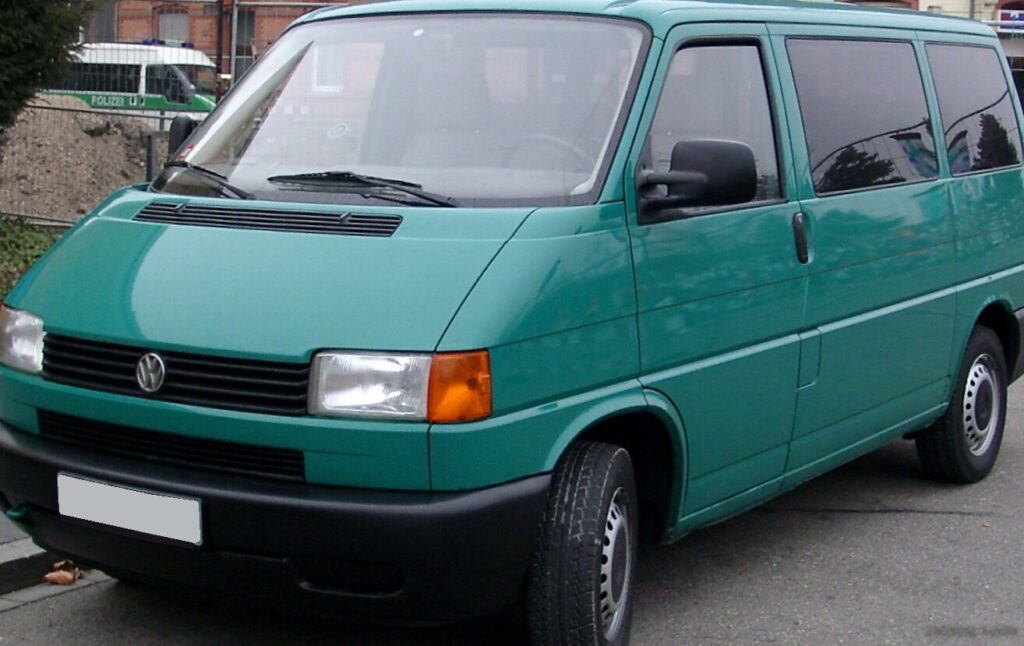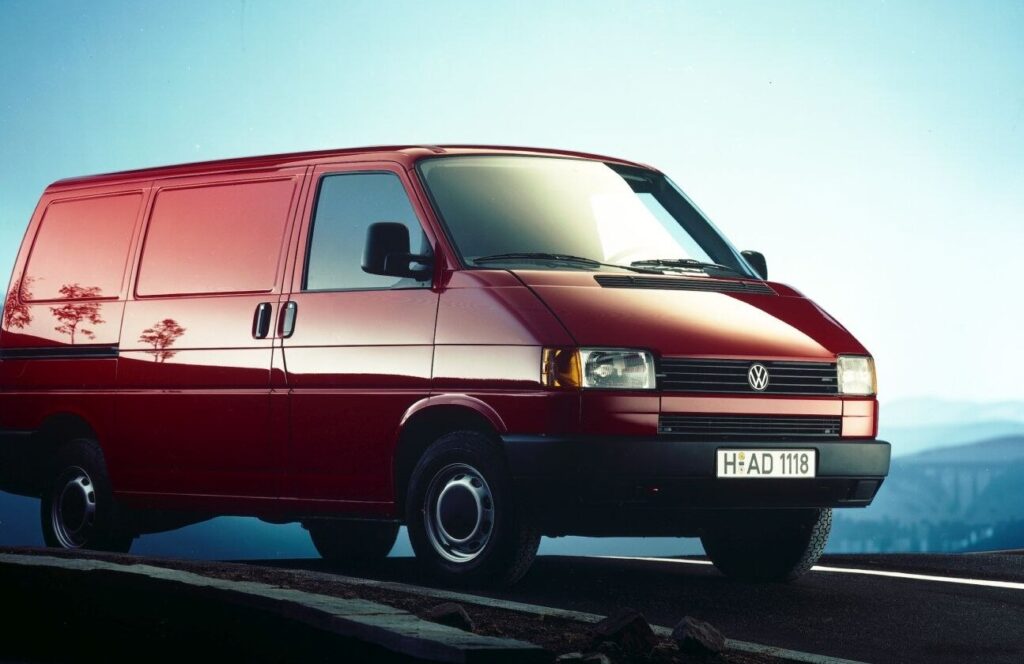
The Volkswagen Transporter (T4), produced from 1990 to 2003, represented a significant leap forward for the iconic van, moving to a front-wheel-drive layout and offering a more car-like driving experience. Within the T4 range, the 2.0-liter (84 horsepower) L1H1 panel van, available primarily between 1990 and 1995, served as an entry-level workhorse, popular with small businesses and tradespeople. The “L1H1” designation refers to the van’s body length (L1 – short wheelbase) and roof height (H1 – standard roof). This variant occupied the lower end of the T4 spectrum, positioned below the more powerful 1.9 TDI diesel and 2.5 petrol options, and offered a more affordable entry point into T4 ownership.
Technical Specifications
| Brand | Volkswagen |
| Model | Transporter |
| Generation | Transporter (T4) Panel Van |
| Type (Engine) | 2.0 (84 Hp) L1H1 |
| Start of production | 1990 year |
| End of production | 1995 year |
| Powertrain Architecture | Internal Combustion engine |
| Body type | Van |
| Seats | 2 |
| Doors | 4-5 |
| Fuel consumption (combined) | 13.5 l/100 km (17.4 US mpg, 20.9 UK mpg, 7.4 km/l) |
| Fuel Type | Petrol (Gasoline) |
| Maximum speed | 144 km/h (89.48 mph) |
| Weight-to-power ratio | 18.1 kg/Hp, 55.3 Hp/tonne |
| Weight-to-torque ratio | 9.6 kg/Nm, 104.6 Nm/tonne |
| Power | 84 Hp @ 4300 rpm |
| Power per litre | 42.7 Hp/l |
| Torque | 159 Nm @ 2200 rpm (117.27 lb.-ft. @ 2200 rpm) |
| Engine layout | Front, Transverse |
| Engine Model/Code | AAC |
| Engine displacement | 1968 cm3 (120.09 cu. in.) |
| Number of cylinders | 4 |
| Engine configuration | Inline |
| Cylinder Bore | 81 mm (3.19 in.) |
| Piston Stroke | 95.5 mm (3.76 in.) |
| Compression ratio | 8.5:1 |
| Number of valves per cylinder | 2 |
| Fuel injection system | Multi-port manifold injection |
| Engine aspiration | Naturally aspirated engine |
| Valvetrain | SOHC |
| Engine oil capacity | 5 l (5.28 US qt | 4.4 UK qt) |
| Coolant | 9 l (9.51 US qt | 7.92 UK qt) |
| Kerb Weight | 1520 kg (3351.03 lbs.) |
| Max. weight | 2320-2700 kg (5114.72 – 5952.48 lbs.) |
| Max load | 800-1180 kg (1763.7 – 2601.45 lbs.) |
| Trunk (boot) space – maximum | 5400 l (190.7 cu. ft.) |
| Fuel tank capacity | 80 l (21.13 US gal | 17.6 UK gal) |
| Max. roof load | 100 kg (220.46 lbs.) |
| Permitted trailer load with brakes (12%) | 2000 kg (4409.25 lbs.) |
| Permitted trailer load without brakes | 700 kg (1543.24 lbs.) |
| Permitted towbar download | 100 kg (220.46 lbs.) |
| Length | 4650 mm (183.07 in.) |
| Width | 1840 mm (72.44 in.) |
| Height | 1940 mm (76.38 in.) |
| Wheelbase | 2920 mm (114.96 in.) |
| Front track | 1575 mm (62.01 in.) |
| Rear (Back) track | 1540 mm (60.63 in.) |
| Ride height (ground clearance) | 180 mm (7.09 in.) |
| Drag coefficient (Cd) | 0.36 |
| Minimum turning circle (turning diameter) | 11.7 m (38.39 ft.) |
| Drivetrain Architecture | The Internal combustion engine (ICE) drives the front wheels of the vehicle. |
| Drive wheel | Front wheel drive |
| Number of gears and type of gearbox | 5 gears, manual transmission |
| Front suspension | Independent torsion bar, double wishbone, Transverse stabilizer |
| Rear suspension | Independent coil spring, Trailing arm |
| Front brakes | Disc |
| Rear brakes | Drum |
| Steering type | Steering rack and pinion |
| Tires size | 195/70 R15; 205/65 R15; 215/65 R15 |
| Wheel rims size | 6J x 15; 7J x 15 |
Powertrain & Engine Architecture
The 2.0-liter AAC engine powering this T4 variant is a naturally aspirated, inline-four cylinder unit. It utilizes a single overhead camshaft (SOHC) valvetrain operating two valves per cylinder. Fuel delivery is managed by a multi-port fuel injection system, a significant improvement over the carbureted engines found in earlier Transporter generations. This engine produced 84 horsepower at 4300 rpm and 159 Nm (117.27 lb-ft) of torque at 2200 rpm. The engine’s relatively low compression ratio of 8.5:1 was typical for engines designed to run on the prevalent fuel grades of the time. The engine was transversely mounted, contributing to the T4’s improved packaging and front-wheel-drive configuration. The standard transmission was a five-speed manual, although a four-speed automatic was also available, albeit less common with this engine.
Driving Characteristics
The 2.0-liter, 84 hp engine in the T4 provided adequate, but not exhilarating, performance. Acceleration was modest, and overtaking required careful planning. The engine’s strength lay in its usability and relatively low-end torque. The five-speed manual transmission allowed drivers to keep the engine in its optimal power band, while the optional automatic, though convenient, further dulled performance. Compared to the more powerful 1.9 TDI diesel, the petrol engine offered a smoother and quieter driving experience, but at the cost of fuel economy. The front-wheel-drive layout provided predictable handling, but lacked the all-weather capability of the optional four-wheel-drive (Syncro) versions. The gear ratios were geared towards practicality and fuel efficiency rather than outright speed.
Equipment & Trim Levels
The L1H1 2.0 panel van was typically a fairly basic specification. Standard equipment included a driver and passenger seat, basic instrumentation, and a steering wheel. Interior trim was functional and durable, prioritizing practicality over luxury. Options included power steering, electric windows, and upgraded audio systems. The van’s interior was designed to be easily cleaned and maintained, reflecting its intended use as a commercial vehicle. Often, these vans were purchased directly by businesses and fitted with bespoke racking and storage solutions tailored to their specific needs.
Chassis & Braking
The T4 utilized an independent suspension setup on both the front and rear axles. The front suspension employed torsion bars and double wishbones, while the rear featured independent coil springs and trailing arms. This setup provided a comfortable ride, especially considering the van’s load-carrying capacity. Braking was handled by disc brakes on the front wheels and drum brakes on the rear. The braking system was adequate for the van’s weight and performance, but lacked the stopping power of more modern systems. A transverse stabilizer bar was fitted to the front suspension to reduce body roll during cornering.
Market Reception & Comparison
The 2.0-liter petrol T4 was generally well-received as a practical and reliable work van. Critics noted its improved driving dynamics compared to its predecessor, the T3. However, the petrol engine’s fuel economy was a common criticism, particularly in comparison to the increasingly popular 1.9 TDI diesel. The TDI offered significantly better fuel consumption and similar performance, making it a more attractive option for many buyers. The 2.0-liter petrol engine was often seen as a good compromise for those who preferred the smoother operation of a petrol engine and didn’t require the ultimate in fuel efficiency.
Legacy
The AAC engine, while not known for being particularly sophisticated, proved to be reasonably durable and reliable when properly maintained. Today, T4s with the 2.0-liter petrol engine are relatively common in the used market, often at affordable prices. However, they require regular maintenance, including oil changes and valve adjustments. Parts availability is generally good, but some components can be difficult to find. The T4, in all its variants, has gained a loyal following among van enthusiasts and is increasingly appreciated as a classic vehicle. The 2.0-liter petrol version, while not the most desirable trim, remains a viable option for those seeking a simple, reliable, and affordable van for light commercial use or camper conversions.