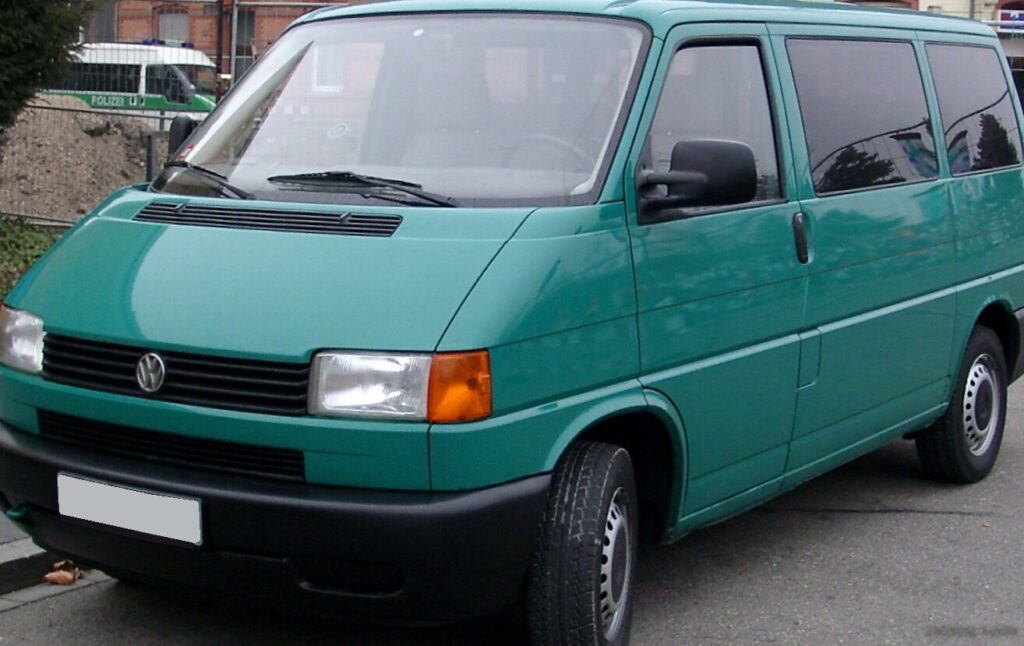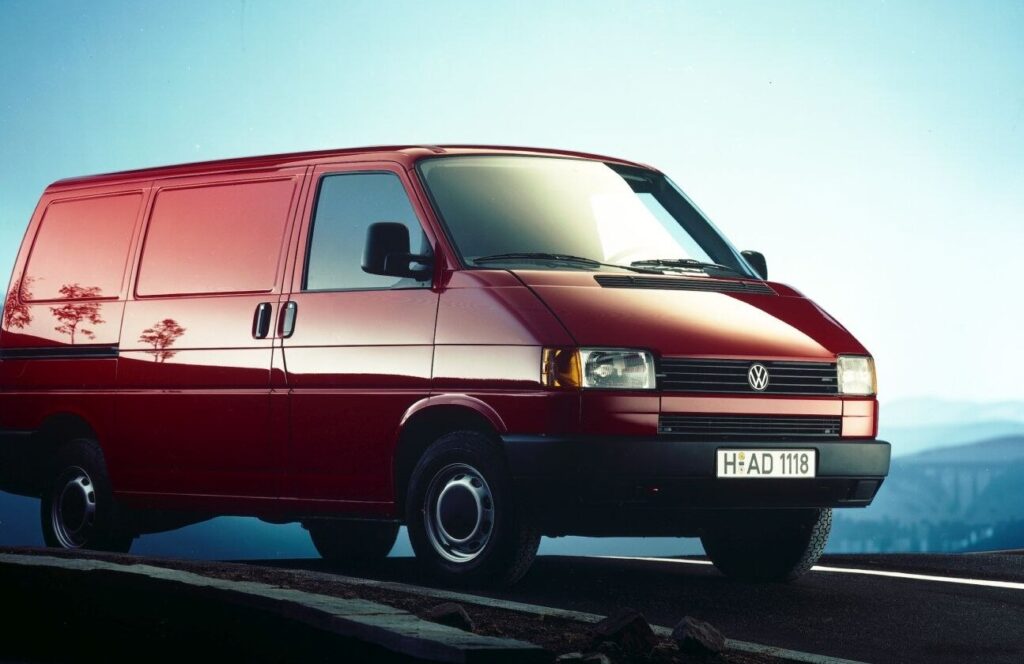
The Volkswagen Transporter (T4), produced from 1990 to 2003, represented a significant leap forward for the iconic van, moving to a front-wheel-drive layout and offering a more car-like driving experience. Within the T4 range, the 2.0-liter (84 horsepower) L2H1 panel van, manufactured between 1990 and 1995, served as a popular entry-level option, particularly in European markets. This variant was designed for commercial use, prioritizing practicality and affordability over outright performance. The “L2H1” designation indicates a long wheelbase and a low roof height, maximizing cargo capacity within the T4’s overall dimensions. It was a workhorse intended for small businesses, tradespeople, and those needing a versatile, reliable van for deliveries and transport.
Technical Specifications
| Brand | Volkswagen |
| Model | Transporter |
| Generation | Transporter (T4) Panel Van |
| Type (Engine) | 2.0 (84 Hp) L2H1 |
| Start of production | 1990 |
| End of production | 1995 |
| Powertrain Architecture | Internal Combustion engine |
| Body type | Van |
| Seats | 2 |
| Doors | 4-5 |
| Fuel consumption (combined) | 13.5 l/100 km (17.4 US mpg, 20.9 UK mpg, 7.4 km/l) |
| Fuel Type | Petrol (Gasoline) |
| Maximum speed | 144 km/h (89.48 mph) |
| Weight-to-power ratio | 18.7 kg/Hp, 53.5 Hp/tonne |
| Weight-to-torque ratio | 9.9 kg/Nm, 101.3 Nm/tonne |
| Power | 84 Hp @ 4300 rpm |
| Power per litre | 42.7 Hp/l |
| Torque | 159 Nm @ 2200 rpm (117.27 lb.-ft. @ 2200 rpm) |
| Engine layout | Front, Transverse |
| Engine Model/Code | AAC |
| Engine displacement | 1968 cm3 (120.09 cu. in.) |
| Number of cylinders | 4 |
| Engine configuration | Inline |
| Cylinder Bore | 81 mm (3.19 in.) |
| Piston Stroke | 95.5 mm (3.76 in.) |
| Compression ratio | 8.5:1 |
| Number of valves per cylinder | 2 |
| Fuel injection system | Multi-port manifold injection |
| Engine aspiration | Naturally aspirated engine |
| Valvetrain | SOHC |
| Engine oil capacity | 5 l (5.28 US qt | 4.4 UK qt) |
| Coolant | 9 l (9.51 US qt | 7.92 UK qt) |
| Kerb Weight | 1570 kg (3461.26 lbs.) |
| Max. weight | 2565-2750 kg (5654.86 – 6062.71 lbs.) |
| Max load | 995-1180 kg (2193.6 – 2601.45 lbs.) |
| Trunk (boot) space – maximum | 6300 l (222.48 cu. ft.) |
| Fuel tank capacity | 80 l (21.13 US gal | 17.6 UK gal) |
| Max. roof load | 100 kg (220.46 lbs.) |
| Permitted trailer load with brakes (12%) | 2000 kg (4409.25 lbs.) |
| Permitted trailer load without brakes | 700 kg (1543.24 lbs.) |
| Permitted towbar download | 100 kg (220.46 lbs.) |
| Length | 5055 mm (199.02 in.) |
| Width | 1840 mm (72.44 in.) |
| Height | 1940 mm (76.38 in.) |
| Wheelbase | 3320 mm (130.71 in.) |
| Front track | 1575 mm (62.01 in.) |
| Rear (Back) track | 1540 mm (60.63 in.) |
| Front overhang | 860 mm (33.86 in.) |
| Rear overhang | 875 mm (34.45 in.) |
| Ride height (ground clearance) | 180 mm (7.09 in.) |
| Drag coefficient (Cd) | 0.36 |
| Minimum turning circle (turning diameter) | 12.9 m (42.32 ft.) |
| Drivetrain Architecture | The Internal combustion engine (ICE) drives the front wheels of the vehicle. |
| Drive wheel | Front wheel drive |
| Number of gears and type of gearbox | 5 gears, manual transmission |
| Front suspension | Independent torsion bar, double wishbone, Transverse stabilizer |
| Rear suspension | Independent coil spring, Trailing arm |
| Front brakes | Disc |
| Rear brakes | Drum |
| Steering type | Steering rack and pinion |
| Tires size | 195/70 R15; 205/65 R15; 215/65 R15 |
| Wheel rims size | 6J x 15; 7J x 15 |
INTRODUCTION
The Volkswagen Transporter T4 2.0 (84 Hp) L2H1, produced between 1990 and 1995, was a cornerstone of the fourth-generation Transporter lineup. It represented a shift away from the rear-wheel-drive layout of its predecessors, embracing a more modern front-wheel-drive configuration. This change, coupled with a range of engine options, aimed to broaden the van’s appeal and improve its usability. The L2H1 variant, with its long wheelbase and low roof, offered a practical balance between cargo space and maneuverability, making it a popular choice for commercial operators. It was positioned as the entry-level engine option, offering a more affordable purchase price and lower running costs compared to the more powerful 1.9 TDI diesel or the 2.5-liter gasoline variants.
Powertrain & Engine Architecture
The heart of the T4 2.0 is the AAC engine code, a 1.968-liter, inline-four cylinder gasoline engine. This engine utilizes a single overhead camshaft (SOHC) valvetrain operating two valves per cylinder. Fuel delivery is managed by a multi-port fuel injection system, providing a balance between efficiency and performance. The engine produces 84 horsepower at 4300 rpm and 159 Nm (117.27 lb-ft) of torque at 2200 rpm. The engine’s relatively simple design contributed to its reliability and ease of maintenance. The 2.0-liter engine was paired with a five-speed manual transmission as standard, although a four-speed automatic transmission was also available, albeit less common. The automatic transmission, while offering convenience, did impact fuel economy and performance.
Driving Characteristics
The 84 hp 2.0-liter engine, when coupled with the manual transmission, provided adequate performance for everyday use, particularly when unladen. However, when fully loaded, the van’s acceleration was noticeably diminished. The automatic transmission further reduced performance, resulting in slower acceleration and a less responsive driving experience. Gear ratios were optimized for fuel efficiency and load-carrying capability rather than outright speed. The front-wheel-drive configuration offered good traction in most conditions, but could suffer from torque steer under hard acceleration. Compared to the more powerful engines in the T4 range, this variant prioritized fuel economy and affordability over dynamic driving characteristics.
Equipment & Trim Levels
The T4 2.0 L2H1 panel van was typically sparsely equipped, reflecting its commercial focus. Standard features included basic steel wheels, cloth upholstery, and a simple dashboard layout. Power steering was often an optional extra. Interior trim was functional and durable, designed to withstand the rigors of commercial use. Optional extras included upgraded audio systems, electric windows, and central locking. The emphasis was on providing a practical and reliable work vehicle rather than luxury or comfort.
Chassis & Braking
The T4’s chassis featured independent suspension all around, with a torsion bar setup at the front and a trailing arm arrangement at the rear. This provided a reasonably comfortable ride, even when carrying a load. Front brakes were discs, offering good stopping power, while rear brakes were drums, a cost-saving measure common in commercial vehicles of this era. A transverse stabilizer bar at the front helped to reduce body roll during cornering. The suspension was tuned to prioritize stability and load-carrying capacity over sporty handling.
Market Reception & Comparison
The T4 2.0 L2H1 was generally well-received as a practical and affordable commercial vehicle. Critics praised its spacious interior, improved driving dynamics compared to its predecessor, and relatively low running costs. However, the 84 hp engine was often criticized for being underpowered, particularly when the van was fully loaded or when equipped with the automatic transmission. Compared to the 1.9 TDI diesel, the 2.0-liter gasoline engine offered less torque and worse fuel economy. The TDI was favored by those who prioritized fuel efficiency and low-speed pulling power. The 2.5-liter gasoline engine provided more power but at the expense of increased fuel consumption.
Legacy
The Volkswagen Transporter T4 2.0 L2H1 remains a popular choice in the used vehicle market, particularly among those seeking a reliable and affordable work van. The AAC engine, while not known for its blistering performance, is generally considered to be durable and relatively easy to maintain. However, potential buyers should be aware of common issues such as corrosion, particularly in areas prone to salt exposure. The availability of spare parts is generally good, and the van’s relatively simple construction makes it accessible to amateur mechanics. Today, well-maintained examples of the T4 2.0 L2H1 are increasingly sought after by enthusiasts and those looking for a classic commercial vehicle with a loyal following.