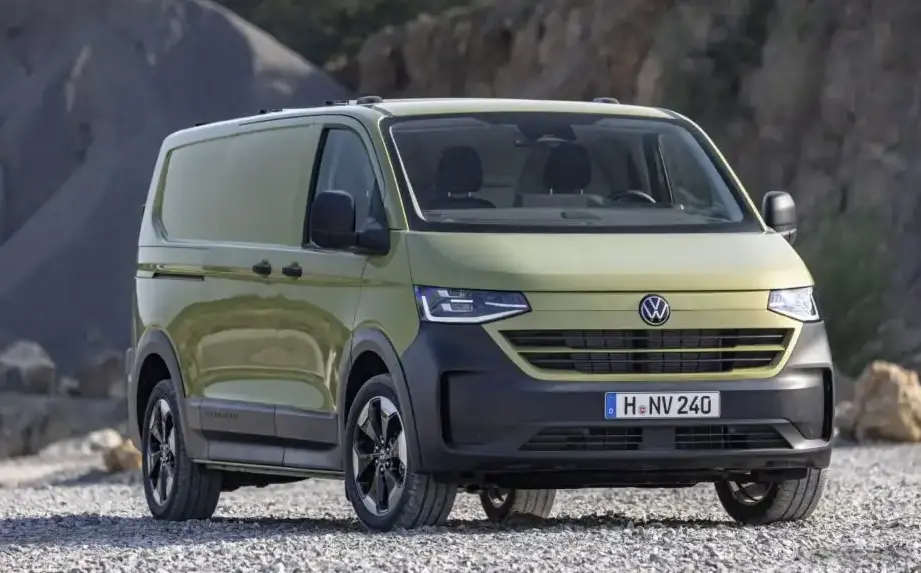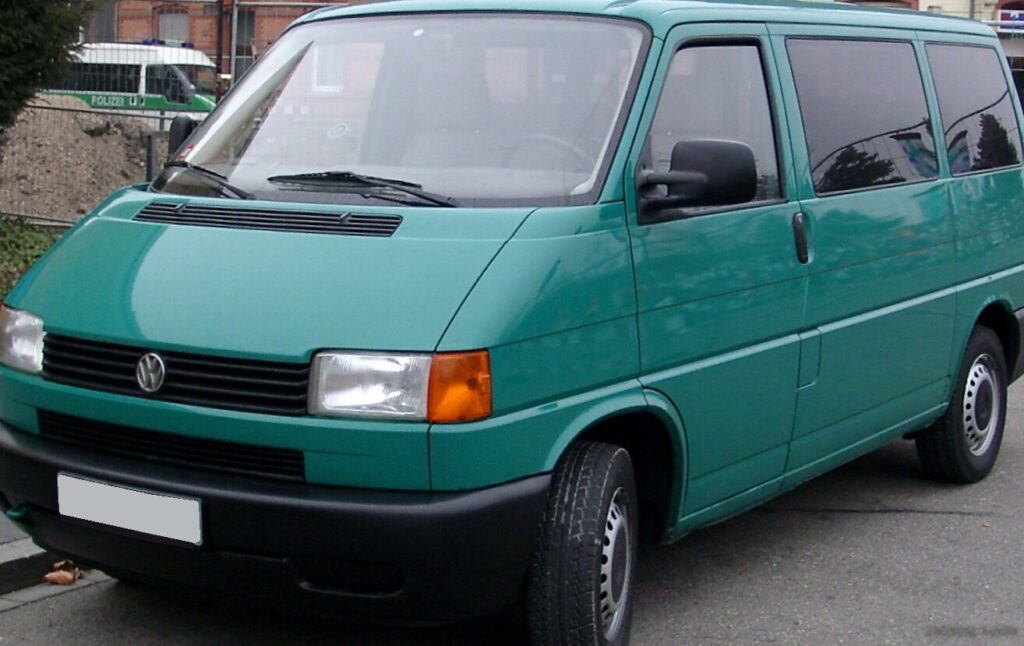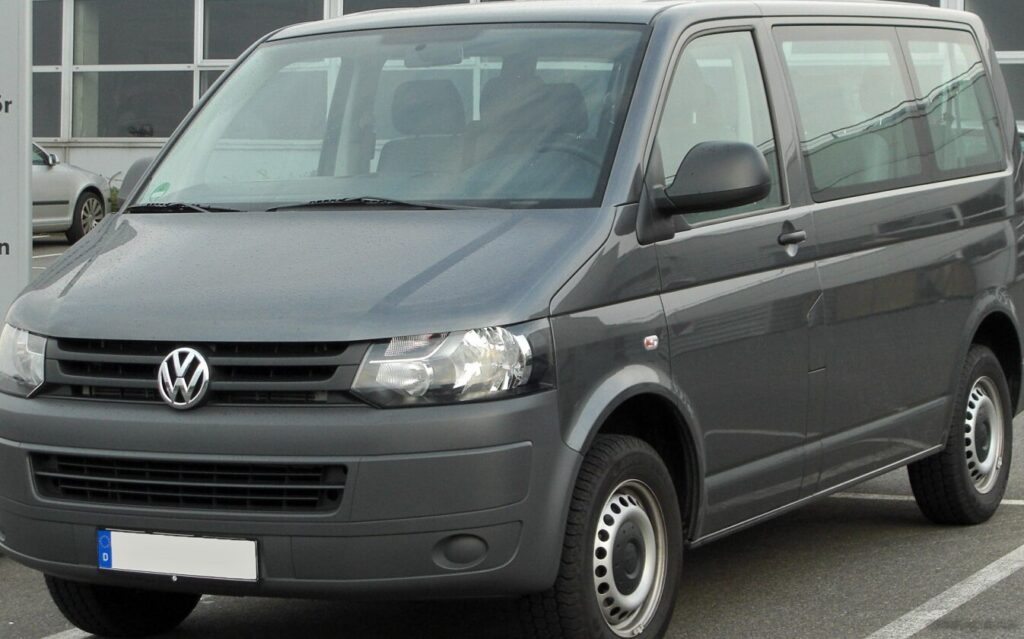
The Volkswagen Transporter (T5) facelift, produced from 2009 to 2015, represented a significant update to the fifth generation of Volkswagen’s iconic commercial vehicle. Within the T5 range, the Kombi 2.0 TDI with 102 horsepower and a manual transmission (often configured as an L2H1 – long wheelbase, high roof) occupied a crucial position as a versatile and economical option for both commercial and family use. This variant aimed to balance practicality, fuel efficiency, and affordability, making it a popular choice in European markets and beyond. The T5 platform, based on the Volkswagen Group’s PQ35 architecture (also underpinning the Audi A3 and VW Golf Mk5), offered a robust and adaptable base for a wide range of body styles and configurations.
Technical Specifications
| Brand | Volkswagen |
| Model | Transporter |
| Generation | Transporter (T5, facelift 2009) Kombi |
| Type (Engine) | 2.0 TDI (102 Hp) L2H1 |
| Start of production | 2009 |
| End of production | 2015 |
| Powertrain Architecture | Internal Combustion engine |
| Body type | Van |
| Seats | 4-9 |
| Doors | 4-5 |
| Fuel consumption (economy) – urban (NEDC) | 9.5 l/100 km (24.8 US mpg, 29.7 UK mpg, 10.5 km/l) |
| Fuel consumption (economy) – extra urban (NEDC) | 6.1 l/100 km (38.6 US mpg, 46.3 UK mpg, 16.4 km/l) |
| Fuel consumption (economy) – combined (NEDC) | 7.3 l/100 km (32.2 US mpg, 38.7 UK mpg, 13.7 km/l) |
| CO2 emissions (NEDC) | 193 g/km |
| Fuel Type | Diesel |
| Acceleration 0 – 100 km/h | 16.4 sec |
| Acceleration 0 – 62 mph | 16.4 sec |
| Acceleration 0 – 60 mph | 15.6 sec |
| Maximum speed | 157 km/h (97.56 mph) |
| Emission standard | Euro 5 |
| Weight-to-power ratio | 18.6 kg/Hp, 53.7 Hp/tonne |
| Weight-to-torque ratio | 7.6 kg/Nm, 131.5 Nm/tonne |
| Power | 102 Hp @ 3500 rpm |
| Power per litre | 51.8 Hp/l |
| Torque | 250 Nm @ 1500-2500 rpm (184.39 lb.-ft. @ 1500-2500 rpm) |
| Engine layout | Front, Transverse |
| Engine Model/Code | EA189 / CAAB |
| Engine displacement | 1968 cm3 (120.09 cu. in.) |
| Number of cylinders | 4 |
| Engine configuration | Inline |
| Cylinder Bore | 81 mm (3.19 in.) |
| Piston Stroke | 95.5 mm (3.76 in.) |
| Compression ratio | 16.5:1 |
| Number of valves per cylinder | 4 |
| Fuel injection system | Diesel Commonrail |
| Engine aspiration | Turbocharger, Intercooler |
| Valvetrain | DOHC |
| Engine oil capacity | 7 l (7.4 US qt | 6.16 UK qt) |
| Coolant | 11 l (11.62 US qt | 9.68 UK qt) |
| Kerb Weight | 1901-2193 kg (4190.99 – 4834.74 lbs.) |
| Max. weight | 2800-3200 kg (6172.94 – 7054.79 lbs.) |
| Max load | 899-1007 kg (1981.96 – 2220.05 lbs.) |
| Trunk (boot) space – maximum | 6700 l (236.61 cu. ft.) |
| Fuel tank capacity | 80 l (21.13 US gal | 17.6 UK gal) |
| Max. roof load | 100 kg (220.46 lbs.) |
| Permitted trailer load with brakes (12%) | 2200 kg (4850.17 lbs.) |
| Permitted trailer load without brakes | 750 kg (1653.47 lbs.) |
| Permitted towbar download | 100 kg (220.46 lbs.) |
| Length | 5292 mm (208.35 in.) |
| Width | 1904 mm (74.96 in.) |
| Width including mirrors | 2283 mm (89.88 in.) |
| Height | 1990 mm (78.35 in.) |
| Wheelbase | 3400 mm (133.86 in.) |
| Front overhang | 896 mm (35.28 in.) |
| Rear overhang | 996 mm (39.21 in.) |
| Ride height (ground clearance) | 201 mm (7.91 in.) |
| Minimum turning circle (turning diameter) | 13.2 m (43.31 ft.) |
| Front suspension | Independent, type McPherson with coil spring and anti-roll bar |
| Rear suspension | Independent coil spring, Transverse stabilizer, Trailing arm |
| Front brakes | Ventilated discs, 308×29.5 mm |
| Rear brakes | Ventilated discs, 294×22 mm |
| Assisting systems | ABS (Anti-lock braking system) |
| Steering type | Steering rack and pinion |
| Power steering | Hydraulic Steering |
| Tires size | 215/65 R16 |
| Wheel rims size | 6.5J x 16 |
INTRODUCTION
The Volkswagen Transporter T5, particularly the facelifted models from 2009 onwards, solidified the vehicle’s reputation as a versatile workhorse and family transport. The Kombi variant, designed to bridge the gap between a pure commercial van and a passenger-focused MPV, offered flexible seating arrangements and a more comfortable interior than the panel van versions. The 2.0 TDI engine, in its 102 horsepower guise, was a mainstay of the T5 lineup, offering a balance between fuel economy and acceptable performance for everyday use. The L2H1 configuration – denoting a long wheelbase and high roof – maximized cargo space and headroom, making it suitable for a wide range of applications. This specific combination was popular in Europe, where diesel engines dominated the commercial vehicle market, and found a niche following in other regions as well.
Powertrain & Engine Architecture
The heart of this Transporter Kombi is the EA189 series 2.0-liter four-cylinder diesel engine, specifically the CAAB code. This engine utilizes a common rail direct injection system, delivering fuel at extremely high pressure for improved combustion efficiency and reduced emissions. The engine features a single turbocharger with an intercooler to increase air density and boost power output. The valvetrain employs a dual overhead camshaft (DOHC) design with four valves per cylinder, optimizing gas flow for enhanced performance. The 102 horsepower output is achieved at 3500 rpm, while peak torque of 250 Nm (184 lb-ft) is available between 1500 and 2500 rpm. This broad torque curve provides good low-end grunt, making it suitable for carrying loads and navigating urban environments. The engine is transversely mounted at the front of the vehicle. The manual transmission, typically a five-speed unit, is chosen for its simplicity and reliability, and contributes to the vehicle’s overall fuel efficiency.
Driving Characteristics
The 102 hp 2.0 TDI with a manual transmission in the T5 Kombi delivers a pragmatic driving experience. Acceleration is not its strong suit, with a 0-60 mph time around 15.6 seconds, but it’s adequate for most everyday driving scenarios. The engine’s strength lies in its mid-range torque, which provides sufficient power for overtaking and climbing hills, even when fully loaded. The gear ratios are tuned for economy, meaning the engine operates at relatively low revs during cruising. Compared to higher-powered TDI variants (like the 140 hp or 180 hp versions), this engine feels less stressed and offers better fuel economy. However, it requires more frequent gear changes, especially when ascending inclines or carrying heavy loads. The manual transmission provides a more engaging driving experience than the optional automatic, offering greater control and responsiveness.
Equipment & Trim Levels
The T5 Kombi 2.0 TDI 102 hp typically came with a reasonable level of standard equipment. This included power steering, ABS brakes, a driver’s airbag, and basic audio system. The interior featured durable cloth upholstery and a functional dashboard layout. The Kombi configuration allowed for flexible seating arrangements, with options for multiple rows of seats and various configurations to accommodate passengers and cargo. Optional extras included air conditioning, electric windows, central locking, upgraded audio systems, and alloy wheels. Higher trim levels offered additional features such as cruise control, parking sensors, and more luxurious interior trim.
Chassis & Braking
The T5 Kombi utilizes an independent suspension setup on both the front and rear axles. The front suspension employs a McPherson strut design with coil springs and an anti-roll bar, while the rear suspension features a trailing arm setup with coil springs and a transverse stabilizer. This configuration provides a comfortable ride quality and good handling characteristics. Braking duties are handled by ventilated disc brakes on all four wheels, providing adequate stopping power. The ABS system helps to prevent wheel lockup during emergency braking. The steering is rack and pinion, offering precise and responsive control.
Market Reception & Comparison
The T5 Kombi 2.0 TDI 102 hp was generally well-received by critics as a practical and economical choice. It was praised for its versatility, fuel efficiency, and robust build quality. However, some reviewers noted its lack of outright performance compared to higher-powered variants. Compared to the more powerful TDI models, this version offered a lower purchase price and better fuel economy, making it attractive to budget-conscious buyers. The 1.9 TDI engine, available in earlier T5 models, was known for its durability but offered less power and refinement than the 2.0 TDI. The 2.0 TDI provided a good balance between performance, economy, and refinement.
Legacy
The 2.0 TDI engine, particularly the CAAB code, has proven to be a relatively reliable powertrain, although it’s not without its potential issues. The most notable concern is the potential for diesel particulate filter (DPF) clogging, especially with frequent short journeys. Regular maintenance, including oil changes and DPF regeneration, is crucial for ensuring long-term reliability. Today, the T5 Kombi 2.0 TDI 102 hp remains a popular choice in the used car market, offering a practical and affordable solution for commercial and family transport. Its robust build quality and relatively simple mechanicals make it a relatively easy vehicle to maintain, and parts availability is generally good.