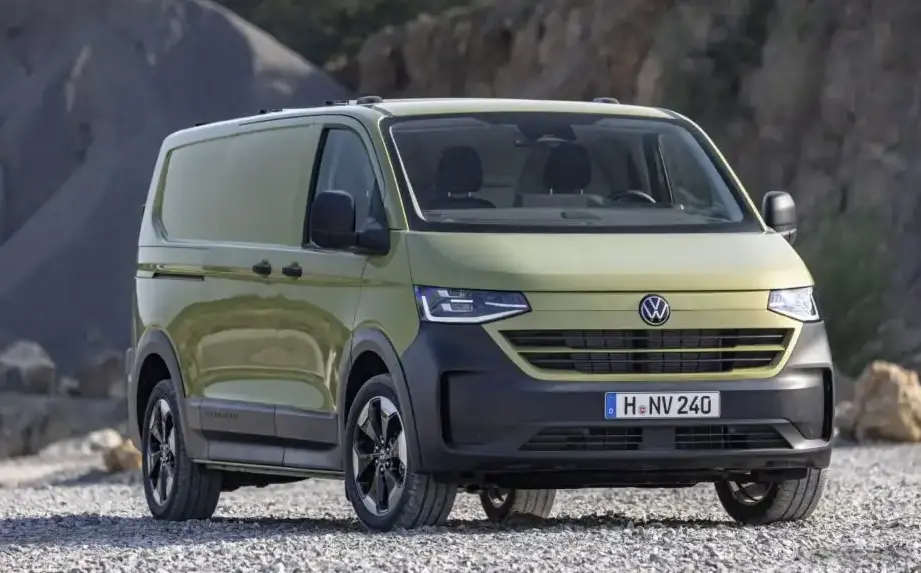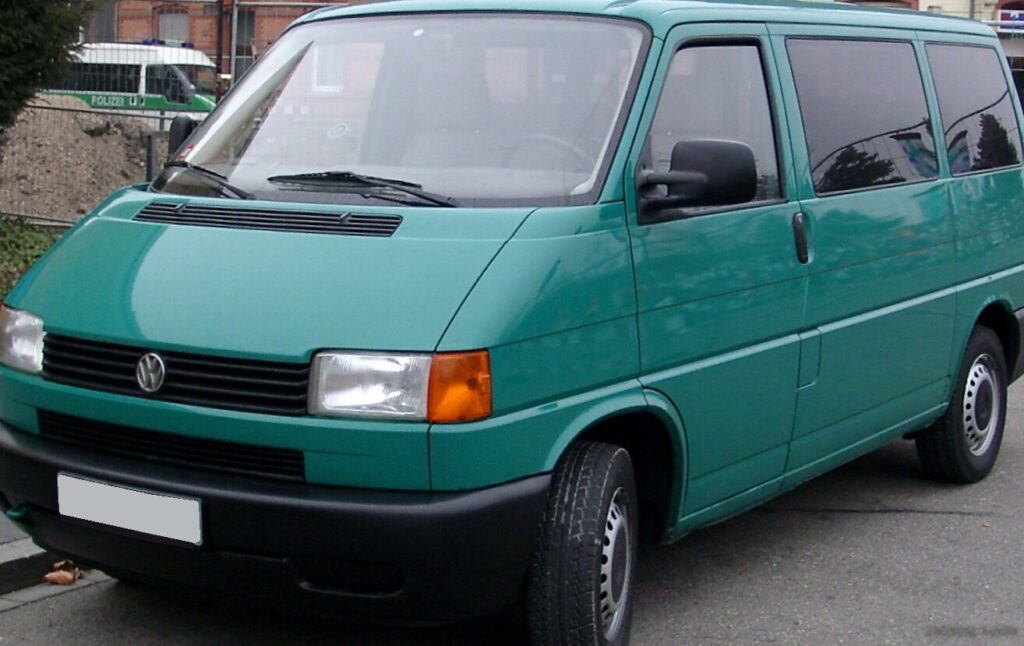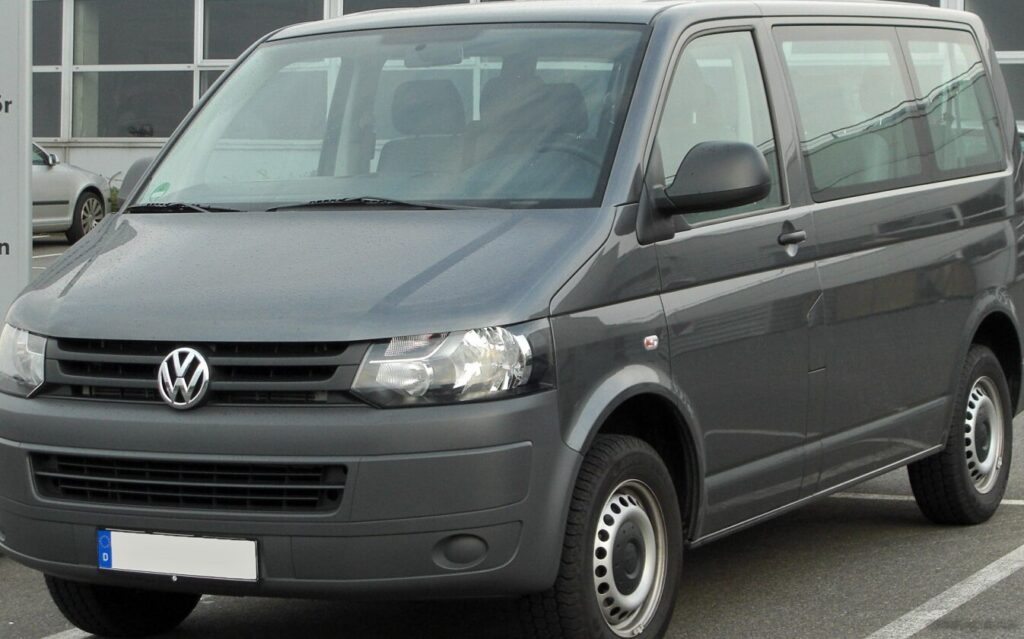
The Volkswagen Transporter (T5) facelift, produced from 2009 to 2015, represented a significant update to the fifth generation of Volkswagen’s iconic commercial vehicle. Within the T5 range, the Kombi 2.0 TDI with 140 horsepower and a dual-clutch gearbox (DSG) in the L2H3 configuration was a popular choice, particularly in European markets. This variant aimed to balance practicality, fuel efficiency, and a more refined driving experience compared to lower-spec models. The L2H3 designation refers to the vehicle’s body length (L2 – long wheelbase) and roof height (H3 – high roof), offering substantial cargo and passenger space. This specific combination positioned itself as a versatile option for both commercial and family use, bridging the gap between basic cargo vans and more luxurious passenger carriers.
Technical Specifications
| Brand | Volkswagen |
| Model | Transporter |
| Generation | Transporter (T5, facelift 2009) Kombi |
| Type (Engine) | 2.0 TDI (140 Hp) DSG L2H3 |
| Start of production | 2009 |
| End of production | 2015 |
| Powertrain Architecture | Internal Combustion engine |
| Body type | Van |
| Seats | 4-9 |
| Doors | 4-5 |
| Fuel consumption (economy) – urban (NEDC) | 10.2 l/100 km (23.1 US mpg, 27.7 UK mpg, 9.8 km/l) |
| Fuel consumption (economy) – extra urban (NEDC) | 7.2 l/100 km (32.7 US mpg, 39.2 UK mpg, 13.9 km/l) |
| Fuel consumption (economy) – combined (NEDC) | 8.3 l/100 km (28.3 US mpg, 34 UK mpg, 12 km/l) |
| CO2 emissions (NEDC) | 219 g/km |
| Fuel Type | Diesel |
| Acceleration 0 – 100 km/h | 13.3 sec |
| Acceleration 0 – 62 mph | 13.3 sec |
| Acceleration 0 – 60 mph | 12.6 sec |
| Maximum speed | 160 km/h (99.42 mph) |
| Emission standard | Euro 5 |
| Weight-to-power ratio | 13.6 kg/Hp, 73.6 Hp/tonne |
| Weight-to-torque ratio | 5.6 kg/Nm, 178.9 Nm/tonne |
| Power | 140 Hp @ 3500 rpm |
| Power per litre | 71.1 Hp/l |
| Torque | 340 Nm @ 1750-2500 rpm (250.77 lb.-ft. @ 1750-2500 rpm) |
| Engine layout | Front, Transverse |
| Engine Model/Code | EA189 / CAAC |
| Engine displacement | 1968 cm3 (120.09 cu. in.) |
| Number of cylinders | 4 |
| Engine configuration | Inline |
| Cylinder Bore | 81 mm (3.19 in.) |
| Piston Stroke | 95.5 mm (3.76 in.) |
| Compression ratio | 16.5:1 |
| Number of valves per cylinder | 4 |
| Fuel injection system | Diesel Commonrail |
| Engine aspiration | Turbocharger, Intercooler |
| Valvetrain | DOHC |
| Engine oil capacity | 7 l (7.4 US qt | 6.16 UK qt) |
| Coolant | 11 l (11.62 US qt | 9.68 UK qt) |
| Kerb Weight | 1901-2240 kg (4190.99 – 4938.35 lbs.) |
| Max. weight | 2800-3200 kg (6172.94 – 7054.79 lbs.) |
| Max load | 899-960 kg (1981.96 – 2116.44 lbs.) |
| Trunk (boot) space – maximum | 9300 l (328.43 cu. ft.) |
| Fuel tank capacity | 80 l (21.13 US gal | 17.6 UK gal) |
| Permitted trailer load with brakes (12%) | 2500 kg (5511.56 lbs.) |
| Permitted trailer load without brakes | 750 kg (1653.47 lbs.) |
| Permitted towbar download | 100 kg (220.46 lbs.) |
| Length | 5292 mm (208.35 in.) |
| Width | 1904 mm (74.96 in.) |
| Width including mirrors | 2283 mm (89.88 in.) |
| Height | 2476 mm (97.48 in.) |
| Wheelbase | 3400 mm (133.86 in.) |
| Front overhang | 896 mm (35.28 in.) |
| Rear overhang | 996 mm (39.21 in.) |
| Ride height (ground clearance) | 201 mm (7.91 in.) |
| Minimum turning circle (turning diameter) | 13.2 m (43.31 ft.) |
| Front suspension | Independent, type McPherson with coil spring and anti-roll bar |
| Rear suspension | Independent coil spring, Transverse stabilizer, Trailing arm |
| Front brakes | Ventilated discs, 308×29.5 mm |
| Rear brakes | Ventilated discs, 294×22 mm |
| Number of gears and type of gearbox | 7 gears, automatic transmission DSG |
Powertrain & Engine Architecture
The heart of this Transporter variant is the 2.0-liter four-cylinder diesel engine, specifically the EA189 series, often identified by the engine code CAAC. This engine utilizes a common rail direct injection system, delivering fuel at extremely high pressure for optimized combustion. A turbocharger with an intercooler is employed to increase power output and improve efficiency. The engine features a double overhead camshaft (DOHC) valvetrain with four valves per cylinder, enhancing breathing and contributing to its 140 horsepower output at 3500 rpm and 340 Nm (250.77 lb-ft) of torque between 1750 and 2500 rpm. Paired with this engine is the 7-speed DSG (Direct-Shift Gearbox), a dual-clutch transmission known for its quick and smooth gear changes. The DSG offers both fully automatic operation and the option for manual gear selection via the shift lever or steering wheel-mounted paddles.
Driving Characteristics
The 140 hp TDI with DSG provides a noticeable step up in performance compared to the lower-powered engine options available in the T5 range. While not a sports van, it offers sufficient power for comfortable highway cruising and overtaking, even when fully loaded. The DSG transmission contributes to a more refined driving experience, eliminating the need for constant gear shifting. However, compared to the 6-speed manual transmission, the DSG can sometimes feel slightly less responsive in certain driving situations. The gear ratios are tuned for a balance between fuel economy and usability, with a relatively tall final drive to aid efficiency. Acceleration from 0-60 mph takes around 12.6 seconds, and the top speed is limited to 99.42 mph. The front-wheel-drive configuration provides adequate traction for most conditions, but can struggle in slippery environments compared to all-wheel-drive variants.
Equipment & Trim Levels
The Kombi trim level generally included features such as air conditioning, power windows, central locking, and an audio system. Specific standard equipment could vary depending on the market and optional packages selected. Interior upholstery typically consisted of durable cloth materials, with options for upgraded leather or partial leather trim. Dashboard layouts were functional and focused on practicality, with clear instrumentation and logically placed controls. Common optional extras included parking sensors, a navigation system, upgraded audio systems, and various comfort and convenience features.
Chassis & Braking
The T5 Transporter utilizes an independent suspension setup on both the front and rear axles. The front suspension employs McPherson struts with coil springs and an anti-roll bar, while the rear features a multi-link setup with coil springs and a transverse stabilizer. This configuration provides a reasonable balance between ride comfort and handling. Braking duties are handled by ventilated disc brakes on all four wheels, providing adequate stopping power. An Anti-lock Braking System (ABS) is standard, enhancing safety during emergency braking situations. The steering system is a hydraulic power-assisted rack and pinion setup, offering precise and responsive steering feel.
Market Reception & Comparison
The 2.0 TDI 140 hp DSG Kombi was well-received in the European market as a versatile and practical vehicle. Critics praised its fuel efficiency, comfortable ride, and refined driving experience compared to lower-spec models. Compared to the 1.9 TDI variants, the 2.0 TDI offered more power and torque, resulting in improved performance. However, the 2.0 TDI was generally more expensive to purchase and maintain. The higher-output 180 hp TDI offered even greater performance, but at a further cost increase. The DSG transmission was generally seen as a positive feature, but some reviewers noted its occasional lack of responsiveness compared to a manual gearbox.
Legacy
The EA189 engine, while generally reliable, has been subject to scrutiny regarding emissions compliance, leading to software updates and recalls in some markets. However, the engine itself is known for its durability and longevity when properly maintained. The DSG transmission, while more complex than a traditional automatic, has also proven to be relatively reliable, although regular fluid changes are crucial for its long-term health. Today, the T5 Transporter 2.0 TDI 140 hp DSG L2H3 remains a popular choice in the used vehicle market, prized for its practicality, versatility, and relatively affordable running costs. Its robust construction and readily available parts supply ensure that it will continue to be a common sight on roads for years to come.