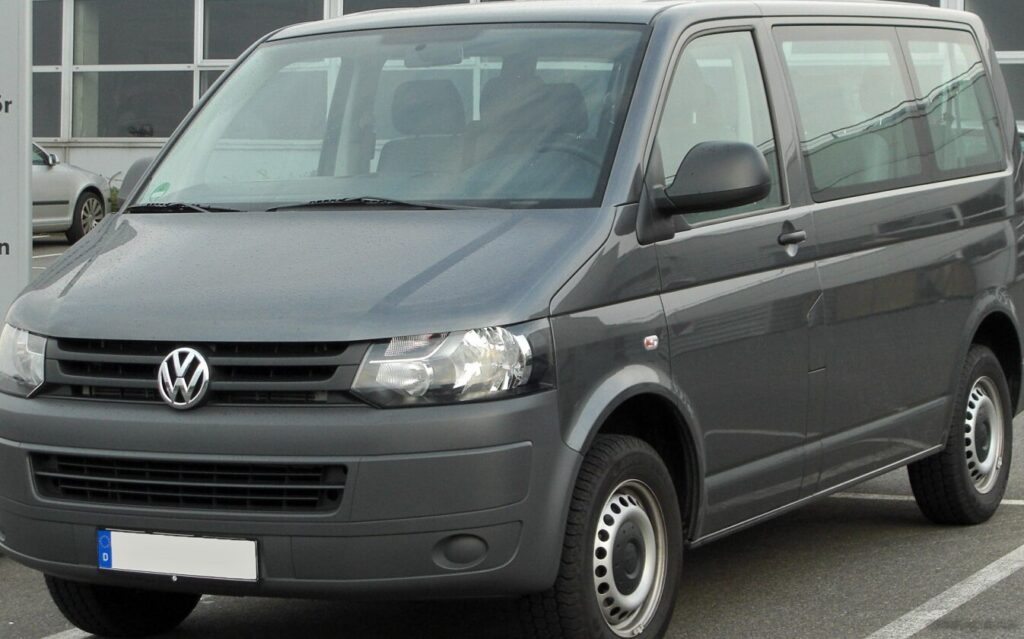
The Volkswagen Transporter (T5) facelift, produced from 2009 to 2015, represented a significant update to the fifth generation of Volkswagen’s popular commercial vehicle. Within the T5 range, the Kombi 2.0 TDI with 180 horsepower and a long wheelbase (L2) and medium roof height (H1) configuration occupied a versatile middle ground. This variant aimed to balance practicality, fuel efficiency, and a reasonable level of performance for both commercial and family use. It was positioned as a step up from the base engine options, offering more power for those regularly carrying heavier loads or traveling longer distances, while remaining more affordable than the top-of-the-line models.
The heart of the Transporter Kombi 2.0 TDI (180 Hp) is the EA189 series engine, specifically the CFCA code. This is a 2.0-liter, four-cylinder turbocharged diesel engine. The engine utilizes a common rail direct fuel injection system, delivering fuel at extremely high pressure for optimized combustion. A key feature of this engine is its bi-turbo setup – two turbochargers working in sequence. A smaller turbocharger provides quick response at lower engine speeds, minimizing turbo lag, while a larger turbocharger takes over at higher speeds to deliver increased power. The engine also incorporates an intercooler to cool the compressed intake air, further enhancing performance. The valvetrain employs a dual overhead camshaft (DOHC) design with four valves per cylinder, contributing to efficient gas exchange. Power is delivered through a six-speed manual transmission, which was standard for this configuration.
In real-world driving, the 180 hp TDI offered a noticeable improvement in performance compared to lower-powered T5 variants. Acceleration from 0-62 mph (0-100 km/h) took approximately 10.3 seconds, and it could reach a top speed of 118.68 mph (191 km/h). While not a sports van, the engine provided ample torque – 400 Nm (295 lb-ft) – available from 1500-2000 rpm, making it capable of carrying a full load of passengers or cargo without feeling strained. The six-speed manual transmission allowed drivers to keep the engine in its optimal power band, and the gear ratios were well-suited for both city driving and highway cruising. Compared to the base engine options, this variant offered a more relaxed and confident driving experience, particularly when fully loaded.
The Kombi trim level, even with the 180 hp engine, focused on practicality and functionality. Standard equipment typically included air conditioning, power windows, central locking, and a basic audio system. Interior upholstery was generally durable cloth, designed to withstand the rigors of commercial use. The dashboard layout was functional and straightforward, prioritizing ease of use. Optional extras included features like upgraded audio systems, parking sensors, alloy wheels, and more sophisticated navigation systems. The Kombi configuration offered flexible seating arrangements, with options for multiple rows of seats to accommodate up to nine passengers.
The T5 Transporter’s chassis featured independent suspension on both the front and rear axles. The front suspension utilized a McPherson strut setup with coil springs and an anti-roll bar, while the rear employed a trailing arm configuration with coil springs and a transverse stabilizer. This setup provided a reasonable balance between ride comfort and handling. Braking was accomplished with ventilated discs on all four wheels, providing adequate stopping power even when heavily loaded. Anti-lock Braking System (ABS) was standard. The weight-to-power ratio of 10.6 kg/hp indicated a reasonably efficient powertrain for its intended purpose.
Critics generally praised the T5 Transporter for its practicality, reliability, and overall build quality. The 2.0 TDI 180 hp engine was considered a good compromise between performance and fuel economy. Fuel consumption figures averaged around 30.9 US mpg (37.2 UK mpg) on the combined cycle, making it relatively economical for a vehicle of its size and capability. However, some reviewers noted that the engine could be somewhat noisy under heavy acceleration. Compared to the more powerful (and expensive) models, the 180 hp TDI offered a more accessible price point without sacrificing too much in terms of performance. The 1.9 TDI variants were considered more economical but lacked the extra power of the 2.0 TDI.
| Brand | Volkswagen |
| Model | Transporter |
| Generation | Transporter (T5, facelift 2009) Kombi |
| Type (Engine) | 2.0 TDI (180 Hp) L2H1 |
| Start of production | 2009 |
| End of production | 2015 |
| Fuel consumption (urban) | 9.6 l/100 km (24.5 US mpg) |
| Fuel consumption (extra urban) | 6.5 l/100 km (36.2 US mpg) |
| Fuel consumption (combined) | 7.6 l/100 km (30.9 US mpg) |
| CO2 emissions | 199 g/km |
| Fuel Type | Diesel |
| Acceleration 0-100 km/h | 10.3 sec |
| Acceleration 0-62 mph | 10.3 sec |
| Maximum speed | 191 km/h (118.68 mph) |
| Engine Code | CFCA |
| Engine Displacement | 1968 cm3 (120.09 cu. in.) |
| Power | 180 Hp @ 4000 rpm |
| Torque | 400 Nm @ 1500-2000 rpm (295.02 lb.-ft.) |
| Kerb Weight | 1901-2262 kg (4190.99 – 4986.86 lbs.) |
| Max. weight | 2800-3200 kg (6172.94 – 7054.79 lbs.) |
| Fuel tank capacity | 80 l (21.13 US gal) |
| Length | 5292 mm (208.35 in.) |
| Width | 1904 mm (74.96 in.) |
| Height | 1990 mm (78.35 in.) |
| Number of gears | 6 |
| Gearbox type | Manual |
Today, the T5 Transporter 2.0 TDI (180 Hp) enjoys a solid reputation for reliability, particularly when well-maintained. The EA189 engine, while subject to some scrutiny regarding emissions in earlier years, has proven to be durable. Used examples are readily available, and prices vary depending on mileage, condition, and service history. The combination of practicality, fuel efficiency, and reasonable performance continues to make this variant a popular choice for both commercial and private buyers in the used vehicle market.