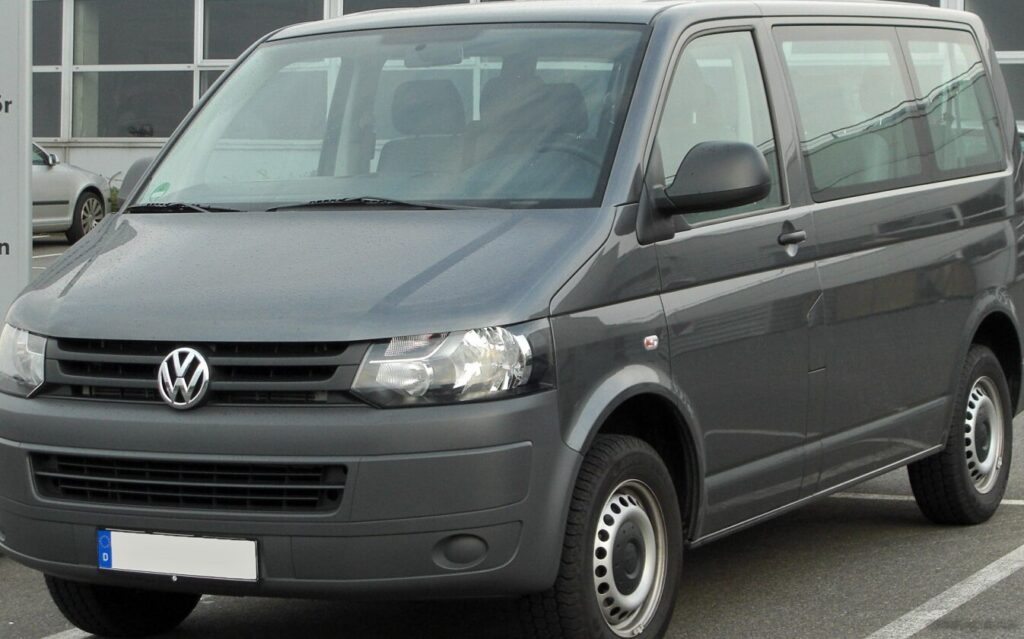
The Volkswagen Transporter (T5) facelift, produced from 2009 to 2015, represented a significant update to the fifth generation of Volkswagen’s popular commercial vehicle. The “Kombi” designation refers to a passenger-oriented variant, bridging the gap between a pure cargo van and a full-fledged multi-purpose vehicle (MPV). Within the T5 facelift range, the 2.0 TDI BMT (BlueMotion Technology) with 140 horsepower and a 7-speed Direct-Shift Gearbox (DSG) – designated L2H1 – was a common configuration, entering production in 2012 and continuing through 2015. This variant occupied a middle ground in the T5 lineup, offering a balance of fuel efficiency, performance, and practicality for both commercial and family use.
Volkswagen Transporter T5 Facelift: 2.0 TDI BMT (140 hp) DSG L2H1 Overview
The T5 facelift brought cosmetic and mechanical revisions to the Transporter range, including updated front-end styling, interior improvements, and the introduction of more efficient engine options. The 2.0 TDI BMT engine was a key component of this efficiency push, utilizing technologies like common rail fuel injection and a particulate filter to reduce emissions. The L2H1 designation indicates a long wheelbase (L2) and a standard roof height (H1), providing a versatile cargo or passenger space. The combination of the 140 hp TDI engine and the 7-speed DSG transmission aimed to deliver a smooth and economical driving experience, appealing to a broad spectrum of buyers.
Powertrain & Engine Architecture
The heart of this Transporter variant is the Volkswagen EA189 series 2.0-liter four-cylinder diesel engine, specifically the CAAC engine code. This engine is a turbocharged common rail diesel, meaning fuel is delivered to the cylinders via a high-pressure common rail system for precise control and improved combustion. The engine features a single overhead camshaft (SOHC) design operating four valves per cylinder (DOHC). The turbocharger, coupled with an intercooler, forces more air into the engine, boosting power output. The BMT (BlueMotion Technology) package includes features like a particulate filter to reduce soot emissions and optimized engine mapping for improved fuel economy.
The 7-speed DSG transmission is a dual-clutch automated manual gearbox. It utilizes two separate clutches – one for the odd-numbered gears and one for the even-numbered gears – allowing for incredibly fast and smooth gear changes. This transmission offers both fully automatic operation and the ability for the driver to manually select gears via the gear lever or steering wheel-mounted paddles (depending on trim level). The DSG’s gear ratios are optimized for both fuel efficiency and performance, providing strong acceleration and comfortable cruising.
Driving Characteristics
The 140 hp 2.0 TDI BMT with DSG delivers a respectable, though not exhilarating, driving experience. Acceleration from 0-62 mph (0-100 km/h) takes approximately 13 seconds. While slower than the more powerful TDI variants (like the 180 hp version), the 140 hp engine provides sufficient power for everyday driving, including carrying a full load of passengers or cargo. The DSG transmission contributes to a smooth and refined driving experience, with quick and seamless gear changes. The engine’s peak torque of 340 Nm (250.77 lb-ft) available from 1750-2500 rpm provides good pulling power at lower engine speeds, making it well-suited for hauling and towing. Compared to a manual transmission equipped T5, the DSG offers convenience and ease of use, particularly in urban environments. However, some drivers may prefer the more direct feel and control of a manual gearbox.
Equipment & Trim Levels
The Kombi trim level generally included features geared towards passenger comfort and convenience. Standard equipment typically included air conditioning, power windows, power mirrors, a basic audio system, and ABS brakes. Interior upholstery was usually cloth, with options for upgraded materials and designs. Dashboard configuration was relatively straightforward, prioritizing functionality and durability. Optional extras available for this trim included features like parking sensors, a navigation system, upgraded audio systems, alloy wheels, and various interior trim upgrades. Higher trim levels, such as Highline, added more premium features like climate control, leather upholstery, and more advanced infotainment systems.
Chassis & Braking
The T5 Transporter utilized a front-wheel-drive layout, contributing to its relatively low weight and good fuel efficiency. The front suspension consisted of independent McPherson struts with coil springs and an anti-roll bar, providing a comfortable ride and stable handling. The rear suspension employed a semi-independent trailing arm setup with coil springs and a transverse stabilizer bar. Braking duties were handled by ventilated discs on all four wheels, providing ample stopping power. ABS (Anti-lock Braking System) was standard, enhancing safety and control during emergency braking situations. The curb weight of approximately 1901 kg (4190.99 lbs) influenced the suspension tuning and braking performance.
Market Reception & Comparison
The 2.0 TDI BMT 140 hp DSG variant of the T5 Transporter was generally well-received by critics and buyers alike. It was praised for its fuel efficiency, comfortable ride, and smooth-shifting DSG transmission. Fuel economy figures averaged around 7.5 l/100 km (31.4 US mpg), making it an attractive option for businesses and individuals looking to minimize running costs. Compared to the more powerful TDI variants, the 140 hp version offered a more affordable price point, making it accessible to a wider range of buyers. However, some critics noted that the engine could feel strained when fully loaded or driving uphill. Compared to the 1.9 TDI models available in earlier T5s, the 2.0 TDI offered improved performance and refinement, albeit with potentially higher maintenance costs due to the more complex common rail fuel injection system and DSG transmission.
Technical Specifications
| Brand | Volkswagen |
| Model | Transporter (T5, facelift 2009) Kombi |
| Type | 2.0 TDI BMT (140 Hp) DSG L2H1 |
| Start of production | 2012 |
| End of production | 2015 |
| Engine Displacement | 1968 cm3 (120.09 cu. in.) |
| Engine Code | CAAC |
| Number of Cylinders | 4, Inline |
| Power | 140 Hp @ 3500 rpm |
| Torque | 340 Nm @ 1750-2500 rpm (250.77 lb.-ft.) |
| Fuel Consumption (Urban) | 9.3 l/100 km (25.3 US mpg) |
| Fuel Consumption (Extra Urban) | 6.5 l/100 km (36.2 US mpg) |
| Fuel Consumption (Combined) | 7.5 l/100 km (31.4 US mpg) |
| CO2 Emissions | 198 g/km |
| Transmission | 7-speed DSG |
| Kerb Weight | 1901 kg (4190.99 lbs.) |
| Max. Weight | 2800-3200 kg (6172.94 – 7054.79 lbs.) |
| Fuel Tank Capacity | 80 l (21.13 US gal) |
| Length | 5292 mm (208.35 in.) |
| Width | 1904 mm (74.96 in.) |
| Height | 1990 mm (78.35 in.) |
Legacy
The 2.0 TDI BMT engine, while generally reliable, has been subject to some scrutiny regarding the durability of its diesel particulate filter (DPF) and potential issues with the dual-mass flywheel (DMF) in the DSG transmission. Regular maintenance, including timely DPF regeneration and DMF inspection, is crucial for long-term reliability. Today, used T5 Transporters with this powertrain configuration remain relatively common in the market. They are often sought after for their practicality, fuel efficiency, and relatively affordable price. However, potential buyers should be aware of the potential maintenance costs associated with the DPF and DSG transmission and ensure a thorough inspection is conducted before purchase. The T5 Transporter, in all its variants, remains a popular choice for businesses and families seeking a versatile and dependable vehicle.