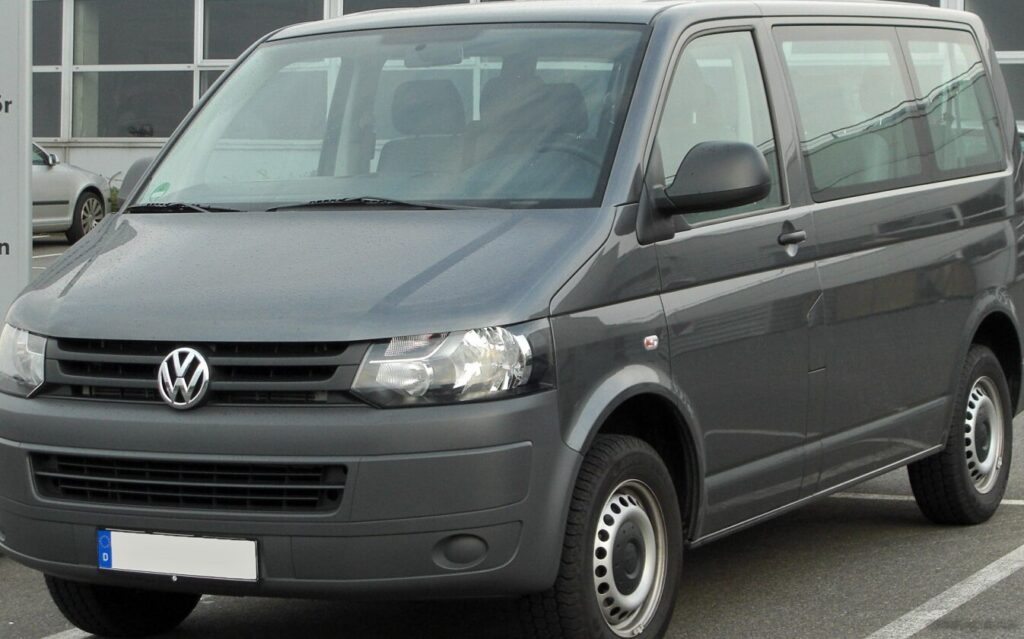
The Volkswagen Transporter (T5) facelift, produced from 2009 to 2015, represented a significant update to the fifth generation of Volkswagen’s popular commercial vehicle. Within this generation, the Kombi variant offered a blend of cargo capacity and passenger comfort, catering to both commercial and family needs. The 2.0 TDI BMT (180 hp) 4MOTION L1H2, introduced in 2012, was a higher-specification version of the T5 Kombi, positioned as a premium offering within the range. It combined a powerful diesel engine with all-wheel drive capability and a practical, medium-length wheelbase and roof height configuration (L1H2). This variant aimed to provide a versatile vehicle suitable for demanding work and leisure applications.
Powertrain & Engine Architecture
The heart of the Transporter Kombi 2.0 TDI BMT (180 hp) 4MOTION is the EA189 series 2.0-liter inline four-cylinder diesel engine, specifically the CFCA engine code. This engine utilizes common rail direct injection, delivering fuel directly into the combustion chamber at extremely high pressure for improved efficiency and reduced emissions. The “BMT” designation stands for “BlueMotion Technology,” indicating the inclusion of various fuel-saving technologies. These included a particulate filter to reduce soot emissions, and a start/stop system to automatically shut off the engine when idling. The engine is turbocharged by a bi-turbo system – a combination of a low-pressure and a high-pressure turbocharger – which provides both strong low-end torque and high-end power. The engine’s valvetrain features a double overhead camshaft (DOHC) design with four valves per cylinder, optimizing gas flow for enhanced performance.
Power is delivered to all four wheels via Volkswagen’s 4MOTION all-wheel-drive system. This system is primarily front-wheel drive, but can automatically engage the rear wheels via a viscous coupling when traction is lost. The transmission is a six-speed manual gearbox, chosen for its efficiency and driver control. The engine produces 180 horsepower at 4000 rpm and 400 Nm (295 lb-ft) of torque between 1500 and 2000 rpm, providing a broad and usable powerband.
Fuel Injection and Turbocharging
The common rail injection system operates at pressures up to 1800 bar, atomizing the fuel for a more complete combustion process. The bi-turbo setup is crucial to the engine’s performance characteristics. The smaller, high-pressure turbocharger spools up quickly at lower engine speeds, providing immediate throttle response and strong low-end torque. The larger, low-pressure turbocharger takes over at higher engine speeds, maintaining power and preventing turbo lag. An intercooler is used to cool the compressed air from the turbochargers, increasing air density and further enhancing performance.
Driving Characteristics
The 2.0 TDI BMT (180 hp) 4MOTION Kombi offers a noticeable step up in performance compared to lower-powered versions of the T5. The 180 horsepower and 295 lb-ft of torque provide ample power for carrying a full load of passengers and cargo, even on inclines. The six-speed manual transmission allows for precise gear selection and helps to keep the engine in its optimal powerband. Acceleration from 0-62 mph (0-100 km/h) takes approximately 10.7 seconds, and the vehicle has a top speed of 113 mph (182 km/h). The 4MOTION all-wheel-drive system provides excellent traction in various conditions, including wet roads, snow, and gravel. While not a sports van, the Kombi 2.0 TDI BMT offers a confident and capable driving experience.
Compared to the 1.9 TDI variants, the 2.0 TDI BMT provides significantly more power and torque, resulting in improved acceleration and towing capacity. It also offers a more refined driving experience due to the smoother operation of the common rail injection system and the bi-turbo setup. However, the 2.0 TDI BMT is generally less fuel-efficient than the 1.9 TDI, and may require more frequent maintenance due to the complexity of the turbocharging system.
Equipment & Trim Levels
The Kombi variant of the T5 typically offered a flexible seating configuration, accommodating between four and nine passengers. Standard equipment on the 2.0 TDI BMT (180 hp) 4MOTION L1H2 included features such as air conditioning, power windows, central locking, and an audio system. The L1H2 designation indicates a medium wheelbase and roof height, providing a good balance between cargo space and maneuverability. The interior typically featured durable cloth upholstery, with optional upgrades to leather available. The dashboard layout was functional and straightforward, with easy-to-read gauges and controls. Optional extras included features such as a navigation system, parking sensors, heated seats, and alloy wheels.
Chassis & Braking
The T5 Kombi 2.0 TDI BMT (180 hp) 4MOTION utilizes an independent suspension system on both the front and rear axles. The front suspension features McPherson struts with coil springs and an anti-roll bar, while the rear suspension employs a trailing arm setup with coil springs and a transverse stabilizer. This suspension configuration provides a comfortable ride and good handling characteristics. The braking system consists of ventilated disc brakes on all four wheels, providing ample stopping power. The vehicle is equipped with ABS (Anti-lock Braking System) to prevent wheel lockup during hard braking. The steering system is a hydraulic power-assisted rack and pinion setup, offering precise and responsive steering feel.
Market Reception & Comparison
The Volkswagen Transporter T5, in general, enjoyed a strong reputation for reliability and practicality. The 2.0 TDI BMT (180 hp) 4MOTION variant was well-received by critics for its combination of power, efficiency, and all-wheel-drive capability. Fuel economy was rated at approximately 30.5 US mpg (combined), which was competitive for a vehicle of its size and weight. However, some critics noted that the engine could be somewhat noisy under heavy acceleration. Compared to other trims in the T5 lineup, the 2.0 TDI BMT 4MOTION was positioned as a premium offering, commanding a higher price tag. Its main competitors included the Mercedes-Benz Vito and the Ford Transit.
Technical Specifications
| Brand | Volkswagen |
| Model | Transporter |
| Generation | Transporter (T5, facelift 2009) Kombi |
| Type | 2.0 TDI BMT (180 Hp) 4MOTION L1H2 |
| Start of production | 2012 |
| End of production | 2015 |
| Engine | 2.0-liter Inline-4 Diesel |
| Engine Code | CFCA |
| Power | 180 hp @ 4000 rpm |
| Torque | 400 Nm (295 lb-ft) @ 1500-2000 rpm |
| Fuel Consumption (Urban) | 9.4 l/100 km (25 US mpg) |
| Fuel Consumption (Extra Urban) | 6.7 l/100 km (35.1 US mpg) |
| Fuel Consumption (Combined) | 7.7 l/100 km (30.5 US mpg) |
| CO2 Emissions | 203 g/km |
| Transmission | 6-speed Manual |
| Drive | All-Wheel Drive (4MOTION) |
| Kerb Weight | 1938 kg (4272.56 lbs) |
| Max. Weight | 2800-3200 kg (6172.94 – 7054.79 lbs) |
| Fuel Tank Capacity | 80 l (21.13 US gal) |
| Length | 4892 mm (192.6 in) |
| Width | 1904 mm (74.96 in) |
| Height | 2176 mm (85.67 in) |
Legacy
The 2.0 TDI BMT (180 hp) engine, while generally reliable, is known to be susceptible to issues with the dual-mass flywheel and the turbocharger, particularly if not properly maintained. Regular oil changes and adherence to Volkswagen’s recommended service intervals are crucial for ensuring long-term reliability. On the used car market, the T5 Kombi 2.0 TDI BMT 4MOTION holds its value relatively well due to its versatility, performance, and all-wheel-drive capability. It remains a popular choice for both commercial and private buyers seeking a practical and capable van. However, potential buyers should be aware of the potential maintenance costs associated with the engine and drivetrain.