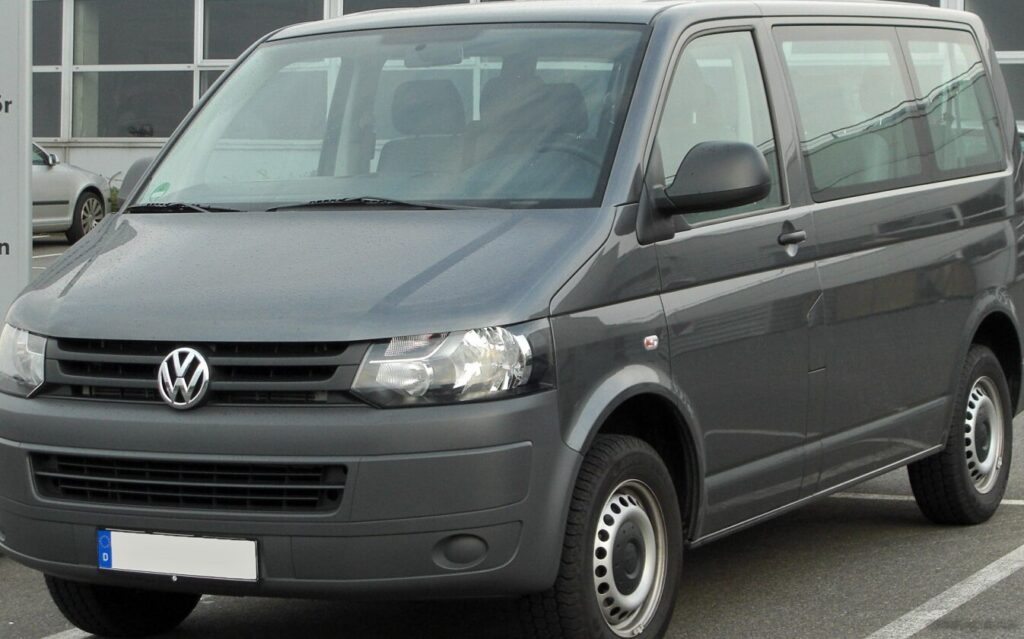
The Volkswagen Transporter (T5) facelift, produced from 2009 to 2015, represented a significant update to the fifth generation of Volkswagen’s popular commercial vehicle. Within this generation, the Kombi variant offered a blend of cargo capacity and passenger comfort, catering to both commercial and family needs. The 2.0 TDI BMT (Bi-Motion Technology) with 180 horsepower and a 4MOTION all-wheel-drive system, specifically produced from 2012-2015, was a higher-specification option within the T5 Kombi range, positioned as a premium offering for those requiring enhanced performance and all-weather capability. This variant, designated with the engine code CFCA, was a key part of Volkswagen’s strategy to offer a versatile and technologically advanced van for the European market.
Powertrain & Engine Architecture
The heart of the Transporter Kombi 2.0 TDI BMT 4MOTION is the EA189 series 2.0-liter inline four-cylinder diesel engine. This engine, identified by the code CFCA, utilizes common rail direct injection and a sophisticated bi-turbocharger setup. The bi-turbo system employs two turbochargers – a smaller, variable geometry turbocharger for rapid response at low engine speeds, and a larger turbocharger for increased power at higher RPMs. This configuration aims to minimize turbo lag and deliver a broad, usable torque curve. The engine features a double overhead camshaft (DOHC) valvetrain with four valves per cylinder, optimizing gas flow for improved efficiency and power output.
The BMT designation refers to Volkswagen’s Bi-Motion Technology, which in this case incorporates a particulate filter to reduce emissions, meeting Euro 5 standards. The engine’s fuel injection system is a high-pressure common rail system, allowing for precise fuel delivery and optimized combustion. The engine produces 180 horsepower (132 kW) at 4000 rpm and 400 Nm (295 lb-ft) of torque between 1500 and 2000 rpm. The engine’s compression ratio is 16.5:1. The engine oil capacity is 7 liters (7.4 US quarts), and the coolant capacity is 11 liters (11.62 US quarts).
The 4MOTION all-wheel-drive system is a permanent all-wheel-drive system with a viscous coupling. This system normally distributes power to the front wheels, but automatically engages the rear wheels when wheel slip is detected, providing enhanced traction in challenging conditions. The transmission is a 6-speed manual gearbox, chosen for its efficiency and driver engagement.
Driving Characteristics
The 180 hp 2.0 TDI BMT 4MOTION offered a noticeable performance upgrade compared to lower-powered T5 Kombi variants. Acceleration from 0 to 100 km/h (0-62 mph) takes approximately 10.6 seconds, and 0-60 mph is achieved in around 10.1 seconds. While not a sports van, the engine provides ample torque for comfortable cruising and effortless overtaking, even when fully loaded. The 4MOTION system significantly improves handling and stability, particularly on slippery surfaces. The manual transmission allows for precise control over gear selection, maximizing engine efficiency and responsiveness. Compared to the base engine options, this variant delivers a more refined and confident driving experience. The gear ratios are tuned to prioritize both fuel economy and usable power across a wide range of speeds. The bi-turbo setup minimizes turbo lag, providing a more linear power delivery than single-turbo diesel engines.
Equipment & Trim Levels
The 2.0 TDI BMT 4MOTION Kombi typically came equipped with a generous level of standard features. Interior upholstery was generally cloth, though leather options were available as upgrades. The dashboard layout was functional and ergonomic, with a clear instrument cluster and logically placed controls. Standard equipment often included air conditioning, a CD/radio system, power windows, and central locking. Safety features such as ABS (Anti-lock Braking System) and driver/passenger airbags were standard.
Optional extras included features like a navigation system, parking sensors, upgraded audio systems, heated seats, and various interior trim upgrades. The Kombi configuration allowed for flexible seating arrangements, with options for multiple rows of seats to accommodate up to nine passengers. The rear seating could often be folded or removed to maximize cargo space. Specific trim levels, such as Trendline, Comfortline, and Highline, offered progressively more features and refinements.
Chassis & Braking
The T5 Kombi 2.0 TDI BMT 4MOTION utilizes an independent suspension system on both the front and rear axles. The front suspension employs a McPherson strut design with coil springs and an anti-roll bar, providing a comfortable ride and stable handling. The rear suspension features a trailing arm setup with coil springs and a transverse stabilizer bar, further enhancing stability and reducing body roll. The braking system consists of ventilated discs on all four wheels, providing ample stopping power. Front brake discs measure 340×32.5 mm, while rear discs are 294×22 mm. The hydraulic power steering provides precise and responsive steering feel.
The vehicle’s weight-to-power ratio is 11.1 kg/hp, and the weight-to-torque ratio is 5 kg/Nm. The curb weight is approximately 2000 kg (4409.25 lbs), with a maximum permissible weight ranging from 3000 to 3200 kg (6613.87 – 7054.79 lbs), depending on the specific configuration. Tire sizes typically ranged from 215/60 R17 to 255/45 R18, depending on the wheel size and trim level.
Market Reception & Comparison
The 2.0 TDI BMT 4MOTION Kombi was generally well-received by critics and buyers alike. It was praised for its strong performance, all-weather capability, and versatile interior. Fuel economy was respectable, with combined fuel consumption figures around 7.7 l/100 km (30.5 US mpg). Compared to the lower-powered T5 Kombi variants, the 180 hp model offered a significant improvement in driving experience. However, it was more expensive to purchase and maintain than the base models. Compared to the petrol-powered T5s, the diesel engine offered superior fuel economy and torque. The 4MOTION system provided a distinct advantage over two-wheel-drive models in terms of traction and stability. Reliability was generally good, although some owners reported issues with the diesel particulate filter (DPF) and turbocharger over the long term.
Technical Specifications
| Brand | Volkswagen |
| Model | Transporter (T5, facelift 2009) Kombi |
| Type | 2.0 TDI BMT (180 Hp) 4MOTION L2H1 |
| Start of production | 2012 |
| End of production | 2015 |
| Engine Code | CFCA |
| Engine Displacement | 1968 cm3 (120.09 cu. in.) |
| Number of Cylinders | 4 (Inline) |
| Power | 180 Hp @ 4000 rpm |
| Torque | 400 Nm @ 1500-2000 rpm (295.02 lb.-ft.) |
| Fuel Consumption (Urban) | 9.4 l/100 km (25 US mpg) |
| Fuel Consumption (Extra Urban) | 6.7 l/100 km (35.1 US mpg) |
| Fuel Consumption (Combined) | 7.7 l/100 km (30.5 US mpg) |
| CO2 Emissions | 203 g/km |
| Acceleration 0-100 km/h | 10.6 sec |
| Maximum Speed | 188 km/h (116.82 mph) |
| Kerb Weight | 2000 kg (4409.25 lbs) |
| Max. Weight | 3000-3200 kg (6613.87 – 7054.79 lbs) |
| Fuel Tank Capacity | 80 l (21.13 US gal) |
| Transmission | 6-speed Manual |
| Drive | All-Wheel Drive (4×4) |
Legacy
The Volkswagen Transporter T5 2.0 TDI BMT 4MOTION Kombi remains a popular choice in the used vehicle market. Its reputation for reliability, versatility, and all-weather capability continues to attract buyers. While the EA189 engine has been subject to scrutiny regarding emissions, well-maintained examples can provide many years of reliable service. The 4MOTION system is particularly valued in regions with harsh winters or challenging road conditions. The T5 generation, and this variant in particular, has established itself as a benchmark for commercial and passenger vans, known for its robust construction and practical design. The engine, while not without its potential issues, is generally considered durable and relatively easy to maintain, making it a viable option for those seeking a capable and dependable van.