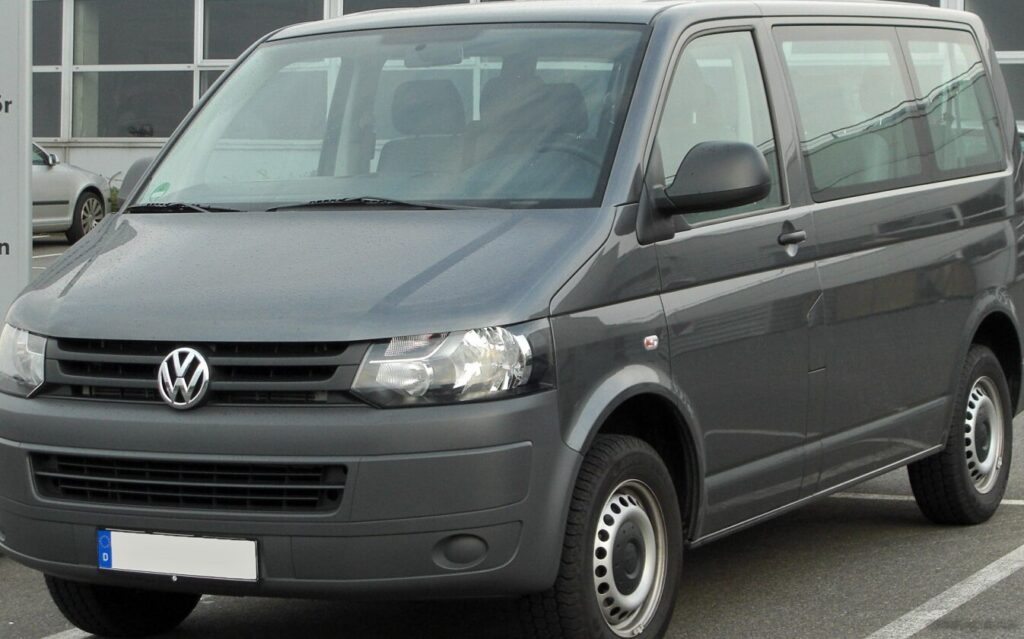
The Volkswagen Transporter (T5) facelift, produced from 2009 to 2015, represented a significant update to the fifth generation of Volkswagen’s popular commercial vehicle. Within the T5 range, the Kombi variant offered a blend of cargo capacity and passenger comfort, catering to both commercial and family needs. The 2.0 TDI BMT (BlueMotion Technology) with 180 horsepower and a 7-speed Direct-Shift Gearbox (DSG), available from 2012 to 2015, was a mid-to-upper trim level, positioned above the base engine options but below the more powerful and specialized configurations. This specific combination aimed to provide a balance of performance, fuel efficiency, and modern convenience for a wide range of users.
Powertrain & Engine Architecture
The heart of the Transporter Kombi 2.0 TDI BMT (180 Hp) DSG L2H2 is the EA189 series 2.0-liter inline four-cylinder diesel engine, specifically the CFCA engine code. This engine is a turbocharged diesel, but uniquely features a bi-turbo setup – a smaller turbocharger for low-end response and a larger turbocharger for high-end power. This configuration helps to mitigate turbo lag and deliver a broader, more usable powerband. The engine utilizes a common rail direct fuel injection system, operating at a high pressure to ensure efficient combustion and reduced emissions. The engine’s valvetrain employs a Dual Overhead Camshaft (DOHC) design with four valves per cylinder, optimizing gas flow for increased power and efficiency.
The 7-speed DSG transmission is a crucial component of this variant. DSG, or Direct-Shift Gearbox, is a dual-clutch transmission that offers the efficiency of a manual gearbox with the convenience of an automatic. It consists of two separate clutches, one for odd-numbered gears and one for even-numbered gears. This allows for incredibly fast and smooth gear changes, as the next gear is pre-selected and ready to engage. The DSG transmission in the T5 is electronically controlled, adapting shift points based on driving conditions and driver input. The transmission’s gear ratios are tuned to maximize both acceleration and fuel economy, taking advantage of the engine’s torque characteristics.
Engine Specifications
Key engine specifications include a compression ratio of 16.5:1, a bore of 81mm, and a stroke of 95.5mm, resulting in a displacement of 1968 cm³ (120.09 cubic inches). Maximum power output is 180 hp (132 kW) at 4000 rpm, and peak torque is 400 Nm (295.02 lb-ft) available between 1500 and 2000 rpm. This relatively high torque output at low engine speeds is a hallmark of modern turbo-diesel engines and contributes to the Transporter’s usability in everyday driving and when carrying loads.
Driving Characteristics
The 180 hp TDI with DSG offers a noticeable step up in performance compared to the lower-powered diesel options available in the T5 range. Acceleration from 0-100 km/h (0-62 mph) takes approximately 10.3 seconds, and 0-60 mph is achieved in around 9.8 seconds. While not a sports van, this provides ample power for overtaking maneuvers and maintaining comfortable cruising speeds, even when fully loaded. The bi-turbo setup minimizes turbo lag, providing a responsive feel throughout the rev range. The DSG transmission contributes to a smooth and efficient driving experience, with quick and precise gear changes. Compared to the manual transmission versions, the DSG offers greater convenience, particularly in urban traffic. However, some drivers may prefer the more direct feel and control of a manual gearbox.
The power delivery is characterized by a strong mid-range torque, making it well-suited for hauling cargo or towing trailers. The DSG transmission effectively manages the engine’s power, keeping it within the optimal torque band for most driving situations. The overall driving experience is refined and comfortable, making the Transporter a capable and versatile vehicle for both work and leisure.
Equipment & Trim Levels
The Kombi trim level, combined with the 2.0 TDI 180 hp engine and DSG transmission, typically included a generous level of standard equipment. This generally included features such as air conditioning, power windows, central locking, an integrated radio/CD player, and driver and passenger airbags. The interior upholstery was typically cloth, although leather upholstery was available as an optional extra. The dashboard layout was functional and ergonomic, with clear instrumentation and easy-to-reach controls.
Optional extras available for this trim level included features such as a navigation system, parking sensors, cruise control, heated seats, and upgraded audio systems. The Kombi configuration allowed for flexible seating arrangements, with options for multiple rows of seats and various configurations to accommodate different passenger and cargo needs. Exterior features often included alloy wheels, body-colored bumpers, and sliding side doors for easy access.
Chassis & Braking
The Transporter T5 utilizes an independent suspension system on both the front and rear axles. The front suspension employs a McPherson strut design with coil springs and an anti-roll bar, while the rear suspension features a trailing arm setup with coil springs and a transverse stabilizer. This suspension configuration provides a good balance of ride comfort and handling stability. The kerb weight of the Kombi 2.0 TDI BMT DSG L2H2 is approximately 1901 kg (4190.99 lbs).
The braking system consists of ventilated discs on all four wheels, providing ample stopping power. The front brakes measure 340×32.5 mm, while the rear brakes are 294×22 mm. The vehicle is equipped with ABS (Anti-lock Braking System) as standard, enhancing braking performance and stability in emergency situations. The steering system is a hydraulic power-assisted rack and pinion setup, providing precise and responsive steering feel.
Market Reception & Comparison
The 2.0 TDI 180 hp DSG variant of the Transporter T5 Kombi was generally well-received by critics and buyers alike. It was praised for its blend of performance, fuel efficiency, and practicality. Fuel economy figures averaged around 7.4 l/100 km (31.8 US mpg) combined, making it a relatively economical option for a vehicle of its size and capability. Compared to the lower-powered diesel engines, the 180 hp version offered a significant improvement in performance, making it more suitable for drivers who frequently carry heavy loads or travel long distances. Compared to the more powerful (and often more expensive) TDI variants, it offered a good balance of performance and cost. Reliability was generally good, although, like all diesel engines, it was susceptible to issues with the diesel particulate filter (DPF) if not properly maintained.
Technical Specifications
| Brand | Volkswagen |
| Model | Transporter |
| Generation | Transporter (T5, facelift 2009) Kombi |
| Type | 2.0 TDI BMT (180 Hp) DSG L2H2 |
| Start of production | 2012 |
| End of production | 2015 |
| Engine | 2.0-liter Inline-4 Turbo Diesel (CFCA) |
| Power | 180 hp @ 4000 rpm |
| Torque | 400 Nm (295.02 lb-ft) @ 1500-2000 rpm |
| Transmission | 7-speed DSG (Dual-Clutch) |
| Fuel Consumption (Combined) | 7.4 l/100 km (31.8 US mpg) |
| CO2 Emissions | 195 g/km |
| Kerb Weight | 1901 kg (4190.99 lbs) |
| Max. Weight | 2800-3200 kg (6172.94 – 7054.79 lbs) |
| Fuel Tank Capacity | 80 l (21.13 US gal) |
| Dimensions (Length x Width x Height) | 5292 mm x 1904 mm x 2176 mm (208.35 in x 74.96 in x 85.67 in) |
Legacy
The 2.0 TDI 180 hp DSG powertrain in the T5 Transporter Kombi has proven to be a relatively reliable and durable combination. While the EA189 engine series has been subject to some scrutiny regarding emissions, the engines themselves are generally robust when properly maintained. The DSG transmission, while complex, has also proven to be reliable with regular servicing, including fluid changes. On the used car market, these Transporters are still sought after for their versatility, practicality, and relatively good fuel economy. They represent a good value proposition for buyers looking for a capable and reliable commercial vehicle or family van. However, potential buyers should be aware of the potential for DPF issues and ensure that the vehicle has been regularly serviced according to Volkswagen’s recommendations.