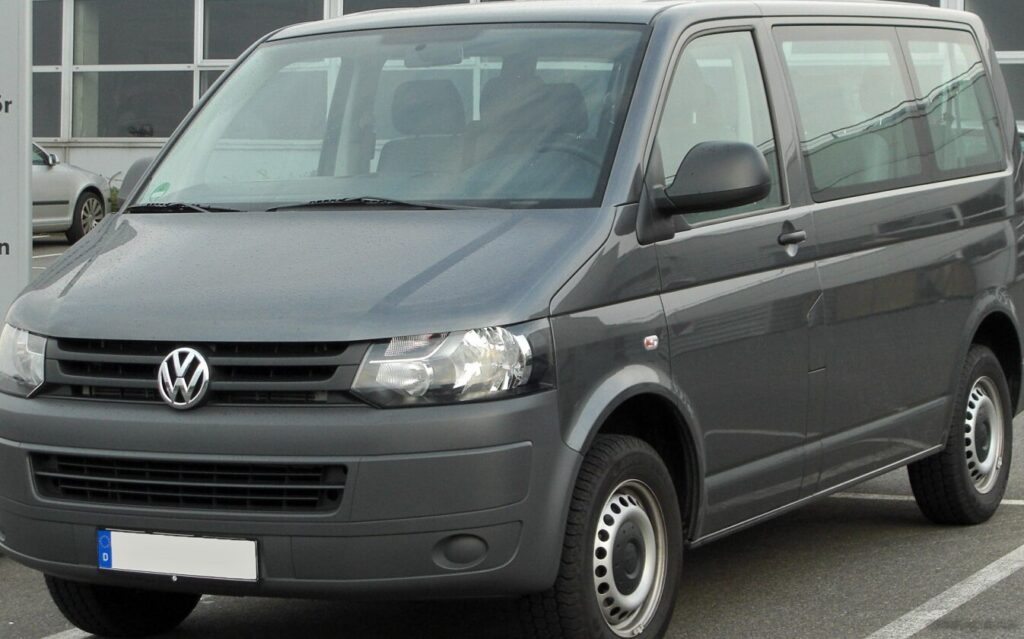
The Volkswagen Transporter (T5) facelift, produced from 2009 to 2015, represented a significant update to the fifth generation of Volkswagen’s popular commercial vehicle. Within the T5 range, the Kombi variant offered a blend of cargo capacity and passenger comfort, serving as a versatile option for both businesses and families. The 2.0 TDI BMT (Bi-Motion Technology) with 180 horsepower, introduced in 2012, was a higher-output diesel engine option available during the later years of the T5 facelift. This configuration, typically paired with a six-speed manual transmission, positioned itself as a mid-range offering, bridging the gap between the more economical base diesel engines and the more powerful, albeit more expensive, options.
Volkswagen Transporter T5 Facelift: 2.0 TDI BMT (180 Hp) Overview
The T5 facelift, internally designated as the 7E series, brought cosmetic and mechanical revisions to the already successful T5 platform. The Kombi body style, characterized by its flexible seating arrangements and increased interior space compared to the panel van, was a popular choice. The 2.0 TDI BMT engine, part of Volkswagen’s EA189 engine family, was designed to offer a balance of performance and fuel efficiency. The “BMT” designation indicated the inclusion of Volkswagen’s BlueMotion Technology, a suite of fuel-saving measures. Production of this specific variant ran from 2012 until the end of T5 production in 2015.
Powertrain & Engine Architecture
The heart of the 2.0 TDI BMT is the EA189 engine code CFCA. This is a 1968cc, four-cylinder diesel engine featuring common rail direct injection and a bi-turbocharger setup. The bi-turbo system utilizes two turbochargers – a smaller, low-pressure turbo for improved responsiveness at lower engine speeds, and a larger, high-pressure turbo for increased power at higher RPMs. This configuration helps to mitigate turbo lag and deliver a broader torque curve. The engine boasts a compression ratio of 16.5:1 and utilizes a DOHC (Dual Overhead Camshaft) valvetrain with four valves per cylinder. The fuel injection system is a Bosch common rail system, delivering highly pressurized fuel directly into the combustion chamber for efficient combustion. The engine produces 180 horsepower at 4000 rpm and 400 Nm (295 lb-ft) of torque between 1500 and 2000 rpm. The six-speed manual transmission was the most common pairing for this engine, offering precise gear changes and contributing to the vehicle’s overall efficiency. While a seven-speed DSG (Direct-Shift Gearbox) dual-clutch automatic transmission was available on some T5 models, it was less frequently paired with the 180 hp TDI BMT.
Driving Characteristics
The 2.0 TDI BMT 180 hp variant of the T5 Kombi offered a noticeable step up in performance compared to the lower-powered diesel options. The bi-turbo setup provided strong low-end torque, making it well-suited for carrying loads or navigating hilly terrain. Acceleration from 0-62 mph (0-100 km/h) took approximately 10.3 seconds, which was competitive for a vehicle of its size and weight. The six-speed manual transmission allowed drivers to effectively utilize the engine’s powerband, while the relatively short gearing contributed to brisk acceleration. Compared to the 140 hp TDI, the 180 hp version felt significantly more responsive, particularly when fully loaded. However, it didn’t offer the outright performance of the more expensive and less common higher-output TDI variants. The driving experience was generally comfortable, with the T5’s suspension providing a reasonable balance between ride quality and handling. The front-wheel-drive configuration provided predictable handling characteristics, although traction could be limited in slippery conditions when heavily loaded.
Equipment & Trim Levels
The T5 Kombi 2.0 TDI BMT 180 hp was typically offered in several trim levels, with standard equipment varying depending on the market. Base models generally included features such as air conditioning, power windows, central locking, and an audio system with basic connectivity. Higher trim levels added features like alloy wheels, upgraded interior upholstery, cruise control, parking sensors, and a more sophisticated infotainment system. Interior upholstery ranged from durable cloth to more premium leather options. Dashboard configurations were generally functional and utilitarian, prioritizing practicality over luxury. Optional extras included features such as a sunroof, upgraded audio systems, navigation systems, and various driver-assistance technologies. The Kombi’s seating configuration was a key selling point, with options ranging from a standard four-seat layout to configurations accommodating up to nine passengers. The rear seats could often be folded, removed, or reconfigured to maximize cargo space.
Chassis & Braking
The T5 Kombi utilized a front-wheel-drive chassis with an independent McPherson strut suspension at the front and an independent coil spring suspension with a transverse stabilizer at the rear. This suspension setup provided a reasonable balance between ride comfort and handling. The front brakes consisted of ventilated discs measuring 340×32.5mm, while the rear brakes were also ventilated discs measuring 294x22mm. Anti-lock Braking System (ABS) was standard equipment. The steering system was a hydraulic power steering rack and pinion, providing precise and responsive steering feel. The T5’s weight-to-power ratio was approximately 10.6 kg/hp, reflecting the vehicle’s substantial weight. The standard tire size varied depending on the trim level, with options ranging from 215/60 R17 to 235/55 R17 and 255/45 R18.
Market Reception & Comparison
The 2.0 TDI BMT 180 hp variant of the T5 Kombi was generally well-received by critics and consumers alike. It was praised for its strong performance, good fuel economy (approximately 33.1 US mpg combined), and versatile interior. Compared to the lower-powered TDI engines, the 180 hp version offered a significant improvement in drivability, making it a more appealing option for those who frequently carried heavy loads or drove long distances. However, it was more expensive than the base diesel models. Compared to the higher-output TDI variants, the 180 hp engine offered a good balance of performance and cost. Reliability was generally good, although some owners reported issues with the bi-turbo system and the diesel particulate filter (DPF). Fuel economy figures of 7.1 l/100 km (combined) were competitive for its class.
Technical Specifications
| Brand | Volkswagen |
| Model | Transporter |
| Generation | Transporter (T5, facelift 2009) Kombi |
| Type (Engine) | 2.0 TDI BMT (180 Hp) L1H1 |
| Start of production | 2012 |
| End of production | 2015 |
| Powertrain Architecture | Internal Combustion engine |
| Body type | Van |
| Seats | 4-9 |
| Doors | 4-5 |
| Fuel consumption (economy) – urban (NEDC) | 8.7 l/100 km (27 US mpg) |
| Fuel consumption (economy) – extra urban (NEDC) | 6.2 l/100 km (37.9 US mpg) |
| Fuel consumption (economy) – combined (NEDC) | 7.1 l/100 km (33.1 US mpg) |
| CO2 emissions (NEDC) | 187 g/km |
| Fuel Type | Diesel |
| Acceleration 0 – 100 km/h | 10.3 sec |
| Acceleration 0 – 62 mph | 10.3 sec |
| Acceleration 0 – 60 mph | 9.8 sec |
| Maximum speed | 191 km/h (118.68 mph) |
| Emission standard | Euro 5 |
| Weight-to-power ratio | 10.6 kg/Hp |
| Weight-to-torque ratio | 4.8 kg/Nm |
| Power | 180 Hp @ 4000 rpm |
| Torque | 400 Nm @ 1500-2000 rpm (295.02 lb.-ft.) |
| Engine layout | Front, Transverse |
| Engine Model/Code | EA189 / CFCA |
| Engine displacement | 1968 cm3 (120.09 cu. in.) |
| Number of cylinders | 4 |
| Engine configuration | Inline |
| Cylinder Bore | 81 mm (3.19 in.) |
| Piston Stroke | 95.5 mm (3.76 in.) |
| Compression ratio | 16.5:1 |
| Number of valves per cylinder | 4 |
| Fuel injection system | Diesel Commonrail |
| Engine aspiration | BiTurbo, Intercooler |
| Valvetrain | DOHC |
| Engine oil capacity | 7 l (7.4 US qt | 6.16 UK qt) |
| Coolant | 11 l (11.62 US qt | 9.68 UK qt) |
| Kerb Weight | 1901 kg (4190.99 lbs.) |
| Max. weight | 2800-3200 kg (6172.94 – 7054.79 lbs.) |
| Fuel tank capacity | 80 l (21.13 US gal | 17.6 UK gal) |
| Length | 4892 mm (192.6 in.) |
| Width | 1904 mm (74.96 in.) |
| Height | 1990 mm (78.35 in.) |
| Wheelbase | 3000 mm (118.11 in.) |
Legacy
The 2.0 TDI BMT 180 hp engine, while not without its potential issues (particularly concerning the DPF and turbochargers), proved to be a relatively reliable and capable powerplant. Today, used T5 Kombi models equipped with this engine represent a good value proposition for those seeking a versatile and practical vehicle. Regular maintenance, including timely DPF regeneration and careful monitoring of the turbocharger system, is crucial for ensuring long-term reliability. The T5’s robust build quality and readily available parts supply contribute to its continued popularity in the used car market. The 2.0 TDI BMT 180 hp variant remains a desirable option for those who prioritize performance and fuel efficiency in a commercial vehicle.