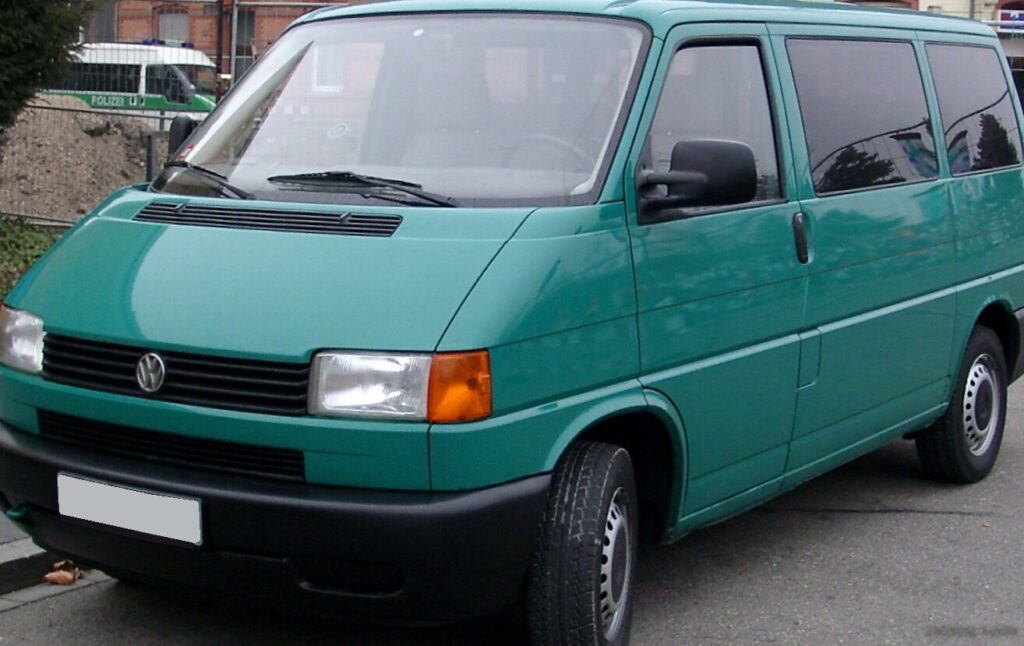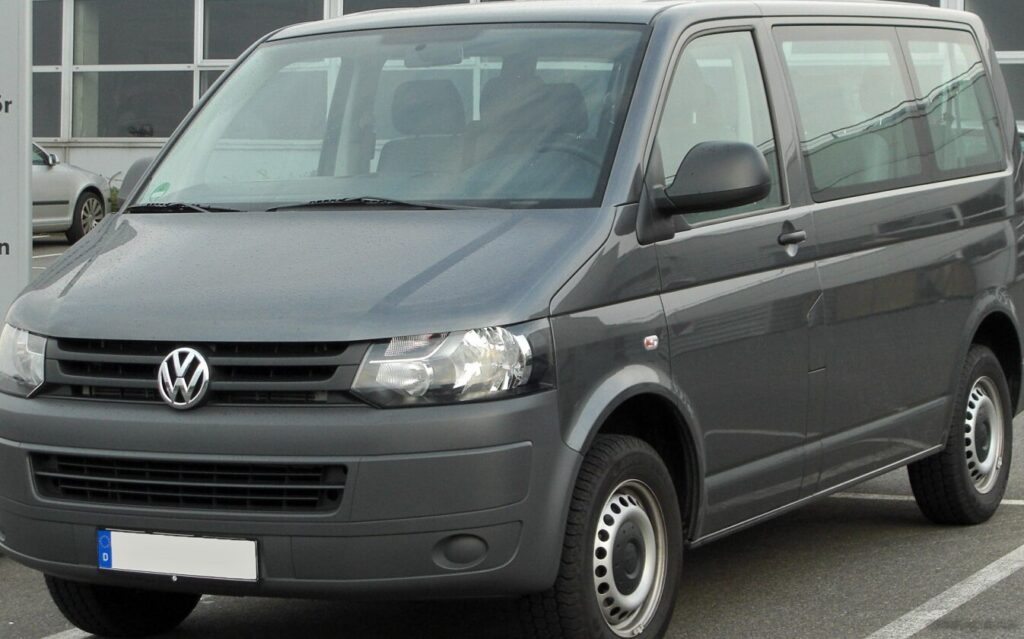
The Volkswagen Transporter (T5) facelift, produced from 2009 to 2015, represented a significant update to the fifth generation of Volkswagen’s popular commercial vehicle. Within the T5 range, the Kombi variant offered a blend of cargo capacity and passenger comfort, catering to both commercial and family needs. The 2.0 TDI BMT (Bi-Motion Technology) with 180 horsepower, introduced in 2012, was a higher-output diesel option positioned as a premium offering within the T5 Kombi lineup, bridging the gap between the more economical base diesels and specialized performance trims. This variant, typically designated with the engine code CFCA, was available in various body configurations, including the L2H1 (Long Wheelbase, High Roof) which maximized interior space.
Powertrain & Engine Architecture
The heart of the T5 Kombi 2.0 TDI BMT (180 Hp) is the EA189 series 2.0-liter inline four-cylinder diesel engine. This engine, specifically the CFCA code, utilizes common rail direct injection and a sophisticated bi-turbocharger system. The bi-turbo setup employs two turbochargers – a smaller, variable geometry turbocharger for rapid response at low engine speeds, and a larger turbocharger for increased power at higher RPMs. This configuration aims to mitigate turbo lag and deliver a broader, more usable powerband. The engine features a 16.5:1 compression ratio and a double overhead camshaft (DOHC) valvetrain with four valves per cylinder.
The BMT designation refers to Volkswagen’s Bi-Motion Technology, which incorporates a start-stop system to improve fuel efficiency in urban driving conditions. The engine is equipped with a diesel particulate filter (DPF) to reduce emissions, meeting Euro 5 standards. Fuel is delivered via a common rail system operating at high pressure, ensuring precise fuel atomization and efficient combustion. The engine’s oil capacity is 7 liters (7.4 US quarts), and it requires a specific oil specification as outlined by Volkswagen.
The 2.0 TDI BMT (180 Hp) was typically paired with a six-speed manual transmission, although a seven-speed dual-clutch transmission (DSG) was also available as an option. The manual transmission offered precise gear changes and a more engaging driving experience, while the DSG provided smoother, faster shifts and enhanced fuel economy. The final drive ratio varied depending on the specific configuration, influencing both acceleration and top speed.
Engine Specifications
The CFCA engine produces 180 horsepower (Hp) at 4000 rpm and 400 Nm (295.02 lb-ft) of torque between 1500 and 2000 rpm. This output translates to a power-to-liter ratio of 91.5 Hp/l. The engine’s displacement is 1968 cm³ (120.09 cu. in.), with a cylinder bore of 81 mm (3.19 in.) and a piston stroke of 95.5 mm (3.76 in.).
Driving Characteristics
The T5 Kombi 2.0 TDI BMT (180 Hp) offered a noticeable step up in performance compared to the lower-powered diesel variants. The bi-turbocharger system provided strong low-end torque, making it well-suited for carrying loads or navigating urban traffic. Acceleration from 0 to 100 km/h (0-62 mph) took approximately 10.3 seconds, and 0 to 60 mph was achieved in around 9.8 seconds. The maximum speed was electronically limited to 191 km/h (118.68 mph).
Compared to the base 1.9 TDI models, the 2.0 TDI BMT offered significantly improved responsiveness and overtaking capability. While not as sporty as some of the higher-performance Transporter variants, it provided a comfortable and capable driving experience for both everyday use and longer journeys. The six-speed manual transmission allowed drivers to effectively utilize the engine’s powerband, while the optional DSG offered seamless gear changes and enhanced fuel efficiency. The front-wheel-drive configuration provided good traction in most conditions, although it could struggle in slippery terrain with a heavy load.
Equipment & Trim Levels
The T5 Kombi 2.0 TDI BMT (180 Hp) typically came equipped with a generous level of standard features. These included air conditioning, power windows, central locking, and an audio system with CD player. Higher trim levels offered additional features such as alloy wheels, upgraded upholstery, a multi-function steering wheel, and a navigation system. Optional extras included parking sensors, a rearview camera, and various comfort and convenience packages. Interior upholstery options ranged from cloth to leather, and dashboard configurations varied depending on the trim level. The Kombi variant offered flexible seating arrangements, with options for multiple rows of seats to accommodate up to nine passengers.
Chassis & Braking
The T5 Kombi 2.0 TDI BMT (180 Hp) utilized an independent suspension system on both the front and rear axles. The front suspension featured McPherson struts with coil springs and an anti-roll bar, while the rear suspension employed a trailing arm configuration with coil springs and a transverse stabilizer. This setup provided a comfortable ride and good handling characteristics. The braking system consisted of ventilated discs on all four wheels, with ABS (Anti-lock Braking System) as standard. Front brake discs measured 340×32.5 mm, while rear discs were 294×22 mm. Hydraulic power steering provided precise and responsive steering feel.
Market Reception & Comparison
The T5 Kombi 2.0 TDI BMT (180 Hp) was generally well-received by critics and consumers alike. It was praised for its strong performance, comfortable ride, and versatile interior. Fuel economy was a key selling point, with combined fuel consumption figures of around 7.1 l/100 km (33.1 US mpg). Compared to the lower-powered diesel variants, the 180 Hp model offered a significant improvement in performance without a substantial penalty in fuel economy. However, some critics noted that the engine could be somewhat noisy under heavy acceleration. In terms of reliability, the EA189 engine has been subject to some scrutiny due to potential DPF issues, but overall, the T5 Kombi proved to be a durable and dependable vehicle.
Technical Specifications
| Brand | Volkswagen |
| Model | Transporter |
| Generation | Transporter (T5, facelift 2009) Kombi |
| Type (Engine) | 2.0 TDI BMT (180 Hp) L2H1 |
| Start of production | 2012 year |
| End of production | 2015 year |
| Powertrain Architecture | Internal Combustion engine |
| Body type | Van |
| Seats | 4-9 |
| Doors | 4-5 |
| Fuel consumption (economy) – urban (NEDC) | 8.7 l/100 km (27 US mpg, 32.5 UK mpg, 11.5 km/l) |
| Fuel consumption (economy) – extra urban (NEDC) | 6.2 l/100 km (37.9 US mpg, 45.6 UK mpg, 16.1 km/l) |
| Fuel consumption (economy) – combined (NEDC) | 7.1 l/100 km (33.1 US mpg, 39.8 UK mpg, 14.1 km/l) |
| CO2 emissions (NEDC) | 187 g/km |
| Fuel Type | Diesel |
| Acceleration 0 – 100 km/h | 10.3 sec |
| Acceleration 0 – 62 mph | 10.3 sec |
| Acceleration 0 – 60 mph | 9.8 sec |
| Maximum speed | 191 km/h (118.68 mph) |
| Emission standard | Euro 5 |
| Weight-to-power ratio | 10.6 kg/Hp, 94.7 Hp/tonne |
| Weight-to-torque ratio | 4.8 kg/Nm, 210.4 Nm/tonne |
| Power | 180 Hp @ 4000 rpm |
| Torque | 400 Nm @ 1500-2000 rpm (295.02 lb.-ft. @ 1500-2000 rpm) |
| Engine layout | Front, Transverse |
| Engine Model/Code | EA189 / CFCA |
| Engine displacement | 1968 cm3 (120.09 cu. in.) |
| Number of cylinders | 4 |
| Engine configuration | Inline |
| Cylinder Bore | 81 mm (3.19 in.) |
| Piston Stroke | 95.5 mm (3.76 in.) |
| Compression ratio | 16.5:1 |
| Number of valves per cylinder | 4 |
| Fuel injection system | Diesel Commonrail |
| Engine aspiration | BiTurbo, Intercooler |
| Valvetrain | DOHC |
| Engine oil capacity | 7 l (7.4 US qt | 6.16 UK qt) |
| Coolant | 11 l (11.62 US qt | 9.68 UK qt) |
| Kerb Weight | 1901 kg (4190.99 lbs.) |
| Max. weight | 2800-3200 kg (6172.94 – 7054.79 lbs.) |
| Max load | 899-1299 kg (1981.96 – 2863.8 lbs.) |
| Trunk (boot) space – maximum | 6700 l (236.61 cu. ft.) |
| Fuel tank capacity | 80 l (21.13 US gal | 17.6 UK gal) |
| Length | 5292 mm (208.35 in.) |
| Width | 1904 mm (74.96 in.) |
| Height | 1990 mm (78.35 in.) |
| Wheelbase | 3400 mm (133.86 in.) |
Legacy
The Volkswagen T5 Kombi 2.0 TDI BMT (180 Hp) remains a popular choice in the used vehicle market. Its combination of practicality, performance, and fuel efficiency makes it a versatile option for both commercial and private buyers. While the EA189 engine has been subject to some scrutiny regarding emissions and DPF reliability, regular maintenance and careful driving can mitigate these issues. The T5 Kombi’s robust construction and durable components contribute to its longevity, and well-maintained examples continue to provide reliable service for many years. The 180 horsepower variant, in particular, is sought after by those who require a bit more power and performance than the base diesel models offer, solidifying its position as a desirable trim level within the T5 range.