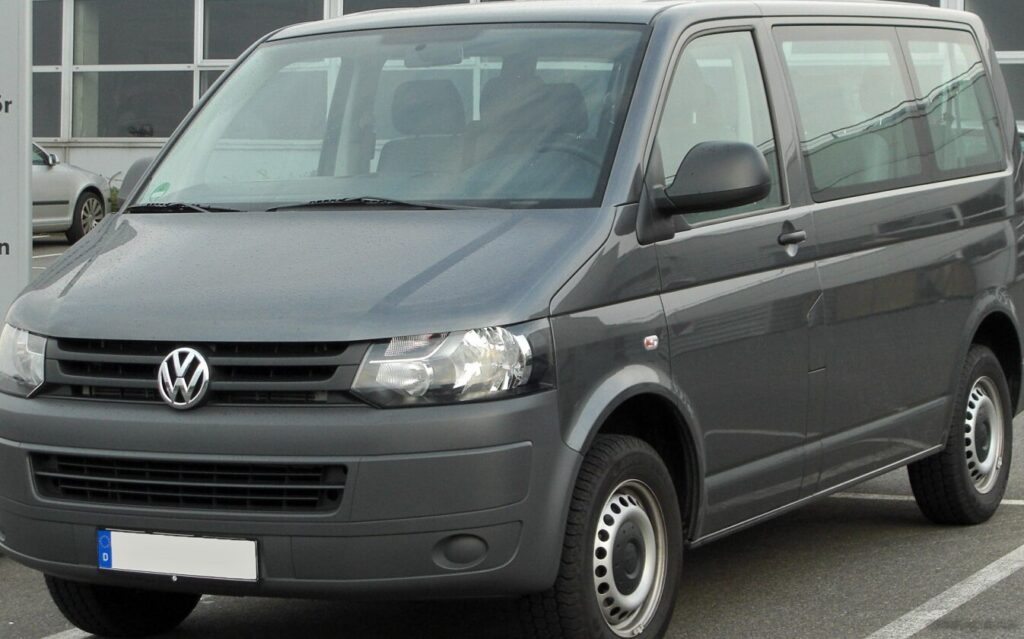
The Volkswagen Transporter (T5) facelift, produced from 2009 to 2015, represented a significant update to the fifth generation of Volkswagen’s popular commercial vehicle. Within the T5 range, the Kombi 2.0 TDI BMT (84 hp) L1H1, introduced in 2011, occupied the entry-level position, offering a balance of practicality, fuel efficiency, and affordability. This variant was primarily aimed at businesses and individuals requiring a versatile van for light commercial duties, family transport, or recreational use, where outright performance was less critical than running costs. The “L1H1” designation refers to the vehicle’s body length (L1 – short wheelbase) and roof height (H1 – standard roof).
Powertrain & Engine Architecture
The heart of the Transporter Kombi 2.0 TDI BMT (84 hp) is the EA189 series 2.0-liter inline four-cylinder diesel engine, specifically the CAAA engine code. This engine is a turbocharged common rail direct injection diesel. The ‘BMT’ designation stands for ‘BlueMotion Technology’, indicating the inclusion of fuel-saving technologies. The engine utilizes a single turbocharger with an intercooler to improve efficiency and power delivery. Fuel is delivered via a Bosch common rail system operating at a maximum pressure of 1,600 bar, ensuring precise fuel atomization for cleaner combustion and improved fuel economy. The engine features a double overhead camshaft (DOHC) valvetrain with four valves per cylinder, optimizing gas flow for enhanced performance.
The engine is transversely mounted at the front of the vehicle, driving the front wheels. The transmission is a five-speed manual gearbox. This gearbox was chosen to maximize fuel efficiency and keep costs down, rather than offering quicker acceleration. The gear ratios are relatively long, prioritizing economy over spirited driving. First gear is geared for starting from a standstill with a load, while fifth gear is designed for efficient cruising on highways.
Fuel Injection and Turbocharging
The common rail direct injection system is a key component of the engine’s efficiency. It allows for multiple injection events per combustion cycle, optimizing the burning process. The turbocharger provides increased air intake, boosting power output. The intercooler cools the compressed air from the turbocharger, further increasing its density and improving combustion efficiency. The engine also incorporates an exhaust gas recirculation (EGR) system to reduce nitrogen oxide (NOx) emissions, and a diesel particulate filter (DPF) to trap soot particles.
Driving Characteristics
The 84 hp output of the 2.0 TDI BMT engine translates to modest performance. Acceleration from 0-62 mph (0-100 km/h) takes approximately 21.1 seconds, and the top speed is limited to 90.72 mph (146 km/h). The engine delivers its peak torque of 220 Nm (162.26 lb-ft) between 1250 and 2500 rpm, providing reasonable pulling power for everyday driving and moderate loads. However, the engine can feel strained when fully loaded or climbing steep hills. The five-speed manual transmission, while contributing to fuel economy, requires frequent gear changes to maintain optimal engine speed, especially in hilly terrain. Compared to the more powerful 140 hp or 180 hp versions of the 2.0 TDI, the 84 hp variant offers significantly less performance, but at a lower purchase price and with improved fuel efficiency.
The driving experience is best described as utilitarian. The focus is on practicality and efficiency rather than driver engagement. Steering is light and precise, making maneuvering in urban environments easy. The suspension is tuned for comfort and load-carrying capacity, providing a reasonably smooth ride even when the vehicle is partially loaded.
Equipment & Trim Levels
The Kombi trim level, even in its base 84 hp configuration, offered a reasonable level of standard equipment. Typically, it included features such as power steering, ABS (Anti-lock Braking System), driver and passenger airbags, and a basic audio system. The interior was typically finished with durable cloth upholstery. The dashboard layout was functional and straightforward, with clearly labeled controls.
Optional extras available for the Kombi 2.0 TDI BMT included air conditioning, electric windows, central locking, a more advanced audio system with Bluetooth connectivity, and alloy wheels. Higher trim levels, such as Trendline and Highline, offered additional features like cruise control, parking sensors, and upgraded interior trim.
Chassis & Braking
The Transporter T5 Kombi 2.0 TDI BMT L1H1 utilizes an independent McPherson strut suspension system at the front, providing good ride comfort and handling. The rear suspension employs a semi-independent trailing arm setup with coil springs and a transverse stabilizer bar. This configuration balances load-carrying capacity with ride quality. The braking system consists of ventilated discs on all four wheels, providing adequate stopping power for the vehicle’s weight. The front discs measure 308×29.5 mm, while the rear discs are 294×22 mm. The hydraulic power steering provides light and precise steering control.
Market Reception & Comparison
The 84 hp version of the Transporter T5 Kombi was generally well-received by critics as a cost-effective and fuel-efficient option. It was praised for its practicality and versatility, making it a popular choice for small businesses and families. However, its lack of outright performance was often noted. Compared to the more powerful TDI variants, the 84 hp model offered significantly lower fuel consumption – around 6.8 l/100 km (34.6 US mpg) combined – but at the expense of acceleration and towing capacity. The 84 hp model was also generally more reliable than the higher-output versions, as it placed less stress on the engine components. Competitors in this segment included the Ford Transit Connect, the Citroën Berlingo, and the Fiat Doblo.
Technical Specifications
| Brand | Volkswagen |
| Model | Transporter T5 Kombi |
| Engine Type | 2.0 TDI BMT |
| Engine Code | CAAA |
| Power Output | 84 hp @ 3500 rpm |
| Torque | 220 Nm @ 1250-2500 rpm (162.26 lb-ft) |
| Engine Displacement | 1968 cm³ (120.09 cu. in.) |
| Number of Cylinders | 4 |
| Fuel Injection | Diesel Commonrail |
| Turbocharger | Yes, with Intercooler |
| Transmission | 5-speed Manual |
| Drive Type | Front-Wheel Drive |
| Kerb Weight | 1901 kg (4190.99 lbs) |
| Max. Weight | 2600-3000 kg (5732.02 – 6613.87 lbs) |
| Fuel Consumption (Combined) | 6.8 l/100 km (34.6 US mpg, 41.5 UK mpg) |
| CO2 Emissions | 179 g/km |
| Fuel Tank Capacity | 80 l (21.13 US gal, 17.6 UK gal) |
| Length | 4892 mm (192.6 in) |
| Width | 1904 mm (74.96 in) |
| Height | 1990 mm (78.35 in) |
Legacy
The 2.0 TDI BMT engine, while not known for its blistering performance, proved to be a relatively reliable unit when properly maintained. Common issues included DPF blockages (particularly with frequent short journeys) and potential problems with the turbocharger. However, these issues were generally manageable with regular servicing and preventative maintenance. In the used car market, the Transporter T5 Kombi 2.0 TDI BMT (84 hp) remains a popular choice for those seeking an affordable and practical van. Its fuel efficiency and relatively low running costs make it an attractive option for businesses and individuals on a budget. While it may not be the fastest or most luxurious van available, its durability and versatility ensure its continued relevance in the commercial vehicle sector.