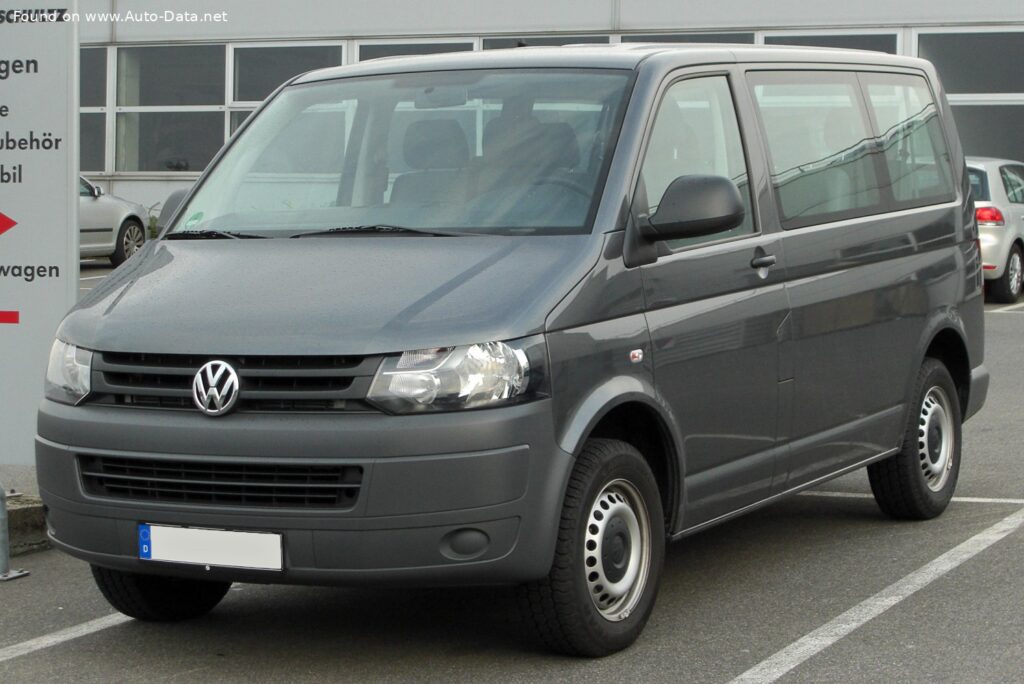
The Volkswagen Transporter (T5) facelift, produced from 2009 to 2015, represented a significant update to the fifth generation of Volkswagen’s popular commercial vehicle. Within the T5 range, the Kombi 2.0 TSI (204 Hp) 4MOTION DSG L2H2, manufactured from 2011 to 2015, occupied a premium position, offering a blend of performance, practicality, and all-weather capability. This variant catered to buyers needing a versatile vehicle for both work and leisure, capable of handling demanding loads and diverse terrains. The “L2H2” designation refers to the vehicle’s body length and roof height, indicating a long wheelbase and high roof configuration, maximizing interior space. It was built on the 1HX0/A3 platform.
Volkswagen Transporter T5: The 2.0 TSI 4MOTION DSG Kombi
The 2.0 TSI 4MOTION DSG Kombi was positioned as a higher-end offering within the T5 range. While base models utilized diesel engines focused on fuel efficiency, and simpler configurations were available, the TSI variant prioritized performance and driving experience. It sat above the naturally aspirated gasoline engines and the lower-powered diesel options, but below specialized models like the Caravelle or Multivan, which focused more heavily on passenger comfort and luxury appointments. This model aimed to bridge the gap between commercial practicality and a more refined driving experience.
Powertrain & Engine Architecture
At the heart of the Kombi 2.0 TSI 4MOTION DSG lies the EA888 engine, specifically the CJKA variant. This is a 1.984-liter (121.07 cubic inches) inline-four cylinder gasoline engine featuring direct fuel injection and a turbocharger with an intercooler. The engine produces 204 horsepower at 4200-6000 rpm and 350 Nm (258.15 lb-ft) of torque between 1500-4000 rpm. The direct injection system allows for precise fuel delivery, optimizing combustion efficiency and power output. The engine utilizes a double overhead camshaft (DOHC) valvetrain with four valves per cylinder, further enhancing its breathing and performance. Compression ratio is set at 9.8:1.
The “DSG” in the name denotes Volkswagen’s dual-clutch transmission, a 7-speed automatic gearbox. This transmission offers quicker and smoother gear changes compared to a traditional torque converter automatic, contributing to improved acceleration and fuel efficiency. The 4MOTION system is Volkswagen’s all-wheel-drive system, utilizing a viscous coupling to distribute power between the front and rear axles as needed. This provides enhanced traction in slippery conditions and improves handling stability. The engine requires 5.7 liters (6.02 US quarts) of engine oil, specified to Volkswagen standards, and 11 liters (11.62 US quarts) of coolant.
Driving Characteristics
The 2.0 TSI 4MOTION DSG Kombi delivers a noticeably more spirited driving experience than its diesel counterparts. The 204 hp output and 350 Nm of torque provide ample power for both city driving and highway cruising. Acceleration from 0-100 km/h (0-62 mph) takes approximately 9.2 seconds, while 0-60 mph is achieved in around 8.7 seconds. The DSG transmission contributes to brisk acceleration, with seamless gear changes minimizing power interruption. The 4MOTION system provides confident handling in various conditions, particularly on wet or loose surfaces.
Compared to the lower-powered 1.9 TDI or 2.0 TDI diesel engines, the TSI variant offers a more responsive and refined driving experience. However, it sacrifices some of the diesel’s fuel economy. The gear ratios in the DSG transmission are optimized for both acceleration and cruising efficiency. First gear is relatively short for quick take-offs, while higher gears are geared for relaxed highway driving. The engine’s torque curve is relatively flat, providing strong pulling power across a wide range of engine speeds.
Equipment & Trim Levels
The Kombi trim level, even with the TSI engine, generally focused on practicality and functionality. Standard equipment typically included air conditioning, power windows, power steering, and an audio system. Safety features such as ABS (Anti-lock Braking System) and driver/passenger airbags were also standard. The interior upholstery was typically durable cloth, designed to withstand the rigors of commercial use. The dashboard layout was functional and straightforward, prioritizing ease of use.
Optional extras available for the 2.0 TSI 4MOTION DSG Kombi included features like upgraded audio systems, navigation systems, parking sensors, alloy wheels, and more luxurious interior trim options. Some models could be equipped with features like cruise control and heated seats. The Kombi configuration typically offered seating for between 4 and 9 passengers, depending on the specific layout chosen. The L2H2 body style provided a generous cargo capacity, making it suitable for a wide range of applications.
Chassis & Braking
The T5 Kombi 2.0 TSI 4MOTION DSG utilizes an independent suspension system on both the front and rear axles. The front suspension employs a McPherson strut design with coil springs and an anti-roll bar, while the rear suspension features a trailing arm setup with coil springs and a transverse stabilizer. This suspension configuration provides a good balance between ride comfort and handling stability. The braking system consists of ventilated discs on all four wheels, with front discs measuring 340×32.5 mm and rear discs measuring 294×22 mm. Hydraulic power steering provides precise and responsive steering feel.
The vehicle’s weight (approximately 1980 kg or 4365.15 lbs) is relatively high, necessitating a robust braking system. The 4MOTION all-wheel-drive system also contributes to improved braking performance by distributing braking force more effectively. Tire sizes varied depending on the trim level and optional equipment, with common sizes including 215/60 R17, 235/55 R17, and 255/45 R18. Wheel rim sizes typically ranged from 7J x 17 to 8J x 18.
Market Reception & Comparison
The 2.0 TSI 4MOTION DSG Kombi received generally positive reviews from automotive critics. It was praised for its strong performance, refined driving experience, and all-weather capability. However, its fuel economy was often cited as a drawback compared to the diesel-powered models. The TSI variant was considered a good choice for buyers who prioritized performance and driving enjoyment over fuel efficiency.
Compared to the 1.9 TDI or 2.0 TDI models, the TSI offered a more engaging driving experience but consumed more fuel (10.3 l/100 km combined, or 22.8 US mpg). CO2 emissions were also higher at 239 g/km. The TSI engine was generally considered more reliable than some of the earlier gasoline engines offered in the T5 range, but it required regular maintenance to ensure optimal performance. The DSG transmission, while offering smooth and quick gear changes, could be more expensive to repair than a traditional automatic transmission.
Technical Specifications
| Brand | Volkswagen |
| Model | Transporter |
| Generation | Transporter (T5, facelift 2009) Kombi |
| Type | 2.0 TSI (204 Hp) 4MOTION DSG L2H2 |
| Start of production | 2011 |
| End of production | 2015 |
| Engine | EA888 / CJKA |
| Displacement | 1984 cm3 (121.07 cu. in.) |
| Cylinders | 4, Inline |
| Power | 204 Hp @ 4200-6000 rpm |
| Torque | 350 Nm @ 1500-4000 rpm (258.15 lb.-ft.) |
| Fuel Consumption (Urban) | 13.8 l/100 km (17 US mpg) |
| Fuel Consumption (Extra Urban) | 8.3 l/100 km (28.3 US mpg) |
| Fuel Consumption (Combined) | 10.3 l/100 km (22.8 US mpg) |
| CO2 Emissions | 239 g/km |
| Transmission | 7-speed DSG Automatic |
| Drive | All-wheel drive (4MOTION) |
| Kerb Weight | 1980 kg (4365.15 lbs) |
| Max. Weight | 3000-3200 kg (6613.87 – 7054.79 lbs) |
| Fuel Tank Capacity | 80 l (21.13 US gal) |
| Length | 5292 mm (208.35 in) |
| Width | 1904 mm (74.96 in) |
| Height | 2176 mm (85.67 in) |
Legacy
The 2.0 TSI engine, in general, has proven to be a relatively reliable powerplant when properly maintained. The EA888 series of engines has been used in a wide range of Volkswagen and Audi vehicles, and its design has been continuously refined over the years. The DSG transmission, while potentially more expensive to repair, is known for its smooth and efficient operation. Today, used examples of the T5 Kombi 2.0 TSI 4MOTION DSG are sought after by enthusiasts and those needing a versatile and capable vehicle. Regular maintenance, including oil changes and DSG transmission servicing, is crucial to ensure the long-term reliability of this powertrain. The combination of performance, practicality, and all-wheel-drive capability continues to make this variant a desirable option in the used commercial vehicle market.