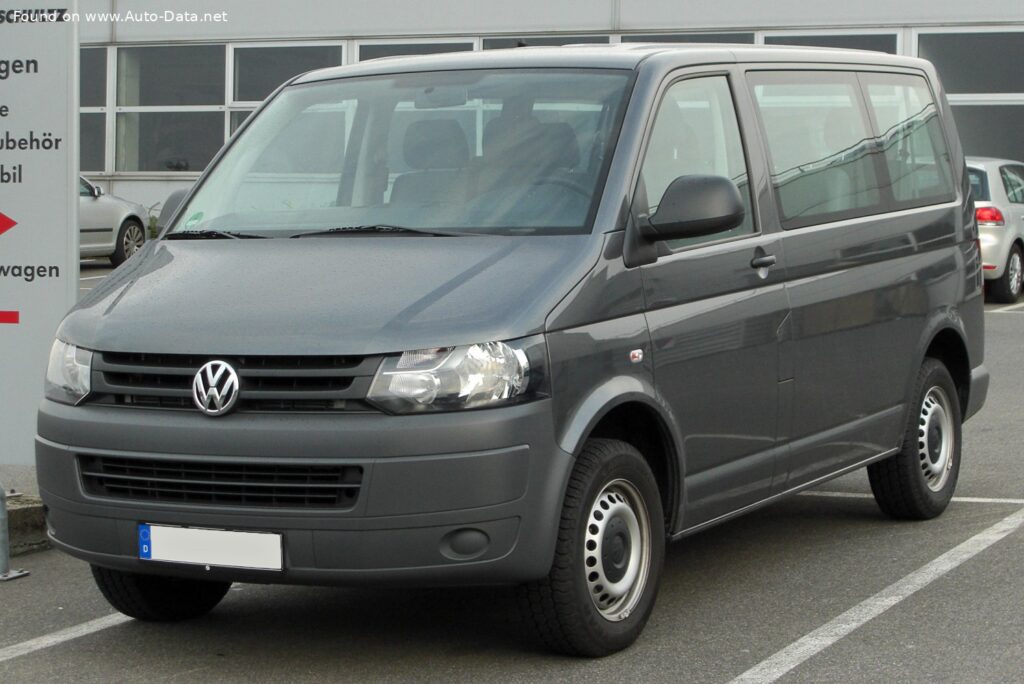
The Volkswagen Transporter (T5) facelift, produced from 2009 to 2015, represented a significant update to the fifth generation of Volkswagen’s popular commercial vehicle. Within the T5 range, the Kombi 2.0 TSI (204 Hp) 4MOTION DSG L2H3, manufactured from 2011 to 2015, occupied a premium position, offering a blend of performance, practicality, and all-weather capability. This variant was designed for buyers needing a versatile vehicle capable of both commercial duties and family transport, with a focus on those who frequently travel longer distances or require enhanced traction. The “L2H3” designation refers to the vehicle’s body length and roof height, indicating a long wheelbase and high roof configuration, maximizing interior space.
Powertrain & Engine Architecture
At the heart of the Transporter Kombi 2.0 TSI 4MOTION DSG L2H3 lies the EA888 engine, specifically the CJKA variant. This is a 1.984-liter (121.07 cubic inches) inline-four cylinder gasoline engine utilizing direct fuel injection and a turbocharger with an intercooler. The engine produces 204 horsepower at 4200-6000 rpm and 350 Nm (258.15 lb-ft) of torque between 1500-4000 rpm. The 9.8:1 compression ratio contributes to efficient combustion, while the double overhead camshaft (DOHC) valvetrain ensures precise valve control. The direct injection system allows for more accurate fuel delivery and improved engine responsiveness.
The “TSI” designation signifies Volkswagen’s technology for Turbocharged Stratified Injection. This engine is known for its relatively smooth power delivery and responsiveness. The engine oil capacity is 5.7 liters (6.02 US quarts / 5.02 UK quarts), and requires a specification adhering to Volkswagen standards. The cooling system holds 11 liters (11.62 US quarts / 9.68 UK quarts) of coolant.
Paired with the engine is a 7-speed dual-clutch gearbox (DSG). This transmission offers quick and seamless gear changes, contributing to both performance and fuel efficiency. The 4MOTION all-wheel-drive system is a permanent all-wheel drive, utilizing a viscous coupling to distribute power between the front and rear axles as needed, providing enhanced traction in slippery conditions.
Engine Code Specifics (CJKA)
The CJKA engine code is particularly notable for its use of a timing chain rather than a timing belt, reducing maintenance requirements compared to earlier EA888 variants. However, it is also known to be susceptible to carbon buildup on the intake valves, a common issue with direct injection engines, potentially leading to reduced performance over time if not addressed through regular cleaning or preventative maintenance.
Driving Characteristics
The 204 hp output and 350 Nm of torque provide the Transporter Kombi 2.0 TSI 4MOTION DSG L2H3 with brisk acceleration. Zero to 100 km/h (0-62 mph) takes approximately 9.4 seconds, and 0-60 mph is achieved in around 8.9 seconds. While not a sports van, the engine delivers ample power for overtaking and maintaining highway speeds, even when fully loaded. The DSG transmission contributes to a smooth driving experience, with quick shifts and minimal torque interruption. The 4MOTION system provides excellent grip in various conditions, enhancing stability and confidence, particularly on wet or loose surfaces.
Compared to lower-powered Transporter variants, such as those equipped with the 2.0 TDI diesel engine, the TSI offers a more responsive and refined driving experience. However, the TSI engine generally delivers lower fuel economy than the diesel alternatives. Compared to the higher-output TSI variants (if available in some markets), the 204 hp version strikes a balance between performance and efficiency, making it suitable for a wider range of applications.
Equipment & Trim Levels
The Kombi trim level, even within the T5 facelift range, offered a good level of standard equipment. Typically, this included features such as air conditioning, power windows, central locking, an audio system with CD player, and driver and passenger airbags. The L2H3 configuration provided a spacious interior, capable of seating up to nine passengers depending on the seating arrangement. The high roof allowed for comfortable standing room for most adults.
Optional extras commonly available for this variant included features like parking sensors, a navigation system, upgraded audio systems, leather upholstery, heated seats, and various driver assistance systems. The interior typically featured durable, hard-wearing materials suitable for commercial use, but with a degree of comfort and refinement. Dashboard configuration was functional and driver-focused, with clear instrumentation and logically placed controls.
Chassis & Braking
The Transporter T5 utilized an independent suspension setup on both the front and rear axles. The front suspension employed a McPherson strut design with coil springs and an anti-roll bar, while the rear suspension featured a trailing arm configuration with coil springs and a transverse stabilizer. This setup provided a reasonable balance between ride comfort and handling. The kerb weight of the L2H3 variant is approximately 1980 kg (4365.15 lbs).
Braking duties were handled by ventilated discs on all four wheels, with front discs measuring 340×32.5 mm and rear discs measuring 294×22 mm. The vehicle was equipped with ABS (Anti-lock Braking System) as standard, enhancing braking performance and stability. The steering system was a hydraulic power-assisted rack and pinion setup, providing precise and responsive steering feel.
Market Reception & Comparison
The Transporter T5 facelift, and specifically the 2.0 TSI 4MOTION DSG L2H3 variant, was generally well-received by critics and buyers alike. The combination of performance, practicality, and all-wheel-drive capability made it a compelling option for those needing a versatile vehicle. Fuel economy, however, was often cited as a drawback compared to the diesel-powered models. Combined fuel consumption was around 10.7 l/100 km (22 US mpg / 26.4 UK mpg), with CO2 emissions of 249 g/km (Euro 5 standard).
In terms of reliability, the EA888 engine, while generally robust, was known to require regular maintenance to prevent carbon buildup. The DSG transmission, while offering smooth shifting, could be prone to issues if not serviced according to Volkswagen’s recommendations. Compared to the 2.0 TDI variants, the TSI engine was generally considered to be slightly less fuel-efficient but more refined and responsive.
Technical Specifications
| Brand | Volkswagen |
| Model | Transporter |
| Generation | Transporter (T5, facelift 2009) Kombi |
| Type | 2.0 TSI (204 Hp) 4MOTION DSG L2H3 |
| Start of production | 2011 |
| End of production | 2015 |
| Engine | 1984 cm3 Inline-4 |
| Power | 204 Hp @ 4200-6000 rpm |
| Torque | 350 Nm @ 1500-4000 rpm |
| Fuel Consumption (Urban) | 14 l/100 km (16.8 US mpg) |
| Fuel Consumption (Extra Urban) | 8.8 l/100 km (26.7 US mpg) |
| Fuel Consumption (Combined) | 10.7 l/100 km (22 US mpg) |
| CO2 Emissions | 249 g/km |
| Transmission | 7-speed DSG |
| Drive | All-wheel drive (4MOTION) |
| Kerb Weight | 1980 kg (4365.15 lbs) |
| Max. Weight | 3000-3200 kg (6613.87 – 7054.79 lbs) |
| Fuel Tank Capacity | 80 l (21.13 US gal) |
| Length | 5292 mm (208.35 in) |
| Width | 1904 mm (74.96 in) |
| Height | 2476 mm (97.48 in) |
Legacy
The Volkswagen Transporter T5 2.0 TSI 4MOTION DSG L2H3 remains a popular choice in the used vehicle market. The EA888 engine, while requiring diligent maintenance, is generally considered to be reliable. The DSG transmission, if properly maintained, can provide years of smooth operation. The 4MOTION system continues to be valued for its all-weather capability. However, potential buyers should be aware of the potential for carbon buildup on the intake valves and the importance of adhering to Volkswagen’s recommended service intervals for the DSG transmission. Overall, this variant represents a well-rounded and capable commercial vehicle that continues to offer a good balance of performance, practicality, and reliability.