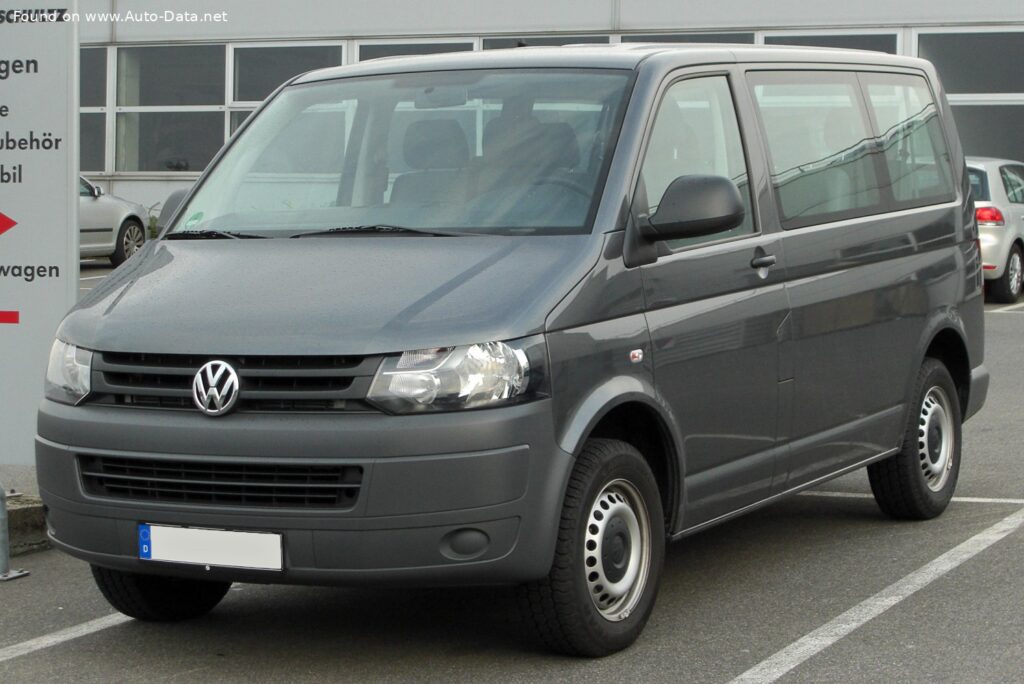
The Volkswagen Transporter (T5) facelift, produced from 2009 to 2015, represented a significant update to the fifth generation of Volkswagen’s popular commercial vehicle. Within the T5 range, the Kombi 2.0 TSI (204 hp) with a 7-speed Dual Clutch Gearbox (DSG) and L2H1 configuration – denoting a long wheelbase and medium roof height – occupied a mid-to-upper position in the lineup. Introduced in 2011, this variant aimed to provide a blend of performance, practicality, and comfort for both commercial and passenger applications. It served as a more powerful and refined alternative to the base diesel engines, while remaining more accessible than the full-spec passenger carriers.
Powertrain & Engine Architecture
The heart of the Transporter Kombi 2.0 TSI L2H1 is the EA888 series 2.0-liter turbocharged four-cylinder gasoline engine, specifically the CJKA engine code. This engine is a direct-injection, DOHC (Dual Overhead Camshaft) 16-valve unit. Direct injection, a key feature, allows for precise fuel delivery, improving efficiency and reducing emissions. The EA888 engine family is known for its robust construction and relatively straightforward maintenance. The turbocharger, coupled with an intercooler, significantly boosts power output. The engine produces 204 horsepower at 4200-6000 rpm and 350 Nm (258.15 lb-ft) of torque between 1500-4000 rpm. This broad torque curve provides strong pulling power, beneficial for a van intended for carrying loads.
The engine is transversely mounted at the front of the vehicle. The 7-speed DSG (Direct-Shift Gearbox) is a dual-clutch transmission that offers both the efficiency of a manual gearbox and the convenience of an automatic. It features two separate clutches, one for odd-numbered gears and one for even-numbered gears, allowing for incredibly fast and smooth gear changes. The DSG’s gear ratios are optimized for both acceleration and fuel economy. First gear is relatively short for quick take-offs, while the higher gears are geared for efficient cruising. The DSG also includes a manual shift mode for drivers who prefer more control.
Fuel Injection and Valvetrain
The CJKA engine utilizes a sophisticated direct fuel injection system, delivering fuel directly into the combustion chamber at high pressure. This allows for precise control over the combustion process, maximizing efficiency and minimizing emissions. The DOHC valvetrain, with four valves per cylinder, further enhances engine breathing and contributes to the engine’s power output. Variable valve timing on both the intake and exhaust sides optimizes performance across the engine’s operating range.
Driving Characteristics
The 204 hp 2.0 TSI engine transforms the driving experience of the Transporter compared to the lower-powered diesel options. Acceleration from 0-100 km/h (0-62 mph) takes approximately 8.7 seconds, and 0-60 mph is achieved in around 8.3 seconds. While not a sports car, this provides ample power for overtaking and maintaining speed on highways, even when fully loaded. The DSG transmission contributes to a smooth and responsive driving experience, with quick and seamless gear changes. Compared to the manual transmission versions of the same engine, the DSG offers greater convenience, particularly in urban traffic. However, some drivers may prefer the more direct feel of a manual gearbox.
The torque delivery is a key strength of this powertrain. The 350 Nm of torque available from 1500 rpm provides strong pulling power at low speeds, making it easy to maneuver the van in tight spaces and to haul heavy loads. The engine feels responsive and willing throughout the rev range, and the turbocharger provides a noticeable boost in power when accelerating. The long wheelbase (L2) contributes to a stable and comfortable ride, even at higher speeds.
Equipment & Trim Levels
The Kombi trim level, as opposed to the more basic panel van or the higher-spec passenger carriers, offered a balance of practicality and comfort. Standard equipment typically included air conditioning, power windows, power steering, an adjustable steering wheel, and a basic audio system. The interior featured durable cloth upholstery and a functional dashboard layout. The L2H1 configuration provided a generous cargo area behind the rear seats, making it suitable for both commercial and family use. The Kombi typically offered seating for up to nine passengers, depending on the configuration.
Optional extras available for the 2.0 TSI Kombi included features such as alloy wheels, upgraded audio systems with navigation, parking sensors, cruise control, and heated seats. More luxurious options, like leather upholstery and climate control, were often reserved for the higher-end passenger carrier models.
Chassis & Braking
The Transporter T5 utilized a McPherson strut front suspension with coil springs and an anti-roll bar. The rear suspension employed a semi-independent trailing arm setup with coil springs and a transverse stabilizer bar. This suspension configuration provided a good balance between ride comfort and handling. The stabilizer bars helped to reduce body roll during cornering. The kerb weight of the 2.0 TSI Kombi L2H1 is approximately 1881 kg (4146.9 lbs).
The braking system consisted of ventilated discs on all four wheels, with diameters of 340×32.5 mm at the front and 294×22 mm at the rear. ABS (Anti-lock Braking System) was standard, providing enhanced braking performance and stability in emergency situations. The steering system was a hydraulic power-assisted rack and pinion setup, offering precise and responsive steering feel.
Market Reception & Comparison
The 2.0 TSI engine was generally well-received by critics as a significant upgrade over the diesel options. It offered a smoother, quieter, and more refined driving experience. Fuel economy, however, was a point of contention. While the TSI engine provided good performance, its fuel consumption (9.8 l/100 km combined) was higher than that of the diesel engines (typically around 7-8 l/100 km). Reliability was generally good, although the DSG transmission required regular maintenance (fluid changes) to ensure optimal performance. Compared to the 1.9 TDI and 2.5 TDI diesel engines, the 2.0 TSI offered more power and refinement but at the cost of fuel efficiency. The more powerful VR6 gasoline engine offered even greater performance but came with a higher price tag and even higher fuel consumption.
Technical Specifications
| Brand | Volkswagen |
| Model | Transporter |
| Generation | Transporter (T5, facelift 2009) Kombi |
| Type | 2.0 TSI (204 Hp) DSG L2H1 |
| Start of production | 2011 |
| End of production | 2015 |
| Engine Model/Code | EA888 / CJKA |
| Engine displacement | 1984 cm3 (121.07 cu. in.) |
| Number of cylinders | 4 |
| Engine configuration | Inline |
| Power | 204 Hp @ 4200-6000 rpm |
| Torque | 350 Nm @ 1500-4000 rpm (258.15 lb.-ft.) |
| Fuel Type | Petrol (Gasoline) |
| Fuel consumption (urban) | 13.2 l/100 km (17.8 US mpg) |
| Fuel consumption (extra urban) | 7.8 l/100 km (30.2 US mpg) |
| Fuel consumption (combined) | 9.8 l/100 km (24 US mpg) |
| Acceleration 0-100 km/h | 8.7 sec |
| Maximum speed | 200 km/h (124.27 mph) |
| Kerb Weight | 1881 kg (4146.9 lbs) |
| Fuel tank capacity | 80 l (21.13 US gal) |
| Transmission | 7-speed DSG |
Legacy
The 2.0 TSI engine, when paired with the DSG transmission, proved to be a reliable and capable powertrain in the Transporter T5. While the DSG requires diligent maintenance, the engine itself is generally considered robust. On the used car market, these models are often sought after by buyers who prioritize performance and refinement over ultimate fuel economy. The EA888 engine is well-known within the Volkswagen enthusiast community, and parts availability is generally good. However, potential buyers should be aware of the DSG transmission’s maintenance requirements and ensure that it has been properly serviced. The T5, in general, remains a popular choice for both commercial and private buyers due to its practicality, versatility, and relatively affordable price point.