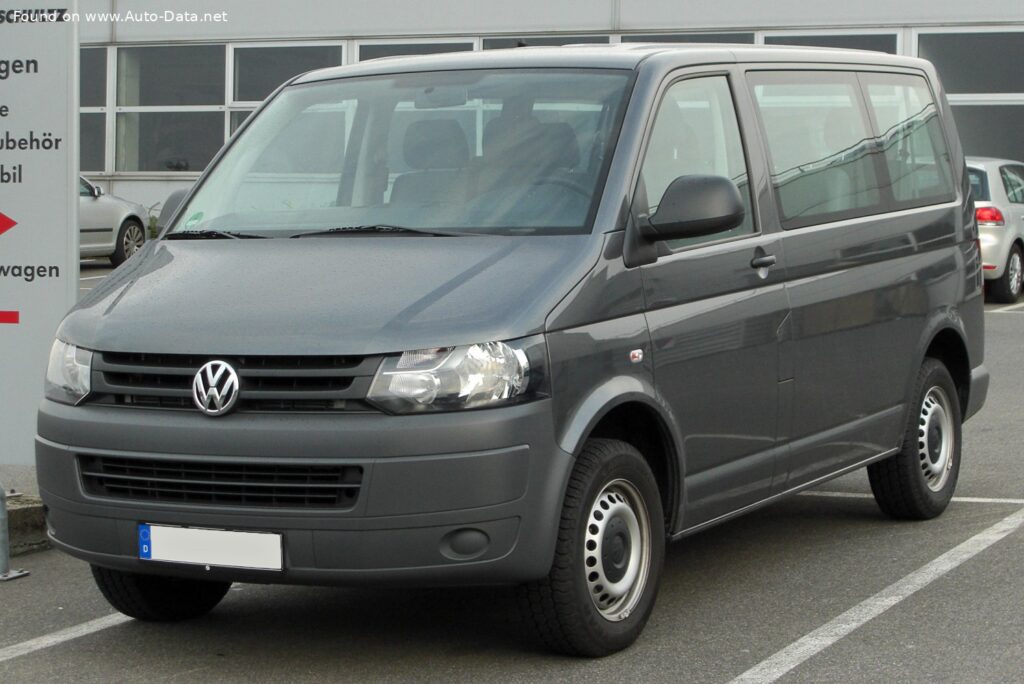
The Volkswagen Transporter (T5) facelift, produced from 2009 to 2015, represented a significant update to the fifth generation of Volkswagen’s popular commercial vehicle. Within the T5 range, the Kombi variant offered a blend of cargo capacity and passenger comfort, catering to both commercial and family needs. The 2.0 TSI (204 hp) L1H1 model, introduced in 2011, occupied a mid-to-upper position in the lineup, offering a substantial performance upgrade over the base diesel engines while remaining more accessible than the range-topping options. The “L1H1” designation refers to the vehicle’s body length (L1 – short wheelbase) and roof height (H1 – standard roof). This specific configuration was aimed at buyers seeking a versatile vehicle with brisk acceleration and a relatively refined driving experience.
The 2.0 TSI L1H1: Positioning and Overview
The 2.0 TSI L1H1 Kombi was positioned as a premium offering within the T5 range. While the majority of Transporters were equipped with diesel engines focused on fuel efficiency and torque, the TSI model prioritized performance. It appealed to owners who frequently carried lighter loads and desired quicker acceleration, particularly on highways or when fully loaded with passengers. Compared to the base 1.9 TDI or 2.0 TDI engines, the TSI offered a noticeable power increase. However, it came at the cost of slightly higher fuel consumption and a more complex engine design. The Kombi body style, with its flexible seating arrangements and increased interior space compared to the panel van, made this variant particularly suitable for families, tradespeople needing to carry both cargo and personnel, and those seeking a comfortable and practical vehicle for leisure activities.
Powertrain & Engine Architecture
The heart of the 2.0 TSI L1H1 is the EA888 engine, specifically the CJKA variant. This is a 1.984-liter (121.07 cubic inches) inline-four cylinder gasoline engine featuring direct fuel injection and a turbocharger with an intercooler. The engine produces 204 horsepower at 4200-6000 rpm and 350 Nm (258.15 lb-ft) of torque between 1500-4000 rpm. The direct injection system, utilizing high-pressure fuel injectors, ensures precise fuel delivery for optimal combustion and efficiency. The engine also incorporates a double overhead camshaft (DOHC) valvetrain with four valves per cylinder, contributing to its high power output. The compression ratio is 9.8:1.
The engine is transversely mounted in the front of the vehicle. While a six-speed manual transmission was standard, a six-speed automatic transmission was also available, and frequently chosen by buyers prioritizing convenience. This automatic transmission is a conventional torque converter type, offering smooth shifts and ease of use. It’s programmed for a balance between fuel economy and responsiveness, though it doesn’t offer the same level of driver control as the manual gearbox. The automatic transmission’s gear ratios are tuned to maximize the engine’s torque output, providing adequate acceleration in most driving situations.
Driving Characteristics
The 2.0 TSI L1H1 Transporter delivers a noticeably more spirited driving experience than its diesel counterparts. Acceleration from 0-100 km/h (0-62 mph) takes approximately 8.7 seconds, and 0-60 mph is achieved in around 8.3 seconds. While not a sports car, this performance is more than adequate for a vehicle of this size and type. The turbocharger provides a broad torque curve, resulting in strong acceleration across a wide range of engine speeds. The automatic transmission, when equipped, contributes to a relaxed driving experience, particularly in urban traffic. However, it can sometimes feel hesitant during quick overtaking maneuvers. Compared to the manual transmission, the automatic slightly diminishes the feeling of control, but offers greater convenience. The relatively short wheelbase of the L1 variant contributes to nimble handling, making the vehicle easy to maneuver in tight spaces.
Equipment & Trim Levels
The 2.0 TSI L1H1 Kombi typically came standard with a good level of equipment, reflecting its position as a premium trim. Standard features generally included air conditioning, power windows, power mirrors, a CD/radio system, and ABS brakes. The interior upholstery was typically cloth, though leather upholstery was available as an option. The dashboard layout was functional and straightforward, with easy-to-read gauges and logically placed controls. Optional extras included a navigation system, parking sensors, alloy wheels, upgraded audio systems, and various comfort and convenience features. The Kombi configuration allowed for flexible seating arrangements, with options for multiple rows of seats and various configurations to accommodate different passenger and cargo needs. The rear seats could often be folded or removed entirely to maximize cargo space.
Chassis & Braking
The T5 Transporter’s chassis is based on a robust ladder-frame construction, providing a solid and durable platform. The front suspension utilizes an independent McPherson strut setup with coil springs and an anti-roll bar, while the rear suspension employs an independent coil spring setup with a transverse stabilizer and trailing arms. This suspension configuration provides a good balance between ride comfort and handling. The braking system consists of ventilated discs on all four wheels, providing ample stopping power. The front brakes measure 340×32.5 mm, while the rear brakes are 294×22 mm. ABS (Anti-lock Braking System) is standard, enhancing safety and stability during emergency braking. The steering system is a hydraulic rack and pinion setup, offering precise and responsive steering feel.
Market Reception & Comparison
The 2.0 TSI L1H1 Kombi received generally positive reviews from automotive critics. It was praised for its strong performance, comfortable ride, and versatile interior. However, some critics noted that the fuel consumption was higher than that of the diesel models. Compared to the 2.0 TDI, the TSI offered a more engaging driving experience but sacrificed some fuel economy. The TSI also had a slightly more complex engine design, potentially leading to higher maintenance costs over the long term. In terms of reliability, the EA888 engine is generally considered to be a robust unit, but it is susceptible to carbon buildup on the intake valves, particularly if the vehicle is primarily used for short trips. Regular servicing and the use of high-quality fuel are essential to maintain optimal performance and reliability.
Technical Specifications
| Brand | Volkswagen |
| Model | Transporter |
| Generation | Transporter (T5, facelift 2009) Kombi |
| Type | 2.0 TSI (204 Hp) L1H1 |
| Start of production | 2011 |
| End of production | 2015 |
| Engine | EA888 / CJKA |
| Displacement | 1984 cm3 (121.07 cu. in.) |
| Power | 204 Hp @ 4200-6000 rpm |
| Torque | 350 Nm @ 1500-4000 rpm (258.15 lb.-ft.) |
| Fuel Consumption (Urban) | 12.8 l/100 km (18.4 US mpg, 22.1 UK mpg) |
| Fuel Consumption (Extra Urban) | 7.8 l/100 km (30.2 US mpg, 36.2 UK mpg) |
| Fuel Consumption (Combined) | 9.6 l/100 km (24.5 US mpg, 29.4 UK mpg) |
| CO2 Emissions | 224 g/km |
| Kerb Weight | 1881 kg (4146.9 lbs.) |
| Max. Weight | 2800-3200 kg (6172.94 – 7054.79 lbs.) |
| Fuel Tank Capacity | 80 l (21.13 US gal, 17.6 UK gal) |
| Acceleration 0-100 km/h | 8.7 sec |
| Maximum Speed | 200 km/h (124.27 mph) |
Legacy
The 2.0 TSI-powered T5 Transporter Kombi remains a popular choice in the used vehicle market. Its combination of performance, practicality, and comfort makes it a versatile option for a wide range of buyers. While the TSI engine may require slightly more diligent maintenance than the diesel alternatives, its robust construction and readily available parts ensure that it can provide many years of reliable service. The T5 platform, in general, is well-regarded for its durability and practicality, and the 2.0 TSI variant offers a compelling alternative for those seeking a more engaging and refined driving experience. As with any used vehicle, a thorough inspection and maintenance history check are essential before making a purchase.