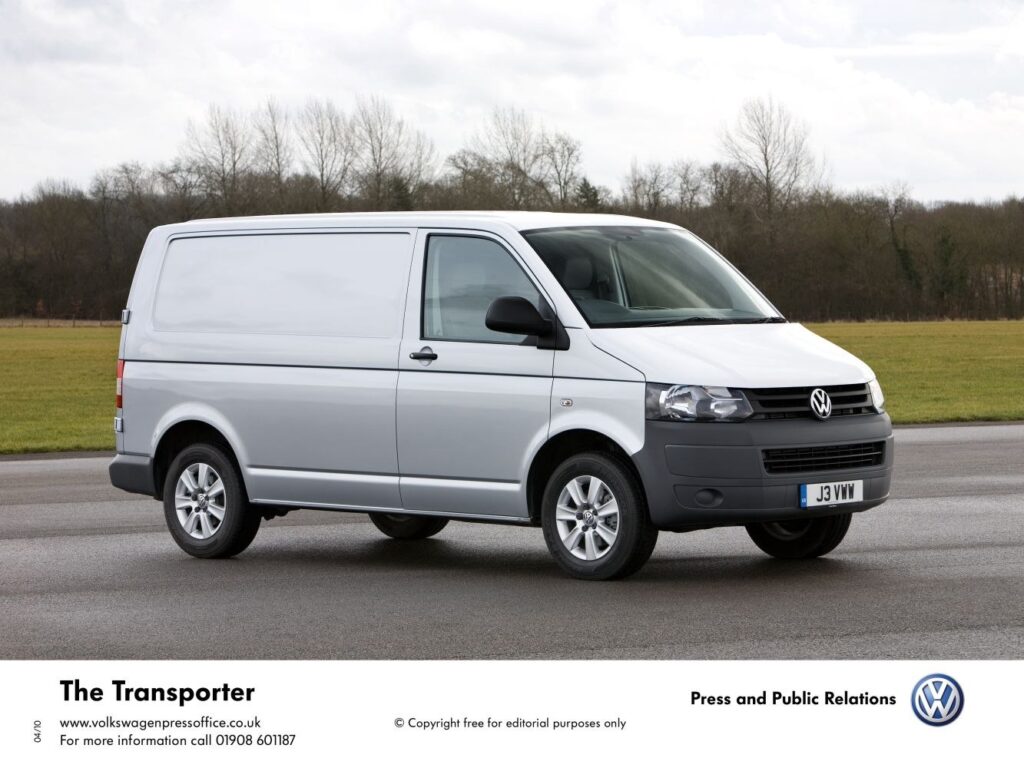
The Volkswagen Transporter (T5) facelift, produced from 2009 to 2013, represented a significant refresh of the fifth-generation Transporter line. Within this generation, the 2.0 (116 hp) Panel Van, specifically the L2H1 configuration, occupied a middle ground in the lineup, offering a balance between affordability, fuel economy, and practicality for commercial users. The T5 facelift brought updated styling, improved safety features, and revised engine options compared to the earlier T5 models. This variant was primarily aimed at businesses and tradespeople requiring a versatile and reliable van for everyday use.
The 2.0 (116 hp) Transporter: Positioning and Overview
The 2.0-liter, 116 horsepower Transporter L2H1 was a popular choice in the European market, and increasingly found its way into the US as a grey market import. The “L2H1” designation refers to the van’s body length and roof height – ‘L2’ indicating a longer wheelbase than the standard T5, and ‘H1’ denoting a lower roof height. This configuration provided a good compromise between cargo space and maneuverability. It sat below the more powerful 2.5 TDI and 2.0 BiTDI models in terms of performance, and above the base 1.9 TDI in terms of power output. The target audience was small businesses, delivery services, and tradespeople who needed a dependable van without the expense of the higher-spec models.
Powertrain & Engine Architecture
The heart of this Transporter variant is the Volkswagen EA113 engine, specifically the AXA engine code. This is a 1.984-liter (121.07 cubic inches) inline-four cylinder gasoline engine. It utilizes a multi-port fuel injection system, delivering fuel directly into the intake manifold. The engine features a single overhead camshaft (SOHC) valvetrain with two valves per cylinder. The 116 hp output is achieved at 5200 rpm, while peak torque of 170 Nm (125.39 lb-ft) is available between 2700 and 4700 rpm. The compression ratio is 10.5:1. Engine oil capacity is 5 liters (5.28 US quarts / 4.4 UK quarts), and the recommended oil specification should be consulted in the vehicle’s owner’s manual.
The engine is transversely mounted at the front of the vehicle. The 2.0 (116 hp) Transporter was typically paired with a five-speed manual transmission, although a six-speed automatic transmission was also available as an option. The automatic transmission, while offering convenience, generally resulted in slightly lower fuel economy and a less engaging driving experience compared to the manual. The automatic transmission’s gear ratios were optimized for fuel efficiency and everyday usability rather than outright performance.
Driving Characteristics
The 2.0 (116 hp) Transporter L2H1 offered adequate, but not exhilarating, performance. Acceleration from 0 to 100 km/h (0-62 mph) took approximately 15 seconds. Top speed was limited to 163 km/h (101.28 mph). The engine’s torque curve provided reasonable pulling power for carrying loads, but it did require downshifting on inclines or when fully loaded. Compared to the more powerful TDI diesel variants, the gasoline engine felt less responsive at lower engine speeds. The manual transmission allowed for greater control and efficiency, while the automatic provided smoother shifts but at the cost of some responsiveness. The front-wheel-drive configuration contributed to predictable handling, but also limited traction in slippery conditions.
Equipment & Trim Levels
The base Transporter Panel Van, even in the 2.0 (116 hp) configuration, came with a reasonable level of standard equipment. This typically included power steering, ABS (Anti-lock Braking System), a driver’s airbag, and basic steel wheels. Interior upholstery was typically durable cloth. The dashboard layout was functional and straightforward, prioritizing practicality over luxury. Optional extras included air conditioning, a radio/CD player, electric windows, central locking, and upgraded seating. Higher trim levels, such as Trendline and Highline, added more comfort and convenience features, including body-colored bumpers, alloy wheels, and upgraded interior trim. The L2H1 configuration focused on maximizing cargo space, with minimal interior finishing in the rear cargo area.
Chassis & Braking
The T5 Transporter utilized an independent suspension system on both the front and rear axles. The front suspension employed McPherson struts with coil springs and an anti-roll bar, while the rear suspension featured a trailing arm setup with coil springs and a transverse stabilizer. This suspension configuration provided a comfortable ride, even when the van was loaded. Braking duties were handled by ventilated discs on all four wheels, providing adequate stopping power. The front brakes measured 308×29.5 mm, while the rear brakes were 294×22 mm. The hydraulic power steering system offered light and precise steering control.
Market Reception & Comparison
The 2.0 (116 hp) Transporter L2H1 was generally well-received by critics as a practical and reliable workhorse. It was praised for its fuel efficiency (10.3-10.6 l/100 km combined), its spacious interior, and its durability. However, it was also criticized for its relatively modest performance compared to the diesel variants. Compared to the 1.9 TDI, the 2.0 offered a noticeable power increase, but at the expense of slightly higher fuel consumption. The 2.5 TDI provided significantly more power and torque, but came with a higher price tag and increased running costs. The gasoline engine was considered a good option for those who primarily drove shorter distances and did not require the extra pulling power of a diesel.
Technical Specifications
| Brand | Volkswagen |
| Model | Transporter (T5, facelift 2009) Panel Van |
| Type | 2.0 (116 Hp) L2H1 |
| Start of production | 2009 |
| End of production | 2013 |
| Engine Code | AXA |
| Engine Displacement | 1984 cm3 (121.07 cu. in.) |
| Number of Cylinders | 4 |
| Power | 116 hp @ 5200 rpm |
| Torque | 170 Nm (125.39 lb-ft) @ 2700-4700 rpm |
| Fuel Consumption (Combined) | 10.3-10.6 l/100 km (22.8 – 22.2 US mpg) |
| CO2 Emissions | 241-247 g/km |
| Kerb Weight | 1705-2141 kg (3758.88 – 4720.1 lbs.) |
| Max. Load | 709-1145 kg (1563.08 – 2524.29 lbs.) |
| Cargo Space (Max) | 6700 l (236.61 cu. ft.) |
| Fuel Tank Capacity | 80 l (21.13 US gal) |
| Transmission | 5-speed manual or 6-speed automatic |
| Drive Type | Front-wheel drive |
| Length | 5292 mm (208.35 in.) |
| Width | 1904 mm (74.96 in.) |
| Height | 1990 mm (78.35 in.) |
Legacy
The 2.0 (116 hp) Transporter L2H1 has proven to be a relatively reliable workhorse in the used car market. The EA113 engine, while not without its quirks, is generally considered durable and relatively easy to maintain. Common issues include oil leaks and occasional problems with the fuel injection system. The automatic transmission, if properly maintained, can provide years of service. Today, these vans are often found being used by small businesses and tradespeople, or converted into camper vans. Their affordability and practicality continue to make them a popular choice for those seeking a versatile and dependable van.