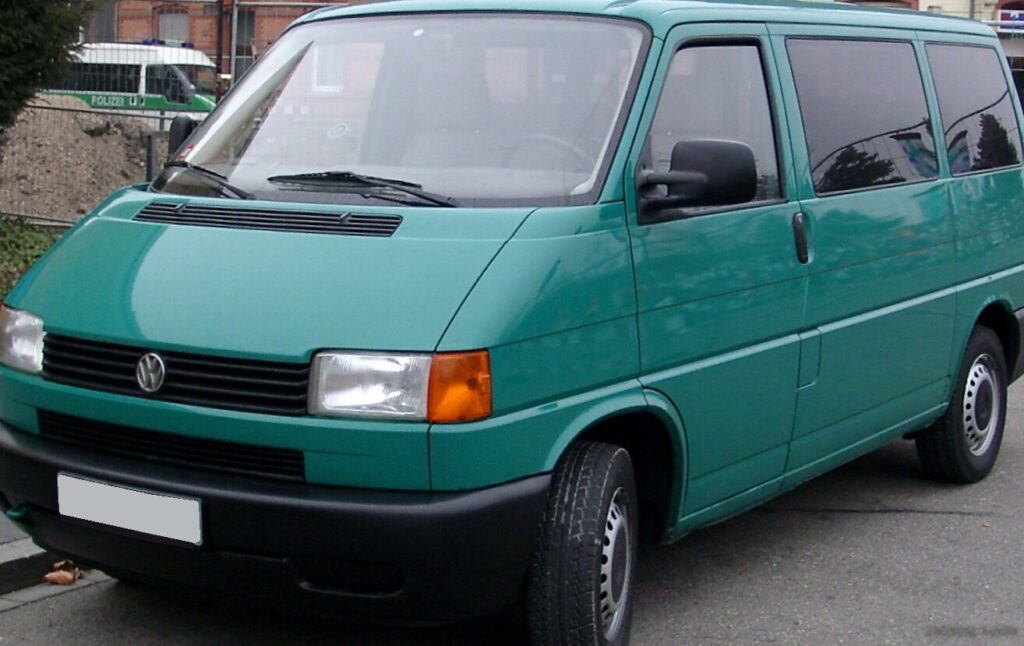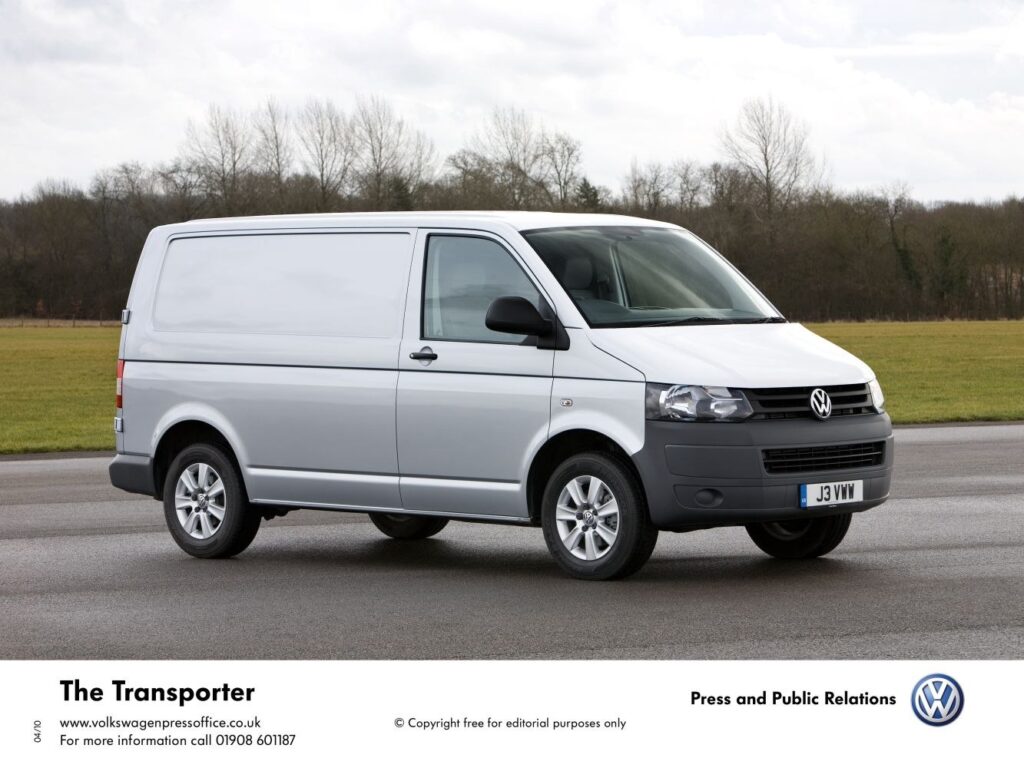
The Volkswagen Transporter (T5) facelift, produced from 2009 to 2013, represented a significant refresh of the fifth-generation Transporter line. Within this generation, the 2.0 (116 hp) L2H3 Panel Van configuration occupied a middle ground, offering a balance between affordability, fuel economy, and practicality for commercial users. The “L2H3” designation refers to the vehicle’s body length (L2 – long wheelbase) and roof height (H3 – high roof), making it a versatile option for businesses requiring substantial cargo space. This variant was positioned as a workhorse, appealing to tradespeople, delivery services, and those needing a robust van for various commercial applications. It sat below the more powerful 2.0 BiTDI and 2.5 TDI models, and above the base 1.9 TDI in terms of performance and price.
Powertrain & Engine Architecture
The 2009-2013 Volkswagen Transporter T5 2.0 (116 hp) L2H3 Panel Van was powered by the EA113 engine family, specifically the AXA engine code. This is a 1.984-liter (121.07 cubic inches) inline four-cylinder gasoline engine. The AXA engine utilizes multi-port fuel injection, a single overhead camshaft (SOHC) valvetrain with two valves per cylinder, and a compression ratio of 10.5:1. The engine produces 116 horsepower at 5200 rpm and 170 Nm (125.39 lb-ft) of torque between 2700 and 4700 rpm. While not a high-performance engine, it was designed for reliability and reasonable fuel efficiency. The engine’s power output per liter is 58.5 hp/l.
The engine was typically paired with a five-speed manual transmission, although an optional six-speed automatic transmission was available. The automatic transmission was a conventional torque converter type, chosen for its smoothness and ease of use, particularly in urban environments. The gear ratios were optimized for hauling and everyday driving, prioritizing torque delivery over outright acceleration. The automatic transmission, while offering convenience, did slightly impact fuel economy compared to the manual version.
Engine Details
The EA113 engine, while generally robust, is known to have some potential weaknesses. These include potential for oil consumption due to piston ring wear, and occasional issues with the intake manifold. Regular oil changes with a quality synthetic oil are crucial for maintaining the engine’s longevity. The engine oil capacity is 5 liters (5.28 US qt / 4.4 UK qt), and the recommended coolant capacity is 7.1 liters (7.5 US qt / 6.25 UK qt).
Driving Characteristics
The driving experience in the 2.0 (116 hp) Transporter L2H3 is best described as practical and utilitarian. Acceleration is modest, taking approximately 15.6 seconds to reach 100 km/h (62 mph) and 14.8 seconds to reach 60 mph. The engine feels strained when fully loaded or climbing steep hills. However, for typical urban and highway driving with a reasonable payload, the engine provides adequate power. The automatic transmission contributes to a smooth and comfortable ride, especially in stop-and-go traffic. The gear ratios are spaced to keep the engine within its optimal torque band, making it relatively easy to maintain a consistent speed. Compared to the more powerful TDI diesel variants, the gasoline engine is noticeably quieter and smoother, but lacks the low-end torque and fuel efficiency of the diesel options.
The front-wheel-drive configuration provides predictable handling, although it can suffer from torque steer under hard acceleration. The relatively soft suspension setup prioritizes ride comfort over sporty handling, making it well-suited for carrying loads over uneven surfaces.
Equipment & Trim Levels
The 2.0 (116 hp) L2H3 Panel Van typically came with a fairly basic level of equipment, reflecting its commercial focus. Standard features generally included a driver’s airbag, anti-lock braking system (ABS), power steering, and a basic audio system. The interior was typically finished with durable, easy-to-clean plastics and cloth upholstery. The driver and passenger seats were typically adjustable, and the van could be configured with either two or three seats.
Optional extras included air conditioning, electric windows, central locking, a more advanced audio system with Bluetooth connectivity, and parking sensors. Some models also offered upgraded interior trim options and alloy wheels. The L2H3 configuration itself was a key feature, providing a generous cargo volume of 9300 liters (328.43 cubic feet). The fuel tank capacity is 80 liters (21.13 US gal / 17.6 UK gal).
Chassis & Braking
The Transporter T5 utilized an independent McPherson strut front suspension with a coil spring and anti-roll bar. The rear suspension employed a trailing arm setup with coil springs and a transverse stabilizer bar. This configuration provided a good balance between ride comfort and load-carrying capacity. The front brakes were ventilated discs measuring 308×29.5 mm, while the rear brakes were also ventilated discs measuring 294×22 mm. The hydraulic power steering provided light and precise steering feel. The vehicle’s curb weight ranged from 1705 to 2141 kg (3758.88 to 4720.1 lbs), depending on the specific configuration and optional equipment.
Market Reception & Comparison
The 2.0 (116 hp) Transporter L2H3 Panel Van was generally well-received as a practical and affordable commercial vehicle. Critics praised its spacious interior, reasonable fuel economy (10.6-10.9 l/100 km combined), and comfortable ride. However, it was often criticized for its lack of power, particularly when fully loaded. Compared to the diesel variants, the gasoline engine offered lower fuel efficiency and higher CO2 emissions (247-254 g/km). The gasoline engine was also considered less refined than the diesel options. However, the gasoline engine was often cheaper to purchase initially and potentially less expensive to repair in some cases.
Technical Specifications
| Brand | Volkswagen |
| Model | Transporter (T5, facelift 2009) Panel Van |
| Type | 2.0 (116 Hp) L2H3 |
| Start of production | 2009 |
| End of production | 2013 |
| Engine Code | AXA |
| Engine Displacement | 1984 cm3 (121.07 cu. in.) |
| Number of Cylinders | 4 |
| Power | 116 Hp @ 5200 rpm |
| Torque | 170 Nm @ 2700-4700 rpm (125.39 lb.-ft.) |
| Fuel Consumption (Urban) | 13.7-14 l/100 km (17.2 – 16.8 US mpg) |
| Fuel Consumption (Extra Urban) | 8.8-9.1 l/100 km (26.7 – 25.8 US mpg) |
| Fuel Consumption (Combined) | 10.6-10.9 l/100 km (22.2 – 21.6 US mpg) |
| Acceleration 0-100 km/h | 15.6 sec |
| Maximum Speed | 152 km/h (94.45 mph) |
| Curb Weight | 1705-2141 kg (3758.88 – 4720.1 lbs.) |
| Max Load | 709-1145 kg (1563.08 – 2524.29 lbs.) |
| Fuel Tank Capacity | 80 l (21.13 US gal / 17.6 UK gal) |
| Length | 5292 mm (208.35 in.) |
| Width | 1904 mm (74.96 in.) |
| Height | 2476 mm (97.48 in.) |
Legacy
The 2.0 (116 hp) Transporter T5 L2H3 remains a popular choice in the used commercial vehicle market. Its relatively simple engine design and readily available parts contribute to reasonable maintenance costs. While not the most powerful or fuel-efficient option, it offers a good balance of practicality, reliability, and affordability. The EA113 engine, while having known issues, is well-understood by mechanics, making repairs relatively straightforward. These vans are still commonly seen in use today, testament to their durability and versatility. However, potential buyers should be aware of the potential for oil consumption and other common EA113 engine issues and factor these into their purchase decision.