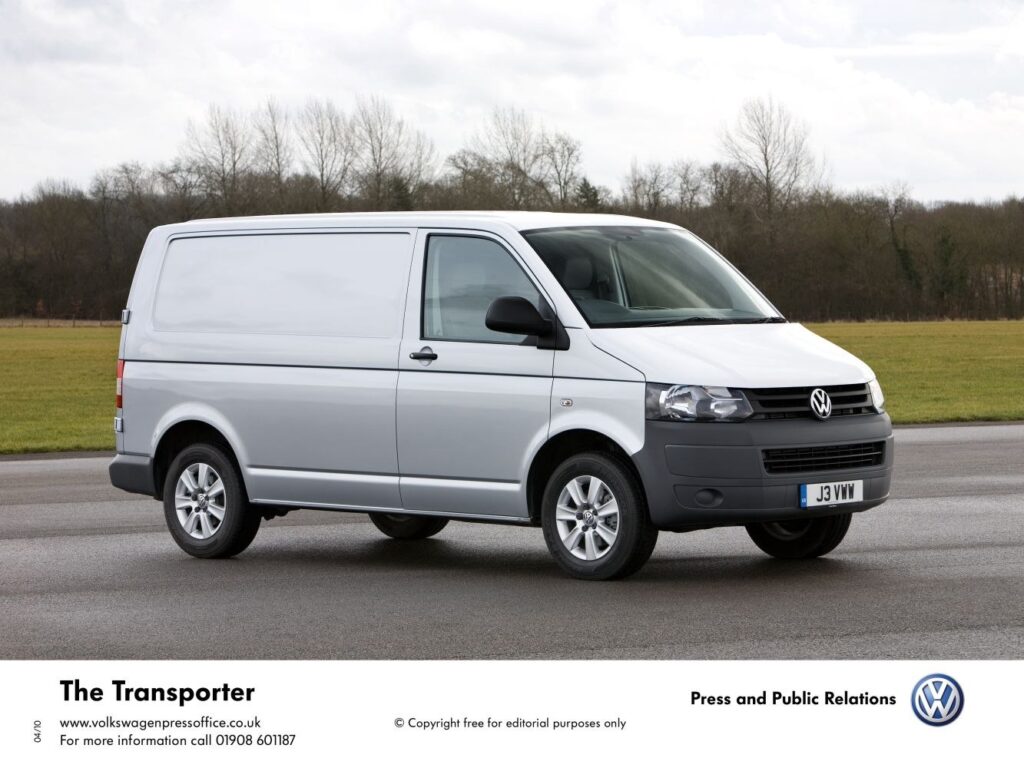
The Volkswagen Transporter (T5) facelift, produced from 2009 to 2015, represented a significant update to the fifth generation of Volkswagen’s popular commercial vehicle. Within the T5 range, the 2.0 TDI (102 hp) Panel Van in the L2H3 configuration occupied a crucial position as a workhorse option, balancing affordability with practicality. The L2H3 designation indicates a long wheelbase (L2) and a high roof (H3), maximizing cargo space. This variant was aimed at businesses and tradespeople requiring a substantial load capacity and reasonable fuel economy, without the expense of higher-powered engines or more luxurious trim levels.
Volkswagen Transporter T5 (2009-2015) 2.0 TDI 102 hp: Overview
The T5 facelift brought cosmetic and mechanical revisions to the Transporter line, including updated front-end styling, interior improvements, and revised engine options. The 2.0 TDI engine, in its 102 horsepower guise, became a mainstay for those prioritizing efficiency and cost-effectiveness. This particular engine code, often identified as the CAAB, was part of the EA189 family and represented a common choice for commercial operators. The T5 Transporter, in all its configurations, served as a versatile platform for a wide range of applications, from courier services to mobile workshops.
Powertrain & Engine Architecture
The heart of the 2.0 TDI 102 hp Transporter is the EA189 series four-cylinder diesel engine. Specifically, the CAAB engine code denotes a 1968cc displacement. This engine utilizes a common rail direct injection system, delivering fuel at extremely high pressure for optimized combustion. The engine features a single turbocharger with an intercooler to increase air density and improve power output. The valvetrain employs a dual overhead camshaft (DOHC) design with four valves per cylinder, contributing to efficient gas exchange. The 102 hp output is achieved at 3500 rpm, while peak torque of 250 Nm (184.39 lb-ft) is available between 1500-2500 rpm. This torque curve is designed to provide ample pulling power at lower engine speeds, ideal for carrying heavy loads. The engine’s compression ratio is relatively high at 16.5:1, typical for diesel engines.
The 2.0 TDI 102 hp was typically paired with a five-speed manual transmission, although a six-speed automatic transmission was available as an option. The automatic transmission, while offering convenience, slightly impacted fuel economy and performance compared to the manual version. The transmission is front-wheel drive, a standard configuration for this trim level, although four-wheel drive (4Motion) was available on other T5 variants.
Driving Characteristics
The 2.0 TDI 102 hp Transporter L2H3 prioritizes functionality over outright performance. Acceleration from 0-100 km/h (0-62 mph) takes approximately 15.5 seconds, and top speed is limited to 145 km/h (90.1 mph). While not particularly quick, the engine provides sufficient power for everyday driving and hauling loads. The relatively low horsepower is compensated by the strong low-end torque, making it easy to maintain speed on inclines and navigate urban environments. The five-speed manual transmission offers a reasonable spread of gears, allowing the driver to keep the engine within its optimal torque band. The automatic transmission, while smooth, can feel somewhat sluggish, particularly when accelerating with a full load. Compared to the more powerful 140 hp or 180 hp TDI versions, the 102 hp model feels noticeably less responsive, but it offers significantly better fuel economy.
Equipment & Trim Levels
The 2.0 TDI 102 hp Panel Van typically came with a basic, utilitarian specification. Standard features generally included a driver’s airbag, anti-lock braking system (ABS), power steering, and a basic audio system. The interior was typically finished with durable, hard-wearing plastics and cloth upholstery. The driver’s seat was usually adjustable for height and lumbar support. The L2H3 configuration provided a generous cargo area of approximately 9300 liters (328.43 cu. ft.). Optional extras included air conditioning, electric windows, central locking, a passenger airbag, and upgraded audio systems. Higher trim levels, such as Trendline or Highline, offered more extensive standard equipment and additional comfort features, but these were typically paired with more powerful engines.
Chassis & Braking
The T5 Transporter’s chassis is based on a robust ladder-frame construction, providing a solid foundation for carrying heavy loads. The front suspension utilizes an independent McPherson strut setup with coil springs and an anti-roll bar, while the rear suspension employs a semi-independent trailing arm configuration with coil springs and a transverse stabilizer. This suspension setup provides a reasonable balance between ride comfort and load-carrying capacity. Braking duties are handled by ventilated disc brakes on all four wheels, providing adequate stopping power. The size of the front discs is 308×29.5mm, while the rear discs measure 294x22mm. ABS (Anti-lock Braking System) is standard, enhancing braking performance and stability, especially in adverse conditions.
Market Reception & Comparison
The 2.0 TDI 102 hp Transporter was well-received by businesses and tradespeople seeking a cost-effective and reliable work vehicle. Critics praised its fuel economy, which typically ranged from 7.6-7.9 l/100 km (30.9-29.8 US mpg), and its robust build quality. However, some reviewers noted its lack of power compared to higher-output TDI variants. Compared to the 140 hp TDI, the 102 hp model offered a noticeable improvement in fuel economy but at the expense of performance. The 102 hp version was also generally more affordable to purchase and maintain. In terms of reliability, the EA189 engine, while generally robust, was later found to be affected by the “Dieselgate” emissions scandal, leading to software updates and potential long-term issues for some vehicles.
Technical Specifications
| Brand | Volkswagen |
| Model | Transporter (T5, facelift 2009) Panel Van |
| Type | 2.0 TDI (102 Hp) L2H3 |
| Start of production | 2009 |
| End of production | 2015 |
| Engine Displacement | 1968 cm3 (120.09 cu. in.) |
| Number of Cylinders | 4, Inline |
| Power | 102 Hp @ 3500 rpm |
| Torque | 250 Nm @ 1500-2500 rpm (184.39 lb.-ft.) |
| Fuel Consumption (Urban) | 9.5-9.8 l/100 km (24.8 – 24 US mpg) |
| Fuel Consumption (Extra Urban) | 6.6-6.9 l/100 km (35.6 – 34.1 US mpg) |
| Fuel Consumption (Combined) | 7.6-7.9 l/100 km (30.9 – 29.8 US mpg) |
| CO2 Emissions | 199-208 g/km |
| Kerb Weight | 1738-2182 kg (3831.63 – 4810.49 lbs.) |
| Max. Weight | 2800-3200 kg (6172.94 – 7054.79 lbs.) |
| Fuel Tank Capacity | 80 l (21.13 US gal) |
| Transmission | 5-speed manual or 6-speed automatic |
| Drive Type | Front-wheel drive |
| Length | 5292 mm (208.35 in.) |
| Width | 1904 mm (74.96 in.) |
| Height | 2476 mm (97.48 in.) |
Legacy
The 2.0 TDI 102 hp Transporter T5 remains a popular choice in the used commercial vehicle market. Its affordability, fuel efficiency, and practicality make it an attractive option for small businesses and tradespeople. However, potential buyers should be aware of the potential issues related to the “Dieselgate” emissions scandal and ensure that any necessary software updates have been performed. The EA189 engine, while generally reliable, can be prone to issues with the turbocharger and fuel injectors. Despite these potential concerns, the T5 Transporter continues to be a highly regarded and versatile vehicle, known for its durability and load-carrying capabilities.