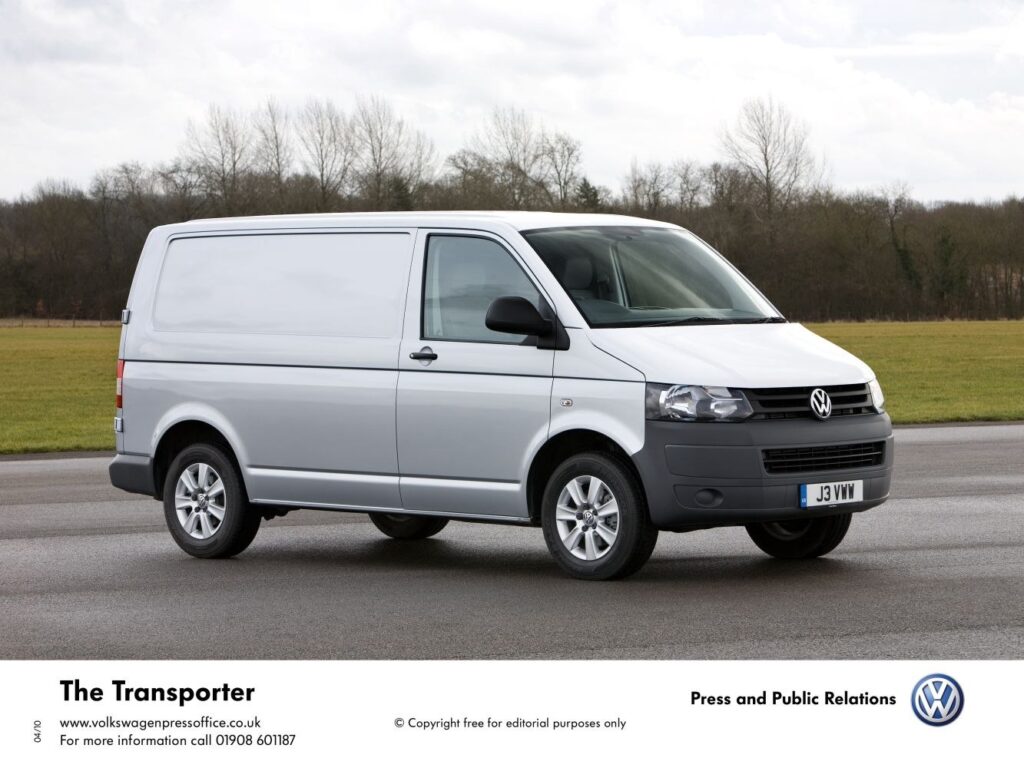
The Volkswagen Transporter (T5) facelift, produced from 2009 to 2015, represented a significant refresh of the fifth-generation Transporter line. Among the various engine and drivetrain configurations offered, the 2.0 TDI 140 hp 4MOTION L1H1 panel van occupied a versatile position, appealing to commercial users and those seeking a robust, all-wheel-drive utility vehicle. This variant combined a turbocharged diesel engine with a four-wheel-drive system, packaged in the standard L1 (short wheelbase) and H1 (low roof) body configuration. It served as a workhorse option, bridging the gap between more basic, lower-powered models and the higher-performance, more expensive trims.
Powertrain & Engine Architecture
The heart of the Transporter 2.0 TDI 4MOTION is the EA189 series engine, specifically the CAAC code variant. This 1968 cc (120.09 cu. in.) inline-four cylinder diesel engine utilizes a common rail direct injection system, delivering fuel at extremely high pressure for optimized combustion. The engine produces 140 horsepower (hp) at 3500 rpm and 340 Newton-meters (250.77 lb-ft) of torque between 1750 and 2500 rpm. A turbocharger with an intercooler is employed to increase air density and boost power output. The engine features a double overhead camshaft (DOHC) valvetrain with four valves per cylinder, contributing to efficient gas exchange.
The 4MOTION system is a permanent all-wheel-drive system utilizing Volkswagen’s Visco-coupling. This system normally drives the front wheels, but automatically engages the rear wheels when wheel slip is detected, providing enhanced traction in challenging conditions. The transmission is a six-speed manual gearbox, chosen for its durability and efficiency in commercial applications. While an automatic transmission was available on some T5 models, it was not typically paired with the 140 hp 4MOTION configuration.
Fuel Injection and Emissions
The CAAC engine utilizes a Bosch common rail system, allowing for precise control over fuel delivery and contributing to improved fuel economy and reduced emissions. The engine meets Euro 5 emission standards, incorporating a diesel particulate filter (DPF) to trap soot particles. This filter requires periodic regeneration, either passively during normal driving or actively through a forced regeneration cycle initiated by the vehicle’s engine control unit (ECU).
Driving Characteristics
The 2.0 TDI 140 hp 4MOTION Transporter offers a balance between performance and economy. While not as quick as the higher-powered TDI variants, it provides sufficient power for everyday use and hauling moderate loads. Acceleration from 0-100 km/h (0-62 mph) takes approximately 13.5 seconds, and the top speed is limited to 170 km/h (105.63 mph). The six-speed manual transmission allows for precise gear selection, maximizing efficiency and providing control over the engine’s power band.
The 4MOTION system significantly enhances handling and stability, particularly on slippery surfaces. The all-wheel-drive provides increased grip during acceleration, cornering, and braking, making it a suitable choice for drivers operating in diverse weather conditions or on uneven terrain. Compared to front-wheel-drive Transporters, the 4MOTION version exhibits reduced understeer and improved traction. The gear ratios are tuned for practicality, prioritizing torque delivery at lower speeds for hauling and towing, rather than outright acceleration.
Equipment & Trim Levels
The 2.0 TDI 140 hp 4MOTION L1H1 typically falls into a mid-range trim level within the T5 facelift lineup. Standard equipment generally includes power windows, central locking, an adjustable steering column, and a basic audio system. The interior features durable, hard-wearing upholstery, designed to withstand the rigors of commercial use. The dashboard layout is functional and straightforward, prioritizing ergonomics and ease of use.
Optional extras commonly available for this variant include air conditioning, a more advanced audio system with Bluetooth connectivity, parking sensors, and upgraded seating. Some models may also feature additional safety equipment, such as electronic stability control (ESC) and traction control. The L1H1 body configuration provides a cargo volume of approximately 5800 liters (204.83 cu. ft.), making it suitable for a wide range of commercial applications.
Chassis & Braking
The Transporter T5 utilizes an independent suspension system on both the front and rear axles. The front suspension employs a McPherson strut design with coil springs and an anti-roll bar, while the rear suspension features a trailing arm setup with coil springs and a transverse stabilizer. This configuration provides a comfortable ride and good handling characteristics. The braking system consists of ventilated discs on all four wheels, providing ample stopping power. The system is equipped with Anti-lock Braking System (ABS) as standard, enhancing safety during emergency braking maneuvers. The hydraulic power steering provides responsive and precise steering control.
Market Reception & Comparison
The 2.0 TDI 140 hp 4MOTION Transporter was generally well-received by critics and commercial vehicle operators. It was praised for its robust engine, all-wheel-drive capability, and practical cargo space. Fuel economy was considered reasonable for a vehicle of its size and weight, with combined fuel consumption figures ranging from 8.0 to 8.3 liters per 100 kilometers (29.4 to 28.3 US mpg). Compared to the more powerful 180 hp TDI variant, the 140 hp model offered a lower purchase price and slightly better fuel economy, making it an attractive option for budget-conscious buyers. However, it lacked the outright performance of the higher-powered engine. Compared to the 1.9 TDI models available in earlier T5 generations, the 2.0 TDI offered improved refinement and performance, while maintaining similar levels of reliability.
Technical Specifications
| Brand | Volkswagen |
| Model | Transporter (T5, facelift 2009) Panel Van |
| Type | 2.0 TDI (140 Hp) 4MOTION L1H1 |
| Start of production | 2009 |
| End of production | 2015 |
| Engine | 1968 cm3 Inline-4 Diesel |
| Power | 140 hp @ 3500 rpm |
| Torque | 340 Nm @ 1750-2500 rpm |
| Transmission | 6-speed Manual |
| Drive | All-Wheel Drive (4MOTION) |
| Fuel Consumption (Combined) | 8.0-8.3 l/100 km (29.4-28.3 US mpg) |
| CO2 Emissions | 211-219 g/km |
| Kerb Weight | 1842-2258 kg (4060.91 – 4978.04 lbs) |
| Max. Load | 942-958 kg (2076.75 – 2112.03 lbs) |
| Cargo Volume | 5800 l (204.83 cu. ft) |
| Fuel Tank Capacity | 80 l (21.13 US gal) |
| Length | 4892 mm (192.6 in) |
| Width | 1904 mm (74.96 in) |
| Height | 1990 mm (78.35 in) |
Legacy
The 2.0 TDI 140 hp 4MOTION powertrain has proven to be relatively reliable, although, like all diesel engines, it is susceptible to issues related to the DPF and fuel injection system. Regular maintenance, including oil changes and DPF regeneration, is crucial for ensuring long-term durability. On the used car market, these Transporters are generally sought after for their practicality, all-wheel-drive capability, and relatively affordable price point. They remain a popular choice for tradespeople, delivery drivers, and those requiring a versatile and dependable commercial vehicle. The EA189 engine, while superseded by newer designs, continues to be a workhorse in many applications, and parts availability remains good. However, potential buyers should be aware of the potential for DPF-related issues and ensure that the vehicle has been properly maintained.