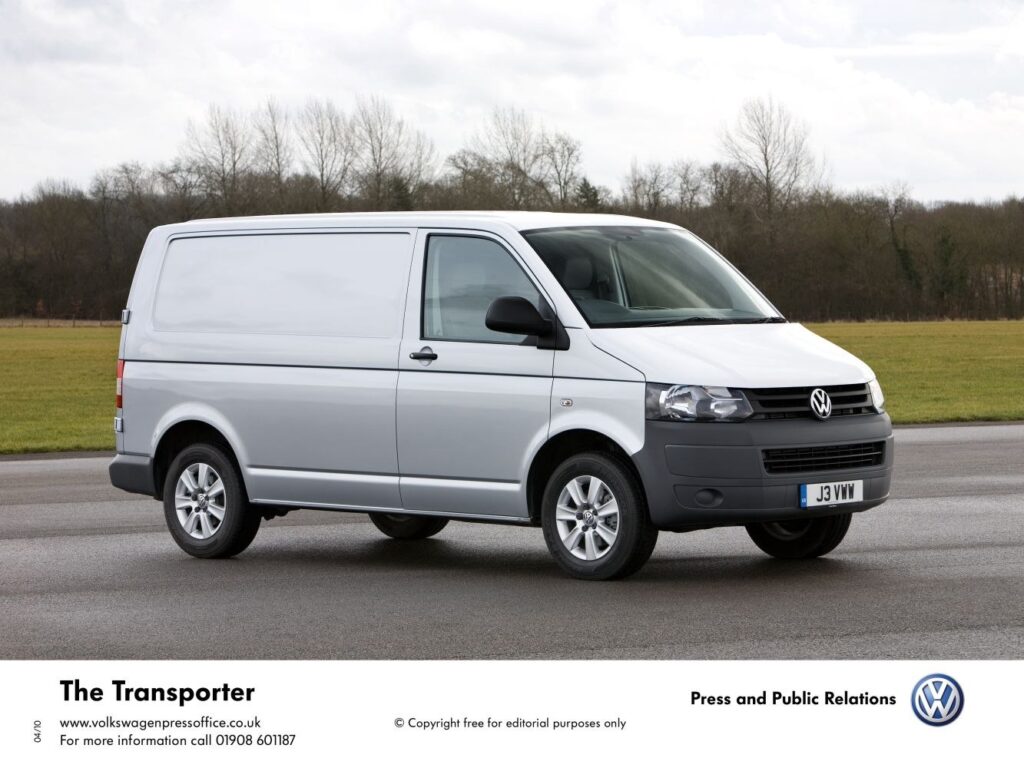
The Volkswagen Transporter (T5), specifically the facelifted version introduced in 2009, represented a significant evolution of Volkswagen’s popular commercial vehicle line. Produced from 2009 to 2015, the T5 offered a wide range of configurations to suit diverse commercial and personal needs. Among these, the 2.0 TDI (140 hp) with a Direct-Shift Gearbox (DSG) and L1H2 body configuration was a common and versatile choice. The L1H2 designation indicates a standard wheelbase and a medium roof height, making it a practical option for businesses and families requiring substantial cargo space without the bulk of the longer or higher variants. This variant occupied a middle ground in the T5 lineup, offering a balance between performance, fuel efficiency, and cost, positioned above the base engine options and below the more powerful, and often more expensive, higher-output TDI models.
Powertrain & Engine Architecture
The heart of the T5 2.0 TDI (140 hp) is the EA189 series four-cylinder diesel engine, specifically the CAAC engine code. This engine is a turbocharged common rail diesel, representing a significant advancement over earlier VW diesel designs. The 1968 cc displacement is achieved through an 81 mm bore and a 95.5 mm stroke, resulting in a compression ratio of 16.5:1. The engine utilizes a double overhead camshaft (DOHC) valvetrain with four valves per cylinder, optimizing gas flow for improved efficiency and power.
Fuel is delivered via a Bosch common rail system, operating at extremely high pressures to ensure fine atomization and complete combustion. The turbocharger, coupled with an intercooler, forces more air into the cylinders, boosting power output. The 140 hp peak power is achieved at 3500 rpm, while the substantial 340 Nm (250.77 lb-ft) of torque is available from 1750 to 2500 rpm. This broad torque curve is a key characteristic of the engine, providing strong pulling power at lower engine speeds, ideal for commercial applications and fully loaded vehicles.
The DSG (Direct-Shift Gearbox) is a seven-speed dual-clutch transmission. This automated manual transmission offers the efficiency of a manual gearbox with the convenience of an automatic. It utilizes two separate clutches, one for the odd-numbered gears and one for the even-numbered gears. This allows for incredibly fast and smooth gear changes, as the next gear is pre-selected and ready to engage. The DSG transmission in the T5 is electronically controlled, adapting shift points based on driving conditions and driver input.
Engine Specifications
The CAAC engine benefits from a particulate filter, designed to reduce harmful emissions. Engine oil capacity is 7 liters (7.4 US qt / 6.16 UK qt), and the recommended oil specification is crucial for maintaining engine longevity. The cooling system holds 11 liters (11.62 US qt / 9.68 UK qt) of coolant.
Driving Characteristics
The 140 hp TDI with DSG offers a competent and practical driving experience. While not exceptionally quick, the ample torque provides brisk acceleration, especially in the lower gears. Acceleration from 0-100 km/h (0-62 mph) takes approximately 12.6 seconds, and the top speed is limited to 166 km/h (103.15 mph). The DSG transmission contributes to a smooth and responsive driving experience, with minimal torque interruption during gear changes.
Compared to the lower-powered T5 variants, the 140 hp TDI provides noticeably more effortless performance, particularly when carrying a load or tackling inclines. However, it falls short of the performance offered by the more powerful TDI engines, such as the 180 hp version. The DSG transmission, while convenient, can sometimes exhibit a slight hesitation at low speeds, a characteristic of some early DSG units. The gear ratios are optimized for both fuel efficiency and usability, providing a good balance between performance and economy.
Equipment & Trim Levels
The T5 2.0 TDI (140 hp) DSG L1H2 was available in various trim levels, typically including base “Trendline,” mid-range “Comfortline,” and higher-specification “Highline” models. The Trendline generally featured basic amenities such as power windows, central locking, and a basic audio system. Comfortline added features like air conditioning, upgraded upholstery, and more comprehensive audio systems. The Highline trim offered premium features such as alloy wheels, parking sensors, and more luxurious interior appointments.
Standard interior features generally included durable plastic trim, functional seating for up to three occupants, and a practical dashboard layout. Optional extras included features like navigation systems, upgraded audio systems, leather upholstery, and various driver assistance systems. The L1H2 body configuration provided a generous cargo volume of approximately 6700 liters (236.61 cu. ft.), making it suitable for a wide range of commercial applications.
Chassis & Braking
The T5’s chassis is based on a robust ladder-frame construction, providing a solid and durable platform. The front suspension utilizes an independent McPherson strut setup with coil springs and an anti-roll bar, while the rear suspension employs a semi-independent trailing arm configuration with coil springs and a transverse stabilizer. This suspension setup provides a reasonable balance between ride comfort and handling, although it is primarily tuned for practicality rather than sporty driving dynamics.
Braking duties are handled by ventilated discs on all four wheels, providing adequate stopping power even when heavily loaded. The T5 is equipped with ABS (Anti-lock Braking System) as standard, enhancing safety during emergency braking situations. The hydraulic power steering provides a reasonable level of assistance, making the vehicle relatively easy to maneuver.
Market Reception & Comparison
The T5 2.0 TDI (140 hp) DSG L1H2 was generally well-received by critics and customers alike. It was praised for its practicality, fuel efficiency, and reliability. Fuel consumption figures averaged around 7.9-8.2 l/100 km (29.8-28.7 US mpg / 35.8-34.4 UK mpg), making it a relatively economical option for commercial operators. Compared to the higher-output TDI models, the 140 hp version offered a lower purchase price and slightly better fuel economy, although at the expense of some performance.
Reliability was generally good, although some owners reported issues with the DSG transmission, particularly early units. Regular maintenance and adherence to recommended service intervals were crucial for ensuring long-term reliability. The 2.0 TDI engine proved to be a durable and dependable unit when properly maintained.
Technical Specifications
| Brand | Volkswagen |
| Model | Transporter (T5, facelift 2009) Panel Van |
| Type | 2.0 TDI (140 Hp) DSG L1H2 |
| Start of production | 2009 |
| End of production | 2015 |
| Powertrain Architecture | Internal Combustion engine |
| Body type | Van |
| Seats | 2-3 |
| Doors | 4-5 |
| Fuel consumption (urban) | 10.1-10.4 l/100 km (23.3 – 22.6 US mpg) |
| Fuel consumption (extra urban) | 6.6-6.9 l/100 km (35.6 – 34.1 US mpg) |
| Fuel consumption (combined) | 7.9-8.2 l/100 km (29.8 – 28.7 US mpg) |
| CO2 emissions | 208-216 g/km |
| Fuel Type | Diesel |
| Acceleration 0-100 km/h | 12.6 sec |
| Maximum speed | 166 km/h (103.15 mph) |
| Engine Model/Code | EA189 / CAAC |
| Engine displacement | 1968 cm3 (120.09 cu. in.) |
| Number of cylinders | 4 |
| Power | 140 Hp @ 3500 rpm |
| Torque | 340 Nm @ 1750-2500 rpm (250.77 lb.-ft.) |
| Kerb Weight | 1734-2150 kg (3822.82 – 4739.94 lbs.) |
| Max. weight | 2800-3200 kg (6172.94 – 7054.79 lbs.) |
| Fuel tank capacity | 80 l (21.13 US gal) |
Legacy
The T5 2.0 TDI (140 hp) DSG L1H2 remains a popular choice in the used commercial vehicle market. Its combination of practicality, fuel efficiency, and relatively low running costs makes it an attractive option for businesses and individuals alike. While the DSG transmission can be a potential source of maintenance issues, regular servicing and preventative maintenance can mitigate these risks. The CAAC engine, when well-maintained, is known for its durability and longevity. The T5 generation, and this variant in particular, cemented Volkswagen’s reputation for producing high-quality, reliable, and versatile commercial vehicles.