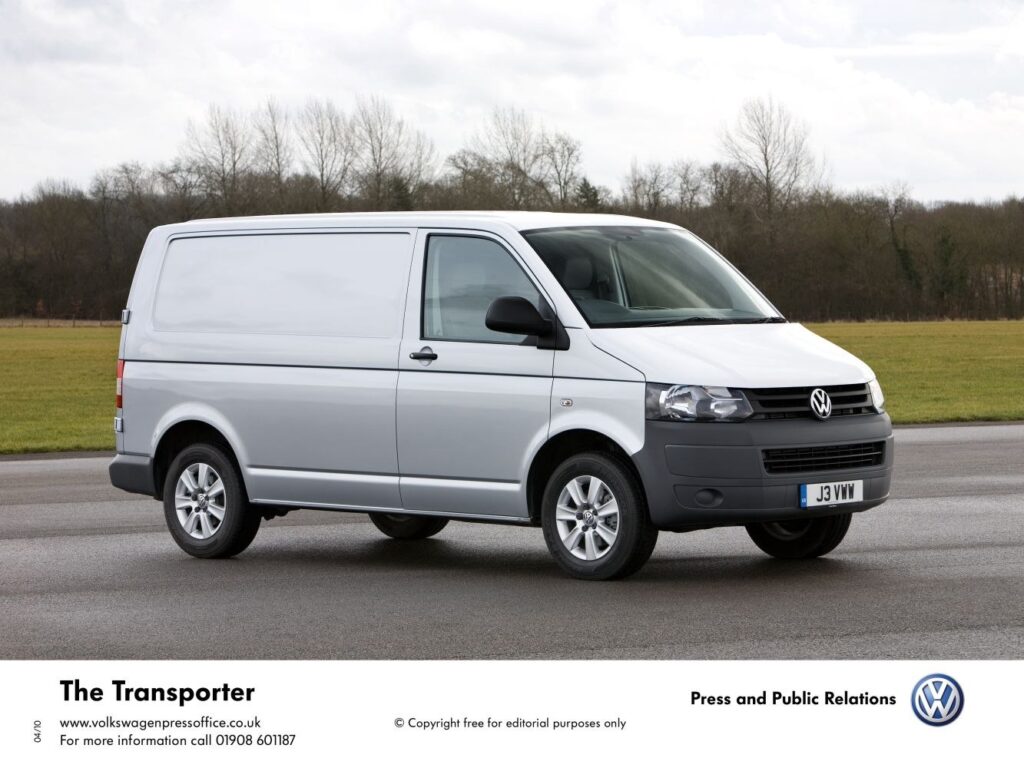
The Volkswagen Transporter (T5) facelift, produced from 2009 to 2015, represented a significant update to the fifth generation of Volkswagen’s popular commercial vehicle. Among the various engine and configuration options available, the 2.0 TDI 140 hp variant with a Direct-Shift Gearbox (DSG) and L2H1 body style was a common choice, particularly in European markets. This configuration balanced practicality, fuel efficiency, and a reasonable level of performance for commercial and personal use. The T5 facelift brought styling revisions, improved interior quality, and updated engine technology compared to the earlier T5 models.
Volkswagen Transporter T5 Facelift: 2.0 TDI 140 hp DSG L2H1
The 2.0 TDI 140 hp DSG L2H1 Transporter occupied a middle ground within the T5 facelift range. It wasn’t the entry-level option – lower-powered diesel engines were available for budget-conscious buyers – but it also wasn’t the performance-oriented choice, which was typically reserved for higher-output TDI variants or the more specialized 4Motion all-wheel-drive models. The L2H1 designation refers to the vehicle’s body length (L2 – long wheelbase) and roof height (H1 – standard roof), making it a versatile option for a wide range of applications, from courier services to camper van conversions.
Powertrain & Engine Architecture
At the heart of this Transporter variant lies the Volkswagen Group’s EA189 series 2.0-liter four-cylinder diesel engine, specifically the CAAC engine code. This engine is a turbocharged common rail direct injection diesel. The EA189 engine family was widely used across the Volkswagen Group during this period, powering various models including the Golf, Passat, and Audi A3. The 140 hp output was achieved through a combination of turbocharger technology, optimized fuel injection mapping, and a relatively conservative compression ratio of 16.5:1. The engine featured a double overhead camshaft (DOHC) valvetrain with four valves per cylinder, contributing to its efficiency and power delivery.
The 2.0 TDI was paired with Volkswagen’s 7-speed Direct-Shift Gearbox (DSG). This dual-clutch transmission offered smooth and rapid gear changes, enhancing both performance and fuel economy. The DSG operates similarly to a traditional automatic transmission but provides the efficiency and control of a manual gearbox. The transmission’s programming was tuned to balance fuel efficiency with responsiveness, offering a comfortable driving experience for everyday use. The DSG unit used in the T5 facelift is known for its reliability, though regular maintenance, including fluid changes, is crucial for longevity.
Driving Characteristics
The 2.0 TDI 140 hp DSG L2H1 Transporter delivered adequate performance for most applications. Acceleration from 0-62 mph (0-100 km/h) took approximately 12.5 seconds, and the top speed was limited to 106.88 mph (172 km/h). While not particularly sporty, the engine provided sufficient torque (340 Nm or 250.77 lb-ft) from 1750-2500 rpm, making it capable of carrying heavy loads and maintaining comfortable cruising speeds on the highway. The DSG transmission helped to keep the engine in its optimal power band, providing responsive acceleration when needed.
Compared to the lower-powered diesel options, the 140 hp variant offered a noticeable improvement in performance, particularly when fully loaded. It also felt more refined and less strained during highway driving. In contrast to the higher-output TDI versions, the 140 hp engine prioritized fuel economy and reliability over outright performance. The gear ratios in the 7-speed DSG were well-suited to the engine’s characteristics, providing a good balance between acceleration and fuel efficiency. The front-wheel-drive configuration contributed to lower fuel consumption compared to the 4Motion all-wheel-drive models.
Equipment & Trim Levels
The T5 facelift Transporter 2.0 TDI 140 hp DSG L2H1 was typically offered with a reasonable level of standard equipment. This generally included features such as power windows, central locking, an adjustable steering wheel, and a basic audio system. Interior upholstery was typically cloth, though higher trim levels offered optional leather or partial leather seating. The dashboard layout was functional and straightforward, with clearly labeled controls.
Optional extras included air conditioning, a more advanced audio system with Bluetooth connectivity, parking sensors, cruise control, and upgraded seating. Many Transporters were also equipped with various commercial vehicle-specific options, such as cargo area lining, additional tie-down points, and specialized storage solutions. The level of equipment varied depending on the specific market and the customer’s preferences.
Chassis & Braking
The T5 facelift Transporter featured an independent suspension system on both the front and rear axles. The front suspension utilized a McPherson strut design with coil springs and an anti-roll bar, while the rear suspension employed a trailing arm configuration with coil springs and a transverse stabilizer. This setup provided a comfortable ride quality, even when the vehicle was loaded. The steering was rack and pinion with hydraulic power assistance, offering precise and responsive handling.
Braking duties were handled by ventilated discs on all four wheels, providing ample stopping power. The vehicle was equipped with an Anti-lock Braking System (ABS) as standard, enhancing safety and stability during emergency braking maneuvers. The curb weight of the L2H1 variant ranged from 1785 to 2229 kg (3935.25 – 4914.1 lbs), depending on the specific equipment and configuration.
Market Reception & Comparison
The 2.0 TDI 140 hp DSG L2H1 Transporter was well-received in the market as a practical and versatile commercial vehicle. Critics praised its fuel efficiency, comfortable ride, and smooth-shifting DSG transmission. It was considered a good all-rounder, capable of handling a wide range of tasks without compromising on comfort or usability. Compared to the lower-powered diesel options, the 140 hp variant offered a noticeable improvement in performance, making it a more appealing choice for drivers who frequently carried heavy loads or drove on the highway.
Fuel economy figures ranged from 7.9-8.2 l/100 km (29.8 – 28.7 US mpg, 35.8 – 34.4 UK mpg), depending on driving conditions and load. While the higher-output TDI variants offered more performance, they also consumed more fuel. The 140 hp engine struck a good balance between performance and economy, making it a popular choice for businesses and individuals alike.
Technical Specifications
| Brand | Volkswagen |
| Model | Transporter (T5, facelift 2009) Panel Van |
| Type | 2.0 TDI (140 Hp) DSG L2H1 |
| Start of production | 2009 |
| End of production | 2015 |
| Engine | EA189 / CAAC 2.0L Inline-4 Diesel |
| Power | 140 Hp @ 3500 rpm |
| Torque | 340 Nm @ 1750-2500 rpm (250.77 lb.-ft.) |
| Fuel Consumption (Urban) | 10.1-10.4 l/100 km (23.3 – 22.6 US mpg) |
| Fuel Consumption (Extra Urban) | 6.6-6.9 l/100 km (35.6 – 34.1 US mpg) |
| Fuel Consumption (Combined) | 7.9-8.2 l/100 km (29.8 – 28.7 US mpg) |
| CO2 Emissions | 208-216 g/km |
| Transmission | 7-speed DSG |
| Drive | Front-wheel drive |
| Curb Weight | 1785-2229 kg (3935.25 – 4914.1 lbs) |
| Max. Weight | 2800-3200 kg (6172.94 – 7054.79 lbs) |
| Fuel Tank Capacity | 80 l (21.13 US gal) |
| Length | 5292 mm (208.35 in) |
| Width | 1904 mm (74.96 in) |
| Height | 1990 mm (78.35 in) |
Legacy
The 2.0 TDI engine, while subject to some controversy regarding emissions (particularly in relation to the “Dieselgate” scandal), proved to be a relatively reliable powertrain when properly maintained. The DSG transmission, while more complex than a traditional manual gearbox, also demonstrated good durability with regular fluid changes. Today, used T5 facelift Transporters with the 2.0 TDI 140 hp engine are readily available and represent a good value for money, offering a practical and versatile solution for commercial and personal use. However, potential buyers should be aware of the engine’s emissions history and ensure that any vehicle they consider has been properly serviced and maintained.