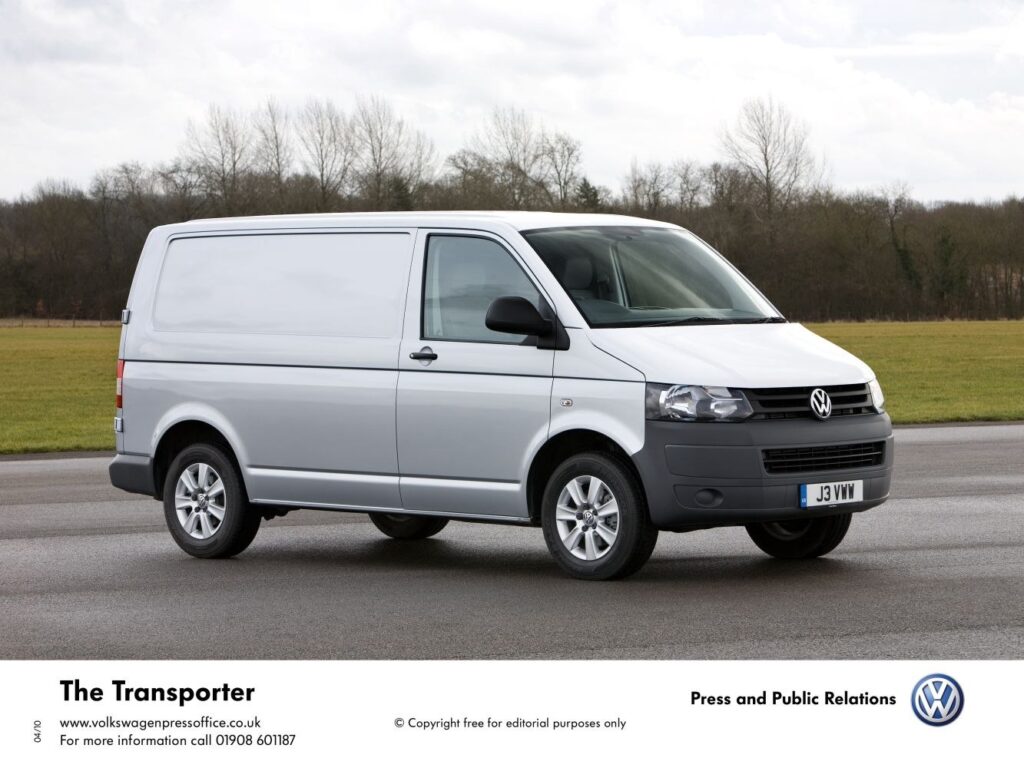
The Volkswagen Transporter (T5) facelift, produced from 2009 to 2015, represented a significant update to the fifth generation of Volkswagen’s popular commercial vehicle. Among the various configurations available, the 2.0 TDI 140 hp variant with a Direct-Shift Gearbox (DSG) and L2H3 body style was a common choice for businesses and tradespeople requiring a versatile and relatively efficient panel van. This version occupied a middle ground in the T5 lineup, offering a balance between performance, fuel economy, and cost, positioned above the lower-powered diesel options and below the more expensive and performance-oriented models.
Powertrain & Engine Architecture
The heart of the Transporter 2.0 TDI 140 was the EA189 series four-cylinder diesel engine, specifically the CAAC engine code. This 1968 cc (120.09 cubic inches) engine utilized a common rail direct injection system, delivering fuel at extremely high pressure for optimized combustion. The engine featured a single turbocharger with an intercooler to increase air density and boost power output. The valvetrain employed a Dual Overhead Camshaft (DOHC) design with four valves per cylinder, contributing to improved breathing and efficiency. Compression ratio was set at 16.5:1.
The 140 horsepower peak was achieved at 3500 rpm, while the maximum torque of 340 Nm (250.77 lb-ft) was available between 1750 and 2500 rpm. This broad torque curve was a key characteristic of the engine, providing strong pulling power at lower engine speeds, ideal for carrying loads. The engine also incorporated a diesel particulate filter (DPF) to reduce emissions, meeting Euro 5 standards.
Paired with the 2.0 TDI engine was Volkswagen’s 7-speed DSG (Direct-Shift Gearbox). This dual-clutch transmission offered the convenience of an automatic while maintaining the efficiency and responsiveness of a manual gearbox. The DSG automatically selects the optimal gear for the driving conditions, contributing to improved fuel economy and smoother acceleration. The transmission’s quick shift times also enhanced the driving experience.
Engine Specifications
Engine Code: CAAC
Displacement: 1968 cm3 (120.09 cu. in.)
Configuration: Inline-4
Fuel Injection: Diesel Commonrail
Turbocharger: Yes, with Intercooler
Valvetrain: DOHC, 4 valves per cylinder
Driving Characteristics
The 2.0 TDI 140 hp/DSG combination in the T5 offered a practical and usable driving experience. Acceleration from 0-100 km/h (0-62 mph) took approximately 13 seconds, and 0-60 mph was achieved in around 12.4 seconds. While not particularly sporty, the engine provided sufficient power for everyday driving and hauling moderate loads. The DSG transmission contributed to smooth and efficient gear changes, minimizing power loss during shifts.
Compared to the lower-powered 1.9 TDI versions, the 2.0 TDI 140 offered a noticeable improvement in performance, particularly when fully loaded or driving uphill. However, it lacked the extra punch of the more powerful 2.5 TDI or the sportier feel of the petrol-powered variants. The broad torque band meant that the engine felt responsive in most situations, and the DSG transmission helped to keep the engine in its optimal power range. The front-wheel-drive configuration provided adequate traction for most conditions, but could struggle in slippery environments with a heavy load.
Equipment & Trim Levels
The Transporter T5 facelift 2.0 TDI 140 DSG L2H3 typically came equipped with a functional, rather than luxurious, interior. Standard features generally included a driver’s airbag, anti-lock braking system (ABS), power steering, and a basic audio system. The cab typically featured durable plastic trim and hard-wearing seat upholstery. The L2H3 designation refers to the body length (L2 – long wheelbase) and roof height (H3 – high roof), maximizing cargo space.
Optional extras varied depending on the market and specific trim level, but commonly included air conditioning, electric windows, central locking, a more advanced audio system with Bluetooth connectivity, parking sensors, and upgraded seating. Some models also offered features like cruise control and a multi-function steering wheel. The panel van configuration focused on practicality, with a basic interior designed for durability and ease of cleaning.
Chassis & Braking
The T5 Transporter utilized an independent McPherson strut front suspension with coil springs and an anti-roll bar. The rear suspension employed a semi-independent trailing arm setup with coil springs and a transverse stabilizer. This suspension configuration provided a reasonable balance between ride comfort and handling, although the van’s high center of gravity and load-carrying capacity meant it wasn’t particularly agile.
Braking duties were handled by ventilated discs on all four wheels, providing adequate stopping power for the vehicle’s weight. The braking system was assisted by ABS (Anti-lock Braking System) to prevent wheel lockup during emergency braking. The hydraulic steering provided a reasonably direct feel, although it lacked the feedback of more sophisticated steering systems.
Market Reception & Comparison
The 2.0 TDI 140 hp/DSG variant of the T5 Transporter was generally well-received by critics and customers alike. It was praised for its fuel efficiency, practicality, and relatively low running costs. Fuel economy figures averaged around 8.2-8.5 l/100 km (28.7-27.7 US mpg), making it an attractive option for businesses looking to minimize fuel expenses.
Compared to the lower-powered 1.9 TDI models, the 2.0 TDI 140 offered a noticeable performance improvement without a significant increase in fuel consumption. However, the 2.5 TDI variants provided more power and a more refined driving experience, albeit at a higher price point. Reliability was generally good, although some owners reported issues with the DPF and DSG transmission, particularly if the vehicle was not properly maintained.
Technical Specifications
| Brand | Volkswagen |
| Model | Transporter (T5, facelift 2009) Panel Van |
| Type | 2.0 TDI (140 Hp) DSG L2H3 |
| Production Years | 2009-2015 |
| Engine | EA189 / CAAC |
| Displacement | 1968 cm3 (120.09 cu. in.) |
| Power | 140 Hp @ 3500 rpm |
| Torque | 340 Nm @ 1750-2500 rpm (250.77 lb.-ft.) |
| Fuel Consumption (Urban) | 10.1-10.4 l/100 km (23.3-22.6 US mpg) |
| Fuel Consumption (Extra Urban) | 7.1-7.4 l/100 km (33.1-31.8 US mpg) |
| Fuel Consumption (Combined) | 8.2-8.5 l/100 km (28.7-27.7 US mpg) |
| CO2 Emissions | 216-224 g/km |
| Transmission | 7-speed DSG |
| Kerb Weight | 1785-2229 kg (3935.25 – 4914.1 lbs.) |
| Max. Weight | 2800-3200 kg (6172.94 – 7054.79 lbs.) |
| Cargo Volume (Max) | 9300 l (328.43 cu. ft.) |
| Fuel Tank Capacity | 80 l (21.13 US gal) |
Legacy
The 2.0 TDI 140 hp/DSG powertrain in the T5 Transporter has proven to be relatively durable, although long-term reliability can be affected by maintenance and driving habits. The EA189 engine, while generally robust, is known to be susceptible to DPF issues if not regularly driven on longer journeys. The DSG transmission requires regular fluid changes to prevent premature wear.
In the used car market, the T5 Transporter 2.0 TDI 140 DSG L2H3 remains a popular choice for businesses and individuals seeking a practical and affordable panel van. Well-maintained examples continue to command reasonable prices, and the availability of spare parts is good. The combination of fuel efficiency, practicality, and relatively low running costs ensures that the T5 2.0 TDI 140 DSG remains a relevant and desirable vehicle in the commercial vehicle segment.