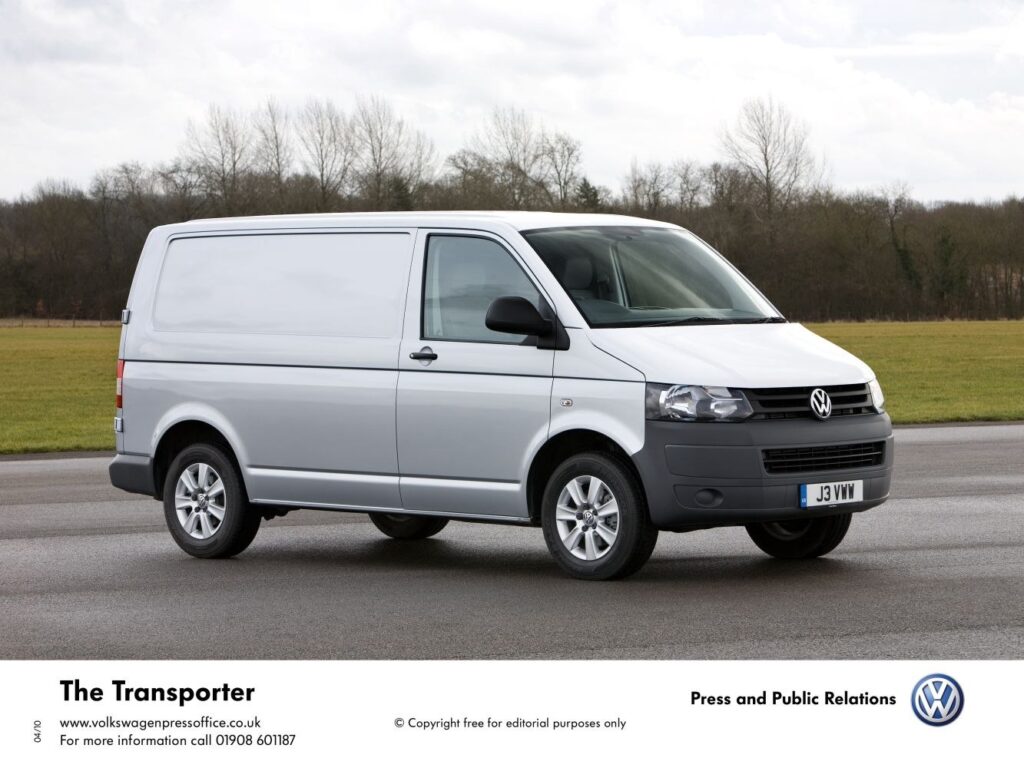
The Volkswagen Transporter (T5) facelift, produced from 2009 to 2015, represented a significant update to the fifth generation of Volkswagen’s popular commercial vehicle. Within the T5 range, the 2.0 TDI 140 hp variant, typically configured as a Panel Van in the L2H1 body style (Long Wheelbase, High Roof), occupied a crucial middle ground. It aimed to balance affordability, fuel efficiency, and practicality for commercial users and tradespeople. This version offered a step up in performance from the lower-powered TDI options while remaining more economical than the range-topping models.
Powertrain & Engine Architecture
The heart of the Transporter 2.0 TDI 140 was the EA189 series four-cylinder diesel engine, specifically the CAAC engine code. This 1968 cc (120.09 cubic inches) engine utilized common rail direct injection, a technology that significantly improved fuel atomization and combustion efficiency compared to earlier diesel injection systems. The engine featured a turbocharger with an intercooler, boosting power output to 140 horsepower (hp) at 3500 rpm and 340 Newton-meters (250.77 lb-ft) of torque between 1750 and 2500 rpm. The engine employed a double overhead camshaft (DOHC) valvetrain with four valves per cylinder, optimizing gas flow for improved performance.
The 2.0 TDI 140 was primarily paired with a six-speed manual transmission, although a six-speed automatic transmission was also available as an option. The automatic transmission, while offering convenience, was sometimes criticized for slightly reduced fuel economy and a less engaging driving experience compared to the manual. The transmission was designed to handle the engine’s torque output effectively, providing smooth shifts under normal driving conditions. Engine oil capacity was 7 liters (7.4 US quarts / 6.16 UK quarts), and the engine required coolant totaling 11 liters (11.62 US quarts / 9.68 UK quarts). A diesel particulate filter (DPF) was standard equipment to meet Euro 5 emission standards.
Engine Specifications (CAAC)
The CAAC engine was known for its relatively robust construction, but also for potential issues with the DPF and turbocharger over extended periods, particularly if not maintained properly. Regular oil changes and the use of high-quality diesel fuel were crucial for longevity.
Driving Characteristics
The 2.0 TDI 140 hp Transporter offered a practical and capable driving experience. While not exceptionally quick, the 340 Nm of torque provided ample pulling power for carrying loads. Acceleration from 0 to 100 km/h (0-62 mph) took approximately 12.2 seconds, and the top speed was around 173 km/h (107.5 mph). The six-speed manual transmission allowed drivers to keep the engine in its optimal torque band, providing responsive acceleration and efficient cruising. The automatic transmission, while convenient, could sometimes feel sluggish during overtaking maneuvers.
Compared to the lower-powered 102 hp TDI variant, the 140 hp engine offered a noticeable improvement in performance, particularly when fully loaded. However, it lacked the outright performance of the more expensive 180 hp TDI and the sportier BiTDI models. The front-wheel-drive configuration provided adequate traction for most applications, but could struggle in slippery conditions with a heavy load. The suspension was tuned for comfort and load-carrying capacity, resulting in a slightly softer ride compared to some of its competitors.
Equipment & Trim Levels
The Transporter 2.0 TDI 140, in its base Panel Van configuration, was typically equipped with functional, work-oriented features. Standard equipment included a driver’s airbag, anti-lock braking system (ABS), power steering, and a basic audio system. The interior was typically finished with durable, easy-to-clean materials. The cab offered seating for up to three occupants, depending on the configuration.
Optional extras included air conditioning, electric windows, central locking, a more advanced audio system with Bluetooth connectivity, and parking sensors. Higher trim levels, such as Trendline and Highline, added additional features like alloy wheels, upgraded interior trim, and cruise control. The L2H1 body style provided a generous cargo volume of 6700 liters (236.61 cubic feet), making it suitable for a wide range of commercial applications. Various shelving and load securing options were available to customize the cargo area.
Chassis & Braking
The T5 Transporter utilized an independent McPherson strut front suspension with a coil spring and anti-roll bar. The rear suspension employed a trailing arm configuration with coil springs and a transverse stabilizer. This setup provided a good balance between ride comfort and load-carrying capacity. The front brakes were ventilated discs measuring 308×29.5 mm, while the rear brakes were also ventilated discs, sized at 294×22 mm. The hydraulic power steering provided light and precise steering feel. The vehicle’s curb weight ranged from 1773 to 2217 kg (3908.8 to 4887.65 lbs), depending on the specific configuration and equipment.
Market Reception & Comparison
The Volkswagen Transporter 2.0 TDI 140 hp was generally well-received by critics and commercial vehicle operators. It was praised for its fuel efficiency, practicality, and reliability. Fuel economy figures averaged around 7.4-7.7 l/100 km (31.8-30.5 US mpg), making it an economical choice for businesses. Compared to the lower-powered TDI variants, the 140 hp engine offered a significant improvement in performance without a substantial increase in fuel consumption.
However, some critics noted that the automatic transmission could be slow to respond, and the ride quality could be somewhat firm when the vehicle was fully loaded. Compared to competitors like the Ford Transit and Mercedes-Benz Vito, the Transporter was often seen as offering a more refined driving experience and a higher level of build quality. The T5’s reputation for reliability contributed to its strong resale value.
Technical Specifications
| Brand | Volkswagen |
| Model | Transporter (T5, facelift 2009) Panel Van |
| Type | 2.0 TDI (140 Hp) L2H1 |
| Start of production | 2009 |
| End of production | 2015 |
| Engine | EA189 / CAAC |
| Displacement | 1968 cm3 (120.09 cu. in.) |
| Cylinders | 4, Inline |
| Power | 140 Hp @ 3500 rpm |
| Torque | 340 Nm @ 1750-2500 rpm (250.77 lb.-ft.) |
| Fuel Consumption (Urban) | 9.5-9.8 l/100 km (24.8 – 24 US mpg) |
| Fuel Consumption (Extra Urban) | 6.2-6.5 l/100 km (37.9 – 36.2 US mpg) |
| Fuel Consumption (Combined) | 7.4-7.7 l/100 km (31.8 – 30.5 US mpg) |
| CO2 Emissions | 195-203 g/km |
| Acceleration 0-100 km/h | 12.2 sec |
| Maximum Speed | 173 km/h (107.5 mph) |
| Kerb Weight | 1773-2217 kg (3908.8 – 4887.65 lbs.) |
| Max. Load | 983-1027 kg (2167.14 – 2264.15 lbs.) |
| Fuel Tank Capacity | 80 l (21.13 US gal) |
| Length | 5292 mm (208.35 in.) |
| Width | 1904 mm (74.96 in.) |
| Height | 1990 mm (78.35 in.) |
Legacy
The 2.0 TDI 140 hp engine, while not without its potential issues (particularly related to the DPF), proved to be a relatively reliable and durable powertrain when properly maintained. Today, used T5 Transporters with this engine are still common on the road, testament to their build quality and practicality. The CAAC engine is generally considered serviceable by most diesel mechanics, and spare parts are readily available. However, potential buyers should be aware of the potential for DPF problems and turbocharger wear, and a thorough inspection is recommended before purchase. The T5 Transporter, in all its variants, remains a popular choice for businesses and tradespeople seeking a versatile and dependable commercial vehicle.