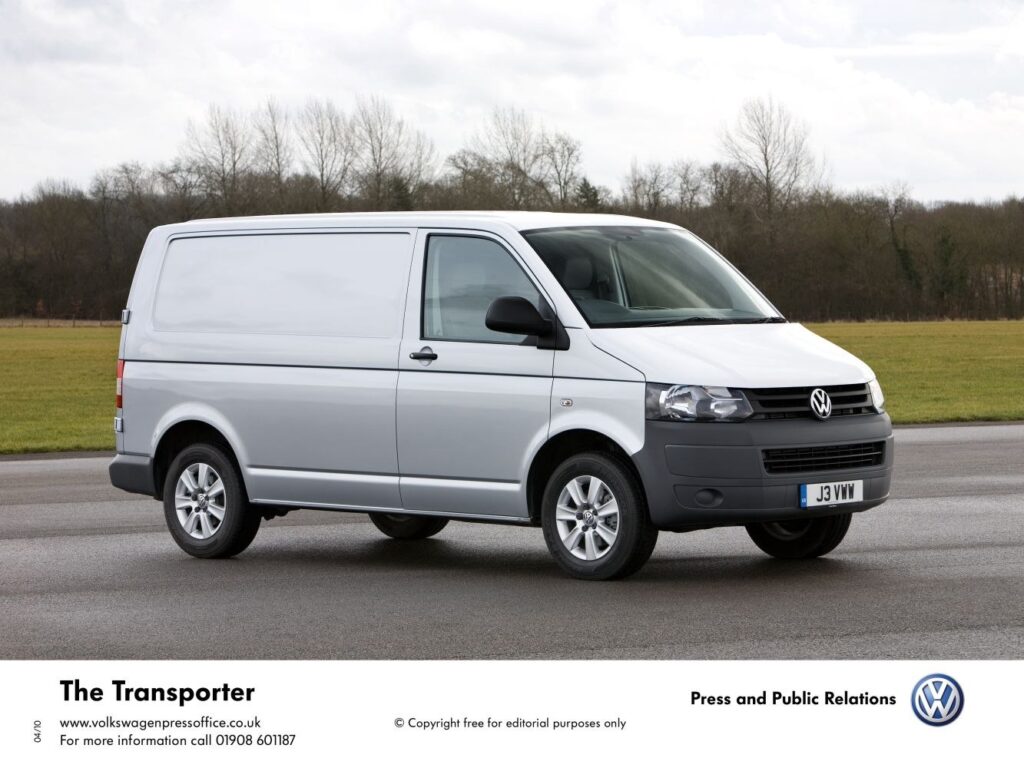
The Volkswagen Transporter (T5) facelift, produced from 2009 to 2015, represented a significant refresh of the fifth-generation Transporter line. Among the various engine and configuration options available, the 2.0 TDI 140 hp variant with a manual transmission (often paired with the L2H2 body configuration – long wheelbase, high roof) was a popular choice for commercial and private use. This version occupied a middle ground in the T5 range, offering a balance between performance, fuel economy, and payload capacity. It served as a step up from the lower-powered TDI engines while remaining more affordable and practical than the higher-output versions.
Powertrain & Engine Architecture
The heart of the Transporter 2.0 TDI 140 was the EA189 series four-cylinder diesel engine, specifically the CAAC engine code. This engine, a common sight in Volkswagen Group vehicles of the period, featured a 1.968-liter displacement (120.09 cubic inches). It employed a turbocharger with an intercooler to boost power output. The fuel injection system was a Diesel Commonrail system, delivering fuel directly into the cylinders at extremely high pressure for improved combustion efficiency and reduced emissions. The engine utilized a Double Overhead Camshaft (DOHC) valvetrain with four valves per cylinder, optimizing gas flow and contributing to its power delivery.
The 2.0 TDI 140 produced 140 horsepower (hp) at 3500 rpm and 340 Newton-meters (250.77 lb-ft) of torque between 1750 and 2500 rpm. This torque curve provided strong low-end and mid-range pulling power, ideal for carrying loads or navigating varied terrain. The engine’s compression ratio was relatively high at 16.5:1, typical for diesel engines, contributing to thermal efficiency. The engine oil capacity was 7 liters (7.4 US quarts or 6.16 UK quarts), and it required a specific oil specification as outlined by Volkswagen.
Transmission Details
The 2.0 TDI 140 was most commonly paired with a six-speed manual transmission. This gearbox was chosen for its durability and efficiency, providing a good spread of ratios for both city driving and highway cruising. The gear ratios were optimized to maximize fuel economy while still providing adequate acceleration. While a seven-speed DSG (Direct-Shift Gearbox) dual-clutch automatic transmission was available on some T5 models, it was less frequently seen with this specific engine output, and the manual transmission remained the more prevalent choice for this trim level.
Driving Characteristics
The driving experience in the Transporter 2.0 TDI 140 was characterized by its practicality and usability. The 340 Nm of torque available from relatively low engine speeds meant that the van felt responsive even when fully loaded. Acceleration from 0 to 100 km/h (0-62 mph) took approximately 12.3 seconds, which was adequate for most driving situations, though not particularly sporty. The top speed was 167 km/h (103.77 mph). Compared to the higher-powered TDI variants, the 140 hp version offered a more relaxed driving experience, prioritizing fuel efficiency and ease of use over outright performance. The manual transmission allowed for greater driver control, particularly when navigating challenging conditions or towing. Compared to the 1.9 TDI, the 2.0 TDI offered a noticeable increase in power and refinement.
Equipment & Trim Levels
The Transporter T5 facelift 2.0 TDI 140, particularly in the L2H2 configuration, was often specified as a work van, so standard equipment tended to be functional rather than luxurious. Typically, it included features such as power steering, ABS (Anti-lock Braking System), a driver’s airbag, and basic instrumentation. The interior was typically trimmed with durable, hard-wearing materials. The dashboard layout was functional and straightforward, prioritizing ergonomics and ease of use.
Optional extras were plentiful, allowing buyers to customize the van to their specific needs. These included air conditioning, a radio/CD player, electric windows, central locking, upgraded seating, and various cargo area enhancements such as shelving, tie-down points, and lighting. Higher trim levels, such as Trendline or Highline, added more comfort and convenience features as standard, including body-colored bumpers, alloy wheels, and upgraded interior trim.
Chassis & Braking
The T5 Transporter featured an independent suspension setup on both the front and rear axles. The front suspension utilized a McPherson strut design with coil springs and an anti-roll bar, while the rear suspension employed a trailing arm configuration with coil springs and a transverse stabilizer. This setup provided a reasonable balance between ride comfort and handling stability, even when the van was loaded. The front brakes were ventilated discs measuring 308×29.5 mm, while the rear brakes were also ventilated discs measuring 294×22 mm. This braking system provided adequate stopping power for the vehicle’s weight and performance capabilities.
Market Reception & Comparison
The Volkswagen Transporter T5 2.0 TDI 140 was generally well-received by critics and buyers alike. It was praised for its reliability, fuel efficiency, and practicality. Fuel consumption figures averaged around 7.4-7.7 liters per 100 kilometers (31.8-30.5 US mpg), making it an economical choice for businesses and individuals who needed a versatile van. Compared to the more powerful TDI variants, the 140 hp version offered a lower purchase price and slightly better fuel economy. However, it lacked the outright performance of its higher-powered siblings. Compared to competitors like the Mercedes-Benz Vito and Ford Transit, the Transporter T5 was often seen as offering a more refined driving experience and a higher level of build quality.
Technical Specifications
| Brand | Volkswagen |
| Model | Transporter (T5, facelift 2009) Panel Van |
| Type | 2.0 TDI (140 Hp) L2H2 |
| Start of production | 2009 |
| End of production | 2015 |
| Engine | EA189 / CAAC |
| Displacement | 1968 cm3 (120.09 cu. in.) |
| Cylinders | 4, Inline |
| Power | 140 Hp @ 3500 rpm |
| Torque | 340 Nm @ 1750-2500 rpm (250.77 lb.-ft.) |
| Fuel Consumption (Urban) | 9.5-9.8 l/100 km (24.8 – 24 US mpg) |
| Fuel Consumption (Extra Urban) | 6.2-6.5 l/100 km (37.9 – 36.2 US mpg) |
| Fuel Consumption (Combined) | 7.4-7.7 l/100 km (31.8 – 30.5 US mpg) |
| CO2 Emissions | 195-203 g/km |
| Acceleration 0-100 km/h | 12.3 sec |
| Maximum Speed | 167 km/h (103.77 mph) |
| Kerb Weight | 1773-2217 kg (3908.8 – 4887.65 lbs.) |
| Max. Weight | 2800-3200 kg (6172.94 – 7054.79 lbs.) |
| Fuel Tank Capacity | 80 l (21.13 US gal) |
| Transmission | 6-speed Manual |
Legacy
The 2.0 TDI 140 engine, while part of the EA189 family that later faced scrutiny regarding emissions compliance, proved to be a relatively reliable powertrain when properly maintained. The T5 Transporter, in general, has earned a reputation for durability and longevity. Today, used examples of the 2.0 TDI 140 are still relatively common on the market. They represent a cost-effective option for those seeking a practical and dependable van. However, potential buyers should be aware of the potential for diesel particulate filter (DPF) issues, particularly on vehicles that have primarily been used for short journeys. Regular servicing and preventative maintenance are crucial to ensuring the continued reliability of these vehicles.