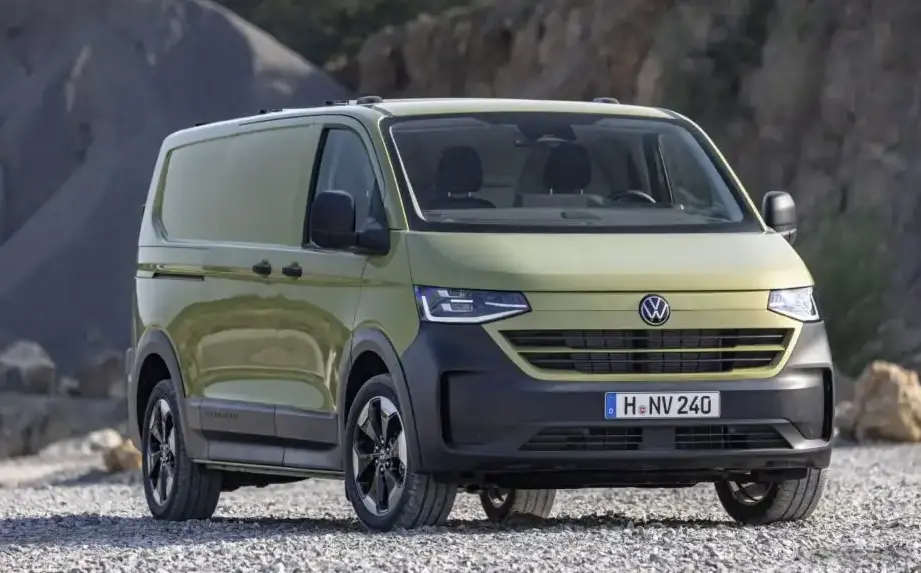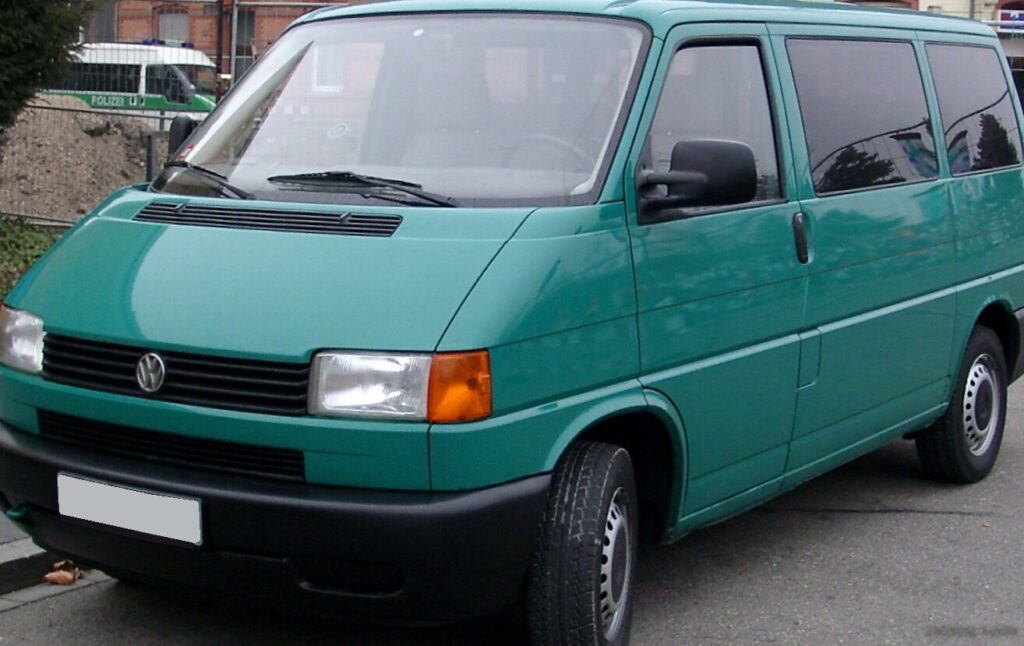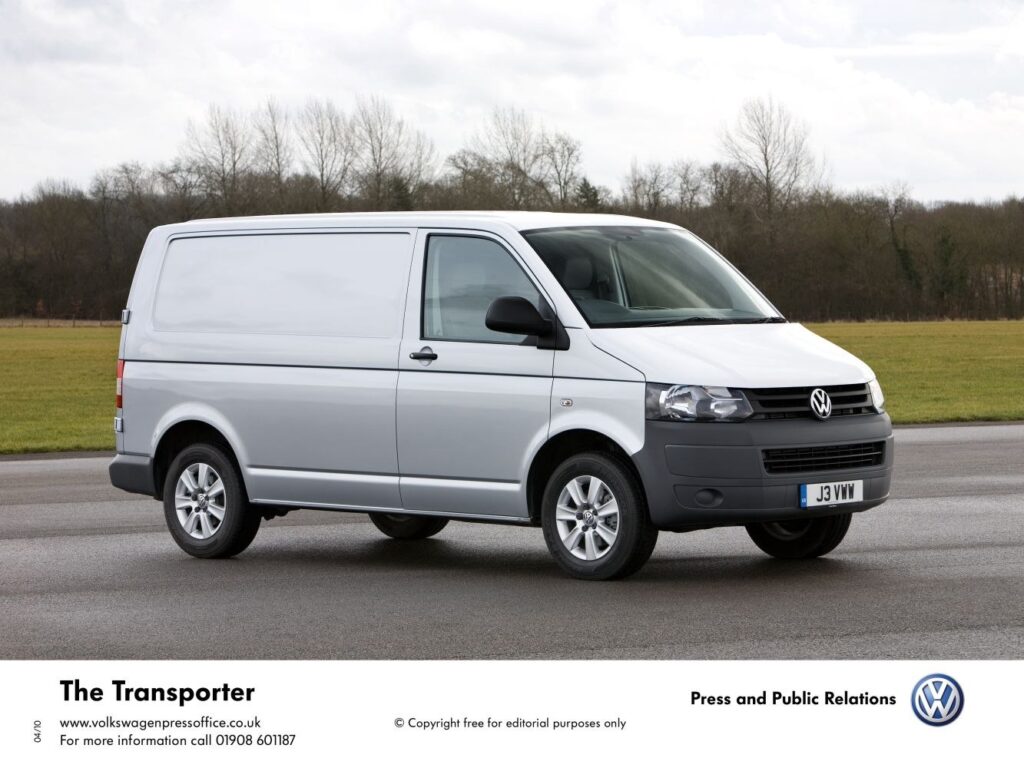
The Volkswagen Transporter, a cornerstone of the light commercial vehicle segment, underwent a significant refresh for its fifth generation (T5) in 2009. This iteration, specifically the Volkswagen Transporter (T5, facelift 2009) Panel Van, marks a pivotal period in the model’s evolution, harmonizing robust utility with improved efficiency and contemporary technology. Primarily engineered for the demanding European and international markets where commercial vans are essential to countless businesses, the T5 facelift continued the Transporter’s legacy as a versatile and dependable workhorse. This particular variant, equipped with the potent 2.0 TDI (180 hp) engine and a DSG automatic transmission in the L1H1 (short wheelbase, standard roof) configuration, offered a compelling blend of power, economy, and practicality for professionals needing a capable and comfortable commercial vehicle.
The Volkswagen Transporter (T5, facelift 2009) Panel Van: A European Icon
The Volkswagen Transporter series boasts a rich history dating back to the iconic T1 “Bus” of the 1950s. The T5 generation, launched in 2003, continued this tradition, and its 2009 facelift brought a host of improvements to maintain its competitiveness in a fiercely contested market. While not a common sight on American roads in its commercial panel van form, the Transporter is a ubiquitous fixture across Europe, serving as everything from delivery vehicles and tradesmen’s vans to ambulance conversions and recreational campers (Multivan/California variants). The facelifted T5 introduced updated styling, a revised interior, and, crucially, a new range of more efficient and powerful engines, including the advanced 2.0 TDI bi-turbo unit, coupled with Volkswagen’s renowned Direct-Shift Gearbox (DSG).
The L1H1 designation signifies the standard, shorter wheelbase (L1) and standard roof height (H1) configuration, offering a balance between maneuverability in urban environments and substantial cargo capacity. This makes the Volkswagen Transporter (T5, facelift 2009) Panel Van a highly adaptable vehicle, capable of navigating tight city streets while still accommodating a considerable payload. Its robust construction and sophisticated powertrain ensured it remained a top contender for businesses prioritizing reliability, running costs, and driver comfort.
Powertrain & Engine Architecture
At the heart of this Volkswagen Transporter (T5, facelift 2009) Panel Van variant lies a sophisticated 2.0-liter (1968 cm3) inline four-cylinder TDI diesel engine. This unit, internally designated EA189 / CFCA, is distinguished by its BiTurbo aspiration and Commonrail fuel injection system. The BiTurbo setup, utilizing two turbochargers, was designed to provide strong power delivery across a wide RPM range, minimizing turbo lag and ensuring responsive acceleration. This advanced engineering allowed the relatively small 2.0-liter engine to produce an impressive 180 horsepower at 4000 rpm and a substantial 295.02 lb-ft (400 Nm) of torque, available from a low 1500 rpm up to 2000 rpm. This broad torque band is particularly beneficial for a commercial vehicle, providing ample pulling power for heavy loads and effortless highway cruising.
Power is efficiently transmitted to the front wheels via Volkswagen’s highly regarded 7-speed DSG (Direct-Shift Gearbox) automatic transmission. This dual-clutch system offers quick, seamless gear changes, contributing significantly to both driving comfort and fuel efficiency. The DSG utilizes two separate clutches for odd and even gears, pre-selecting the next gear for near-instantaneous shifts. This results in a smoother, more responsive driving experience compared to traditional automatic transmissions. The combination of the powerful TDI engine and the responsive DSG gearbox allows the Transporter to accelerate from 0 to 60 mph in a respectable 9.5 seconds, with a top speed of 118.68 mph (191 km/h). These figures are remarkable for a commercial panel van, highlighting its ability to keep pace with passenger cars on highways while still delivering excellent load-carrying capabilities.
Despite its robust performance, the 2.0 TDI engine was also engineered for efficiency. The combined fuel economy for this variant was rated between 29 and 30.2 US mpg (7.8-8.1 l/100 km) under the NEDC cycle, a commendable figure for a vehicle of its size and capability. This efficiency, coupled with a generous 21.13 US gallon (80 liter) fuel tank, provided a substantial driving range, reducing downtime for refueling. The engine also featured a particulate filter and met the Euro 5 emission standard, reflecting Volkswagen’s commitment to reducing environmental impact.
Driving Characteristics
The 180 hp TDI engine and 7-speed DSG transmission combination in the T5 facelift offered a noticeable step up in performance compared to lower-powered variants. While not a sports van, it provided ample power for everyday driving, even when fully loaded. The DSG transmission’s quick shifts and intelligent gear selection ensured the engine remained in its optimal power band, delivering smooth and responsive acceleration. Compared to the 1.9 TDI or lower-powered 2.0 TDI engines, the BiTurbo setup minimized turbo lag, providing a more linear and predictable power delivery. The automatic transmission also made it more accessible to drivers unfamiliar with manual gearboxes, broadening its appeal. However, the manual transmission options offered slightly better fuel economy and a more engaging driving experience for enthusiasts. The gear ratios were tuned for a balance between acceleration and fuel efficiency, with a relatively tall final drive to maximize highway cruising range.
Equipment & Trim Levels
The Volkswagen Transporter (T5, facelift 2009) Panel Van, in this 2.0 TDI 180 hp DSG L1H1 configuration, typically came with a fairly standard level of equipment focused on practicality and functionality. Standard features generally included power windows, central locking, an adjustable steering column, and a basic audio system. The interior upholstery was typically durable cloth, designed to withstand the rigors of commercial use. The dashboard configuration was functional and straightforward, with clearly labeled controls.
Optional extras available for this trim included air conditioning, a more advanced audio system with Bluetooth connectivity, parking sensors, upgraded seating, and various cargo area enhancements such as additional tie-down points and shelving systems. Higher trim levels, often available as packages, could add features like alloy wheels, fog lights, and cruise control. The level of standard equipment varied slightly depending on the specific market and customer preferences.
Chassis & Braking
The Volkswagen Transporter (T5, facelift 2009) Panel Van utilized a robust chassis and suspension system designed to handle substantial payloads and provide a comfortable ride. The front suspension utilized an independent McPherson strut design with coil springs and an anti-roll bar, while the rear featured an independent coil spring setup with a transverse stabilizer and trailing arms. This sophisticated suspension system provided a comfortable ride quality for a commercial vehicle and stable handling, even with a full load. Power-assisted hydraulic rack and pinion steering further enhanced maneuverability and driver feedback.
Braking performance was provided by ventilated disc brakes on all four wheels, offering excellent stopping power even when heavily laden. The system included ABS (Anti-lock Braking System) as standard, enhancing stability and control during emergency braking maneuvers. The braking system was designed to withstand frequent use and provide reliable performance over extended periods. The rear brakes were typically slightly smaller in diameter than the front brakes, reflecting the weight distribution of the vehicle.
Market Reception & Comparison
Critics generally viewed the 2.0 TDI (180 hp) DSG combination in the T5 facelift favorably. It was praised for its strong performance, smooth shifting DSG transmission, and relatively good fuel economy. The BiTurbo engine was particularly well-regarded for its responsiveness and lack of turbo lag. Compared to the lower-powered TDI variants, the 180 hp version offered a significant improvement in driving experience, making it more suitable for long-distance journeys and demanding workloads.
In terms of fuel economy, the 2.0 TDI 180 hp DSG variant typically achieved between 29 and 30.2 US mpg (7.8-8.1 l/100 km) under the NEDC cycle, which was competitive with other diesel-powered vans in its class. Reliability was generally good, although some owners reported issues with the DSG transmission, particularly early units. However, these issues were often addressed through software updates and improved maintenance procedures. Compared to the VR6 gasoline engine option (where available), the TDI offered significantly better fuel economy and lower running costs, making it the preferred choice for most commercial operators.
Technical Specifications
| Category | Specification |
| Brand | Volkswagen |
| Model | Transporter |
| Generation | Transporter (T5, facelift 2009) Panel Van |
| Type (Engine) | 2.0 TDI (180 Hp) DSG L1H1 |
| Start of Production | 2009 year |
| End of Production | 2015 year |
| Powertrain Architecture | Internal Combustion engine |
| Body type | Van |
| Seats | 2-3 |
| Doors | 4-5 |
| Performance Specs | |
| Fuel consumption (economy) – urban (NEDC) | 9.9-10.2 l/100 km (23.8 – 23.1 US mpg) |
| Fuel consumption (economy) – extra urban (NEDC) | 6.6-6.9 l/100 km (35.6 – 34.1 US mpg) |
| Fuel consumption (economy) – combined (NEDC) | 7.8-8.1 l/100 km (30.2 – 29 US mpg) |
| CO2 emissions (NEDC) | 205-214 g/km |
| Fuel Type | Diesel |
| Acceleration 0 – 60 mph | 9.5 sec |
| Maximum speed | 118.68 mph (191 km/h) |
| Emission standard | Euro 5 |
| Weight-to-power ratio | 9.9 kg/Hp (101.1 Hp/tonne) |
| Weight-to-torque ratio | 4.5 kg/Nm (224.6 Nm/tonne) |
| Engine Specs | |
| Power | 180 Hp @ 4000 rpm |
| Power per liter | 91.5 Hp/l |
| Torque | 295.02 lb-ft (400 Nm) @ 1500-2000 rpm |
| Engine layout | Front, Transverse |
| Engine Model/Code | EA189 / CFCA |
| Engine displacement | 2.0 Liters (1968 cm3 / 120.09 cu. in.) |
| Number of cylinders | 4 |
| Engine configuration | Inline |
| Cylinder Bore | 3.19 in (81 mm) |
| Piston Stroke | 3.76 in (95.5 mm) |
| Compression ratio | 16.5:1 |
| Number of valves per cylinder | 4 |
| Fuel injection system | Diesel Commonrail |
| Engine aspiration | BiTurbo, Intercooler |
| Valvetrain | DOHC |
| Engine oil capacity | 7.4 US qt (7 l) |
| Engine oil specification | Not specified |
| Coolant | 11.62 US qt (11 l) |
| Engine systems | Particulate filter |
| Space, Volume and Weights | |
| Kerb Weight | 3926.43 – 4784.03 lbs (1781-2170 kg) |
| Max. weight | 6172.94 – 7054.79 lbs (2800-3200 kg) |
| Max load | 2246.51 – 2270.76 lbs (1019-1030 kg) |
| Trunk (boot) space – maximum | 204.83 cu. ft. (5800 l) |
| Fuel tank capacity | 21.13 US gal (80 l) |
| Max. roof load | 220.46 lbs (100 kg) |
| Permitted trailer load with brakes (12%) | 5511.56 lbs (2500 kg) |
| Permitted trailer load without brakes | 1653.47 lbs (750 kg) |
| Permitted towbar download | 220.46 lbs (100 kg) |
| Dimensions | |
| Length | 192.6 in (4892 mm) |
| Width | 74.96 in (1904 mm) |
| Width including mirrors | 89.88 in (2283 mm) |
| Height | 78.35 in (1990 mm) |
| Wheelbase | 118.11 in (3000 mm) |
| Front overhang | 35.28 in (896 mm) |
| Rear overhang | 39.21 in (996 mm) |
| Ride height (ground clearance) | 7.91 in (201 mm) |
| Minimum turning circle (turning diameter) | 39.04 ft (11.9 m) |
| Approach angle | 21° |
| Departure angle | 17° |
| Ramp-over (brakeover) angle | 14° |
| Wading depth | 11.81 in (300 mm) |
| Drivetrain, Brakes and Suspension Specs | |
| Drivetrain Architecture | The Internal combustion engine (ICE) drives the front wheels of the vehicle. |
| Drive wheel | Front wheel drive |
| Number of gears and type of gearbox | 7 gears, automatic transmission DSG |
| Front suspension | Independent, type McPherson with coil spring and anti-roll bar |
| Rear suspension | Independent coil spring, Transverse stabilizer, Trailing arm |
| Front brakes | Ventilated discs, 13.39×1.28 in (340×32.5 mm) |
| Rear brakes | Ventilated discs, 11.57×0.87 in (294×22 mm) |
| Assisting systems | ABS (Anti-lock braking system) |
| Steering type | Steering rack and pinion |
| Power steering | Hydraulic Steering |
| Tires size | 215/60 R17; 235/55 R17; 255/45 R18 |
| Wheel rims size | 7J x 17; 8J x 18 |
Legacy
The Volkswagen Transporter has consistently been a benchmark in the light commercial vehicle sector, and the T5 generation, particularly its facelifted version from 2009 to 2015, upheld this reputation. In its primary markets, especially Europe, it faced stiff competition from rivals such as the Ford Transit, Mercedes-Benz Vito, Renault Trafic, and Opel Vivaro. However, the Volkswagen Transporter (T5, facelift 2009) Panel Van distinguished itself through its premium build quality, refined driving dynamics, and the efficiency and power of its TDI engines coupled with the advanced DSG transmission. These attributes often positioned it at a slightly higher price point, but justified by its perceived durability, higher residual values, and superior driving experience compared to some competitors.
The T5 facelift generation solidified the Transporter’s image as a versatile and dependable workhorse. Its robust mechanicals, combined with a practical and adaptable cargo space, made it a favorite among small businesses, large fleets, and tradespeople alike. The 2.0 TDI (180 hp) DSG variant, in particular, was sought after for applications requiring significant power and the convenience of an automatic transmission, such as long-distance deliveries or towing. Its ability to handle substantial payloads and trailer loads further enhanced its utility. Beyond its commercial applications, the T5 platform also served as the basis for the highly popular Multivan and California camper van models, showcasing its inherent versatility. This broad appeal contributed to its enduring legacy and strong market presence. The T5 generation, including the facelift, is remembered as a sophisticated evolution of the Transporter lineage, successfully blending modern automotive technology with the practicality and reliability expected of a Volkswagen commercial vehicle. It set a high standard for subsequent generations and remains a highly regarded vehicle in the used commercial vehicle market, a testament to its quality and lasting impact.