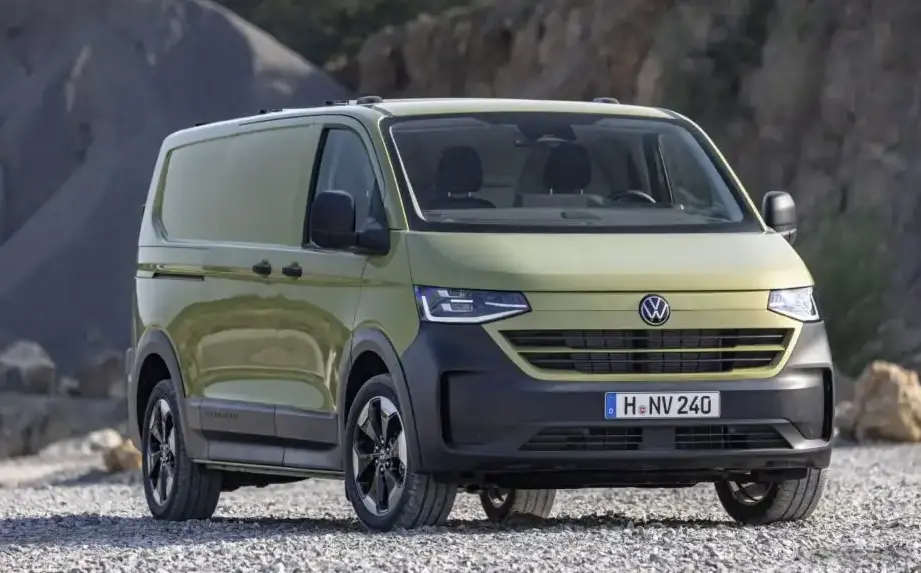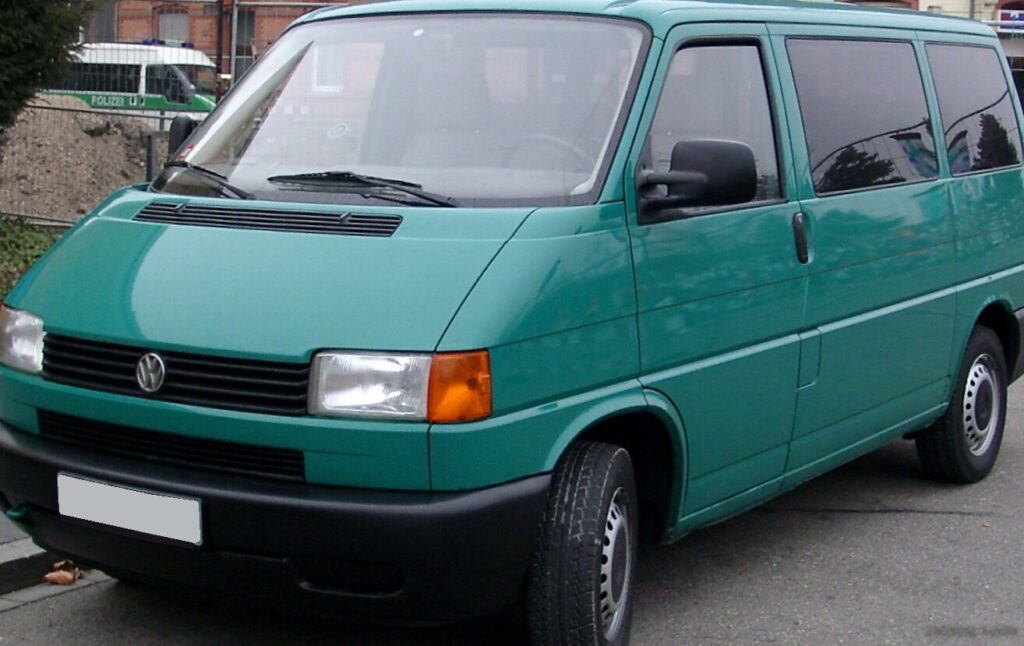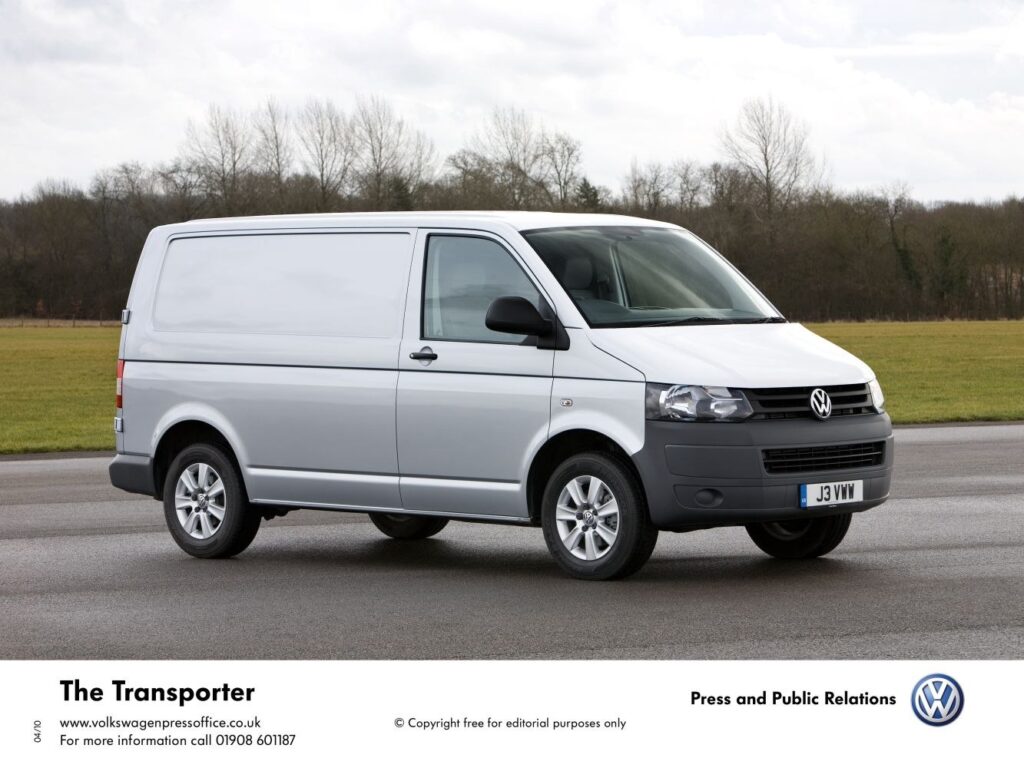
The Volkswagen Transporter, a name synonymous with versatility and reliability in the light commercial vehicle (LCV) segment, has been a cornerstone of Volkswagen’s global product lineup for decades. The T5 generation, introduced in 2003, represented a significant evolution in design, technology, and capability. This article focuses on the facelifted T5, specifically the Volkswagen Transporter (T5, facelift 2009) Panel Van 2.0 TDI (84 Hp) L1H2, produced from 2009 to 2015. This particular variant, a panel van with the 2.0-liter TDI engine producing 84 horsepower, and designated as L1H2 (indicating a standard length and medium roof height), played a crucial role as an economical and practical workhorse primarily in European and other international markets where the Transporter has a strong legacy. While the Transporter series, including its passenger van derivatives like the Multivan and Caravelle, is globally recognized, this commercial panel van was not typically offered in the United States, where Volkswagen’s commercial vehicle strategy differs significantly, focusing instead on larger vans like the Crafter or rebadged models.
Powertrain & Engine Architecture
At the heart of this specific Transporter T5 facelift model is Volkswagen’s 2.0-liter (1968 cm3 or 120.09 cu. in.) TDI diesel engine, identified by the EA189 / CAAA code. This inline four-cylinder unit, featuring a DOHC valvetrain, common-rail fuel injection, and aided by a turbocharger and intercooler, was engineered for efficiency and durability rather than outright speed. The engine utilizes a Bosch EDC16C34 engine control unit (ECU) to manage fuel delivery and ignition timing. The common-rail direct injection system operates at a maximum pressure of 1600 bar, optimizing fuel atomization for cleaner combustion and improved efficiency. The turbocharger is a variable geometry turbo (VGT), allowing for optimized boost pressure across a wider engine speed range.
It delivered a modest but effective 84 horsepower at 3500 rpm, paired with a robust 220 Nm (162.26 lb.-ft.) of torque available across a broad range from 1250 to 2500 rpm. This low-end torque was crucial for a commercial vehicle designed to haul goods, providing ample pulling power even when fully loaded. Power was sent to the front wheels via a 5-speed manual transmission, a setup chosen for its reliability and cost-effectiveness. The transmission utilizes a single-plate dry clutch and features synchromesh on all forward gears. While an automatic transmission was available on other T5 variants, it was not offered with this specific 84 hp engine configuration.
Driving Characteristics
The Transporter 2.0 TDI (84 Hp) L1H2 was not designed for spirited driving. Acceleration from 0 to 60 mph was achieved in approximately 18.8 seconds, with a top speed of 88.23 mph (142 km/h). The 5-speed manual transmission’s gear ratios are geared towards maximizing fuel efficiency and providing sufficient torque for hauling. First gear is relatively short, providing good acceleration from a standstill, while fifth gear is tall, designed for comfortable cruising at highway speeds. The engine’s peak torque is available from a low 1250 rpm, meaning that the vehicle feels responsive in everyday driving situations, even when loaded. Compared to the higher-output 140 hp or 180 hp TDI versions, this 84 hp variant felt noticeably slower, particularly when climbing hills or overtaking. However, the lower power output also contributed to improved fuel economy and reduced stress on the engine and drivetrain.
The driving experience was generally comfortable, thanks to the T5’s well-tuned suspension. However, the unladen ride could be somewhat bouncy, especially on rough roads. Loading the vehicle with cargo significantly improved ride quality. Steering was precise and relatively light, making it easy to maneuver in urban environments.
Equipment & Trim Levels
The Volkswagen Transporter (T5, facelift 2009) Panel Van 2.0 TDI (84 Hp) L1H2 was typically offered as a base-level work van, focusing on functionality and affordability. Standard equipment included a driver’s airbag, Anti-lock Braking System (ABS), power steering, and a basic audio system. The interior was typically trimmed with durable, hard-wearing plastics and cloth upholstery. The driver’s seat was manually adjustable, and the dashboard layout was straightforward and functional.
Optional extras included air conditioning, electric windows, central locking, a passenger’s airbag, and upgraded audio systems. Some models were also equipped with a rear parking sensor system. Higher trim levels, such as the Trendline and Highline, offered more extensive standard equipment, but these were typically paired with the more powerful TDI engines. The L1H2 configuration was primarily focused on providing maximum cargo space and practicality, so luxury features were generally kept to a minimum.
Chassis & Braking
The T5 Transporter utilized a monocoque chassis construction, providing a good balance between strength and weight. The front suspension consisted of independent McPherson struts with coil springs and an anti-roll bar. The rear suspension employed an independent coil spring trailing arm setup, also with an anti-roll bar. This suspension configuration provided a comfortable ride and good handling characteristics, even when the vehicle was fully loaded. The steering system was a hydraulic power-assisted rack and pinion system, offering precise and responsive steering.
Braking was provided by ventilated disc brakes on all four wheels (308×29.5 mm front, 294×22 mm rear). The ABS system helped to prevent wheel lockup during hard braking, improving stability and control. The braking system was generally considered to be effective, providing adequate stopping power for a vehicle of this weight class. The rear drums, often found on lower-spec T5 models, were not used in this configuration.
Market Reception & Comparison
Critics generally viewed the 1.8L Automatic Transporter as a practical and economical workhorse, but acknowledged its lack of performance. Its fuel economy was a major selling point, and its reliability was generally praised. Compared to the higher-output TDI versions, the 84 hp model offered significantly lower running costs, but at the expense of performance. The 140 hp TDI, for example, provided a much more refined driving experience and was better suited for long-distance journeys or frequent hauling of heavy loads. However, the 140 hp version also came with a higher price tag and increased fuel consumption.
Compared to competitors like the Ford Transit Custom and Mercedes-Benz Vito, the Transporter T5 offered a good balance of practicality, reliability, and fuel economy. The Transporter’s reputation for build quality and its strong residual values also made it an attractive option for businesses and tradespeople. The 84 hp TDI engine was particularly popular in markets where fuel costs were high and performance was less of a priority.
Technical Specifications
| General Information | |
| Brand | Volkswagen |
| Model | Transporter |
| Generation | Transporter (T5, facelift 2009) Panel Van |
| Type (Engine) | 2.0 TDI (84 Hp) L1H2 |
| Start of Production | 2009 year |
| End of Production | 2015 year |
| Powertrain Architecture | Internal Combustion Engine |
| Body Type | Van |
| Seats | 2-3 |
| Doors | 4-5 |
| Performance Specs | |
| Fuel Consumption (Economy) – Urban (NEDC) | 9.4-9.7 l/100 km (25 – 24.2 US mpg) |
| Fuel Consumption (Economy) – Extra Urban (NEDC) | 6-6.3 l/100 km (39.2 – 37.3 US mpg) |
| Fuel Consumption (Economy) – Combined (NEDC) | 7.2-7.5 l/100 km (32.7 – 31.4 US mpg) |
| CO2 Emissions (NEDC) | 190-198 g/km |
| Fuel Type | Diesel |
| Acceleration 0 – 60 mph | 18.8 sec |
| Maximum Speed | 142 km/h (88.23 mph) |
| Emission Standard | Euro 5 |
| Weight-to-Power Ratio | 20.1 kg/Hp (49.8 Hp/tonne) |
| Weight-to-Torque Ratio | 7.7 kg/Nm (130.4 Nm/tonne) |
| Engine Specs | |
| Power | 84 Hp @ 3500 rpm |
| Power per Liter | 42.7 Hp/l |
| Torque | 220 Nm (162.26 lb.-ft.) @ 1250-2500 rpm |
| Engine Layout | Front, Transverse |
| Engine Model/Code | EA189 / CAAA |
| Engine Displacement | 1968 cm3 (120.09 cu. in.) |
| Number of Cylinders | 4 |
| Engine Configuration | Inline |
| Cylinder Bore | 81 mm (3.19 in.) |
| Piston Stroke | 95.5 mm (3.76 in.) |
| Compression Ratio | 16.5:1 |
| Number of Valves per Cylinder | 4 |
| Fuel Injection System | Diesel Commonrail |
| Engine Aspiration | Turbocharger, Intercooler |
| Valvetrain | DOHC |
| Engine Oil Capacity | 7 l (7.4 US qt) |
| Coolant | 11 l (11.62 US qt) |
| Engine Systems | Particulate filter |
| Space, Volume and Weights | |
| Kerb Weight | 1687-2103 kg (3719.2 – 4636.32 lbs.) |
| Max. Weight | 2800-3000 kg (6172.94 – 6613.87 lbs.) |
| Max Load | 897-1113 kg (1977.55 – 2453.74 lbs.) |
| Trunk (Boot) Space – Maximum | 6700 l (236.61 cu. ft.) |
| Fuel Tank Capacity | 80 l (21.13 US gal) |
| Permitted Trailer Load with Brakes (12%) | 2200 kg (4850.17 lbs.) |
| Permitted Trailer Load without Brakes | 750 kg (1653.47 lbs.) |
| Permitted Towbar Download | 100 kg (220.46 lbs.) |
| Dimensions | |
| Length | 4892 mm (192.6 in.) |
| Width | 1904 mm (74.96 in.) |
| Width Including Mirrors | 2283 mm (89.88 in.) |
| Height | 2176 mm (85.67 in.) |
| Wheelbase | 3000 mm (118.11 in.) |
| Front Overhang | 896 mm (35.28 in.) |
| Rear Overhang | 996 mm (39.21 in.) |
| Ride Height (Ground Clearance) | 201 mm (7.91 in.) |
| Minimum Turning Circle (Turning Diameter) | 11.9 m (39.04 ft.) |
| Approach Angle | 21° |
| Departure Angle | 17° |
| Ramp-over (Brakeover) Angle | 14° |
| Wading Depth | 300 mm (11.81 in.) |
| Drivetrain, Brakes and Suspension Specs | |
| Drivetrain Architecture | Front-wheel drive (ICE drives front wheels) |
| Drive Wheel | Front wheel drive |
| Number of Gears and Type of Gearbox | 5 gears, manual transmission |
| Front Suspension | Independent, McPherson with coil spring and anti-roll bar |
| Rear Suspension | Independent coil spring, Transverse stabilizer, Trailing arm |
| Front Brakes | Ventilated discs, 308×29.5 mm |
| Rear Brakes | Ventilated discs, 294×22 mm |
| Assisting Systems | ABS (Anti-lock braking system) |
| Steering Type | Steering rack and pinion |
| Power Steering | Hydraulic Steering |
| Tires Size | 215/65 R16 |
| Wheel Rims Size | 6.5J x 16 |
Legacy
The Volkswagen Transporter T5 facelift Panel Van 2.0 TDI (84 Hp) L1H2, while not the most powerful or luxurious version of the T5, has proven to be a durable and reliable workhorse. The EA189 engine, despite being subject to emissions-related recalls in some markets, is generally considered to be a robust unit when properly maintained. In the used car market, these vans are often sought after by small businesses and tradespeople looking for an affordable and dependable vehicle. Their relatively low running costs and strong residual values make them an attractive proposition.
However, potential buyers should be aware of the potential for issues with the dual-mass flywheel and the turbocharger. Regular maintenance, including oil changes and filter replacements, is crucial for ensuring the longevity of the engine and drivetrain. Overall, the Transporter T5 facelift 2.0 TDI (84 Hp) L1H2 remains a popular and respected choice in the LCV segment, continuing the Transporter’s long-standing legacy of practicality, reliability, and versatility.