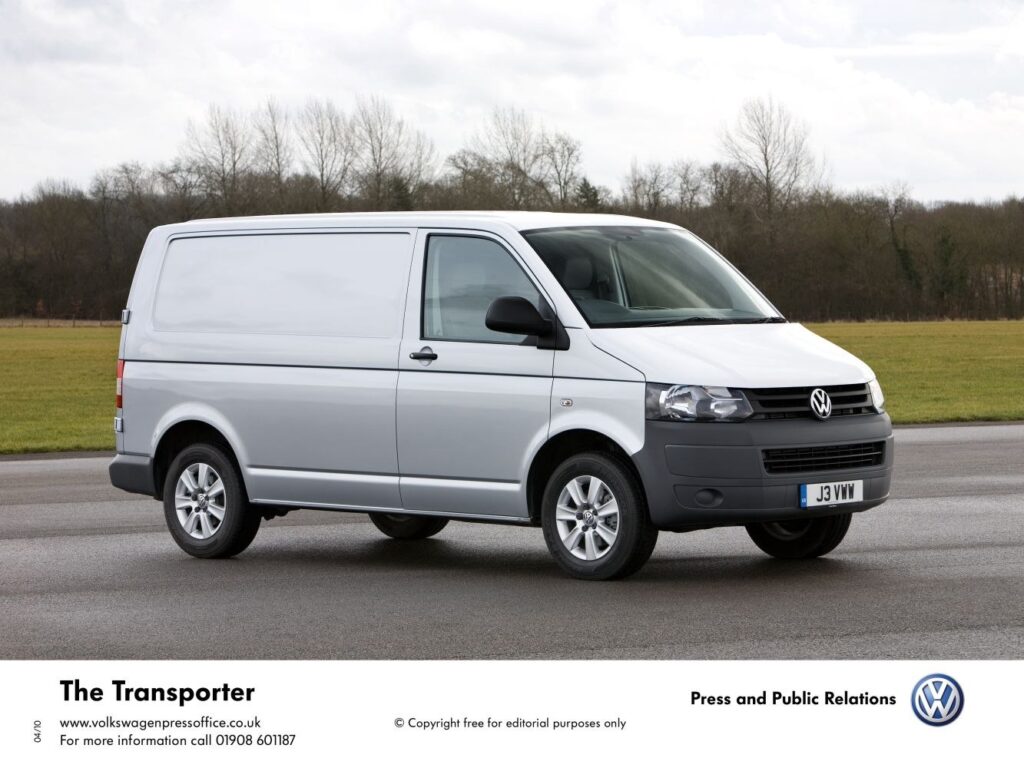
The Volkswagen Transporter (T5, facelift 2009) Panel Van represents a cornerstone in the light commercial vehicle segment, particularly in Europe. This article focuses on the fifth-generation (T5) Transporter, specifically its facelifted iteration launched in 2009, in the Panel Van configuration with the 2.0 TDI (84 Hp) L2H3 powertrain. Produced from 2009 to 2015, this model served as a quintessential utilitarian vehicle, renowned for its robustness, versatility, and efficiency. While passenger variants like the Multivan or Caravelle saw limited North American distribution as the “Eurovan,” the Panel Van, especially with its lower-output diesel engine, was primarily a European commercial fleet vehicle.
The T5 Facelift and its Position in the Lineup
The T5 generation debuted in 2003, building on the reputation of its predecessors. The 2009 facelift brought aesthetic and mechanical refinements, enhancing appeal, modernizing the appearance, and improving powertrain efficiency to meet evolving emission standards. The Panel Van prioritizes load-carrying capacity and durability over passenger comfort. The L2H3 designation indicates a Long Wheelbase (L2) and a High Roof (H3) configuration, maximizing cargo volume. This 84 horsepower diesel variant occupied the entry-level position in the T5 Panel Van range, offering a cost-effective solution for businesses prioritizing functionality over performance. Higher trims featured more powerful TDI engines, such as the 140 hp and 180 hp versions, and often included additional features like upgraded interiors and advanced driver-assistance systems.
Powertrain & Engine Architecture
The Volkswagen Transporter (T5, facelift 2009) Panel Van is powered by a 2.0-liter (1968 cm³ or 120.09 cu. in.) four-cylinder inline diesel engine, identified by the EA189 / CAAA code. This common rail direct injection unit features a turbocharger and intercooler. It produces 84 horsepower at 3500 rpm and 220 Nm (162.26 lb.-ft.) of torque between 1250 and 2500 rpm. The engine utilizes a Bosch EDC16C34 engine control unit (ECU) to manage fuel injection, turbocharger boost, and other critical parameters. The valvetrain consists of a double overhead camshaft (DOHC) with four valves per cylinder, optimizing gas exchange for improved efficiency and torque. The 2.0 TDI engine is a relatively simple design, contributing to its reliability and ease of maintenance.
Transmission Details
Power is transmitted to the front wheels via a 5-speed manual transmission. This transmission is a robust and reliable unit, designed for the demands of commercial use. The gear ratios are optimized for maximizing fuel efficiency and providing adequate torque for hauling loads. First gear is relatively low, providing good starting torque, while fifth gear is geared for efficient highway cruising. The transmission’s simplicity contributes to its durability and relatively low maintenance requirements.
Driving Characteristics
The 2.0 TDI (84 Hp) L2H3 Transporter prioritizes utility over outright performance. Acceleration from 0-60 mph takes approximately 19.3 seconds, and the top speed is around 84.51 mph (136 km/h). The engine’s strength lies in its low-end torque, making it capable of confidently pulling heavy loads from a standstill and maintaining momentum on inclines. Compared to the higher-output TDI versions, this variant feels noticeably slower, particularly when fully loaded or climbing hills. The 5-speed manual transmission requires more frequent shifting to maintain optimal engine speed, especially in hilly terrain. However, the predictable power delivery and relatively light clutch make it easy to drive, even for inexperienced drivers.
Equipment & Trim Levels
As a Panel Van, the T5 2.0 TDI (84 Hp) L2H3 is sparsely equipped, focusing on functionality. Standard features typically included a driver’s airbag, Anti-lock Braking System (ABS), power steering, and basic instrumentation. The interior is typically finished with durable, easy-to-clean plastics. Seating is usually for two or three occupants, with hard-wearing fabric upholstery. Optional extras included air conditioning, a radio with CD player, electric windows, and central locking. Higher trim levels, though rare on this base engine, could add features like upgraded seats, a more sophisticated audio system, and parking sensors.
Chassis & Braking
The T5 Transporter utilizes an independent McPherson strut suspension with coil springs and an anti-roll bar at the front, and an independent coil spring suspension with a transverse stabilizer and trailing arm at the rear. This suspension setup provides a reasonable balance between ride comfort and load-carrying capacity. The braking system consists of ventilated discs on all four wheels (308×29.5 mm front, 294×22 mm rear), providing adequate stopping power even when heavily loaded. The steering is hydraulic power-assisted, making maneuvering the large van relatively easy. Stabilizer bar thickness is moderate, prioritizing stability over sporty handling.
Market Reception & Comparison
Critics generally praised the T5 Transporter for its reliability, build quality, and practicality. The 2.0 TDI (84 Hp) variant was viewed as a cost-effective option for businesses prioritizing fuel efficiency and low running costs. However, its lack of power was often noted, particularly when compared to the higher-output TDI engines. Fuel economy, ranging from 30.9 to 29.8 US mpg (combined NEDC cycle), was a significant selling point. Compared to competitors like the Ford Transit, the Transporter offered a more refined driving experience and a stronger resale value. However, the Transit often offered a wider range of configurations and a lower initial purchase price. The Mercedes-Benz Vito was seen as a more premium alternative, but also came with a higher price tag.
Technical Specifications
| Category | Specification |
| General Information | |
| Brand | Volkswagen |
| Model | Transporter |
| Generation | Transporter (T5, facelift 2009) Panel Van |
| Type (Engine) | 2.0 TDI (84 Hp) L2H3 |
| Production Start | 2009 |
| Production End | 2015 |
| Powertrain Architecture | Internal Combustion Engine |
| Body Type | Van |
| Seats | 2-3 |
| Doors | 4-5 |
| Performance Specifications | |
| Fuel Consumption (Urban, NEDC) | 9.5-9.8 l/100 km |
| Fuel Consumption (Extra Urban, NEDC) | 6.6-6.9 l/100 km |
| Fuel Consumption (Combined, NEDC) | 7.6-7.9 l/100 km |
| CO2 Emissions (NEDC) | 199-208 g/km |
| Fuel Type | Diesel |
| Acceleration 0-62 mph (0-100 km/h) | 20.3 sec |
| Acceleration 0-60 mph (Calculated) | 19.3 sec |
| Maximum Speed | 136 km/h / 84.51 mph |
| Emission Standard | Euro 5 |
| Engine Specifications | |
| Power | 84 Hp @ 3500 rpm |
| Torque | 220 Nm @ 1250-2500 rpm / 162.26 lb.-ft. @ 1250-2500 rpm |
| Engine Layout | Front, Transverse |
| Engine Model/Code | EA189 / CAAA |
| Engine Displacement | 1968 cm³ / 2.0 liters / 120.09 cu. in. |
| Number of Cylinders | 4 |
| Engine Configuration | Inline |
| Valves per Cylinder | 4 |
| Fuel Injection System | Diesel Commonrail |
| Engine Aspiration | Turbocharger, Intercooler |
| Valvetrain | DOHC |
| Space, Volume and Weights | |
| Kerb Weight | 1738-2182 kg / 3831.63 – 4810.49 lbs. |
| Max. Weight (GVWR) | 2800-3000 kg / 6172.94 – 6613.87 lbs. |
| Max Load (Payload) | 818-1062 kg / 1803.38 – 2341.31 lbs. |
| Trunk (Boot) Space – Maximum | 9300 l / 328.43 cu. ft. |
| Fuel Tank Capacity | 80 l / 21.13 US gal |
Legacy
The T5 Transporter 2.0 TDI (84 Hp) L2H3 has proven to be a durable and reliable workhorse. The 2.0 TDI engine, while not the most powerful, is known for its longevity and relatively low maintenance costs. In the used car market, these vans remain popular due to their affordability and practicality. Common issues include wear and tear on suspension components and potential problems with the turbocharger, but these are generally manageable with regular maintenance. The T5 continues to be a sought-after vehicle for small businesses and tradespeople, demonstrating its enduring appeal and solidifying its place as a classic in the light commercial vehicle segment.