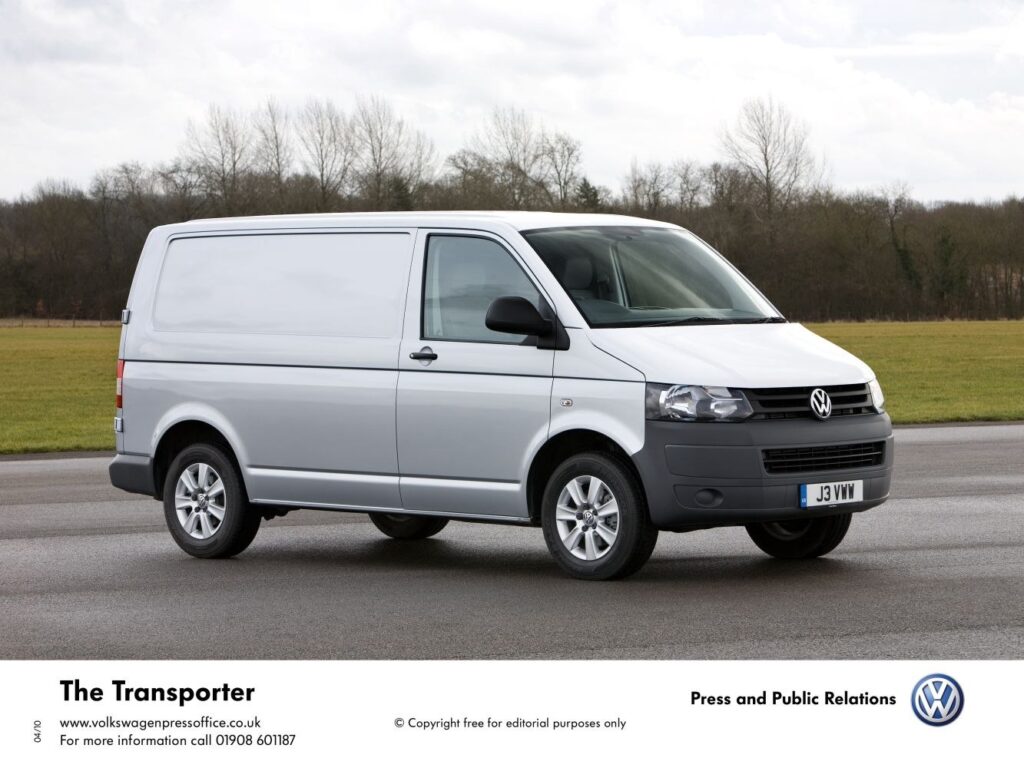
The Volkswagen Transporter (T5, facelift 2009) Panel Van 2.0 TDI BMT (114 Hp) L1H1 represents a significant iteration of Volkswagen’s long-standing commercial vehicle lineage. Produced from 2011 to 2015, this variant of the T5 generation – itself introduced in 2003 and refreshed in 2009 – was a mainstay for businesses and tradespeople across Europe. It distinguished itself through a blend of robust construction, respectable performance, and economic operation. While not officially sold in the United States, the Transporter, often known as the ‘VW Bus’ or ‘Microbus’ in passenger configurations, enjoys iconic status globally, and its commercial versions like the T5 Panel Van are essential tools in their primary markets. This specific model, the L1H1, denotes a short wheelbase and standard roof height, optimizing maneuverability and cargo capacity.
The Evolution of the Volkswagen Transporter (T5, facelift 2009) Panel Van
The T5 generation marked a departure from the T4, embracing a more car-like driving experience and prioritizing comfort and safety without sacrificing its core utility as a commercial vehicle. The 2009 facelift, often referred to as the T5.1, brought substantial refinements. Externally, it received a redesigned front fascia, including new headlights, grille, and bumper, aligning its aesthetics with contemporary Volkswagen passenger cars. More importantly, the facelift introduced a new generation of common rail TDI diesel engines, replacing the older pump-injector units. The 2.0 TDI BMT (BlueMotion Technology) variant was engineered to balance power, efficiency, and reduced emissions, making it attractive to fleet operators and individual contractors. The L1H1 designation signifies the short wheelbase and standard roof height, providing a compact yet functional cargo area.
Powertrain & Engine Architecture
The Volkswagen Transporter (T5, facelift 2009) Panel Van 2.0 TDI BMT (114 Hp) L1H1 is powered by Volkswagen’s 2.0-liter (1968 cm3 or 120.09 cu. in.) turbocharged, intercooled diesel engine. This inline four-cylinder powerplant, identified by the engine code EA189 / CAAD, features a sophisticated common rail fuel injection system and a DOHC valvetrain with four valves per cylinder, ensuring precise fuel delivery and optimal combustion. It produces 114 horsepower at 3500 rpm, sufficient for daily commercial tasks, including hauling substantial loads. Crucially for a work vehicle, its torque output is 250 Nm (184.39 lb.-ft.) available from 1500 to 2750 rpm, providing strong pulling power even when fully laden.
Power is delivered to the front wheels via a smooth-shifting 5-speed manual transmission, a common and reliable setup for vans in this segment. While not focused on outright speed, the Transporter 2.0 TDI BMT accelerates from 0 to 60 mph in approximately 14.1 seconds (0-100 km/h in 14.8 seconds) and reaches a maximum speed of 101.28 mph (163 km/h). These figures reflect its purpose as a practical hauler rather than a performance vehicle.
The BlueMotion Technology (BMT) package is a key feature, incorporating a Start & Stop system and a particulate filter. These technologies were essential for meeting Euro 5 emission standards and improving fuel efficiency. Official NEDC combined fuel consumption figures are impressive for a vehicle of its size: 6.7-7 liters per 100 km, equating to 35.1 – 33.6 US mpg. This efficiency, combined with an 80-liter (21.13 US gal) fuel tank, provides a substantial driving range, reducing refueling downtime and lowering operating costs. CO2 emissions are also controlled at 176-184 g/km.
Driving Characteristics
The 114 hp / 5-speed manual combination in the Transporter T5.1 offers a pragmatic driving experience. Compared to higher-output TDI variants or those equipped with a DSG dual-clutch transmission, this setup prioritizes fuel economy and ease of use over outright performance. The 5-speed gearbox is well-matched to the engine’s torque curve, providing adequate acceleration for most driving situations. The relatively low gearing allows for strong pulling power at lower speeds, ideal for navigating urban environments and carrying heavy loads. However, highway cruising at higher speeds may require more frequent gear changes to maintain optimal engine speed. The manual transmission provides greater driver control compared to an automatic, and the BMT system’s start/stop function contributes to improved fuel economy in stop-and-go traffic. While not sporty, the driving experience is comfortable and predictable, focusing on practicality and efficiency.
Equipment & Trim Levels
The Volkswagen Transporter (T5, facelift 2009) Panel Van 2.0 TDI BMT (114 Hp) L1H1 was typically equipped with a functional, no-frills interior geared towards commercial use. Standard features included a driver’s airbag, ABS, power steering, and a basic audio system. The cabin materials were durable and designed to withstand the rigors of daily use. Upholstery was typically hard-wearing cloth. Optional extras included air conditioning, electric windows, a passenger airbag, upgraded audio systems with Bluetooth connectivity, and parking sensors. Higher trim levels offered additional features such as cruise control, heated seats, and upgraded interior trim. The focus remained on providing a practical and reliable work environment rather than luxurious amenities.
Chassis & Braking
The Transporter features a robust suspension system, with an independent McPherson-type setup with coil springs and an anti-roll bar at the front, and an independent coil spring with a transverse stabilizer and trailing arm at the rear. This setup provides a comfortable ride even when unladen and maintains stability under heavy loads. Braking is handled by ventilated discs on all four wheels (front: 308×29.5 mm, rear: 294×22 mm), complemented by an Anti-lock Braking System (ABS) for enhanced safety. Hydraulic power steering ensures responsive and predictable handling. The 215/65 R16 tires on 6.5J x 16 wheels offer a good balance of load-bearing capacity and ride comfort. Ground clearance is 7.91 inches (201 mm), with approach/departure angles of 21° and 17° respectively, and a wading depth of 11.81 inches (300 mm).
Market Reception & Comparison
Critics generally viewed the 1.8L Automatic Transporter favorably, praising its fuel efficiency, reliability, and practicality. It was often considered a strong contender in the light commercial vehicle segment, particularly for businesses seeking a cost-effective and dependable van. Compared to higher-output TDI trims, the 114 hp version offered lower running costs due to its improved fuel economy. However, it lacked the outright performance and towing capacity of its more powerful siblings. Compared to competitors like the Ford Transit Custom and Mercedes-Benz Vito, the Transporter was often lauded for its car-like driving dynamics and perceived build quality. Its strong residual values also made it an attractive option for businesses considering long-term ownership.
Technical Specifications
| Category | Specification |
| General Information | |
| Brand | Volkswagen |
| Model | Transporter |
| Generation | Transporter (T5, facelift 2009) Panel Van |
| Type (Engine) | 2.0 TDI BMT (114 Hp) L1H1 |
| Start of Production | 2011 year |
| End of Production | 2015 year |
| Powertrain Architecture | Internal Combustion engine |
| Body type | Van |
| Seats | 2-3 |
| Doors | 4-5 |
| Performance Specs | |
| Fuel consumption (economy) – urban (NEDC) | 8.3-8.6 l/100 km (28.3 – 27.4 US mpg) |
| Fuel consumption (economy) – extra urban (NEDC) | 5.8-6.1 l/100 km (40.6 – 38.6 US mpg) |
| Fuel consumption (economy) – combined (NEDC) | 6.7-7 l/100 km (35.1 – 33.6 US mpg) |
| CO2 emissions (NEDC) | 176-184 g/km |
| Fuel Type | Diesel |
| Acceleration 0 – 100 km/h | 14.8 sec |
| Maximum speed | 163 km/h (101.28 mph) |
| Emission standard | Euro 5 |
| Engine Specs | |
| Power | 114 Hp @ 3500 rpm. |
| Torque | 250 Nm @ 1500-2750 rpm. (184.39 lb.-ft. @ 1500-2750 rpm.) |
| Engine layout | Front, Transverse |
| Engine Model/Code | EA189 / CAAD |
| Engine displacement | 1968 cm3 (120.09 cu. in.) |
| Number of cylinders | 4 |
| Engine configuration | Inline |
Legacy
The Volkswagen Transporter series has an enduring legacy, and the T5 facelift models, particularly those with the efficient TDI engines, remain highly sought after in the used vehicle market. The 2.0 TDI BMT engine, while not the most powerful option, is known for its reliability and fuel efficiency. Properly maintained examples continue to provide dependable service for businesses and individuals alike. The T5’s robust construction and readily available parts contribute to its longevity, making it a practical and cost-effective choice for those seeking a reliable commercial vehicle.