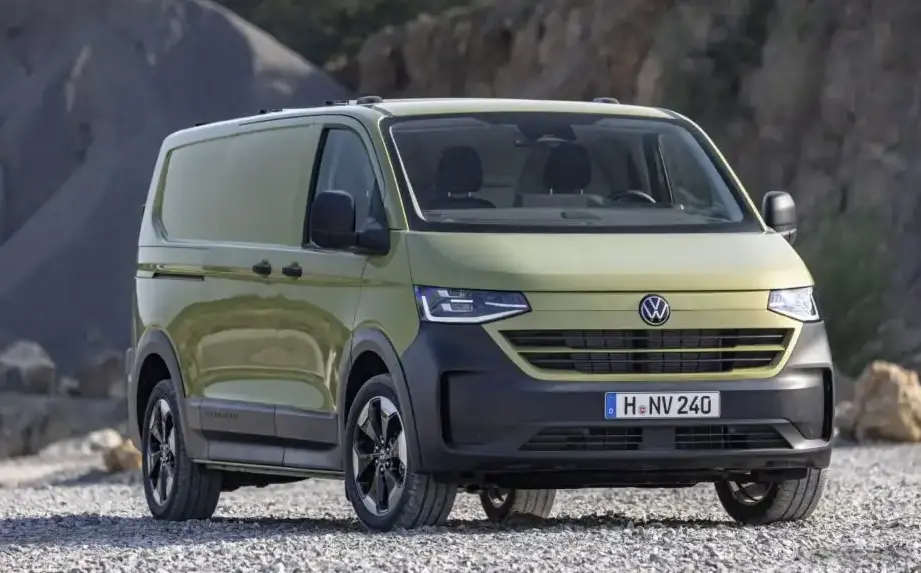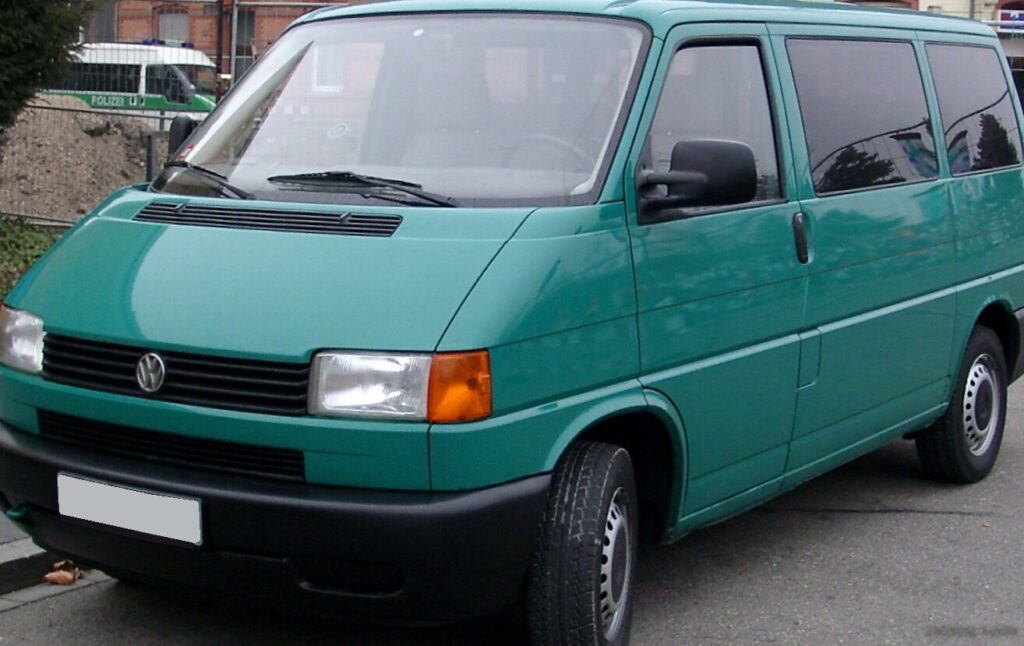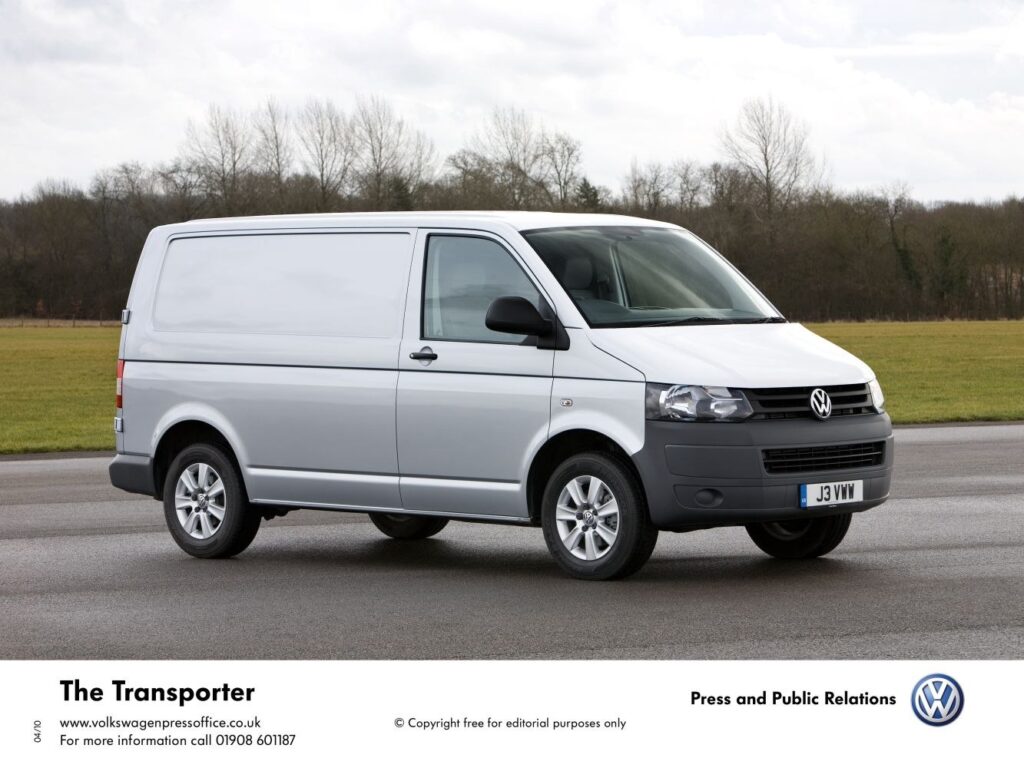
The Volkswagen Transporter (T5, facelift 2009) Panel Van represents a significant iteration of Volkswagen’s highly successful and enduring commercial vehicle line. Launched in 2011 as part of the refreshed T5 generation, this panel van variant, specifically the 2.0 TDI BMT (114 Hp) L1H2 model, was a cornerstone of Volkswagen Commercial Vehicles’ offerings in its primary markets, predominantly Europe and parts of Asia, until its production concluded in 2015. While never officially sold in the United States, where Volkswagen’s commercial vehicle strategy diverged, the Transporter series holds a legendary status globally for its robust construction, versatile utility, and consistent evolution.
The T5 generation, which originally debuted in 2003, received a comprehensive facelift in late 2009, bringing updated styling, enhanced technology, and a new range of more efficient engines. This particular variant, the L1H2, denotes a standard length (L1) and a high roof (H2) configuration, optimizing cargo volume for a wide array of business applications. The integration of BlueMotion Technology (BMT) underscored Volkswagen’s commitment to improving fuel efficiency and reducing emissions, making this Transporter a highly competitive and environmentally conscious choice for businesses requiring a reliable workhorse.
Powertrain & Engine Architecture
Powering this specific Volkswagen Transporter (T5, facelift 2009) Panel Van is a 2.0-liter (1968 cm3 or 120.09 cu. in.) inline four-cylinder TDI (Turbocharged Direct Injection) diesel engine, bearing the internal code EA189 / CAAD. This engine, a hallmark of Volkswagen’s diesel prowess, delivers 114 horsepower at 3500 revolutions per minute, providing a respectable power-to-liter ratio of 57.9 Hp/l for a commercial vehicle. More critically for a van, the engine generates a substantial 250 Nm (184.39 lb.-ft.) of torque, available across a broad and usable rev range from 1500 to 2750 rpm. This low-end torque is crucial for hauling heavy loads, navigating urban environments, and maintaining momentum on varied terrains.
The powertrain architecture is front-wheel drive, with the engine mounted transversely at the front. A 5-speed manual transmission efficiently channels the engine’s power to the front wheels, providing a balanced blend of performance and fuel economy. Performance figures for this panel van include an acceleration from 0 to 60 mph in a measured 14.2 seconds (0-100 km/h in 14.9 seconds) and a top speed of 98.18 mph (158 km/h). These figures are commendable for a vehicle designed primarily for utility and cargo transport rather than outright speed.
The 2.0 TDI BMT engine is equipped with a Diesel Commonrail fuel injection system, a turbocharger, and an intercooler, ensuring optimal combustion and efficiency. Its DOHC (Double Overhead Camshaft) valvetrain with 4 valves per cylinder contributes to its smooth operation and robust power delivery. Crucially, the inclusion of BlueMotion Technology (BMT) features like a Start & Stop System and a Particulate filter significantly enhances its environmental credentials. The vehicle meets Euro 5 emission standards, reflecting its compliance with stringent European regulations for exhaust gases. Fuel economy is a strong suit, with combined NEDC figures ranging from 6.7 to 7.0 liters per 100 kilometers, translating to an impressive 35.1 to 33.6 US mpg. This efficiency was a major selling point for businesses looking to minimize operational costs.
Driving Characteristics
The 114 hp 2.0 TDI BMT engine in the Transporter L1H2 provides adequate, though not exhilarating, performance. Compared to higher-output TDI variants (like the 140 hp or 180 hp versions available in the T5 range), this engine prioritizes fuel efficiency over outright speed. The 5-speed manual transmission is well-matched to the engine’s torque curve, allowing for relatively relaxed cruising at highway speeds. However, overtaking maneuvers require careful planning, and the engine can feel strained when fully loaded or climbing steep inclines. The gear ratios are geared towards maximizing fuel economy, meaning the engine operates at relatively low RPMs during normal driving conditions. This contributes to a quieter cabin experience but can also result in a slight delay in response when accelerating.
Compared to a gasoline engine of similar horsepower, the 2.0 TDI offers significantly more low-end torque, making it easier to start from a standstill with a heavy load. The manual transmission provides greater driver control than the optional automatic transmission, allowing for precise gear selection and engine braking. While not a sporty vehicle, the Transporter L1H2 offers a reasonably comfortable and predictable driving experience, particularly for drivers accustomed to commercial vehicles.
Equipment & Trim Levels
The Volkswagen Transporter (T5, facelift 2009) Panel Van 2.0 TDI BMT L1H2 was typically offered with a relatively utilitarian trim level, focusing on functionality and durability. Standard features generally included a driver’s airbag, Anti-lock Braking System (ABS), power steering, and a basic audio system. The interior upholstery was typically hard-wearing fabric, designed to withstand the rigors of commercial use. The dashboard configuration was straightforward and functional, with clearly labeled controls and ample storage compartments.
Optional extras varied depending on the market and individual customer preferences. Common options included air conditioning, a passenger airbag, electric windows, central locking, a more advanced audio system with Bluetooth connectivity, and parking sensors. Some models were also available with upgraded interior trim, such as partial leather upholstery. The L1H2 configuration itself was a key feature, providing a generous cargo volume of 236.61 cubic feet (6700 liters). Additional options could include different body paint colors and various cargo area configurations, such as shelving or load securing systems.
Chassis & Braking
The Volkswagen Transporter (T5, facelift 2009) Panel Van features a robust chassis designed to handle heavy loads and provide a stable driving experience. It boasts an independent front suspension with McPherson struts, coil springs, and an anti-roll bar, paired with an independent rear suspension featuring coil springs, a transverse stabilizer, and trailing arms. This setup ensures a relatively comfortable ride and precise handling for a vehicle of its size and purpose.
Braking is handled by ventilated discs at both the front (308×29.5 mm) and rear (294×22 mm), complemented by an Anti-lock Braking System (ABS) for enhanced safety. The hydraulic power steering system provides reliable and responsive control, crucial for maneuvering in tight urban spaces. With a minimum turning circle of 39.04 feet (11.9 meters), the Transporter remains surprisingly agile. The rear suspension typically utilized drum brakes on base models, while higher trim levels or heavier-duty configurations might have featured rear disc brakes. Stabilizer bar thickness varied depending on the vehicle’s gross vehicle weight rating (GVWR).
Market Reception & Comparison
Critics generally viewed the 1.8L Automatic combo as a sensible and practical choice for businesses prioritizing fuel efficiency and low running costs. While not the most powerful or dynamically engaging version of the Transporter, it offered a good balance of performance, economy, and reliability. Fuel economy was consistently praised, and the inclusion of BlueMotion Technology further enhanced its appeal. However, some reviewers noted that the engine could feel underpowered when fully loaded or tackling steep hills.
Compared to the higher-output TDI trims, the 114 hp version offered lower purchase price and improved fuel economy, but at the expense of performance. The manual transmission versions were generally preferred by drivers who prioritized control and responsiveness. Compared to competitors like the Ford Transit and Mercedes-Benz Vito, the Transporter was often lauded for its build quality, refined interior, and comfortable ride. However, some competitors offered more extensive customization options or a wider range of body styles.
Technical Specifications: Volkswagen Transporter (T5, facelift 2009) Panel Van 2.0 TDI BMT (114 Hp) L1H2
| Category | Specification |
| General Information | |
| Brand | Volkswagen |
| Model | Transporter |
| Generation | Transporter (T5, facelift 2009) Panel Van |
| Type (Engine) | 2.0 TDI BMT (114 Hp) L1H2 |
| Start of Production | 2011 year |
| End of Production | 2015 year |
| Powertrain Architecture | Internal Combustion Engine, Front-Wheel Drive |
| Body Type | Van |
| Seats | 2-3 |
| Doors | 4-5 |
| Performance Specifications | |
| Fuel Consumption (Urban, NEDC) | 8.3-8.6 l/100 km (28.3 – 27.4 US mpg) |
| Fuel Consumption (Extra Urban, NEDC) | 5.8-6.1 l/100 km (40.6 – 38.6 US mpg) |
| Fuel Consumption (Combined, NEDC) | 6.7-7.0 l/100 km (35.1 – 33.6 US mpg) |
| CO2 Emissions (NEDC) | 176-184 g/km |
| Fuel Type | Diesel |
| Acceleration 0 – 60 mph | 14.2 sec |
| Acceleration 0 – 100 km/h | 14.9 sec |
| Maximum Speed | 98.18 mph (158 km/h) |
| Emission Standard | Euro 5 |
| Weight-to-Power Ratio | 14.8 kg/Hp (67.6 Hp/tonne) |
| Weight-to-Torque Ratio | 6.7 kg/Nm (148.2 Nm/tonne) |
| Engine Specifications | |
| Power | 114 Hp @ 3500 rpm |
| Power per Liter | 57.9 Hp/l |
| Torque | 250 Nm @ 1500-2750 rpm (184.39 lb.-ft.) |
| Engine Layout | Front, Transverse |
| Engine Model/Code | EA189 / CAAD |
| Engine Displacement | 1968 cm3 (120.09 cu. in.) |
| Number of Cylinders | 4 |
| Engine Configuration | Inline |
| Cylinder Bore | 3.19 in. (81 mm) |
| Piston Stroke | 3.76 in. (95.5 mm) |
| Compression Ratio | 16.5:1 |
| Valves per Cylinder | 4 |
| Fuel Injection System | Diesel Commonrail |
| Engine Aspiration | Turbocharger, Intercooler |
| Valvetrain | DOHC |
| Engine Oil Capacity | 7 l (7.4 US qt) |
| Coolant Capacity | 11 l (11.62 US qt) |
| Engine Systems | Start & Stop System, Particulate filter |
| Dimensions, Volume, and Weights | |
| Kerb Weight | 3719.2 – 4636.32 lbs (1687-2103 kg) |
| Max. Weight | 6172.94 – 7054.79 lbs (2800-3200 kg) |
| Max Load | 2418.47 – 2453.74 lbs (1097-1113 kg) |
| Trunk (Boot) Space – Maximum | 236.61 cu. ft. (6700 l) |
| Fuel Tank Capacity | 21.13 US gal (80 l) |
| Permitted Trailer Load with Brakes (12%) | 4850.17 lbs (2200 kg) |
| Permitted Trailer Load without Brakes | 1653.47 lbs (750 kg) |
| Permitted Towbar Download | 220.46 lbs (100 kg) |
| Length | 192.6 in. (4892 mm) |
| Width | 74.96 in. (1904 mm) |
| Width Including Mirrors | 89.88 in. (2283 mm) |
| Height | 85.67 in. (2176 mm) |
| Wheelbase | 118.11 in. (3000 mm) |
| Front Overhang | 35.28 in. (896 mm) |
| Rear Overhang | 39.21 in. (996 mm) |
| Ride Height (Ground Clearance) | 7.91 in. (201 mm) |
| Minimum Turning Circle (Diameter) | 39.04 ft. (11.9 m) |
| Approach Angle | 21° |
| Departure Angle | 17° |
| Ramp-over (Brakeover) Angle | 14° |
| Wading Depth | 11.81 in. (300 mm) |
| Drivetrain, Brakes, and Suspension | |
| Drivetrain Architecture | Internal combustion engine drives the front wheels. |
| Drive Wheel | Front-wheel drive |
| Number of Gears and Type of Gearbox | 5 gears, manual transmission |
| Front Suspension | Independent, McPherson type with coil spring and anti-roll bar |
| Rear Suspension | Independent coil spring, Transverse stabilizer, Trailing arm |
| Front Brakes | Ventilated discs, 308×29.5 mm |
| Rear Brakes | Ventilated discs, 294×22 mm |
| Assisting Systems | ABS (Anti-lock braking system) |
| Steering Type | Steering rack and pinion |
| Power Steering | Hydraulic Steering |
| Tires Size | 215/65 R16 |
| Wheel Rims Size | 6.5J x 16 |
Legacy
The Volkswagen Transporter series, often affectionately known as the “Bus” or “Microbus” in earlier generations, has an unparalleled legacy in the commercial vehicle segment. The T5 generation, and specifically the facelifted 2009 model range including the 2.0 TDI BMT (114 Hp) L1H2 Panel Van, continued this tradition of reliability and versatility. In its primary markets, particularly across Europe, the Transporter was not merely a vehicle; it was an indispensable tool for countless businesses, from small independent contractors to large logistics fleets. Its reputation as a dependable workhorse, capable of enduring demanding daily use while offering competitive running costs, was well-established.
On the used car market today, the T5 Transporter continues to hold its value, particularly well-maintained examples with lower mileage. The 2.0 TDI engine, while not without its potential issues (such as timing chain wear in some EA189 engines), is generally considered reliable if properly serviced. The L1H2 configuration remains popular due to its practical cargo capacity. These vans are often sought after by tradespeople, camper van converters, and small businesses looking for a cost-effective and dependable work vehicle. The availability of parts and a widespread network of Volkswagen service centers further contribute to its enduring appeal.