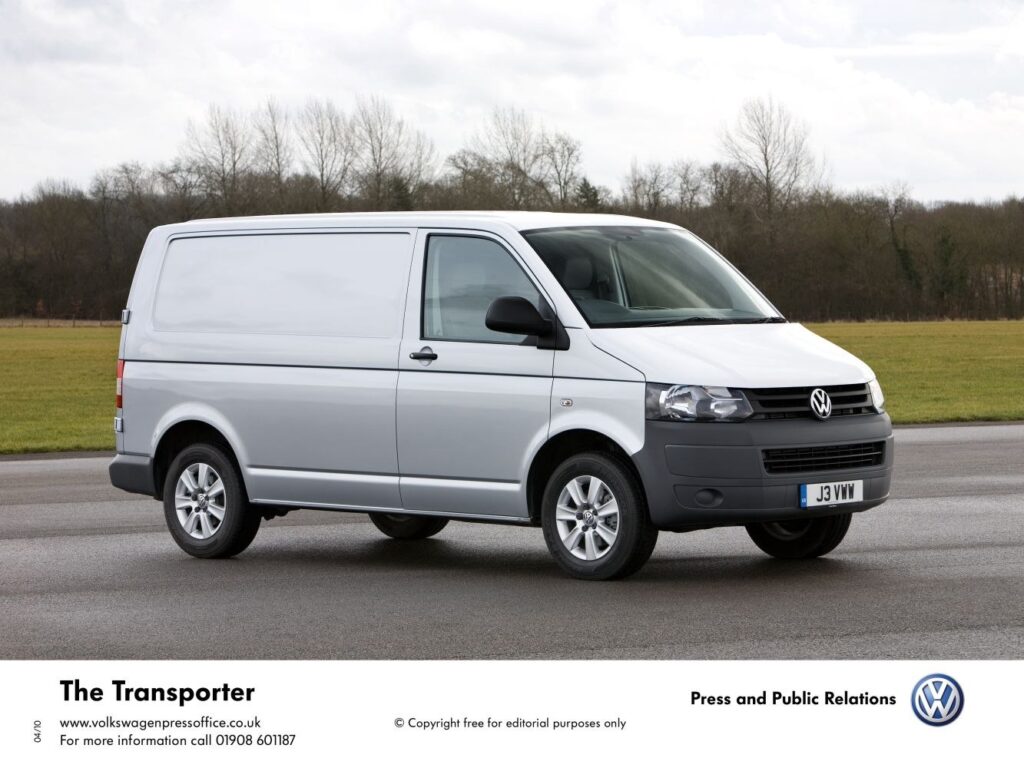
The Volkswagen Transporter, an emblem of utilitarian design and robust engineering, has been a cornerstone of commercial and recreational transport for decades. The T5 generation, introduced in 2003, continued this legacy, and its significant facelift in 2009 brought a host of refinements and technological updates. This article focuses on a specific, highly capable variant from the post-facelift era: the Volkswagen Transporter (T5, facelift 2009) Panel Van 2.0 TDI BMT (140 Hp) 4MOTION L2H3. Produced between 2012 and 2015, this model represented a pinnacle of efficiency and all-weather capability within its segment, primarily serving the demanding European and international commercial vehicle markets.
While not widely sold in the United States, where Volkswagen’s commercial vehicle offerings have historically been limited, the Transporter T5 is globally recognized for its versatility, durability, and practical design. The 2.0 TDI BMT (BlueMotion Technology) engine, paired with Volkswagen’s renowned 4MOTION all-wheel-drive system, and configured as an L2H3 (long wheelbase, high roof) panel van, made this particular Transporter an ideal choice for businesses requiring significant cargo volume, enhanced traction, and economical operation across diverse terrains and climates. It solidified the Transporter’s reputation as a workhorse, adept at handling heavy loads and challenging conditions with characteristic German engineering precision.
Powertrain & Engine Architecture
At the heart of the Volkswagen Transporter (T5, facelift 2009) Panel Van 2.0 TDI BMT (140 Hp) 4MOTION L2H3 lies Volkswagen’s acclaimed EA189 / CAAC engine. This 2.0-liter (120.09 cubic inches) inline four-cylinder turbodiesel unit is a testament to modern diesel engineering, delivering a robust 140 horsepower at 3500 rpm. More critically for a commercial vehicle, it produces a substantial 250.77 lb-ft of torque, available across a broad and usable range from 1750 to 2500 rpm. This ample torque ensures excellent pulling power, crucial for a van often laden with heavy cargo or towing trailers.
The “BMT” designation signifies BlueMotion Technology, Volkswagen’s suite of features aimed at enhancing fuel efficiency and reducing emissions. For this Transporter, BMT includes a Start & Stop System, which automatically shuts off the engine when the vehicle is stationary and restarts it when the clutch is engaged, significantly cutting fuel consumption in urban traffic. A diesel particulate filter is also standard, ensuring compliance with strict Euro 5 emission standards prevalent during its production years. The engine utilizes a common rail direct injection system, delivering precise fuel metering for optimal combustion and reduced emissions.
The EA189 engine features a single overhead camshaft (SOHC) design operating four valves per cylinder (DOHC). This valvetrain configuration balances performance and efficiency. The turbocharger, typically a variable geometry turbo (VGT), provides enhanced low-end torque and improved responsiveness. Power is transmitted to all four wheels via a precise 6-speed manual transmission, offering the driver full control over power delivery. The 4MOTION all-wheel-drive system is a key differentiator, providing permanent front-wheel drive with the ability to engage the rear wheels via an electrically or mechanically operated clutch when slippage is detected. This intelligent system vastly improves traction and stability, especially in adverse weather conditions or on unpaved roads, making the van highly capable for construction sites, delivery routes in rural areas, or any situation demanding extra grip.
Driving Characteristics
The 140 hp / 6-speed manual combination in the Transporter T5 offers a practical balance between performance and economy. While not as quick as the higher-output TDI variants, it provides sufficient power for most commercial applications. The broad torque curve ensures strong acceleration even when fully loaded. The 6-speed transmission allows for efficient highway cruising, keeping engine speeds relatively low and contributing to improved fuel economy. Compared to the 102 hp version, the 140 hp engine offers a noticeable improvement in responsiveness and overall drivability, particularly when climbing hills or overtaking. The 4MOTION system significantly enhances handling and stability, especially on slippery surfaces. The gear ratios are tuned for utility, prioritizing torque delivery over outright speed. First gear is relatively short for easy starts with heavy loads, while higher gears are spaced to maximize fuel efficiency at cruising speeds.
Compared to the higher-performance TDI models, this variant prioritizes fuel efficiency and lower running costs. It’s less suited for drivers who prioritize sporty driving dynamics, but it excels in providing a reliable and economical workhorse for commercial use. The manual transmission provides a more engaging driving experience than an automatic, offering greater control over power delivery and gear selection.
Equipment & Trim Levels
The Volkswagen Transporter (T5, facelift 2009) Panel Van 2.0 TDI BMT (140 Hp) 4MOTION L2H3 was typically equipped with a functional, no-frills interior focused on durability and practicality. Standard features included a driver’s airbag, Anti-lock Braking System (ABS), and power steering. The cabin typically featured durable plastic trim and hard-wearing seat upholstery. The base trim level usually included a basic radio with CD player and a driver’s seat with limited adjustability. The dashboard was redesigned during the facelift to improve ergonomics and usability.
Optional extras included air conditioning, a more advanced infotainment system with navigation, electric windows and mirrors, central locking, and upgraded seat upholstery. Many Transporters were also equipped with additional security features, such as an alarm system and immobilizer. Professionally-oriented options included features like a second battery, auxiliary heating, and specialized storage solutions for tools and equipment. The L2H3 configuration itself is a key feature, providing a large cargo volume and high roof for maximum practicality.
Chassis & Braking
The Transporter T5 utilizes a robust chassis designed to handle significant loads. The front suspension employs an independent McPherson strut setup with coil springs and an anti-roll bar, while the rear features an independent coil spring system with a transverse stabilizer and trailing arms. This configuration provides a balance of ride comfort and load-carrying capability. Braking is handled by ventilated discs at both the front (12.13 x 1.16 inches) and rear (11.57 x 0.87 inches), complemented by an Anti-lock Braking System (ABS) for enhanced safety under various load conditions. The hydraulic rack and pinion steering ensures precise control, even when fully loaded. The 4MOTION system incorporates a viscous coupling or Haldex clutch to distribute power between the front and rear axles as needed.
The rear suspension design and braking system (discs all around) were generally consistent across the T5 range, but the stabilizer bar thickness and spring rates could vary slightly depending on the intended payload capacity. The L2H3 variant, due to its increased height and length, typically featured a slightly stiffer suspension setup to maintain stability when fully loaded.
Market Reception & Comparison
Critics generally praised the Volkswagen Transporter T5 for its build quality, reliability, and driving dynamics. The 2.0 TDI BMT engine was recognized for its fuel efficiency and ample torque, making it a practical choice for commercial users. The 4MOTION all-wheel-drive system was highly regarded for its ability to provide enhanced traction and stability in challenging conditions. However, some critics noted that the interior was somewhat basic compared to some of its rivals, and the price was often higher than comparable vans from other manufacturers.
Compared to the higher-output TDI trims, the 140 hp version offered a better balance between performance and fuel economy. It was generally more economical to run than the 180 hp TDI, but it lacked the same level of outright performance. Compared to the 102 hp TDI, the 140 hp version provided a significant improvement in drivability and responsiveness. In terms of reliability, the T5 generation generally proved to be very durable, although the EA189 engine has been subject to some scrutiny regarding emissions compliance in later years. Fuel economy figures were competitive with other diesel-powered vans in its class, typically achieving around 29-30.2 US mpg (combined).
Technical Specifications
| Category | Specification |
| General Information | |
| Brand | Volkswagen |
| Model | Transporter |
| Generation | Transporter (T5, facelift 2009) Panel Van |
| Type (Engine) | 2.0 TDI BMT (140 Hp) 4MOTION L2H3 |
| Start of Production | 2012 year |
| End of Production | 2015 year |
| Powertrain Architecture | Internal Combustion Engine |
| Body Type | Van |
| Seats | 2-3 |
| Doors | 4-5 |
| Performance Specs | |
| Fuel Consumption (Urban, NEDC) | 9.6-9.9 l/100 km (23.8 – 24.5 US mpg) |
| Fuel Consumption (Extra Urban, NEDC) | 6.8-7.1 l/100 km (33.1 – 34.6 US mpg) |
| Fuel Consumption (Combined, NEDC) | 7.8-8.1 l/100 km (29 – 30.2 US mpg) |
| CO2 Emissions (NEDC) | 206-214 g/km |
| Fuel Type | Diesel |
| Acceleration 0 – 60 mph | 13.3 sec |
| Maximum Speed | 98.18 mph (158 km/h) |
| Emission Standard | Euro 5 |
| Weight-to-Power Ratio | 13.5 kg/Hp, 74 Hp/tonne |
| Weight-to-Torque Ratio | 5.6 kg/Nm, 179.6 Nm/tonne |
| Engine Specs | |
| Power | 140 Hp @ 3500 rpm |
| Power per Liter | 71.1 Hp/l |
| Torque | 250.77 lb.-ft. (340 Nm) @ 1750-2500 rpm |
| Engine Layout | Front, Transverse |
| Engine Model/Code | EA189 / CAAC |
| Engine Displacement | 2.0 liters (1968 cm3, 120.09 cu. in.) |
| Number of Cylinders | 4 |
| Engine Configuration | Inline |
| Cylinder Bore | 3.19 in. (81 mm) |
| Piston Stroke | 3.76 in. (95.5 mm) |
| Compression Ratio | 16.5:1 |
| Valves per Cylinder | 4 |
| Fuel Injection System | Diesel Commonrail |
| Engine Aspiration | Turbocharger, Intercooler |
| Valvetrain | DOHC |
| Engine Oil Capacity | 7.4 US qt (7 liters) |
| Coolant Capacity | 11.62 US qt (11 liters) |
| Engine Systems | Start & Stop System, Particulate filter |
| Space, Volume and Weights | |
| Kerb Weight | 4173.35 – 5152.2 lbs. (1893-2337 kg) |
| Max. Weight | 6613.87 – 7054.79 lbs. (3000-3200 kg) |
| Max Load | 1902.59 – 2440.52 lbs. (863-1107 kg) |
| Trunk (boot) Space – Maximum | 328.43 cu. ft. (9300 liters) |
| Fuel Tank Capacity | 21.13 US gal (80 liters) |
| Permitted Trailer Load with Brakes (12%) | 5511.56 lbs. (2500 kg) |
| Permitted Trailer Load without Brakes | 1653.47 lbs. (750 kg) |
| Permitted Towbar Download | 220.46 lbs. (100 kg) |
| Dimensions | |
| Length | 208.35 in. (5292 mm) |
| Width | 74.96 in. (1904 mm) |
| Width Including Mirrors | 89.88 in. (2283 mm) |
| Height | 97.48 in. (2476 mm) |
| Wheelbase | 133.86 in. (3400 mm) |
| Front Overhang | 35.28 in. (896 mm) |
| Rear Overhang | 39.21 in. (996 mm) |
| Ride Height (Ground Clearance) | 7.91 in. (201 mm) |
| Minimum Turning Circle | 43.31 ft. (13.2 m) |
| Approach Angle | 21° |
| Departure Angle | 17° |
| Ramp-over (Brakeover) Angle | 12° |
| Drivetrain, Brakes and Suspension Specs | |
| Drivetrain Architecture | ICE drives front wheels permanently; rear wheels driven via clutch if necessary. |
| Drive Wheel | All-wheel drive (4×4) |
| Number of Gears and Type | 6 gears, manual transmission |
| Front Suspension | Independent, McPherson with coil spring and anti-roll bar |
| Rear Suspension | Independent coil spring, Transverse stabilizer, Trailing arm |
| Front Brakes | Ventilated discs, 12.13 x 1.16 in. (308×29.5 mm) |
| Rear Brakes | Ventilated discs, 11.57 x 0.87 in. (294×22 mm) |
| Assisting Systems | ABS (Anti-lock Braking System) |
| Steering Type | Steering rack and pinion |
| Power Steering | Hydraulic Steering |
| Tires Size | 215/65 R16 |
| Wheel Rims Size | 6.5J x 16 |
Legacy
The Volkswagen Transporter series holds an almost iconic status in Europe and many other global markets, continuing a lineage that began with the legendary Type 2 (Bus/Microbus) in the 1950s. The T5 generation, and particularly its facelifted iteration from 2009-2015, played a critical role in maintaining Volkswagen’s formidable presence in the light commercial vehicle segment. The Volkswagen Transporter (T5, facelift 2009) Panel Van 2.0 TDI BMT (140 Hp) 4MOTION L2H3, with its blend of powerful yet efficient diesel engine, all-wheel-drive capability, and expansive cargo capacity, was a highly respected and sought-after variant.
In its primary markets, the Transporter T5 competed fiercely with established rivals such as the Ford Transit Custom, Mercedes-Benz Vito, Renault Trafic, and Opel Vivaro (Vauxhall Vivaro in the UK). What set the Transporter apart was its reputation for exceptional build quality, reliability, and robust engineering, often leading to strong residual values. Businesses relied on the Transporter for a wide array of tasks, from urban deliveries to long-haul logistics, and from tradespeople’s mobile workshops to specialized conversions. The 4MOTION system, in particular, broadened its appeal to sectors like utility companies, emergency services, and outdoor adventure businesses that required dependable traction off paved roads or in inclement weather.
The T5 facelift was praised for its improved cabin ergonomics, refined driving dynamics, and the introduction of advanced technologies like BlueMotion, which addressed the growing demand for lower running costs and reduced environmental impact. This particular L2H3 configuration highlighted the Transporter’s versatility, offering one of the largest cargo volumes in its class without moving into the larger, heavier van segments.
Its legacy is one of unwavering dependability and adaptability. Even after the introduction of the T6 generation, the T5 facelift models, especially well-maintained 4MOTION variants, continue to be highly valued in the used vehicle market. They represent a golden era of Volkswagen’s commercial vehicle strategy, blending practical design with cutting-edge (for its time) diesel powertrain technology and an unwavering commitment to quality. The Transporter remains a benchmark for what a modern commercial van should be, and the T5 facelift with its 2.0 TDI BMT 4MOTION L2H3 variant stands as a prime example of its enduring success.