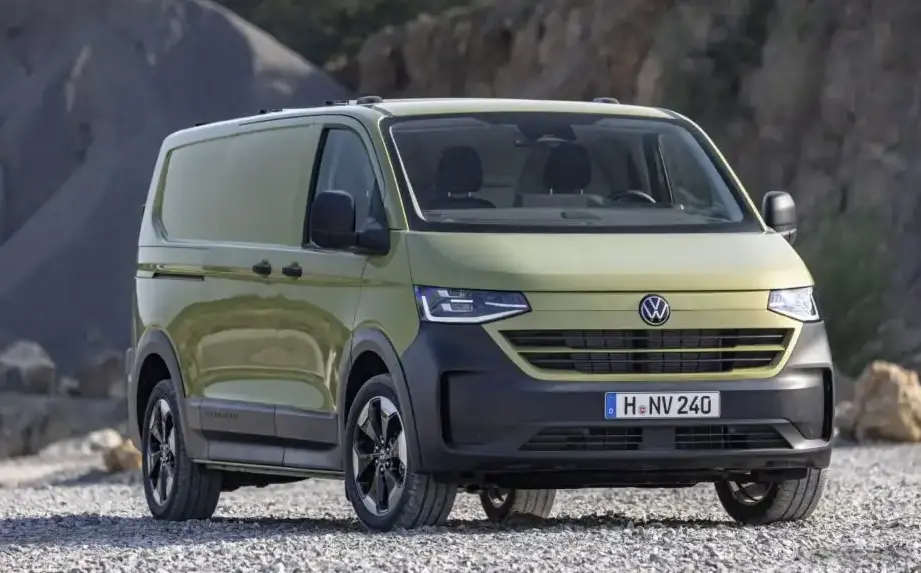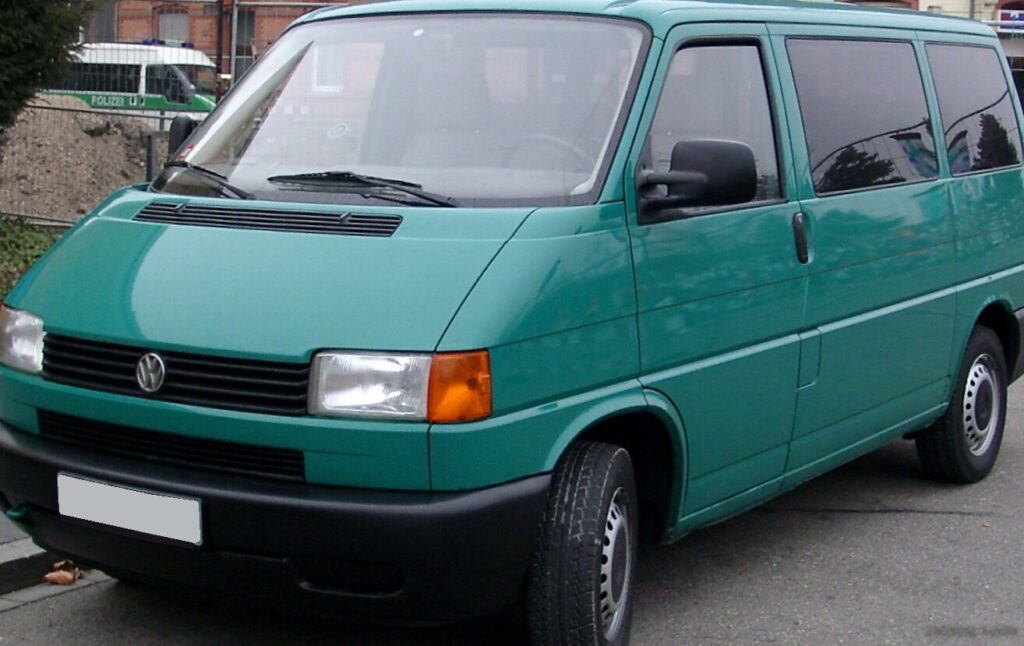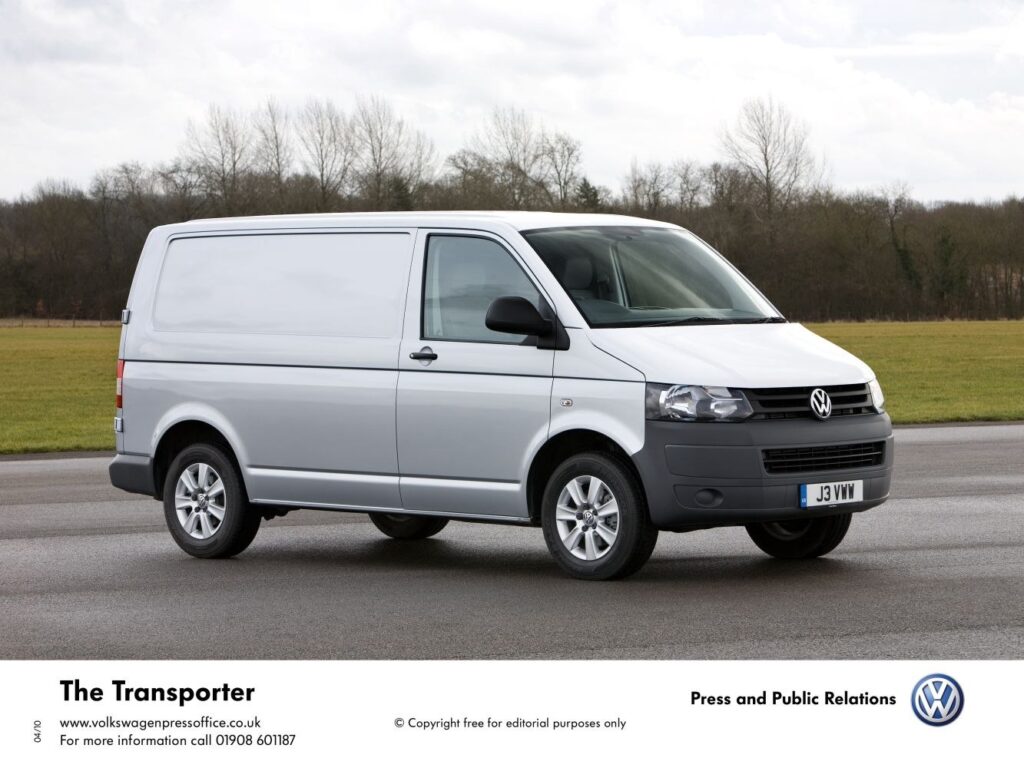
The Volkswagen Transporter, specifically the T5 generation that received a significant facelift in 2009, stands as a cornerstone in the European light commercial vehicle (LCV) market. The variant under review, the Volkswagen Transporter (T5, facelift 2009) Panel Van 2.0 TDI BMT (140 Hp) L1H1, represents a highly practical and efficient workhorse produced between 2012 and 2015. While not directly sold in the United States in this panel van configuration, the Transporter lineage is globally recognized as a benchmark for commercial vans, known for its robustness, versatility, and car-like driving dynamics. This particular model, with its L1H1 designation, signifies a short wheelbase and standard roof height, making it an agile and capable vehicle for urban deliveries and various trade applications across Europe and other international markets. Its diesel powertrain, coupled with Volkswagen’s BlueMotion Technology (BMT), emphasized fuel efficiency and reduced emissions, crucial factors for businesses operating in regions with stringent environmental regulations and high fuel costs.
Powertrain & Engine Architecture
At the heart of this Volkswagen Transporter (T5, facelift 2009) Panel Van is a sophisticated 2.0-liter (1968 cm3 or 120.09 cu. in.) inline-four turbo-diesel engine, designated EA189 / CAAC. This engine, part of Volkswagen’s TDI (Turbocharged Direct Injection) family, is renowned for its blend of power, torque, and fuel efficiency. It delivers a robust 140 horsepower at 3500 rpm, providing ample power for hauling cargo or navigating challenging terrain. More importantly for a commercial vehicle, it produces a substantial 250.77 lb.-ft. of torque, available across a broad rev range from 1750 to 2500 rpm. This wide torque band ensures strong pulling power from low engine speeds, minimizing the need for frequent gear changes, especially when fully loaded.
The engine incorporates a common rail fuel injection system and a turbocharger with an intercooler, optimizing combustion and boosting power output efficiently. Its DOHC (Dual Overhead Camshaft) valvetrain with four valves per cylinder further enhances performance and efficiency. The inclusion of BlueMotion Technology (BMT) signifies Volkswagen’s commitment to eco-friendliness, featuring a Start & Stop System and a particulate filter to meet Euro 5 emission standards. This technology contributes to impressive fuel economy figures for a vehicle of its size: a combined (NEDC) rating of 34.1 – 32.7 US mpg (6.9-7.2 l/100 km).
Power is channeled to the front wheels via a smooth-shifting 6-speed manual transmission, offering precise control and allowing the driver to optimize performance for varying load and road conditions. The Transporter’s acceleration from 0 to 60 mph is achieved in a respectable 11.6 seconds, with a top speed of 107.5 mph (173 km/h), demonstrating that even as a commercial vehicle, it is capable of maintaining pace on highways. Its weight-to-power ratio of 12.3 kg/Hp (81.3 Hp/tonne) and weight-to-torque ratio of 5.1 kg/Nm (197.4 Nm/tonne) underscore its efficient power delivery relative to its curb weight, which ranges from 3796.36 to 4713.48 lbs. (1722-2138 kg).
Driving Characteristics
The 140 hp 2.0 TDI BMT engine in the T5 Transporter Panel Van provides a practical and usable power output for commercial applications. While not offering the outright performance of higher-powered TDI variants, it delivers sufficient torque for hauling moderate loads and maintaining comfortable cruising speeds on highways. The 6-speed manual transmission is well-matched to the engine’s characteristics, allowing drivers to keep the engine within its optimal torque band for efficient operation. Compared to the more powerful 180 hp TDI models, this variant prioritizes fuel economy and reduced running costs over outright speed. The gear ratios are tuned for maximizing fuel efficiency and minimizing engine strain, rather than providing rapid acceleration. Drivers accustomed to the responsiveness of a gasoline engine or the higher output of the larger TDI engines might find the 140 hp version to be somewhat less spirited, but its ample low-end torque makes it well-suited for everyday commercial tasks.
Equipment & Trim Levels
The Volkswagen Transporter (T5, facelift 2009) Panel Van 2.0 TDI BMT (140 Hp) L1H1 typically served as a mid-range offering within the T5 lineup. Standard equipment generally included features such as power windows, central locking, an adjustable steering column, and a basic audio system. The interior typically featured durable cloth upholstery and a functional dashboard layout designed for practicality rather than luxury. Safety features included ABS, driver and passenger airbags, and electronic stability control. Optional extras commonly available included air conditioning, a more advanced audio system with Bluetooth connectivity, parking sensors, and upgraded seating options. Higher trim levels offered additional features such as alloy wheels, body-colored bumpers, and more luxurious interior appointments. The L1H1 configuration, with its short wheelbase and standard roof height, was often favored by businesses requiring a compact and maneuverable van for urban deliveries.
Chassis & Braking
The T5 Transporter utilizes an independent McPherson strut front suspension with coil springs and an anti-roll bar, complemented by an independent coil spring rear suspension with transverse stabilizers and trailing arms. This setup provides a car-like ride quality and stable handling, reducing driver fatigue during long working hours. The braking system consists of ventilated disc brakes on both front (308×29.5 mm) and rear (294×22 mm) axles, coupled with an Anti-lock Braking System (ABS). This provides adequate stopping power for a vehicle of its weight class. The hydraulic rack and pinion power steering ensures precise control and ease of maneuvering, especially in tight spots. The 215/65 R16 tires on 6.5J x 16 wheel rims provide a good balance of load-carrying capability and ride comfort. The rear suspension configuration, while independent, often featured a lighter-duty setup compared to higher-payload variants of the T5, reflecting the lower weight capacity of the L1H1 Panel Van.
Market Reception & Comparison
Critics generally viewed the Volkswagen Transporter (T5, facelift 2009) Panel Van 2.0 TDI BMT (140 Hp) L1H1 favorably, praising its robust build quality, refined driving experience, and fuel efficiency. The 2.0 TDI BMT engine was considered a good compromise between performance and economy, making it a popular choice for businesses seeking to minimize operating costs. Compared to other trims in the T5 lineup, such as the higher-powered TDI variants, this model offered a more affordable entry point while still providing ample power for most commercial applications. Its fuel economy was generally superior to that of the more powerful engines, and its reliability was considered to be excellent. Compared to rivals like the Ford Transit Custom and Mercedes-Benz Vito, the Transporter was often seen as offering a more premium feel and a more comfortable driving experience, although it typically came at a slightly higher price point.
Technical Specifications
| Category | Specification |
| General Information | |
| Brand | Volkswagen |
| Model | Transporter |
| Generation | Transporter (T5, facelift 2009) Panel Van |
| Type (Engine) | 2.0 TDI BMT (140 Hp) L1H1 |
| Start of Production | 2012 year |
| End of Production | 2015 year |
| Powertrain Architecture | Internal Combustion engine |
| Body type | Van |
| Seats | 2-3 |
| Doors | 4-5 |
| Performance Specifications | |
| Fuel consumption (economy) – urban (NEDC) | 8.8-9.1 l/100 km |
| Fuel consumption (economy) – extra urban (NEDC) | 5.8-6.1 l/100 km |
| Fuel consumption (economy) – combined (NEDC) | 6.9-7.2 l/100 km |
| CO2 emissions (NEDC) | 182-189 g/km |
| Fuel Type | Diesel |
| Acceleration 0 – 60 mph | 11.6 sec |
| Maximum speed | 173 km/h |
| Emission standard | Euro 5 |
| Weight-to-power ratio | 12.3 kg/Hp |
| Weight-to-torque ratio | 5.1 kg/Nm |
| Engine Specifications | |
| Power | 140 Hp @ 3500 rpm |
| Power per liter | 71.1 Hp/l |
| Torque | 340 Nm @ 1750-2500 rpm |
| Engine layout | Front, Transverse |
| Engine Model/Code | EA189 / CAAC |
| Engine displacement | 1968 cm3 |
| Number of cylinders | 4 |
| Engine configuration | Inline |
| Cylinder Bore | 81 mm |
| Piston Stroke | 95.5 mm |
| Compression ratio | 16.5:1 |
| Number of valves per cylinder | 4 |
| Fuel injection system | Diesel Commonrail |
| Engine aspiration | Turbocharger, Intercooler |
| Valvetrain | DOHC |
| Engine oil capacity | 7 l |
| Coolant | 11 l |
| Engine systems | Start & Stop System, Particulate filter |
| Space, Volume and Weights | |
| Kerb Weight | 1722-2138 kg |
| Max. weight | 2800-3200 kg |
| Max load | 1062-1078 kg |
| Trunk (boot) space – maximum | 5800 l |
| Fuel tank capacity | 80 l |
| Max. roof load | 100 kg |
| Permitted trailer load with brakes (12%) | 2500 kg |
| Permitted trailer load without brakes | 750 kg |
| Permitted towbar download | 100 kg |
| Dimensions | |
| Length | 4892 mm |
| Width | 1904 mm |
| Width including mirrors | 2283 mm |
| Height | 1990 mm |
| Wheelbase | 3000 mm |
| Front overhang | 896 mm |
| Rear overhang | 996 mm |
| Ride height (ground clearance) | 201 mm |
| Minimum turning circle (turning diameter) | 11.9 m |
| Approach angle | 21° |
| Departure angle | 17° |
| Ramp-over (brakeover) angle | 14° |
| Wading depth | 300 mm |
| Drivetrain, Brakes and Suspension Specifications | |
| Drivetrain Architecture | The Internal combustion engine (ICE) drives the front wheels of the vehicle. |
| Drive wheel | Front wheel drive |
| Number of gears and type of gearbox | 6 gears, manual transmission |
| Front suspension | Independent, type McPherson with coil spring and anti-roll bar |
| Rear suspension | Independent coil spring, Transverse stabilizer, Trailing arm |
| Front brakes | Ventilated discs, 308×29.5 mm |
| Rear brakes | Ventilated discs, 294×22 mm |
| Assisting systems | ABS (Anti-lock braking system) |
| Steering type | Steering rack and pinion |
| Power steering | Hydraulic Steering |
| Tires size | 215/65 R16 |
| Wheel rims size | 6.5J x 16 |
Legacy
The Volkswagen Transporter (T5, facelift 2009) Panel Van 2.0 TDI BMT (140 Hp) L1H1 has proven to be a durable and reliable workhorse in the used car market. The 2.0 TDI engine, while having been subject to some scrutiny regarding diesel emissions in later years, generally exhibits good longevity when properly maintained. Common issues include wear and tear on the turbocharger, potential problems with the dual-mass flywheel, and occasional issues with the fuel injection system. However, these are typically manageable with regular servicing and preventative maintenance. The T5’s robust construction and relatively simple mechanical design contribute to its continued popularity among businesses and tradespeople seeking a dependable and affordable commercial vehicle. Its car-like driving dynamics and comfortable interior also make it a desirable option for those who spend long hours behind the wheel. As a result, well-maintained examples of this variant continue to command reasonable prices in the used vehicle market, reflecting its enduring reputation for quality and reliability.