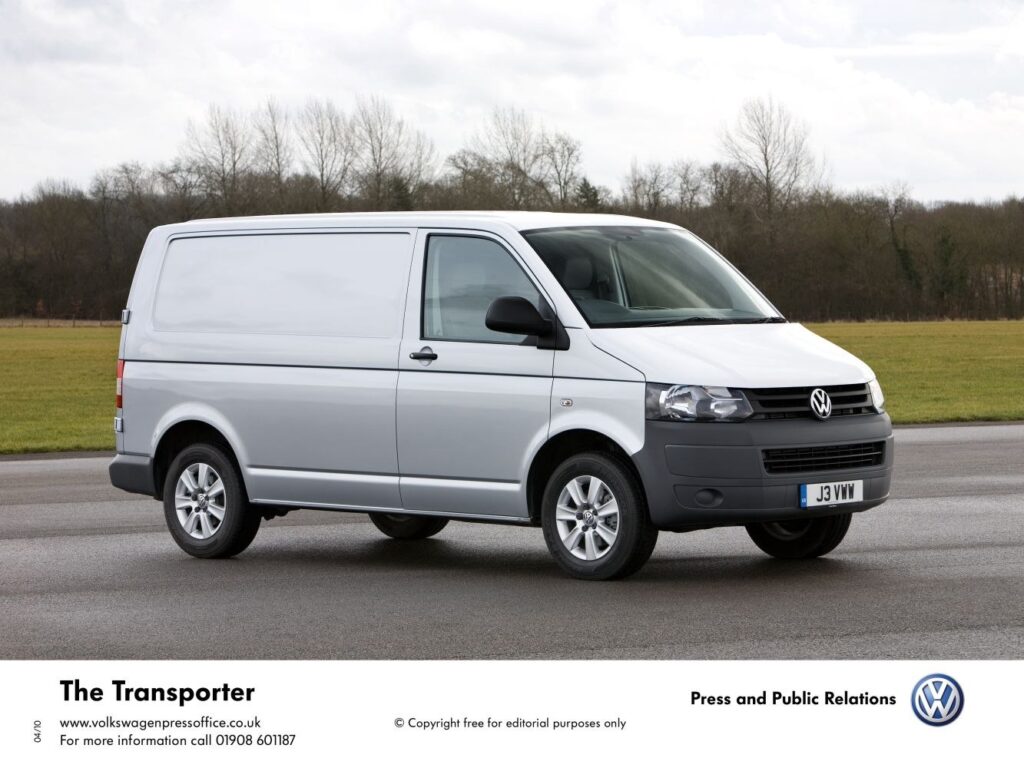
The Volkswagen Transporter (T5, facelift 2009) Panel Van represents a significant iteration of Volkswagen’s venerable light commercial vehicle (LCV) line, renowned globally for its versatility, durability, and efficiency. Introduced as a facelift to the fifth-generation (T5) Transporter, this particular variant, produced between 2012 and 2015, cemented its position as a workhorse across Europe and other international markets. While not officially sold in the United States, the Transporter lineage holds an almost legendary status worldwide, tracing its roots back to the iconic Type 2 “Bus.” This specific model, the 2.0 TDI BMT (BlueMotion Technology) L2H2, combined a potent yet fuel-efficient diesel powertrain with a long wheelbase and high roof configuration, making it an indispensable tool for businesses requiring substantial cargo capacity and robust performance.
The T5 Facelift and its Position in the Market
The T5 generation, launched in 2003, built upon the success of its predecessors by offering improved ergonomics, enhanced safety features, and a more car-like driving experience. The 2009 facelift brought a modernized exterior design, updated interior, and, crucially, a new range of more efficient engines, including the 2.0-liter TDI unit featured here. The “BlueMotion Technology” designation highlighted Volkswagen’s commitment to environmental responsibility, integrating features like a Start & Stop system and a particulate filter to reduce fuel consumption and emissions. This blend of practicality, economy, and Volkswagen’s renowned engineering made the Volkswagen Transporter (T5, facelift 2009) Panel Van a benchmark in the highly competitive European commercial van segment. This variant occupied a mid-range position within the T5 lineup, offering a balance between affordability and capability. It sat above the base-level models with smaller engines and fewer features, but below the more powerful and expensive variants like those equipped with the 2.5-liter TDI engine or more luxurious trim packages.
Powertrain & Engine Architecture: The 2.0 TDI BMT
At the heart of this Volkswagen Transporter (T5, facelift 2009) Panel Van variant is a sophisticated 2.0-liter (1968 cm³, 120.09 cu. in.) inline four-cylinder TDI (Turbocharged Direct Injection) diesel engine, designated EA189 / CAAC. This powerplant was engineered to deliver an optimal balance of power, torque, and fuel efficiency, crucial attributes for a commercial vehicle. It produces 140 horsepower at 3500 rpm, translating to a power-per-liter rating of 71.1 hp/l. More importantly for a cargo van, the engine generates a substantial 340 Nm (250.77 lb.-ft.) of torque, available across a wide and usable band from 1750 to 2500 rpm. This broad torque curve ensures excellent pulling power, even when the vehicle is fully loaded, allowing for confident acceleration and effortless highway cruising.
The engine’s advanced design incorporates a DOHC (Double Overhead Camshaft) valvetrain with four valves per cylinder, a common rail fuel injection system, and forced induction via a turbocharger with an intercooler. This setup optimizes combustion efficiency and power delivery. With a compression ratio of 16.5:1, the engine is designed for diesel’s inherent efficiency. The inclusion of BlueMotion Technology features, such as a Start & Stop system and a particulate filter, significantly contributed to its environmental credentials, helping it meet the Euro 5 emission standard. The engine utilizes a variable geometry turbocharger (VGT) to optimize boost pressure across the engine’s operating range, further enhancing both performance and fuel economy. The common rail direct injection system operates at extremely high pressures, ensuring precise fuel atomization and efficient combustion.
Driving Characteristics of the 140 Hp Automatic
The 2.0 TDI BMT engine, paired with a six-speed automatic transmission, provides a comfortable and practical driving experience. While not offering the outright performance of higher-output TDI variants, the 140 hp version delivers sufficient power for most commercial applications. The automatic transmission, while contributing to ease of use, does result in a slight performance deficit compared to the six-speed manual version due to inherent transmission losses. Gear ratios are optimized for fuel efficiency and load-carrying capability, with a relatively tall final drive. This results in relaxed cruising at highway speeds, but can feel somewhat sluggish when accelerating with a heavy load. The broad torque curve of the engine helps to mitigate this, providing ample pulling power in most situations. Compared to the 102 hp version, the 140 hp engine offers a noticeable improvement in acceleration and overall responsiveness, making it a more suitable choice for drivers who frequently travel on highways or carry heavy loads. The automatic transmission shifts smoothly and predictably, contributing to a refined driving experience.
Equipment & Trim Levels
The Volkswagen Transporter (T5, facelift 2009) Panel Van in this configuration was typically equipped with a functional, yet relatively basic, interior. Standard features included a driver’s airbag, ABS brakes, power steering, and a basic audio system. The cabin typically featured durable plastic trim and hard-wearing seat upholstery. The driver’s seat was adjustable for height and lumbar support, providing a reasonable level of comfort for long journeys. Optional extras included air conditioning, a passenger airbag, electric windows, central locking, and a more advanced audio system with Bluetooth connectivity. Higher trim levels offered additional features such as upgraded seat upholstery, cruise control, and parking sensors. The panel van body style prioritized practicality, with a windowless rear and side panels. The cargo area was typically equipped with tie-down points and optional wood or metal flooring. The dashboard layout was functional and straightforward, with clearly labeled controls and easy-to-read instrumentation.
Chassis & Braking
The T5 Transporter utilizes a robust chassis and suspension system designed to handle heavy loads and provide a comfortable ride. The front suspension features an independent McPherson strut setup with coil springs and an anti-roll bar, while the rear suspension employs an independent coil spring and trailing arm configuration. This setup provides good handling characteristics and a relatively smooth ride, even when the vehicle is fully loaded. The braking system consists of ventilated disc brakes on all four wheels, providing ample stopping power. ABS (Anti-lock Braking System) is standard, enhancing safety and stability during emergency braking maneuvers. The steering is hydraulic power-assisted, providing a light and responsive feel. The vehicle’s relatively long wheelbase contributes to stability, while its compact dimensions make it surprisingly maneuverable in urban environments. Stabilizer bars are fitted to both the front and rear axles to reduce body roll during cornering.
Market Reception & Comparison
Critics generally praised the Volkswagen Transporter (T5, facelift 2009) Panel Van for its build quality, reliability, and fuel efficiency. The 2.0 TDI BMT engine was particularly well-regarded for its balance of power and economy. However, some reviewers noted that the automatic transmission could feel somewhat sluggish, especially when fully loaded. Compared to other trims in the lineup, the 140 hp automatic version offered a good compromise between performance and fuel economy. It was more affordable than the higher-output TDI variants, but provided more power and responsiveness than the base-level models. Fuel economy was a strong selling point, with combined consumption rated at an impressive 6.9-7.2 l/100 km (34.1 – 32.7 US mpg). Reliability was generally good, although some owners reported issues with the dual-mass flywheel and diesel particulate filter. Overall, the Transporter T5 facelift was considered a highly competent and versatile commercial vehicle, capable of meeting the demands of a wide range of businesses.
Technical Specifications
| Category | Specification |
| General Information | |
| Brand | Volkswagen |
| Model | Transporter (T5, facelift 2009) Panel Van |
| Type (Engine) | 2.0 TDI BMT (140 Hp) L2H2 |
| Production Start | 2012 year |
| Production End | 2015 year |
| Body Type | Van |
| Seats | 2-3 |
| Doors | 4-5 |
| Powertrain Architecture | Internal Combustion Engine (Front Wheel Drive) |
| Performance Specs | |
| Power | 140 Hp @ 3500 rpm |
| Power per liter | 71.1 Hp/l |
| Torque | 340 Nm (250.77 lb.-ft.) @ 1750-2500 rpm |
| Acceleration 0-60 mph | 11.7 sec |
| Maximum Speed | 167 km/h (103.77 mph) |
| Fuel Type | Diesel |
| Fuel Economy – Urban (NEDC) | 8.8-9.1 l/100 km (26.7 – 25.8 US mpg) |
| Fuel Economy – Extra Urban (NEDC) | 5.8-6.1 l/100 km (40.6 – 38.6 US mpg) |
| Fuel Economy – Combined (NEDC) | 6.9-7.2 l/100 km (34.1 – 32.7 US mpg) |
| CO2 Emissions (NEDC) | 182-189 g/km |
| Emission Standard | Euro 5 |
| Weight-to-power ratio | 12.7 kg/Hp (79 Hp/tonne) |
| Weight-to-torque ratio | 5.2 kg/Nm (191.8 Nm/tonne) |
| Engine Specs | |
| Engine Model/Code | EA189 / CAAC |
| Engine Displacement | 1968 cm³ (120.09 cu. in.) |
| Number of Cylinders | 4 |
| Engine Configuration | Inline |
| Engine Layout | Front, Transverse |
| Cylinder Bore | 81 mm (3.19 in.) |
| Piston Stroke | 95.5 mm (3.76 in.) |
| Compression Ratio | 16.5:1 |
| Valves per Cylinder | 4 |
| Fuel Injection System | Diesel Commonrail |
| Engine Aspiration | Turbocharger, Intercooler |
| Valvetrain | DOHC |
Legacy
The Volkswagen Transporter, and specifically the T5 generation facelift, holds a significant legacy in the global automotive landscape. The 2.0 TDI BMT engine, while not without its potential issues (such as DPF and dual-mass flywheel concerns), proved to be a reliable and fuel-efficient powerplant when properly maintained. In the used car market today, these vans remain relatively popular, particularly among businesses seeking a dependable and affordable workhorse. Their strong build quality and relatively low running costs make them an attractive option, despite their age. However, potential buyers should be aware of the common issues associated with the TDI engine and ensure that the vehicle has been well-maintained. The T5 Transporter continues to be a respected and sought-after vehicle, a testament to Volkswagen’s engineering prowess and its enduring commitment to building practical and durable commercial vehicles.