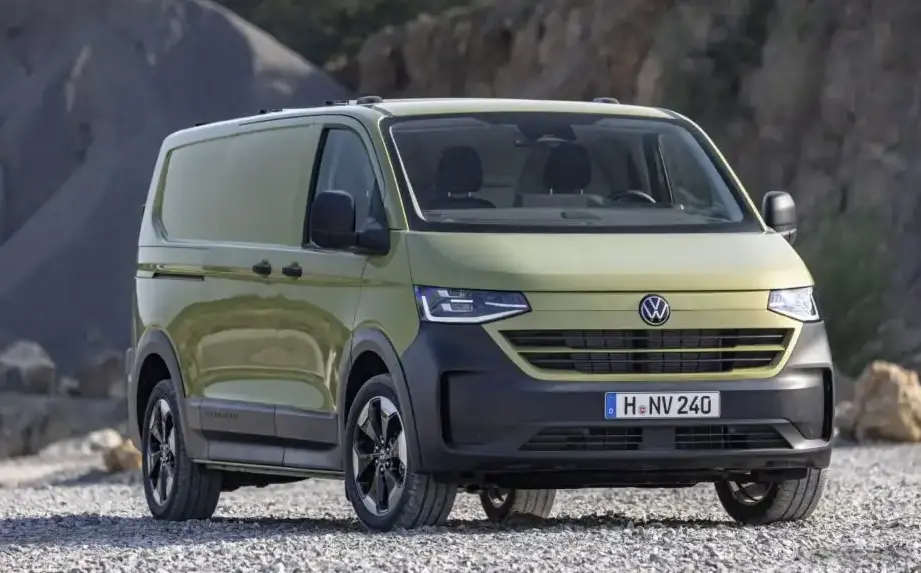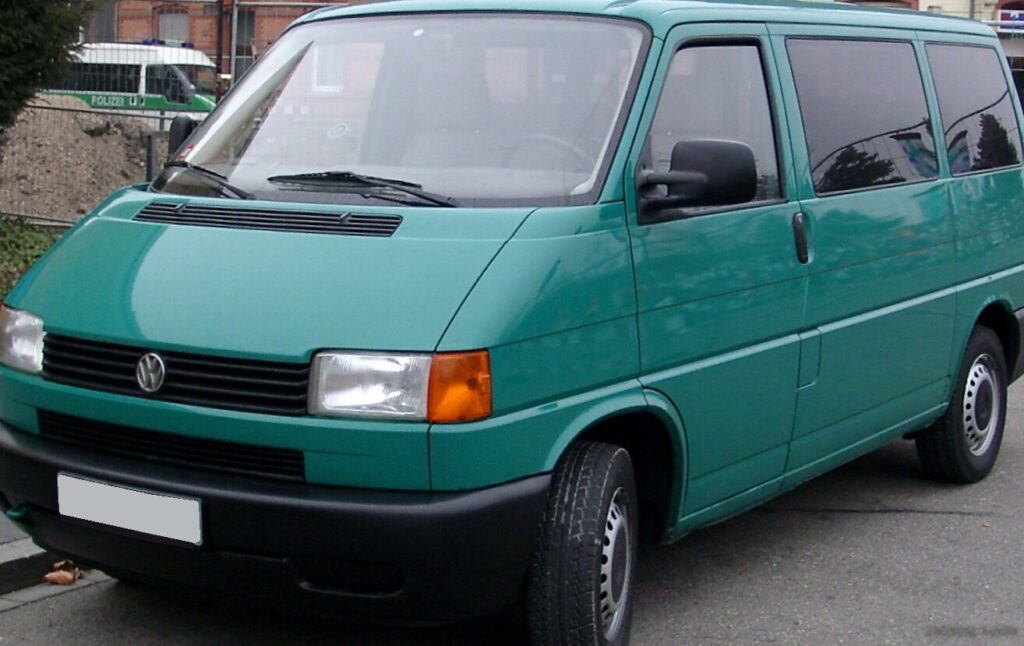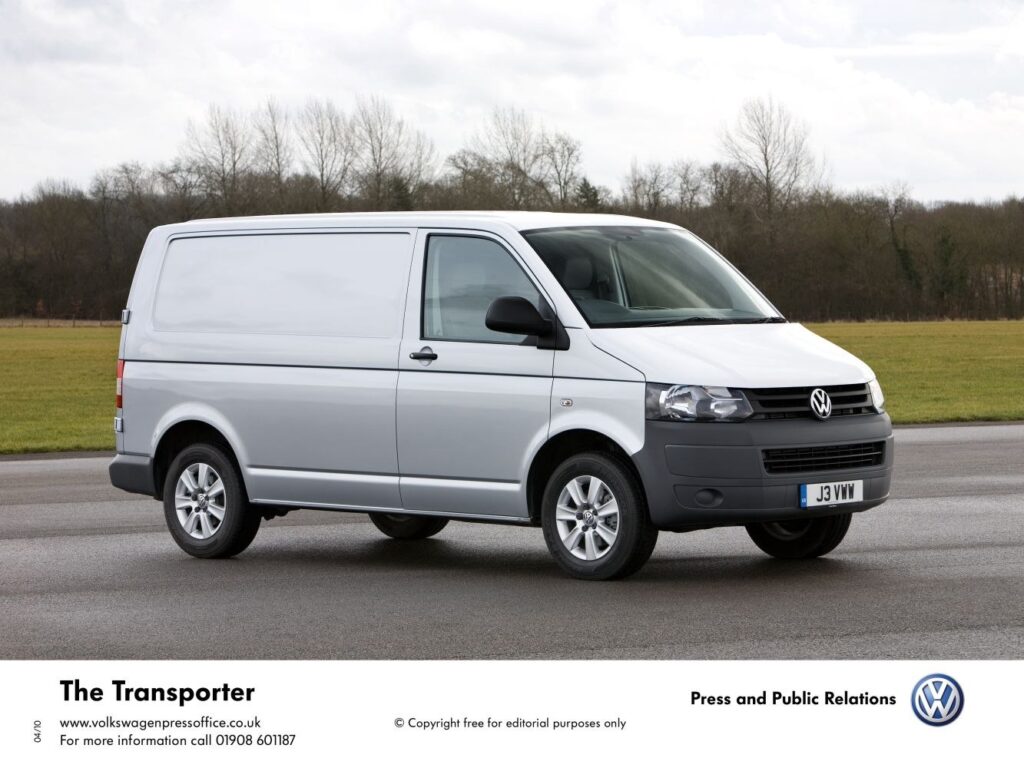
The Volkswagen Transporter (T5, facelift 2009) Panel Van 2.0 TDI BMT (140 Hp) L2H3 represents a cornerstone of Volkswagen’s commercial vehicle lineup, particularly prominent in the European market. Produced between 2012 and 2015, this variant builds upon the T5 generation, initially launched in 2003, and benefits from the significant facelift introduced in 2009. This update brought revised styling, improved powertrains, and enhanced technology to an already successful platform. The L2H3 designation signifies a long wheelbase and high roof configuration, maximizing cargo capacity. While a ubiquitous sight on European roads, the Transporter series was not officially sold in the United States, where Volkswagen’s commercial vehicle offerings were more limited.
Powertrain & Engine Architecture
The 2012-2015 Volkswagen Transporter (T5, facelift 2009) Panel Van L2H3 is powered by Volkswagen’s acclaimed EA189 / CAAC 2.0-liter (120.09 cubic inches) inline-four turbocharged diesel engine. This engine is transversely mounted at the front of the vehicle and drives the front wheels. It’s a robust powertrain designed for efficiency and durability, essential qualities for a commercial vehicle. The engine utilizes a common rail fuel injection system, a turbocharger, and an intercooler to optimize performance and fuel economy.
The 2.0 TDI unit delivers 140 horsepower (hp) at 3500 revolutions per minute (rpm). However, the engine’s strength lies in its torque output, peaking at 250.77 lb.-ft. (340 Nm) between 1750 and 2500 rpm. This broad torque curve provides strong pulling power at low engine speeds, reducing the need for frequent gear changes and improving drivability under load. Power is transmitted through a precise 6-speed manual transmission, contributing to the vehicle’s fuel efficiency. The engine incorporates BlueMotion Technology (BMT), including a Start & Stop System and a particulate filter, to meet stringent Euro 5 emission standards.
Driving Characteristics
The 140 hp / 6-speed manual combination in the Transporter L2H3 offers a balanced driving experience. While not as quick as higher-output versions, it provides sufficient power for highway cruising and urban driving, even when fully loaded. Acceleration from 0 to 60 mph takes approximately 12.1 seconds, with a top speed of 100.04 mph (161 km/h). The 6-speed manual transmission is well-matched to the engine’s torque curve, allowing drivers to maintain optimal engine speed for various driving conditions. Compared to a hypothetical gasoline equivalent, the diesel engine delivers superior fuel economy and a more relaxed driving experience due to the higher torque output at lower revs. The manual transmission provides more driver control than an automatic would, which was also offered on other Transporter variants.
Equipment & Trim Levels
The Volkswagen Transporter (T5, facelift 2009) Panel Van L2H3 was primarily focused on functionality and practicality. Standard equipment typically included features like power windows, central locking, an adjustable steering column, and a driver’s airbag. The interior was designed with durability in mind, featuring hard-wearing plastics and robust upholstery. While not lavishly appointed, the cabin was ergonomically designed for driver comfort during long journeys. Optional extras included air conditioning, a CD player with radio, upgraded seating, parking sensors, and various cargo area enhancements such as shelving and load securing systems. The level of trim was generally basic, reflecting the vehicle’s commercial purpose. Higher trim levels, available on other Transporter models, offered more comfort and convenience features, but the L2H3 was typically specified for its cargo capacity and practicality rather than luxury.
Chassis & Braking
The Transporter L2H3 features an independent McPherson strut front suspension with coil springs and an anti-roll bar, paired with an independent coil spring rear suspension with a transverse stabilizer and trailing arms. This sophisticated suspension setup, uncommon for many commercial vans, provides a comfortable ride and stable handling, even when heavily loaded. The front suspension incorporates a stabilizer bar to reduce body roll during cornering. Braking is handled by ventilated discs at both the front (308×29.5 mm) and rear (294×22 mm), complemented by an Anti-lock Braking System (ABS) for enhanced safety and control. Hydraulic rack and pinion steering ensures precise maneuverability. The standard tire size is 215/65 R16, mounted on 6.5J x 16 steel wheels, chosen for their durability and load-bearing capabilities. The rear suspension design prioritizes load-carrying capacity and stability over outright sportiness.
Market Reception & Comparison
The Volkswagen Transporter (T5, facelift 2009) Panel Van 2.0 TDI BMT (140 Hp) L2H3 was generally well-received by critics and commercial vehicle operators. It was praised for its robust build quality, efficient engine, and car-like driving dynamics. Fuel economy was a significant selling point, with the BMT variant achieving impressive figures of 30.9-32.2 US mpg on the combined NEDC cycle. Compared to other trims in the Transporter lineup, the 140 hp TDI offered a good balance between performance and fuel efficiency. The higher-output TDI variants provided more power but at the expense of fuel economy, while the lower-powered versions were less capable when fully loaded. Compared to rivals like the Mercedes-Benz Vito and Ford Transit Custom, the Transporter was often seen as offering a more refined driving experience and stronger residual values. However, some critics noted that the interior was somewhat utilitarian compared to some competitors.
Technical Specifications
| Category | Specification |
| General Information | |
| Brand | Volkswagen |
| Model | Transporter |
| Generation | Transporter (T5, facelift 2009) Panel Van |
| Engine Type | 2.0 TDI BMT (140 Hp) L2H3 |
| Production Start | 2012 |
| Production End | 2015 |
| Powertrain Architecture | Internal Combustion Engine |
| Body Type | Van |
| Seats | 2-3 |
| Doors | 4-5 |
| Performance Specifications | |
| Fuel Consumption (Urban, NEDC) | 9-9.3 l/100 km (25.3 – 26.1 US mpg) |
| Fuel Consumption (Extra Urban, NEDC) | 6.4-6.7 l/100 km (35.1 – 36.8 US mpg) |
| Fuel Consumption (Combined, NEDC) | 7.3-7.6 l/100 km (30.9 – 32.2 US mpg) |
| CO2 Emissions (NEDC) | 192-199 g/km |
| Fuel Type | Diesel |
| Acceleration 0-60 mph | 12.1 sec |
| Maximum Speed | 100.04 mph (161 km/h) |
| Emission Standard | Euro 5 |
| Weight-to-Power Ratio | 12.7 kg/Hp (79 Hp/tonne) |
| Weight-to-Torque Ratio | 5.2 kg/Nm (191.8 Nm/tonne) |
| Engine Specifications | |
| Power | 140 Hp @ 3500 rpm |
| Power per Liter | 71.1 Hp/l |
| Torque | 250.77 lb.-ft. (340 Nm) @ 1750-2500 rpm |
| Engine Layout | Front, Transverse |
| Engine Model/Code | EA189 / CAAC |
| Engine Displacement | 2.0 liters (1968 cm3 / 120.09 cu. in.) |
| Number of Cylinders | 4 |
| Engine Configuration | Inline |
| Cylinder Bore | 3.19 in. (81 mm) |
| Piston Stroke | 3.76 in. (95.5 mm) |
| Compression Ratio | 16.5:1 |
| Valves per Cylinder | 4 |
| Fuel Injection System | Diesel Commonrail |
| Engine Aspiration | Turbocharger, Intercooler |
| Valvetrain | DOHC |
| Engine Oil Capacity | 7.4 US qt (7 liters) |
| Coolant Capacity | 11.62 US qt (11 liters) |
| Engine Systems | Start & Stop System, Particulate Filter |
| Dimensions, Volume, and Weights | |
| Curb Weight | 3908.8 – 4887.65 lbs. (1773-2217 kg) |
| Gross Vehicle Weight Rating (GVWR) | 6172.94 – 7054.79 lbs. (2800-3200 kg) |
| Payload Capacity | 2167.14 – 2264.15 lbs. (983-1027 kg) |
| Cargo Volume (Maximum) | 328.43 cu. ft. (9300 liters) |
| Fuel Tank Capacity | 21.13 US gal (80 liters) |
| Towing Capacity (with brakes) | 5511.56 lbs. (2500 kg) |
| Towing Capacity (without brakes) | 1653.47 lbs. (750 kg) |
| Tongue Weight | 220.46 lbs. (100 kg) |
| Length | 208.35 in. (5292 mm) |
| Width | 74.96 in. (1904 mm) |
| Width (including mirrors) | 89.88 in. (2283 mm) |
| Height | 97.48 in. (2476 mm) |
| Wheelbase | 133.86 in. (3400 mm) |
| Front Overhang | 35.28 in. (896 mm) |
| Rear Overhang | 39.21 in. (996 mm) |
| Ground Clearance | 7.91 in. (201 mm) |
| Minimum Turning Circle | 43.31 ft. (13.2 m) |
| Approach Angle | 21° |
| Departure Angle | 17° |
| Ramp-over (Brakeover) Angle | 12° |
| Drivetrain, Brakes, and Suspension | |
| Drivetrain Architecture | Front-wheel drive (ICE drives front wheels) |
| Drive Wheel | Front-wheel drive |
| Gearbox Type | 6 gears, manual transmission |
| Front Suspension | Independent, McPherson type with coil spring and anti-roll bar |
| Rear Suspension | Independent coil spring, Transverse stabilizer, Trailing arm |
| Front Brakes | Ventilated discs, 308×29.5 mm |
| Rear Brakes | Ventilated discs, 294×22 mm |
| Assisting Systems | ABS (Anti-lock Braking System) |
| Steering Type | Steering rack and pinion |
| Power Steering | Hydraulic Steering |
| Tire Size | 215/65 R16 |
| Wheel Rims Size | 6.5J x 16 |
Legacy
The Volkswagen Transporter series has established an enduring legacy in the light commercial vehicle segment, particularly in Europe. The T5 generation, and specifically models like the 2012-2015 Volkswagen Transporter (T5, facelift 2009) Panel Van 2.0 TDI BMT (140 Hp) L2H3, solidified its reputation for capability, reliability, and cost-effectiveness. The EA189 2.0 TDI engine, while later subject to emissions scrutiny, proved to be a durable and efficient powertrain when properly maintained. On the used car market, these Transporters remain popular due to their practicality and relatively low running costs. However, potential buyers should be aware of the potential for diesel particulate filter (DPF) issues and ensure regular maintenance has been performed. The T5 Transporter’s influence extends beyond its sales figures, shaping the expectations of commercial vehicle operators and setting a benchmark for refinement and driving dynamics in its class.