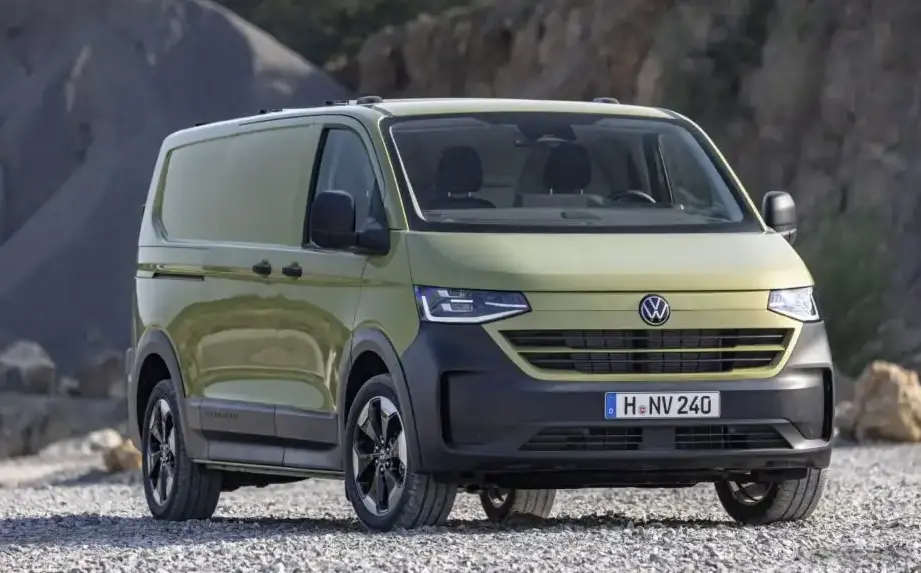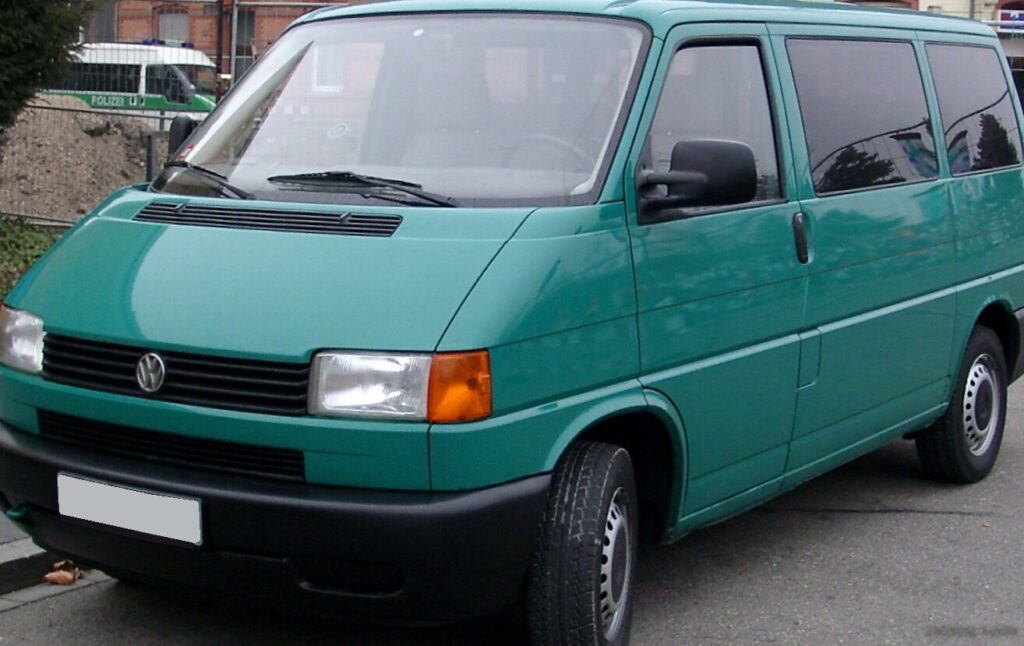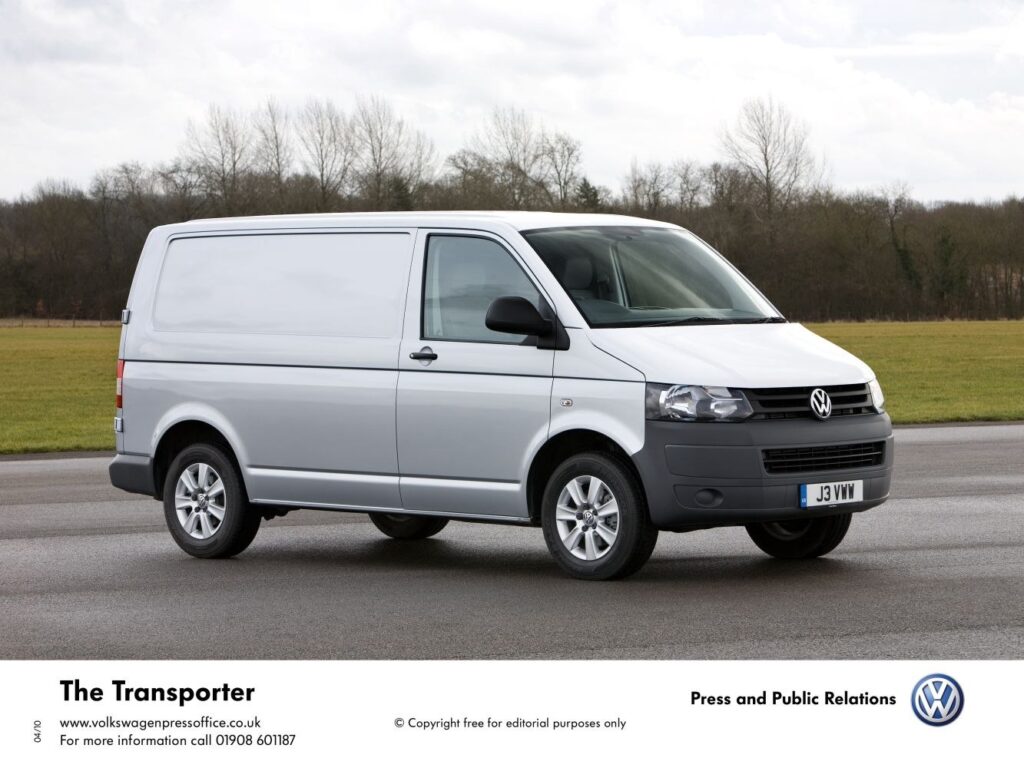
The Volkswagen Transporter, a name synonymous with versatility and reliability, particularly in Europe, saw its fifth generation (T5) receive a significant facelift in 2009. This iteration, produced from 2013 to 2015, represented a refined and technologically advanced chapter in the Transporter’s history. The specific variant under review, the Volkswagen Transporter (T5, facelift 2009) Panel Van 2.0 TDI BMT (180 Hp) 4MOTION L1H2, stands out as a high-performance, all-wheel-drive cargo solution designed for demanding commercial applications. While the Transporter series has had limited direct sales in the United States, its influence on the global light commercial vehicle segment is undeniable, embodying German engineering prowess for efficiency and durability. This particular model, with its robust diesel powertrain and advanced 4MOTION system, was a key player in the European van market, offering a compelling blend of power, payload capacity, and all-weather capability.
Powertrain & Engine Architecture
At the heart of this formidable panel van lies Volkswagen’s acclaimed 2.0-liter TDI (Turbocharged Direct Injection) engine, specifically the BiTurbo variant, which delivers 180 horsepower at 4000 rpm. This engine, internally coded as EA189 / CFCA, features a sophisticated common rail fuel injection system and a DOHC (Double Overhead Camshaft) valvetrain with four valves per cylinder, ensuring optimal combustion and efficiency. The “BiTurbo” designation indicates the use of two turbochargers, providing a broad and responsive power band. This setup generates an impressive 295.02 lb-ft of torque, available from a low 1500 rpm all the way up to 2000 rpm. Such a wide torque plateau is crucial for a commercial vehicle, enabling strong pulling power for heavy loads and excellent drivability in various traffic conditions.
The engine utilizes a common rail direct injection system, injecting fuel directly into the combustion chamber at extremely high pressure. This allows for precise fuel metering and improved combustion efficiency. The DOHC valvetrain, with four valves per cylinder, optimizes gas flow, further enhancing performance and reducing emissions. The two turbochargers are sequentially activated; a smaller turbocharger provides boost at lower engine speeds for improved responsiveness, while a larger turbocharger takes over at higher speeds for increased power output. The engine is paired with a 6-speed manual transmission, offering drivers direct control over the power delivery. The 4MOTION all-wheel-drive system intelligently distributes power, driving the front wheels permanently and engaging the rear wheels via an electrically or mechanically operated clutch when additional grip is needed.
Driving Characteristics
Despite its primary role as a cargo hauler, the Volkswagen Transporter (T5, facelift 2009) Panel Van offers surprisingly brisk performance for its class. It can accelerate from 0 to 60 mph in approximately 10 seconds, reaching a maximum speed of 113.09 mph. This performance is managed through the 6-speed manual transmission. The gear ratios are optimized for both hauling and highway cruising, providing sufficient torque for loaded driving and comfortable speeds on long journeys. Compared to lower-output versions of the T5, such as those equipped with the 102 hp engine, the 180 hp TDI BMT offers a significantly more responsive and effortless driving experience, particularly when fully loaded or climbing hills. While not as sporty as the gasoline-powered variants, the 2.0 TDI BMT provides ample power for most commercial applications. Compared to the higher-output 140 hp TDI, the 180 hp version offers a noticeable increase in performance, especially in overtaking situations.
Equipment & Trim Levels
The Volkswagen Transporter (T5, facelift 2009) Panel Van 2.0 TDI BMT (180 Hp) 4MOTION L1H2 was primarily focused on functionality and durability, rather than luxury. Standard features typically included power windows, central locking, an adjustable steering column, and a driver’s seat with basic adjustments. The interior upholstery was typically hard-wearing fabric, designed to withstand the rigors of commercial use. The dashboard configuration was functional and straightforward, with clearly labeled controls. Optional extras available for this trim included air conditioning, a CD/radio system, heated seats, and parking sensors. Higher trim levels, such as the Comfortline, offered additional features like upgraded upholstery, cruise control, and a multi-function steering wheel. The “L1H2” designation indicates a standard length body and a medium-high roof, providing a generous cargo volume of 236.61 cubic feet (6700 liters).
Chassis & Braking
The T5 Transporter is equipped with a robust chassis and an independent suspension system both front and rear. The front features a McPherson strut setup with coil springs and an anti-roll bar, while the rear utilizes independent coil springs, a transverse stabilizer, and trailing arms. This configuration ensures a comfortable ride and stable handling, even when fully loaded. Braking performance is handled by ventilated discs on both the front (340×32.5 mm) and rear (294×22 mm) axles, complemented by an Anti-lock Braking System (ABS) for enhanced control during emergency stops. The hydraulic power steering system, with a rack and pinion setup, provides responsive and predictable steering, crucial for maneuvering a larger vehicle in urban environments. The van’s substantial ground clearance of 7.91 inches, coupled with impressive approach (21°), departure (17°), and ramp-over (14°) angles, further highlights its capability to tackle varied terrains, a benefit amplified by the 4MOTION system.
Market Reception & Comparison
The Volkswagen Transporter T5, and specifically the 2.0 TDI BMT 180 Hp 4MOTION variant, was well-received by critics for its blend of performance, fuel efficiency, and all-weather capability. It consistently scored well in comparison tests against rivals like the Ford Transit Custom and Mercedes-Benz Vito. Fuel economy, with a combined figure of 29.8 to 30.9 US mpg, was considered competitive for a vehicle of its size and weight. Reliability was generally good, although some owners reported issues with the diesel particulate filter (DPF) and dual-mass flywheel, common concerns with modern diesel engines. The 4MOTION all-wheel-drive system was a significant selling point, particularly in regions with harsh winters or challenging terrain. Compared to the lower-powered T5 variants, the 180 hp TDI BMT offered a more refined and capable driving experience, justifying its higher price point. However, it was generally more expensive than comparable models from Ford and Renault.
Technical Specifications
| Category | Specification |
| General Information | |
| Brand | Volkswagen |
| Model | Transporter |
| Generation | Transporter (T5, facelift 2009) Panel Van |
| Type (Engine) | 2.0 TDI BMT (180 Hp) 4MOTION L1H2 |
| Start of Production | 2013 year |
| End of Production | 2015 year |
| Powertrain Architecture | Internal Combustion engine |
| Body type | Van |
| Seats | 2-3 |
| Doors | 4-5 |
| Performance Specs | |
| Fuel consumption (urban NEDC) | 9.3-9.6 l/100 km |
| Fuel consumption (extra urban NEDC) | 6.6-6.9 l/100 km |
| Fuel consumption (combined NEDC) | 7.6-7.9 l/100 km |
| CO2 emissions (NEDC) | 199-208 g/km |
| Fuel Type | Diesel |
| Acceleration 0 – 60 mph (Calculated) | 10 sec |
| Maximum speed | 113.09 mph |
| Emission standard | Euro 5 |
| Weight-to-power ratio | 10.5 kg/Hp |
| Weight-to-torque ratio | 4.7 kg/Nm |
| Engine Specs | |
| Power | 180 Hp @ 4000 rpm |
| Power per liter | 91.5 Hp/l |
| Torque | 295.02 lb.-ft. @ 1500-2000 rpm |
| Engine layout | Front, Transverse |
| Engine Model/Code | EA189 / CFCA |
| Engine displacement | 120.09 cu. in. |
| Number of cylinders | 4 |
| Engine configuration | Inline |
| Cylinder Bore | 3.19 in. |
| Piston Stroke | 3.76 in. |
| Compression ratio | 16.5:1 |
| Number of valves per cylinder | 4 |
| Fuel injection system | Diesel Commonrail |
| Engine aspiration | BiTurbo, Intercooler |
| Valvetrain | DOHC |
| Engine oil capacity | 7.4 US qt |
| Coolant | 11.62 US qt |
| Engine systems | Start & Stop System, Particulate filter |
| Space, Volume and Weights | |
| Curb Weight | 4166.74 – 5024.33 lbs. |
| Max. weight | 6172.94 – 7054.79 lbs. |
| Max load | 2006.21 – 2030.46 lbs. |
| Cargo (load) space – maximum | 236.61 cu. ft. |
| Fuel tank capacity | 21.13 US gal |
| Permitted trailer load with brakes (12%) | 5511.56 lbs. |
| Permitted trailer load without brakes | 1653.47 lbs. |
| Permitted towbar download | 220.46 lbs. |
| Dimensions | |
| Length | 192.6 in. |
| Width | 74.96 in. |
| Width including mirrors | 89.88 in. |
| Height | 85.67 in. |
| Wheelbase | 118.11 in. |
| Front overhang | 35.28 in. |
| Rear overhang | 39.21 in. |
| Ride height (ground clearance) | 7.91 in. |
| Minimum turning circle (turning diameter) | 39.04 ft. |
| Approach angle | 21° |
| Departure angle | 17° |
| Ramp-over (brakeover) angle | 14° |
| Climb angle | 37° |
| Wading depth | 11.81 in. |
| Drivetrain, Brakes and Suspension Specs | |
| Drivetrain Architecture | ICE drives front wheels permanently, rear wheels driven through electrically or mechanically operated clutch if necessary. |
| Drive wheel | All-wheel drive (4×4) |
| Number of gears and type of gearbox | 6 gears, manual transmission |
| Front suspension | Independent, type McPherson with coil spring and anti-roll bar |
| Rear suspension | Independent coil spring, Transverse stabilizer, Trailing arm |
| Front brakes | Ventilated discs, 340×32.5 mm |
| Rear brakes | Ventilated discs, 294×22 mm |
| Assisting systems | ABS (Anti-lock braking system) |
| Steering type | Steering rack and pinion |
| Power steering | Hydraulic Steering |
| Tires size | 215/60 R17; 235/55 R17; 255/45 R18 |
| Wheel rims size | 7J x 17; 8J x 18 |
Legacy
The Volkswagen Transporter T5, especially its facelifted version from 2009-2015, cemented its position as a benchmark in the European light commercial vehicle segment. The Volkswagen Transporter (T5, facelift 2009) Panel Van 2.0 TDI BMT (180 Hp) 4MOTION L1H2 variant, in particular, was highly regarded for its blend of power, all-weather capability, and fuel efficiency – a critical combination for businesses operating across diverse conditions and geographies. Its reputation for robust build quality and reliability contributed significantly to its strong resale value and enduring popularity. In the used car market today, well-maintained examples of this variant continue to command reasonable prices, reflecting their proven durability and capability. While the EA189 engine has been subject to scrutiny regarding emissions, properly maintained units remain reliable. The 4MOTION system is particularly sought after, adding to the vehicle’s appeal. The T5’s historical significance lies in its continuation of a legendary lineage that began with the original Type 2 “Bus” in the 1950s. Each generation has evolved, adapting to changing market demands and technological advancements, while retaining the core values of versatility and practicality. The facelifted T5, with its modern TDI engines and advanced drivetrain options like 4MOTION, represented a sophisticated evolution of the commercial van, balancing traditional workhorse attributes with contemporary efficiency and driving refinement. Its impact extended beyond pure commercial use, with the platform also spawning popular passenger variants like the Multivan and California camper, further showcasing its inherent adaptability. The T5 generation ultimately paved the way for its successor, the T6, inheriting a legacy of dependability and innovation that continues to define the Volkswagen Transporter series.