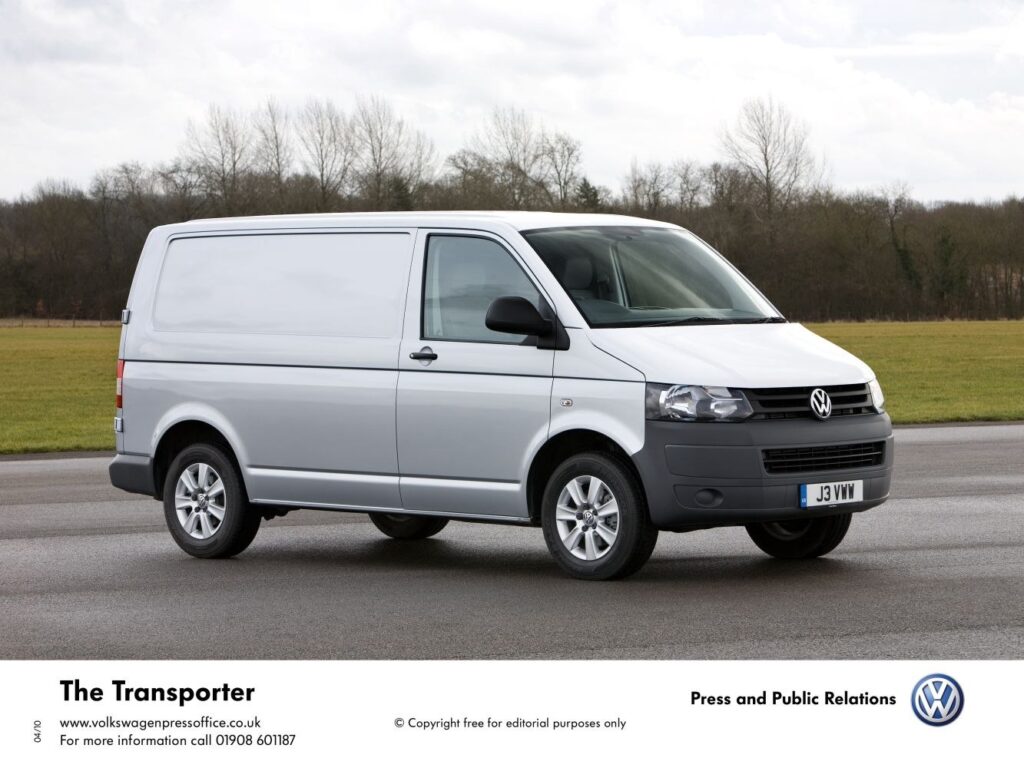
The Volkswagen Transporter (T5, facelift 2009) Panel Van represents a cornerstone of European commercial vehicle design, renowned for its versatility and reliability. This specific variant, the 2.0 TDI BMT (180 Hp) DSG L1H1, was produced between 2013 and 2015 and embodies a potent and efficient option within the T5 lineup. Built on the 1HX0/A3 platform, it catered to businesses demanding a blend of cargo capacity, driver comfort, and robust performance. While not widely available in the United States, the Transporter T5’s influence on global commercial vehicle standards is widely acknowledged.
Powertrain & Engine Architecture
The heart of this Transporter variant is the 2.0-liter TDI (Turbocharged Direct Injection) engine, internally designated EA189 / CFCA. This inline four-cylinder powerplant features a DOHC (Double Overhead Camshaft) valvetrain with four valves per cylinder. A key characteristic of this engine is its BiTurbo setup, utilizing two turbochargers to deliver a broad and responsive power band across the rev range. This configuration, coupled with a common rail fuel injection system and an intercooler, results in a robust 180 horsepower at 4000 rpm. This translates to approximately 91.5 horsepower per liter, a significant output for a diesel engine of this displacement.
Torque delivery is equally impressive, peaking at 400 Nm (approximately 295.02 lb.-ft.) between 1500 and 2000 rpm. This ample low-end torque is crucial for a commercial vehicle, providing excellent pulling power even when fully loaded, and minimizing the need for frequent gear changes. Power is transferred to the front wheels via a sophisticated 7-speed DSG (Direct-Shift Gearbox) automatic transmission. This dual-clutch unit offers exceptionally rapid and smooth shifts, contributing to both performance and fuel efficiency – a critical factor for fleet operators. The DSG transmission utilizes two separate clutches for odd and even gears, allowing for pre-selection of the next gear and seamless transitions.
Fuel Injection and Valvetrain
The EA189 engine utilizes a common rail direct injection system, operating at extremely high pressures to atomize the fuel for optimal combustion. This system allows for precise control over fuel delivery, contributing to both power and efficiency. The DOHC valvetrain, with four valves per cylinder, maximizes airflow into and out of the combustion chamber, further enhancing performance. Variable valve timing is also incorporated, optimizing valve opening and closing events based on engine speed and load.
Driving Characteristics
The 2.0 TDI BMT (180 Hp) DSG L1H1 offers a surprisingly refined driving experience for a panel van. The BiTurbo setup eliminates much of the turbo lag often associated with diesel engines, providing a responsive and linear power delivery. The DSG transmission contributes to this smoothness, offering quick and precise shifts without the jerkiness sometimes found in traditional automatic transmissions. Compared to lower-powered versions of the T5, this variant provides significantly more effortless acceleration and the ability to maintain higher speeds on highways, especially when carrying a load. While a manual transmission was available on other T5 models, the DSG offers a level of convenience and ease of use that is particularly appealing for urban deliveries and long-distance driving.
The gear ratios in the 7-speed DSG are optimized for both fuel efficiency and performance. Lower gears provide strong acceleration from a standstill, while higher gears allow for relaxed cruising at highway speeds. The wide gear spread ensures that the engine operates within its optimal power band in most driving situations. Compared to the VR6 gasoline engine option, the 2.0 TDI offers superior fuel economy and torque, making it a more practical choice for commercial applications. The 1.9 TDI, while more economical, lacks the power and refinement of the 180 hp version.
Equipment & Trim Levels
The Transporter T5 Panel Van L1H1, in this configuration, typically came standard with features geared towards practicality and functionality. These included a driver and passenger airbag, ABS (Anti-lock Braking System), power windows, central locking, and a basic audio system. The interior upholstery was typically durable cloth, designed to withstand the rigors of commercial use. The dashboard layout is functional and straightforward, prioritizing ease of use.
Optional extras included air conditioning, a more advanced audio system with Bluetooth connectivity, parking sensors, cruise control, and upgraded seating. Many vans were also equipped with additional cargo area protection, such as wood paneling or rubber flooring. Specific trim levels, such as Trendline and Highline, offered progressively more standard features and higher-quality interior materials. The Highline trim, for example, often included features like alloy wheels, upgraded upholstery, and climate control.
Chassis & Braking
The T5 Panel Van utilizes a robust chassis designed for durability and load-carrying capacity. The front suspension employs an independent McPherson strut setup with coil springs and an anti-roll bar, providing precise steering and good road holding. The rear suspension is also independent, featuring coil springs, a transverse stabilizer, and trailing arms, contributing to a composed ride even when loaded. This independent rear suspension setup is a significant upgrade over the leaf spring setups found on some older vans.
Braking performance is provided by ventilated discs on all four wheels (340×32.5 mm front, 294×22 mm rear), complemented by an Anti-lock Braking System (ABS) for enhanced safety and control. Hydraulic power steering ensures ease of maneuverability, particularly in tight urban environments, with a minimum turning circle of 39.04 feet (11.9 meters). Stabilizer bars, both front and rear, help to reduce body roll during cornering, improving handling stability.
Market Reception & Comparison
The Volkswagen Transporter T5, particularly the 2.0 TDI BMT (180 Hp) DSG variant, received generally positive reviews from automotive critics. It was praised for its refined driving dynamics, strong performance, and excellent fuel economy. The DSG transmission was widely regarded as a significant improvement over traditional automatic transmissions, offering smooth and responsive shifts. Compared to competitors like the Mercedes-Benz Vito and Ford Transit Custom, the Transporter T5 was often seen as offering a more premium driving experience and a higher level of build quality.
Fuel economy was a key strength of this variant, with combined fuel consumption rated between 7.3-7.6 liters per 100 km (32.2 – 30.9 US mpg). This made it a cost-effective option for businesses operating large fleets. Reliability was generally good, although some owners reported issues with the DSG transmission, particularly early units. However, these issues were often addressed through software updates and improved maintenance procedures. The 180 hp TDI engine proved to be durable and reliable, provided it was properly maintained.
Technical Specifications
| Brand | Volkswagen |
| Model | Transporter |
| Generation | Transporter (T5, facelift 2009) Panel Van |
| Type (Engine) | 2.0 TDI BMT (180 Hp) DSG L1H1 |
| Start of Production | 2013 year |
| End of Production | 2015 year |
| Powertrain Architecture | Internal Combustion engine |
| Body Type | Van |
| Seats | 2-3 |
| Doors | 4-5 |
| Fuel Type | Diesel |
| Emission Standard | Euro 5 |
| Acceleration 0 – 60 mph | 9.5 sec |
| Acceleration 0 – 100 km/h | 10 sec |
| Maximum Speed | 118.68 mph (191 km/h) |
| Fuel Consumption (Urban NEDC) | 27.7 – 26.7 US mpg (8.5-8.8 l/100 km) |
| Fuel Consumption (Extra Urban NEDC) | 35.6 – 34.1 US mpg (6.6-6.9 l/100 km) |
| Fuel Consumption (Combined NEDC) | 32.2 – 30.9 US mpg (7.3-7.6 l/100 km) |
| CO2 Emissions (NEDC) | 192-199 g/km |
| Power | 180 Hp @ 4000 rpm |
| Power per Liter | 91.5 Hp/l |
| Torque | 295.02 lb.-ft. (400 Nm) @ 1500-2000 rpm |
| Engine Layout | Front, Transverse |
| Engine Model/Code | EA189 / CFCA |
| Engine Displacement | 120.09 cu. in. (1968 cm3) |
| Number of Cylinders | 4 |
| Engine Configuration | Inline |
| Cylinder Bore | 3.19 in. (81 mm) |
| Piston Stroke | 3.76 in. (95.5 mm) |
| Compression Ratio | 16.5:1 |
| Valves per Cylinder | 4 |
| Fuel Injection System | Diesel Commonrail |
| Engine Aspiration | BiTurbo, Intercooler |
| Valvetrain | DOHC |
| Engine Oil Capacity | 7.4 US qt (7 l) |
| Coolant Capacity | 11.62 US qt (11 l) |
| Engine Systems | Start & Stop System, Particulate filter |
| Kerb Weight | 3926.43 – 4784.03 lbs. (1781-2170 kg) |
| Max. Weight (GVWR) | 6172.94 – 7054.79 lbs. (2800-3200 kg) |
| Max Load | 2246.51 – 2270.76 lbs. (1019-1030 kg) |
| Trunk (Boot) Space – maximum | 204.83 cu. ft. (5800 l) |
| Fuel Tank Capacity | 21.13 US gal (80 l) |
| Max. Roof Load | 220.46 lbs. (100 kg) |
| Permitted Trailer Load (with brakes 12%) | 5511.56 lbs. (2500 kg) |
| Permitted Trailer Load (without brakes) | 1653.47 lbs. (750 kg) |
| Permitted Towbar Download | 220.46 lbs. (100 kg) |
| Length | 192.6 in. (4892 mm) |
| Width | 74.96 in. (1904 mm) |
| Width including mirrors | 89.88 in. (2283 mm) |
| Height | 78.35 in. (1990 mm) |
| Wheelbase | 118.11 in. (3000 mm) |
| Front Overhang | 35.28 in. (896 mm) |
| Rear Overhang | 39.21 in. (996 mm) |
| Ride Height (Ground Clearance) | 7.91 in. (201 mm) |
| Minimum Turning Circle | 39.04 ft. (11.9 m) |
| Approach Angle | 21° |
| Departure Angle | 17° |
| Ramp-over (Brakeover) Angle | 14° |
| Wading Depth | 11.81 in. (300 mm) |
| Drivetrain Architecture | Front-wheel drive |
| Number of Gears and Type of Gearbox | 7 gears, automatic transmission DSG |
| Front Suspension | Independent, McPherson with coil spring and anti-roll bar |
| Rear Suspension | Independent coil spring, Transverse stabilizer, Trailing arm |
| Front Brakes | Ventilated discs, 340×32.5 mm |
| Rear Brakes | Ventilated discs, 294×22 mm |
| Assisting Systems | ABS (Anti-lock braking system) |
| Steering Type | Steering rack and pinion |
| Power Steering | Hydraulic Steering |
| Tires Size | 215/60 R17; 235/55 R17; 255/45 R18 |
| Wheel Rims Size | 7J x 17; 8J x 18 |
Legacy
The Volkswagen Transporter series has established an enduring legacy in the global automotive landscape, beginning with the iconic T1 “Bus” and evolving through generations to meet changing demands. The T5 generation, and particularly the facelifted models from 2009 onwards, continued this tradition of excellence, solidifying its reputation as a benchmark in the European light commercial vehicle segment. The Volkswagen Transporter (T5, facelift 2009) Panel Van, in its powerful 2.0 TDI BMT (180 Hp) DSG L1H1 configuration, was a testament to Volkswagen’s commitment to combining robust utility with advanced engineering and efficiency.
In the used vehicle market, well-maintained T5s with the 180 hp TDI engine continue to command respectable prices. Their proven durability, comfortable interior, and relatively low running costs make them an attractive option for businesses and individuals alike. While older examples may require some maintenance, the robust mechanicals of the T5 generally ensure a long service life. The DSG transmission, if properly serviced, is generally reliable. This variant of the T5 represents a significant chapter in the Transporter saga, demonstrating a period where commercial vehicles began to integrate advanced passenger car technologies to deliver unprecedented levels of performance, comfort, and efficiency for the working professional.