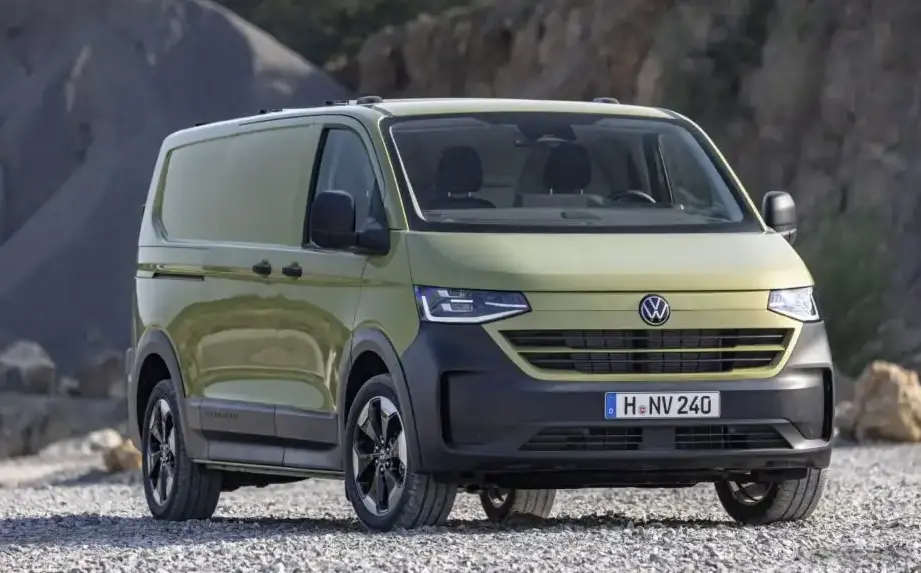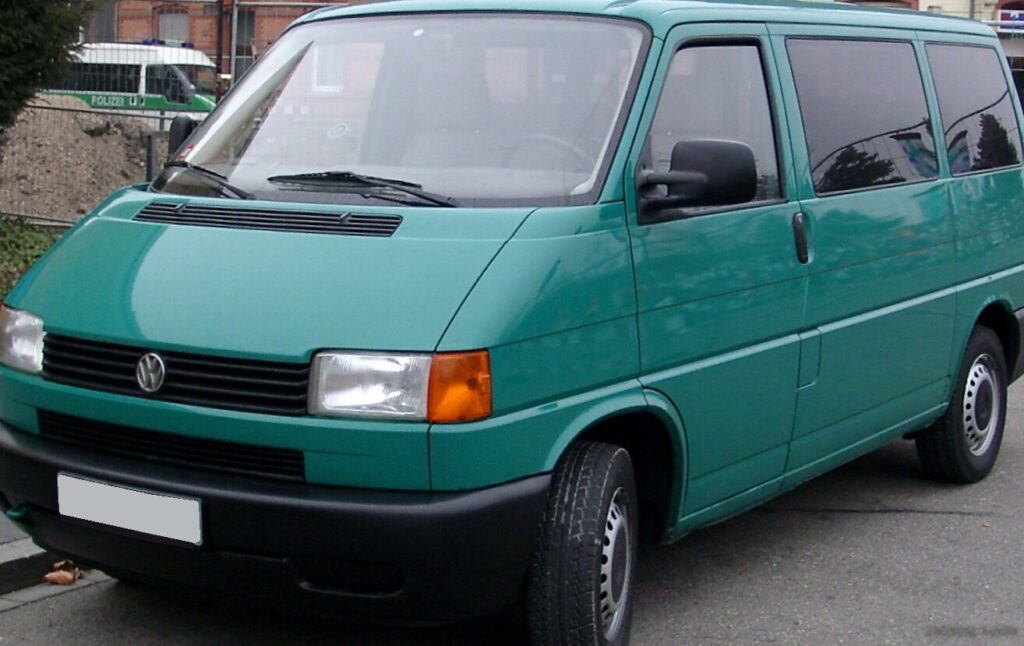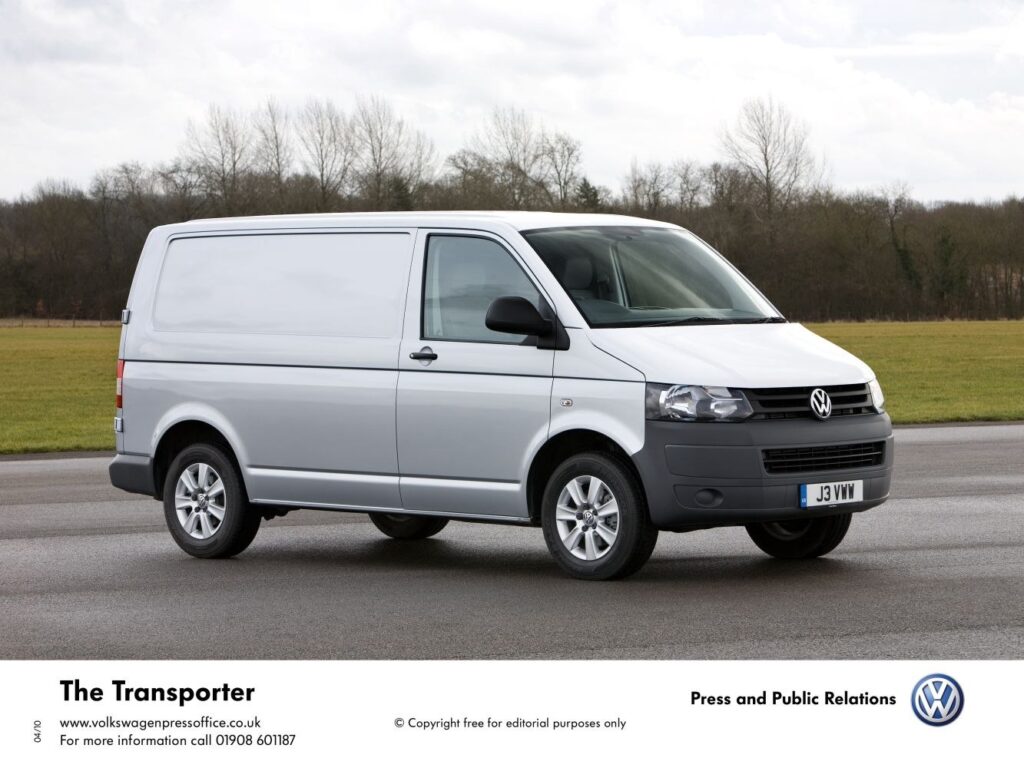
The Volkswagen Transporter (T5, facelift 2009) Panel Van represents a cornerstone of Volkswagen’s commercial vehicle division, renowned globally for its versatility and durability. The T5 generation, and specifically its 2009 facelift, continued this legacy, offering a refined and efficient platform for businesses across Europe and beyond. This article focuses on the Volkswagen Transporter (T5, facelift 2009) Panel Van, specifically the 2.0 TDI BMT (84 Hp) L1H1 variant, a model celebrated for its practicality, robust engineering, and impressive fuel economy in its primary markets. While not widely sold in the United States, the Transporter series is an icon in Europe, serving as everything from a reliable delivery van to a beloved camper. The T5 facelift, produced from 2011 to 2015 in this configuration, embodied the continuous evolution of a vehicle designed to meet the rigorous demands of commercial operations, prioritizing efficiency, cargo capacity, and driver comfort.
Engine & Performance: The 2.0 TDI BMT Powerplant
The Volkswagen Transporter (T5, facelift 2009) Panel Van’s powertrain centers around the EA189 / CAAA 2.0-liter TDI (Turbocharged Direct Injection) engine, a four-cylinder inline diesel unit celebrated for its balance of power, efficiency, and longevity. This specific iteration, featuring BlueMotion Technology (BMT), was engineered to optimize fuel consumption and reduce emissions, a crucial consideration for commercial fleets operating under stringent European environmental regulations.
The engine produces 84 horsepower at 3500 rpm. While this figure might seem modest by modern passenger car standards, it’s important to consider the context of a commercial panel van. The powertrain’s true strength lies in its torque output: a robust 220 Nm (162.26 lb.-ft.) delivered across a broad and accessible rev range, from 1250 to 2500 rpm. This low-end torque is paramount for a commercial vehicle, enabling strong pulling power from a standstill, effortless hauling of heavy loads, and relaxed cruising without constant gear changes. It ensures the van can navigate urban environments and maintain momentum on highways, even when fully laden.
The 2.0 TDI BMT engine benefits from advanced diesel common rail fuel injection, ensuring precise fuel delivery and combustion efficiency. Paired with a turbocharger and intercooler, it provides a responsive power delivery despite its output figures. The DOHC (Dual OverHead Camshaft) valvetrain with 4 valves per cylinder further enhances breathing and efficiency. The inclusion of BlueMotion Technology features like a Start & Stop system and a particulate filter underscored Volkswagen’s commitment to environmental responsibility, helping the vehicle meet Euro 5 emission standards.
Power is channeled to the front wheels via a durable 5-speed manual transmission. This setup, common for commercial vehicles of its era, offers direct engagement and allows drivers to maximize the engine’s torque characteristics. While acceleration figures, such as 0-60 mph in 18.7 seconds, are not indicative of speed, they reflect the vehicle’s primary purpose: reliable, efficient transportation of goods. Fuel economy was a strong suit, with combined NEDC figures ranging from 33.6 to 35.1 US mpg, impressive for a vehicle of its size and utility. This efficiency was a significant cost-saving factor for businesses.
Design & Features: Practicality in Form and Function
The Volkswagen Transporter (T5, facelift 2009) Panel Van embodies a design philosophy centered on practicality and utility. The L1H1 designation signifies the short wheelbase (L1) and standard roof height (H1) configuration, making it the most compact panel van variant in the Transporter range. This combination offered an optimal balance between maneuverability, crucial for urban deliveries, and substantial cargo capacity.
Visually, the T5 facelift brought subtle but effective updates to the front fascia, including redesigned headlights, a new grille, and updated bumpers, aligning its appearance with Volkswagen’s contemporary passenger car lineup. The overall aesthetic remained functional and understated, prioritizing durability and ease of repair over elaborate styling. With a length of 192.6 inches and a width of 74.96 inches (89.88 inches including mirrors), the Transporter L1H1 was designed to navigate tight city streets and parking spaces with relative ease. Its height of 78.35 inches allowed it to fit into many multi-story parking garages, a critical advantage for urban logistics.
Inside, the Panel Van was configured for 2-3 occupants, with a focus on a durable and ergonomic workspace. The cabin was designed to withstand the rigors of daily commercial use, featuring hard-wearing plastics and straightforward controls. While luxury amenities were not its priority, comfort features such as hydraulic power steering and optional air conditioning made long hours behind the wheel more manageable.
The true highlight of the Panel Van is its cargo area. With a maximum trunk volume of 5800 liters (204.83 cubic feet), the L1H1 variant offered ample space for goods, tools, or equipment. The robust construction and flat load floor made it easy to customize with shelving, racking, or other commercial fittings. Maximum payload capacity ranged from 1977.55 to 2012.82 lbs., underscoring its capability as a workhorse. Safety features for the era included ABS (Anti-lock Braking System) as standard, with ventilated disc brakes on both front and rear axles providing reliable stopping power. The independent McPherson front suspension and independent coil spring rear suspension, coupled with anti-roll bars, ensured stable handling and a relatively comfortable ride, even when unladen.
Technical Specifications
| Brand | Volkswagen |
| Model | Transporter |
| Generation | Transporter (T5, facelift 2009) Panel Van |
| Type (Engine) | 2.0 TDI BMT (84 Hp) L1H1 |
| Start of Production | 2011 year |
| End of Production | 2015 year |
| Powertrain Architecture | Internal Combustion engine |
| Body type | Van |
| Seats | 2-3 |
| Doors | 4-5 |
| Fuel consumption (economy) – urban (NEDC) | 8.3-8.6 l/100 km (27.4 – 28.3 US mpg) |
| Fuel consumption (economy) – extra urban (NEDC) | 5.8-6.1 l/100 km (38.6 – 40.6 US mpg) |
| Fuel consumption (economy) – combined (NEDC) | 6.7-7 l/100 km (33.6 – 35.1 US mpg) |
| CO2 emissions (NEDC) | 176-184 g/km |
| Fuel Type | Diesel |
| Acceleration 0 – 60 mph | 18.7 sec |
| Maximum speed | 90.72 mph (146 km/h) |
| Emission standard | Euro 5 |
| Weight-to-power ratio | 20.1 kg/Hp, 49.8 Hp/tonne |
| Weight-to-torque ratio | 7.7 kg/Nm, 130.4 Nm/tonne |
| Power | 84 Hp @ 3500 rpm |
| Power per liter | 42.7 Hp/l |
| Torque | 220 Nm (162.26 lb.-ft.) @ 1250-2500 rpm |
| Engine layout | Front, Transverse |
| Engine Model/Code | EA189 / CAAA |
| Engine displacement | 1968 cm3 (120.09 cu. in.) |
| Number of cylinders | 4 |
| Engine configuration | Inline |
| Cylinder Bore | 3.19 in. (81 mm) |
| Piston Stroke | 3.76 in. (95.5 mm) |
| Compression ratio | 16.5:1 |
| Number of valves per cylinder | 4 |
| Fuel injection system | Diesel Commonrail |
| Engine aspiration | Turbocharger, Intercooler |
| Valvetrain | DOHC |
| Kerb Weight | 3719.2 – 4636.32 lbs. (1687-2103 kg) |
| Max. weight | 5732.02 – 6613.87 lbs. (2600-3000 kg) |
| Max load | 1977.55 – 2012.82 lbs. (897-913 kg) |
| Trunk (boot) space – maximum | 204.83 cu. ft. (5800 l) |
| Fuel tank capacity | 21.13 US gal (80 l) |
| Length | 192.6 in. (4892 mm) |
| Width | 74.96 in. (1904 mm) |
| Width including mirrors | 89.88 in. (2283 mm) |
| Height | 78.35 in. (1990 mm) |
Legacy & Market Impact: The Enduring Appeal of the Transporter
The Volkswagen Transporter T5, particularly its facelifted version from 2009-2015, cemented its position as a dominant force in the European light commercial vehicle (LCV) market. While specific sales figures for the 84 Hp 2.0 TDI BMT L1H1 panel van are part of broader Transporter sales, this variant was a cornerstone of Volkswagen’s commercial offerings, appealing to a wide array of businesses, from independent tradespeople to large logistics fleets. Its reputation for reliability, low running costs (thanks to excellent fuel economy and robust engineering), and high residual values made it a shrewd investment for commercial operators.
In its competitive landscape, the Transporter T5 faced formidable rivals such as the Ford Transit Custom, Mercedes-Benz Vito, Renault Trafic, and Opel/Vauxhall Vivaro. What distinguished the Transporter was its blend of car-like driving dynamics, a testament to Volkswagen’s engineering prowess, with the uncompromised utility of a dedicated commercial vehicle. Its perceived build quality and the extensive Volkswagen service network further contributed to its strong market standing. The BlueMotion Technology, with its focus on reduced emissions and fuel consumption, was particularly relevant in markets where environmental incentives and fuel costs significantly impacted fleet operations.
Beyond its commercial success, the Transporter T5 continued the venerable lineage of the “Bus” or “Kombi,” a vehicle with immense cultural significance stretching back to the original Type 2. Although the Panel Van variant primarily served functional purposes, its robust platform also underpinned popular passenger versions like the Caravelle and Multivan, as well as the iconic California camper van. This shared heritage imbued even the most utilitarian Transporter with a sense of quality and desirability.
The 2.0 TDI BMT (84 Hp) L1H1 model, specifically, was a testament to Volkswagen’s strategy of offering a broad range of powertrains and configurations to suit diverse commercial needs. It provided an entry point into the Transporter range, offering maximum efficiency for those whose primary concern was cost-effective transportation rather than outright speed. Its impact was felt in countless small businesses across Europe, enabling efficient deliveries, mobile services, and flexible logistics. Even after the introduction of the T6 generation, the T5 facelift remains a highly sought-after used vehicle, a testament to its enduring quality and the strong demand for practical, reliable, and efficient commercial transport. Its legacy is one of unwavering utility, quiet competence, and a significant contribution to the backbone of European commerce.