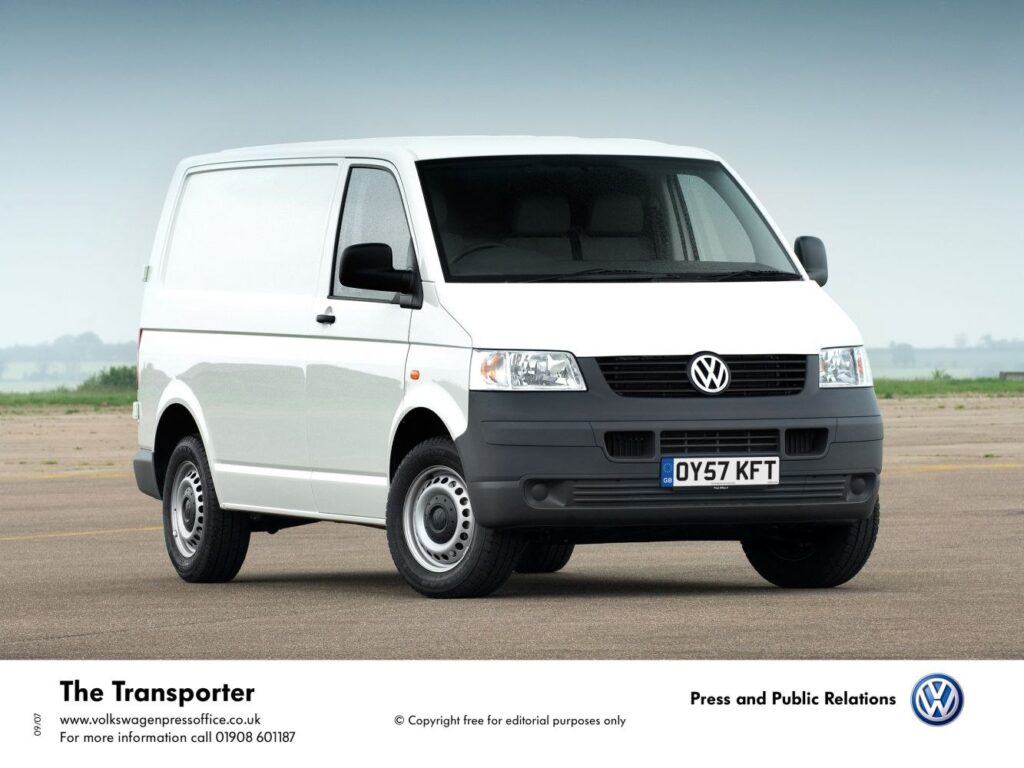
The Volkswagen Transporter (T5) Panel Van 1.9 TDI (102 Hp) DPF L1H1 represents a cornerstone in the global light commercial vehicle (LCV) market, particularly within Europe and other international markets where its versatility and robust engineering have made it a ubiquitous sight on roads and job sites. This detailed article focuses on the Volkswagen Transporter (T5) Panel Van equipped with the 1.9 TDI (102 Hp) DPF L1H1 powertrain, produced between 2006 and 2009. While the Transporter series has been a long-standing staple for Volkswagen globally, this particular iteration was not officially sold in the United States market, where different LCV offerings from Volkswagen, or other brands, filled the segment. Instead, the T5 Panel Van carved out its niche as a highly capable and efficient utility vehicle, serving a vast array of businesses and trades across its primary European landscape.
Volkswagen Transporter (T5) Panel Van: A European Workhorse
The T5 generation, launched in 2003, built upon the formidable legacy of its predecessors, enhancing comfort, safety, and technological sophistication while retaining the core values of durability and practicality. The 1.9 TDI DPF L1H1 model, a short-wheelbase, standard-roof panel van, was specifically designed to offer an optimal balance of cargo capacity, maneuverability, and operating costs, making it a popular choice for urban deliveries, small businesses, and fleet operators. Its internal combustion engine architecture, driving the front wheels, provided a conventional yet highly effective setup for its intended commercial applications.
Engine & Performance
At the heart of the Volkswagen Transporter (T5) Panel Van 1.9 TDI DPF L1H1 lies a robust and fuel-efficient 1.9-liter (1896 cm3 or 115.7 cubic inches) inline four-cylinder diesel engine. This powertrain, known by its internal code EA188 / BRS, was a testament to Volkswagen’s expertise in diesel technology during that era. Equipped with a turbocharger and an intercooler, the engine delivered a respectable 102 horsepower at 3500 revolutions per minute (rpm). More critically for a commercial vehicle, it produced a substantial 184.39 pound-feet (250 Nm) of torque, available at a low 2000 rpm. This low-end torque was crucial for hauling heavy loads and providing confident acceleration in varied driving conditions, particularly in urban environments or when navigating inclines.
The engine utilized a pump-nozzle (unit injector) fuel injection system, a sophisticated technology for its time, which allowed for precise fuel delivery and improved combustion efficiency. With a compression ratio of 18.5:1 and a SOHC (Single Overhead Camshaft) valvetrain with two valves per cylinder, the engine was engineered for both durability and economy. Furthermore, the inclusion of a Diesel Particulate Filter (DPF) system was a significant feature for the 2006-2009 production run, allowing the vehicle to meet the stringent Euro 4 emission standards, a vital consideration for commercial vehicles operating in European cities.
Power was transmitted to the front wheels via a five-speed manual transmission, a common and reliable setup for commercial vehicles of this class. While not designed for outright speed, the Transporter (T5) 1.9 TDI achieved a top speed of 97.56 mph (157 km/h) and could accelerate from 0 to 60 mph in approximately 18 seconds. These figures underscore its focus on utility and efficiency rather than performance. Fuel economy was a strong suit, with a combined consumption rating of 29.8 US mpg (7.9 l/100 km), which was highly competitive for a van of its size and capability, offering significant cost savings for operators over its lifespan. The engine oil capacity was 6.3 liters (6.66 US quarts) and the cooling system held 7.1 liters (7.5 US quarts) of coolant.
Design & Features
The Volkswagen Transporter (T5) Panel Van 1.9 TDI DPF L1H1 embodied a functional and practical design ethos typical of European light commercial vehicles. As an L1H1 variant, it featured a short wheelbase (118.11 inches or 3000 mm) and a standard roof height (77.13 inches or 1959 mm), making it agile enough for city driving and capable of fitting into many multi-story parking garages. The overall length measured 192.52 inches (4890 mm) and width was 74.96 inches (1904 mm), expanding to 88.27 inches (2242 mm) including mirrors.
The panel van body type, with its 4-5 doors, was configured primarily for cargo transport, offering 2-3 seats for the driver and crew. The most defining feature was its expansive cargo area, boasting a maximum trunk space of 204.83 cubic feet (5800 liters). This generous volume, combined with a maximum payload capacity ranging from 2204.62 to 2625.71 pounds (1000-1191 kg), made it an ideal platform for a wide range of commercial applications, from courier services to construction trades. The vehicle also offered impressive towing capabilities, with a permitted trailer load of up to 5511.56 pounds (2500 kg) with brakes, and a robust roof load capacity of 220.46 pounds (100 kg).
Underneath its utilitarian exterior, the T5 featured a well-engineered chassis designed for both durability and a relatively comfortable ride, crucial for long workdays. It utilized an independent McPherson strut front suspension with coil springs and an anti-roll bar, while the rear featured an independent coil spring setup with a transverse stabilizer and trailing arms. This suspension architecture contributed to stable handling and ride quality, even when fully loaded. Braking duties were handled by ventilated discs both front (308×29.5 mm) and rear (294×22 mm), augmented by an Anti-lock Braking System (ABS) for enhanced safety and control during emergency stops. Steering was a hydraulic rack and pinion system, providing direct feedback and ease of maneuverability, especially important in tight urban spaces, with a minimum turning circle of 39.04 feet (11.9 meters). The van rode on 205/65 R16 or 215/65 R16 tires mounted on 6.5J x 16 wheel rims.
Technical Specifications
| Category | Specification |
| General Information | |
| Brand | Volkswagen |
| Model | Transporter |
| Generation | Transporter (T5) Panel Van |
| Type (Engine) | 1.9 TDI (102 Hp) DPF L1H1 |
| Production Start | 2006 |
| Production End | 2009 |
| Powertrain Architecture | Internal Combustion Engine |
| Body Type | Van |
| Seats | 2-3 |
| Doors | 4-5 |
| Performance Specs | |
| Fuel Consumption (Urban) | 9.6 l/100 km (24.5 US mpg) |
| Fuel Consumption (Extra Urban) | 7.0 l/100 km (33.6 US mpg) |
| Fuel Consumption (Combined) | 7.9 l/100 km (29.8 US mpg) |
| CO2 Emissions | 208 g/km |
| Fuel Type | Diesel |
| Acceleration 0 – 60 mph | 18 seconds |
| Acceleration 0 – 62 mph (100 km/h) | 18.9 seconds |
| Maximum Speed | 97.56 mph (157 km/h) |
| Emission Standard | Euro 4 |
| Weight-to-Power Ratio | 17.6 kg/Hp (56.7 Hp/tonne) |
| Weight-to-Torque Ratio | 7.2 kg/Nm (138.9 Nm/tonne) |
| Engine Specs | |
| Power | 102 Hp @ 3500 rpm |
| Power per Liter | 53.8 Hp/l |
| Torque | 184.39 lb.-ft. (250 Nm) @ 2000 rpm |
| Engine Layout | Front, Transverse |
| Engine Model/Code | EA188 / BRS |
| Engine Displacement | 1.9 liters (1896 cm3 / 115.7 cu. in.) |
| Number of Cylinders | 4 |
| Engine Configuration | Inline |
| Cylinder Bore | 3.13 inches (79.5 mm) |
| Piston Stroke | 3.76 inches (95.5 mm) |
| Compression Ratio | 18.5:1 |
| Valves per Cylinder | 2 |
| Fuel Injection System | Pump-nozzle (Unit Injector) |
| Engine Aspiration | Turbocharger, Intercooler |
| Valvetrain | SOHC |
| Engine Oil Capacity | 6.3 liters (6.66 US qt) |
| Coolant Capacity | 7.1 liters (7.5 US qt) |
| Engine Systems | Particulate filter |
| Space, Volume and Weights | |
| Kerb Weight | 3968.32 – 4429.09 lbs. (1800-2009 kg) |
| Max. Weight (GVWR) | 6172.94 – 7054.79 lbs. (2800-3200 kg) |
| Max Load | 2204.62 – 2625.71 lbs. (1000-1191 kg) |
| Trunk (Boot) Space – Max | 204.83 cu. ft. (5800 liters) |
| Fuel Tank Capacity | 21.13 US gallons (80 liters) |
| Max. Roof Load | 220.46 lbs. (100 kg) |
| Permitted Trailer Load with Brakes (8%) | 5511.56 lbs. (2500 kg) |
| Permitted Trailer Load with Brakes (12%) | 4850.17 lbs. (2200 kg) |
| Permitted Trailer Load without Brakes | 1653.47 lbs. (750 kg) |
| Permitted Towbar Download | 220.46 lbs. (100 kg) |
| Dimensions | |
| Length | 192.52 inches (4890 mm) |
| Width | 74.96 inches (1904 mm) |
| Width Including Mirrors | 88.27 inches (2242 mm) |
| Height | 77.13 inches (1959 mm) |
| Wheelbase | 118.11 inches (3000 mm) |
| Front Track | 64.09 inches (1628 mm) |
| Rear (Back) Track | 64.09 inches (1628 mm) |
| Front Overhang | 35.2 inches (894 mm) |
| Rear Overhang | 39.21 inches (996 mm) |
| Ride Height (Ground Clearance) | 6.5 inches (165 mm) |
| Minimum Turning Circle (Turning Diameter) | 39.04 feet (11.9 m) |
| Approach Angle | 22° |
| Departure Angle | 16° |
| Ramp-over (Brakeover) Angle | 14° |
| Wading Depth | 11.81 inches (300 mm) |
| Drivetrain, Brakes and Suspension Specs | |
| Drivetrain Architecture | Front-wheel drive, Internal Combustion Engine |
| Drive Wheel | Front wheel drive |
| Number of Gears and Type of Gearbox | 5 gears, manual transmission |
| Front Suspension | Independent, type McPherson with coil spring and anti-roll bar |
| Rear Suspension | Independent coil spring, Transverse stabilizer, Trailing arm |
| Front Brakes | Ventilated discs, 308×29.5 mm |
| Rear Brakes | Ventilated discs, 294×22 mm |
| Assisting Systems | ABS (Anti-lock braking system) |
| Steering Type | Steering rack and pinion |
| Power Steering | Hydraulic Steering |
| Tires Size | 205/65 R16; 215/65 R16 |
| Wheel Rims Size | 6.5J x 16 |
Legacy and Market Impact
The Volkswagen Transporter (T5) Panel Van, particularly the 1.9 TDI (102 Hp) DPF L1H1 variant, solidified its reputation as a highly reliable and versatile workhorse across European and other international markets during its production run from 2006 to 2009. It continued the Transporter lineage’s tradition of setting benchmarks in the light commercial vehicle segment, known for its robust build quality, efficient powertrains, and practical design. Its absence from the North American market did not diminish its global standing; instead, it underscored the regional differences in commercial vehicle demand and offerings.
In its primary markets, the T5 Panel Van was a fierce competitor against other popular LCVs such as the Ford Transit, Mercedes-Benz Vito, Renault Trafic (and its rebadged variants like the Opel Vivaro/Vauxhall Vivaro and Nissan Primastar), and the Fiat Ducato. What set the T5 apart was its perceived premium quality, car-like driving dynamics, and strong resale value, a testament to its durability and the Volkswagen brand’s reputation. The 1.9 TDI engine, known for its longevity and fuel efficiency, further enhanced its appeal to businesses looking to minimize operating costs.
The T5’s impact extended beyond just commercial fleets; its adaptability also made it a popular base for camper van conversions, a segment where the Transporter has historically excelled. The L1H1 configuration, with its balanced proportions and manageable size, proved particularly well-suited for creating compact and functional camper vans, further cementing the T5’s legacy as a versatile and enduring vehicle.