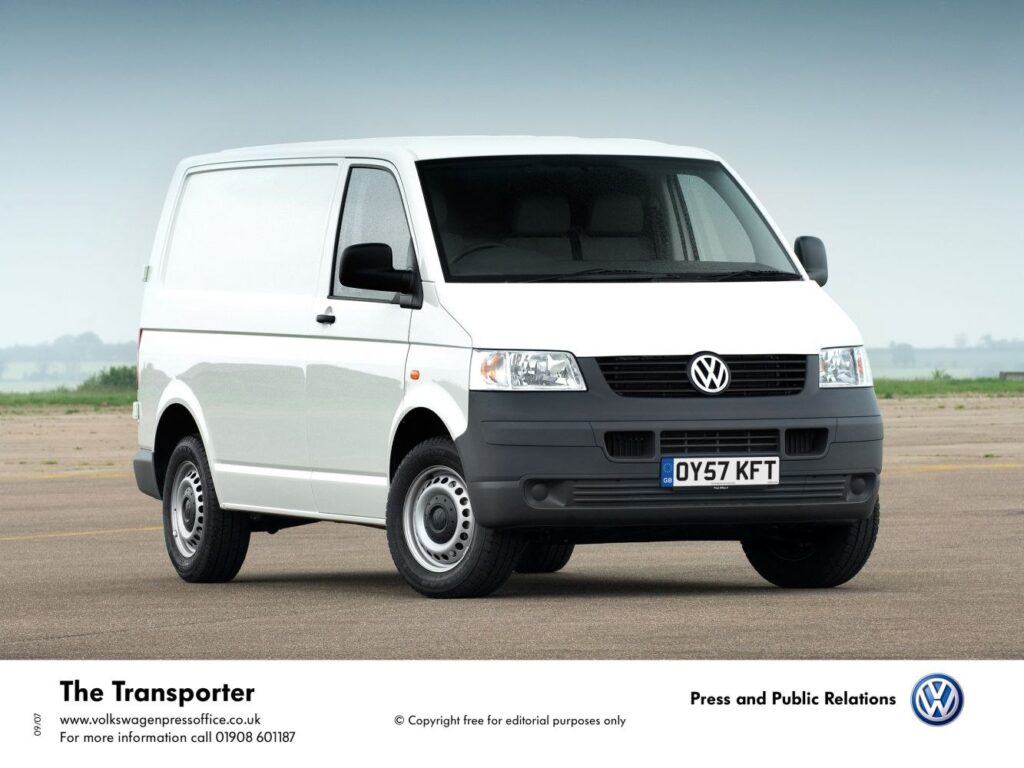
The Volkswagen Transporter series holds an iconic status globally, particularly in Europe, as a versatile and reliable workhorse. The fifth generation, known as the T5, built upon this formidable legacy, offering a modern interpretation of the classic commercial van. Produced from 2003 to 2009, the Transporter (T5) Panel Van was a critical player in the light commercial vehicle segment, catering to a wide array of businesses and trades. This detailed article focuses on a specific, popular configuration: the 1.9 TDI (105 Hp) L2H2 variant. While the Volkswagen Transporter has a storied history and immense popularity across Europe and other international markets, it’s important to note that this specific panel van model was not officially sold in the United States. In the U.S., Volkswagen’s commercial vehicle offerings and minivan segment were addressed by different models, making the T5 Transporter a distinctly European-market vehicle, albeit one recognized globally for its engineering and utility.
The L2H2 designation signifies a Long Wheelbase and High Roof configuration, emphasizing its substantial cargo capacity, a crucial factor for commercial operators. Powered by Volkswagen’s renowned 1.9-liter Turbocharged Direct Injection (TDI) diesel engine, this variant was engineered for efficiency, durability, and robust performance under load, making it an ideal choice for businesses requiring dependable transportation for goods and equipment. This article will delve into the technical specifications, design philosophies, and market impact of this pivotal vehicle, using American English terminology and measurement units for clarity.
Engine & Performance: The Heart of the Volkswagen Transporter (T5)
At the core of the Volkswagen Transporter (T5) Panel Van 1.9 TDI (105 Hp) L2H2 lies Volkswagen’s venerable EA188 / AXB code 1.9-liter (1896 cm³ or 115.7 cu. in.) inline four-cylinder TDI engine. This powertrain architecture, featuring a front, transverse engine layout, was celebrated for its blend of fuel efficiency and torque, characteristics highly prized in the commercial vehicle sector. The engine utilized a SOHC (Single Overhead Camshaft) valvetrain with two valves per cylinder and a sophisticated pump-nozzle (unit injector) fuel injection system, ensuring precise fuel delivery and optimal combustion.
Further enhancing its efficiency and power output, the engine was equipped with a turbocharger and intercooler. This combination allowed the relatively small 1.9-liter unit to produce a respectable 105 horsepower at 3500 rpm. More importantly for a commercial vehicle, it delivered a healthy 184.39 lb-ft (250 Nm) of torque, available at a low 2000 rpm. This low-end torque was crucial for hauling heavy loads, navigating urban environments, and maintaining momentum on highways without excessive downshifting.
Power was sent to the front wheels via a robust 5-speed manual transmission, a common and reliable setup for vans of this era, offering direct control and proven durability. While not designed for outright speed, the Transporter 1.9 TDI provided adequate performance for its intended purpose. It could accelerate from 0 to 60 mph in approximately 18 seconds, reaching a maximum speed of around 95.69 mph. These figures were perfectly acceptable for a vehicle focused on utility and economy rather than performance.
Fuel economy was a significant selling point for the 1.9 TDI. The extra-urban consumption figures ranged from 35.6 to 37.3 US mpg (6.3-6.6 l/100 km), demonstrating its cost-effectiveness over long distances. With an 80-liter (21.13 US gallon) fuel tank, the T5 could cover substantial mileage between fill-ups, minimizing downtime for commercial operations. The engine complied with Euro 3 emission standards, reflecting the environmental regulations of its early production years.
Design & Features: Utility and Practicality
The Volkswagen Transporter (T5) Panel Van was meticulously designed with functionality and durability at its forefront. As an L2H2 variant, it featured a long wheelbase (133.86 inches) and a high roof, maximizing its internal cargo volume. The body type was a classic van configuration, typically featuring 4 to 5 doors, including a sliding side door for easy access to the cargo area and rear barn doors or a tailgate. The cabin was designed to accommodate 2 to 3 occupants, prioritizing driver and co-driver comfort and storage for essential documents and tools.
Dimensions were substantial, with a total length of 208.27 inches (5290 mm), a width of 74.96 inches (1904 mm), and an imposing height of 85.04 inches (2160 mm). These dimensions translated into an impressive maximum cargo volume of 275.45 cubic feet (7800 liters), allowing businesses to transport large quantities of goods or sizable equipment. The maximum payload capacity ranged from 2072.35 to 2486.81 lbs (940-1128 kg), further solidifying its credentials as a serious commercial vehicle. The ability to tow trailers was also significant, with a permitted trailer load with brakes (12%) of up to 4850.17 lbs (2200 kg).
The T5’s chassis and suspension were engineered for a comfortable yet robust ride, crucial for a vehicle that often operates fully loaded. It featured an independent McPherson strut front suspension with coil springs and an anti-roll bar, paired with an independent coil spring rear suspension with a transverse stabilizer and trailing arms. This setup provided a good balance of handling stability and ride comfort, reducing driver fatigue during long working hours.
Safety features for its era included a hydraulic steering rack and pinion system, offering precise control, and an Anti-lock Braking System (ABS) for enhanced stopping power and stability. The braking system comprised ventilated discs at both the front (308×29.5 mm) and rear (294×22 mm), ensuring effective deceleration even with heavy loads. The vehicle’s ground clearance of 6.5 inches (165 mm) and a minimum turning circle of 43.31 feet (13.2 m) provided good maneuverability in urban environments and light off-road conditions, while specific approach (22°) and departure (16°) angles hinted at its capability to handle varied terrains.
Technical Specifications
| Feature | Specification |
| Brand | Volkswagen |
| Model | Transporter |
| Generation | Transporter (T5) Panel Van |
| Type (Engine) | 1.9 TDI (105 Hp) L2H2 |
| Start of Production | 2003 |
| End of Production | 2009 |
| Powertrain Architecture | Internal Combustion Engine |
| Body Type | Van |
| Seats | 2-3 |
| Doors | 4-5 |
| Fuel Type | Diesel |
| Fuel Consumption (Extra Urban) | 35.6 – 37.3 US mpg (6.3-6.6 l/100 km) |
| Acceleration 0-60 mph | 18 seconds |
| Maximum Speed | 95.69 mph (154 km/h) |
| Emission Standard | Euro 3 |
| Weight-to-Power Ratio | 17.7 kg/Hp, 56.5 Hp/tonne |
| Weight-to-Torque Ratio | 7.4 kg/Nm, 134.4 Nm/tonne |
| Power | 105 Hp @ 3500 rpm |
| Power per Liter | 55.4 Hp/l |
| Torque | 184.39 lb-ft (250 Nm) @ 2000 rpm |
| Engine Layout | Front, Transverse |
| Engine Model/Code | EA188 / AXB |
| Engine Displacement | 1.9 l (1896 cm³ / 115.7 cu. in.) |
| Number of Cylinders | 4 |
| Engine Configuration | Inline |
| Cylinder Bore | 3.13 in (79.5 mm) |
| Piston Stroke | 3.76 in (95.5 mm) |
| Compression Ratio | 18:1 |
| Valves per Cylinder | 2 |
| Fuel Injection System | Pump-nozzle (Unit Injector) |
| Engine Aspiration | Turbocharger, Intercooler |
| Valvetrain | SOHC |
| Engine Oil Capacity | 6.13 US qt (5.8 l) |
| Coolant Capacity | 7.5 US qt (7.1 l) |
| Kerb Weight | 4100.6 – 4567.98 lbs (1860-2072 kg) |
| Maximum Weight (GVWR) | 6172.94 – 7054.79 lbs (2800-3200 kg) |
| Max Load | 2072.35 – 2486.81 lbs (940-1128 kg) |
| Trunk (Boot) Space – Maximum | 275.45 cu. ft. (7800 l) |
| Fuel Tank Capacity | 21.13 US gal (80 l) |
| Permitted Trailer Load with Brakes (8%) | 5511.56 lbs (2500 kg) |
| Permitted Trailer Load with Brakes (12%) | 4850.17 lbs (2200 kg) |
| Permitted Trailer Load without Brakes | 1653.47 lbs (750 kg) |
| Permitted Towbar Download | 220.46 lbs (100 kg) |
| Length | 208.27 in (5290 mm) |
| Width | 74.96 in (1904 mm) |
| Width Including Mirrors | 88.27 in (2242 mm) |
| Height | 85.04 in (2160 mm) |
| Wheelbase | 133.86 in (3400 mm) |
| Front Track | 64.09 in (1628 mm) |
| Rear (Back) Track | 64.09 in (1628 mm) |
| Front Overhang | 35.2 in (894 mm) |
| Rear Overhang | 39.21 in (996 mm) |
| Ride Height (Ground Clearance) | 6.5 in (165 mm) |
| Minimum Turning Circle (Diameter) | 43.31 ft (13.2 m) |
| Approach Angle | 22° |
| Departure Angle | 16° |
| Wading Depth | 11.81 in (300 mm) |
| Drivetrain Architecture | Front-wheel drive |
| Drive Wheel | Front wheel drive |
| Number of Gears and Type of Gearbox | 5 gears, manual transmission |
| Front Suspension | Independent, McPherson with coil spring and anti-roll bar |
| Rear Suspension | Independent coil spring, Transverse stabilizer, Trailing arm |
| Front Brakes | Ventilated discs, 308×29.5 mm |
| Rear Brakes | Ventilated discs, 294×22 mm |
| Assisting Systems | ABS (Anti-lock Braking System) |
| Steering Type | Steering rack and pinion |
| Power Steering | Hydraulic Steering |
| Tire Size | 205/65 R16; 215/65 R16 |
| Wheel Rims Size | 6.5J x 16 |
Legacy and Market Impact
The Volkswagen Transporter (T5) Panel Van, particularly the 1.9 TDI (105 Hp) L2H2 variant, cemented its place as a dominant force in the European light commercial vehicle market during its production run from 2003 to 2009. It continued the illustrious lineage of the Transporter series, building on a reputation for robust build quality, exceptional reliability, and high utility that dates back to the original Type 2 “Bus.”
In its primary market, Europe, the T5 Transporter was an indispensable tool for countless businesses, from small independent contractors to large delivery fleets. Its spacious L2H2 configuration made it particularly appealing for tradespeople like plumbers, electricians, and carpenters who needed to carry extensive tools and materials. The efficient 1.9 TDI engine offered a compelling total cost of ownership, combining respectable fuel economy with Volkswagen’s renowned engineering for longevity, which often translated into strong resale values.
The T5 faced stiff competition from other European manufacturers, including the Ford Transit, Mercedes-Benz Vito, Renault Trafic, and Opel Vivaro. However, the Transporter consistently held its own, often lauded for its car-like driving dynamics, comfortable cabin ergonomics—important for drivers spending long hours on the road—and its solid, reassuring road presence. Its design, while functional, also managed to be appealing, giving it a more modern and less utilitarian aesthetic compared to some rivals.
Beyond its practical applications, the T5 also contributed to the cultural phenomenon surrounding the Transporter line. While the panel van was strictly a commercial vehicle, its chassis and design cues were shared with the popular Multivan and California camper variants, further boosting its overall brand recognition and desirability. This cross-segment appeal helped solidify the T5’s image as a versatile and aspirational vehicle, even in its most basic commercial form.
In summary, the Volkswagen Transporter (T5) Panel Van 1.9 TDI (105 Hp) L2H2 was more than just a commercial vehicle; it was a cornerstone of European commerce, embodying Volkswagen’s commitment to quality, efficiency, and practicality. Its legacy endures through its successors, the T6 and T6.1, which continue to refine the successful formula established by generations of Transporters, including this pivotal T5 model. Its absence from the mainstream U.S. market only underscores its tailored design for the specific needs and regulations of its primary European audience, where it remains a celebrated icon of utility and reliability.