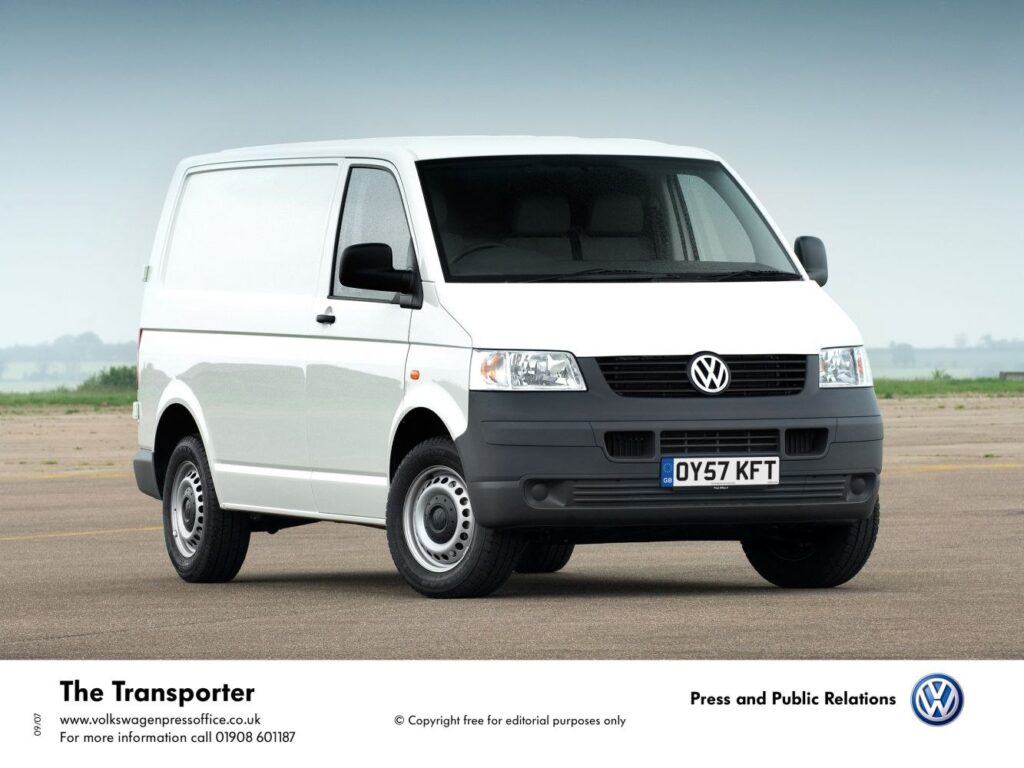
The Volkswagen Transporter, a name synonymous with versatility and reliability in the light commercial vehicle segment, has a storied history dating back to the iconic Type 2. The fifth generation, known internally as the T5, continued this legacy, building upon its predecessors’ reputation for robust engineering and practical design. Introduced in 2003, the T5 series represented a significant evolution, offering enhanced comfort, improved driving dynamics, and a range of modern powertrains. Among the numerous configurations available, the Volkswagen Transporter (T5) Panel Van 2.5 TDI (174 Hp) 4MOTION L2H1 stood out as a particularly capable variant, designed to tackle demanding tasks with its powerful diesel engine and advanced all-wheel-drive system.
Primarily marketed in Europe and other international markets where such commercial vehicles are essential for businesses and trades, the T5 Transporter was a direct competitor to vehicles like the Mercedes-Benz Vito, Ford Transit, and Renault Trafic. The specific L2H1 designation of this model indicates its long wheelbase (L2) and standard roof height (H1), providing a substantial cargo volume without compromising maneuverability significantly. The inclusion of Volkswagen’s renowned 4MOTION all-wheel-drive system further expanded its capabilities, making it an ideal choice for operations requiring enhanced traction, whether navigating challenging job sites or adverse weather conditions across various European terrains. This particular variant, produced between 2003 and 2006, underscored Volkswagen’s commitment to offering specialized tools for diverse commercial needs.
Engine & Performance: The 2.5 TDI Powerplant
At the heart of the Volkswagen Transporter (T5) Panel Van 2.5 TDI (174 Hp) 4MOTION L2H1 was Volkswagen’s formidable 2.5-liter (2460 cm3 or 150.12 cubic inches) inline five-cylinder diesel engine, designated with the internal code EA153 / AXE. This powerplant was a highlight of the T5 range, known for its strong torque delivery and impressive durability. Generating a robust 174 horsepower at 3500 rpm, it provided ample power for hauling heavy loads and maintaining highway speeds. Even more significant for a commercial vehicle was its torque output: a substantial 295.02 pound-feet (400 Nm) available across a useful rev range of 2000-2300 rpm. This broad torque band ensured excellent pulling power from low engine speeds, crucial for quick acceleration with a full cargo bay or when towing.
The engine utilized a sophisticated pump-nozzle (unit injector) fuel injection system, a technology favored by Volkswagen at the time for its precise fuel delivery and efficiency. Combined with a turbocharger and intercooler, this setup ensured optimal combustion and performance, even under strenuous conditions. The engine featured a SOHC (Single Overhead Camshaft) valvetrain with two valves per cylinder and a high compression ratio of 18.5:1, typical for a direct-injection diesel of its era. Mated to a six-speed manual transmission, the powertrain offered drivers precise control over the engine’s output, allowing for efficient gear selection whether navigating city streets or cruising on the autobahn.
Performance figures for this heavy-duty panel van were respectable. It could accelerate from 0 to 60 mph in approximately 11.9 seconds (0-100 km/h in 12.5 seconds) and reach a maximum speed of 114.33 mph (184 km/h). Fuel economy was a key consideration for commercial operators, and the 2.5 TDI delivered a commendable 33.6 US miles per gallon (7 liters per 100 km) in extra-urban driving conditions. Despite its power and capability, the vehicle met Euro 3 emission standards, reflecting the environmental regulations of its production period.
Design & Features: Practicality Meets All-Wheel Drive
The Volkswagen Transporter (T5) Panel Van 2.5 TDI (174 Hp) 4MOTION L2H1 was designed first and foremost as a practical workhorse. Its panel van body type, characterized by its enclosed cargo area and lack of rear windows, emphasized utility. With 4-5 doors and seating for 2-3 occupants in the front cabin, it offered a focused environment for commercial tasks. The L2H1 configuration provided a generous length of 208.27 inches (5290 mm) and a standard height of 77.13 inches (1959 mm), creating an impressive maximum cargo volume of 236.61 cubic feet (6700 liters). This cavernous space was easily accessible, making it suitable for a wide range of goods and equipment.
A standout feature was the 4MOTION all-wheel-drive system. Unlike many conventional 4×4 systems, Volkswagen’s 4MOTION in this T5 variant operated with the internal combustion engine permanently driving the front wheels, with the rear wheels engaging through an electrically or mechanically operated clutch only when necessary. This intelligent system provided optimal traction on slippery surfaces, unpaved roads, or during heavy towing, enhancing safety and capability without significantly impacting fuel economy during normal driving. The independent front suspension (McPherson with coil spring and anti-roll bar) and independent rear suspension (coil spring, transverse stabilizer, trailing arm) contributed to a surprisingly comfortable ride for a commercial vehicle, along with stable handling characteristics.
Safety features for the era included an Anti-lock Braking System (ABS) as standard, complemented by ventilated disc brakes on both the front (308×29.5 mm) and rear (294×22 mm) axles for effective stopping power. The hydraulic power steering, a rack and pinion system, offered precise control and ease of maneuvering, especially important for a vehicle of its size with a minimum turning circle of 43.31 feet (13.2 meters). Practical considerations also extended to a substantial maximum load capacity of up to 1,752.67 pounds (795 kg) and an impressive permitted trailer load with brakes of 5,511.56 pounds (2500 kg), underlining its robust construction and utility.
Volkswagen Transporter (T5) Technical Specifications
| Category | Specification |
| General Information | |
| Brand | Volkswagen |
| Model | Transporter |
| Generation | Transporter (T5) Panel Van |
| Type (Engine) | 2.5 TDI (174 Hp) 4MOTION L2H1 |
| Production Start | 2003 |
| Production End | 2006 |
| Powertrain Architecture | Internal Combustion Engine |
| Body Type | Van |
| Seats | 2-3 |
| Doors | 4-5 |
| Performance Specifications | |
| Fuel Consumption (Extra Urban) | 33.6 US mpg (7 l/100 km) |
| Fuel Type | Diesel |
| Acceleration 0-60 mph | 11.9 seconds |
| Maximum Speed | 114.33 mph (184 km/h) |
| Emission Standard | Euro 3 |
| Weight-to-Power Ratio | 11.5 kg/Hp (86.8 Hp/tonne) |
| Weight-to-Torque Ratio | 5 kg/Nm (199.5 Nm/tonne) |
| Engine Specifications | |
| Power | 174 Hp @ 3500 rpm |
| Power per Liter | 70.7 Hp/l |
| Torque | 295.02 lb.-ft. (400 Nm) @ 2000-2300 rpm |
| Engine Layout | Front, Transverse |
| Engine Model/Code | EA153 / AXE |
| Engine Displacement | 2.5 liters (2460 cm3 / 150.12 cu. in.) |
| Number of Cylinders | 5 |
| Engine Configuration | Inline |
| Cylinder Bore | 3.19 inches (81 mm) |
| Piston Stroke | 3.76 inches (95.5 mm) |
| Compression Ratio | 18.5:1 |
| Valves per Cylinder | 2 |
| Fuel Injection System | Pump-nozzle (Unit Injector) |
| Engine Aspiration | Turbocharger, Intercooler |
| Valvetrain | SOHC |
| Engine Oil Capacity | 7.82 US quarts (7.4 liters) |
| Coolant Capacity | 7.5 US quarts (7.1 liters) |
| Space, Volume, and Weights | |
| Kerb Weight | 4420.27 – 4867.81 lbs. (2005-2208 kg) |
| Max. Weight (GVWR) | 6172.94 – 6613.87 lbs. (2800-3000 kg) |
| Max Load | 1746.06 – 1752.67 lbs. (792-795 kg) |
| Trunk (Boot) Space – Maximum | 236.61 cu. ft. (6700 liters) |
| Fuel Tank Capacity | 21.13 US gallons (80 liters) |
| Max. Roof Load | 220.46 lbs. (100 kg) |
| Permitted Trailer Load with Brakes (8%) | 5511.56 lbs. (2500 kg) |
| Permitted Trailer Load with Brakes (12%) | 5511.56 lbs. (2500 kg) |
| Permitted Trailer Load without Brakes | 1653.47 lbs. (750 kg) |
| Permitted Towbar Download | 220.46 lbs. (100 kg) |
| Dimensions | |
| Length | 208.27 inches (5290 mm) |
| Width | 74.96 inches (1904 mm) |
| Width Including Mirrors | 88.27 inches (2242 mm) |
| Height | 77.13 inches (1959 mm) |
| Wheelbase | 133.86 inches (3400 mm) |
| Front Track | 64.09 inches (1628 mm) |
| Rear Track | 64.09 inches (1628 mm) |
| Front Overhang | 35.2 inches (894 mm) |
| Rear Overhang | 39.21 inches (996 mm) |
| Ride Height (Ground Clearance) | 6.5 inches (165 mm) |
| Minimum Turning Circle | 43.31 feet (13.2 meters) |
| Approach Angle | 22° |
| Departure Angle | 16° |
| Wading Depth | 11.81 inches (300 mm) |
| Drivetrain, Brakes, and Suspension | |
| Drivetrain Architecture | ICE drives front wheels permanently; rear wheels driven via clutch if necessary. |
| Drive Wheel | All-wheel drive (4×4) |
| Number of Gears and Gearbox Type | 6 gears, Manual Transmission |
| Front Suspension | Independent, McPherson type with coil spring and anti-roll bar |
| Rear Suspension | Independent coil spring, Transverse stabilizer, Trailing arm |
| Front Brakes | Ventilated discs, 308×29.5 mm |
| Rear Brakes | Ventilated discs, 294×22 mm |
| Assisting Systems | ABS (Anti-lock Braking System) |
| Steering Type | Steering rack and pinion |
| Power Steering | Hydraulic Steering |
| Tires Size | 215/65 R16 |
| Wheel Rims Size | 6.5J x 16 |
Legacy and Market Impact
The Volkswagen Transporter T5, and particularly the robust Volkswagen Transporter (T5) Panel Van 2.5 TDI (174 Hp) 4MOTION L2H1 variant, cemented its place as a formidable and highly respected player in the European and international light commercial vehicle market. Building on a heritage of reliability and utility stretching back over half a century, the T5 generation successfully modernized the Transporter concept while retaining its core strengths.
Its market impact was significant, offering businesses a versatile and durable solution for transport and logistics. The 2.5 TDI engine was a particular highlight, celebrated for its strong performance, reasonable fuel economy, and long-term reliability—qualities highly valued by commercial operators who depend on their vehicles for their livelihood. The availability of the 4MOTION all-wheel-drive system was a game-changer for many, extending the Transporter’s utility beyond paved roads and into construction sites, rural areas, and regions with challenging winter conditions, where two-wheel-drive competitors often struggled. This enhanced capability allowed the T5 to serve a broader range of niches, from tradespeople needing to access remote job sites to adventure enthusiasts converting the passenger variants into highly capable campers.
Competitors in its primary European market, such as the Ford Transit, Mercedes-Benz Vito, and Fiat Ducato, offered their own strengths, but the T5 Transporter consistently stood out for its car-like driving dynamics, superior build quality, and strong resale values. Its independent suspension all around provided a level of ride comfort and handling precision that often surpassed its rivals, making long working days less fatiguing for drivers. The T5 also became a popular platform for conversions, from camper vans (as the California model) to specialized emergency vehicles, thanks to its adaptable chassis and robust mechanicals.
The T5 generation, including this specific 2.5 TDI 4MOTION panel van, is remembered as a highly successful chapter in the Transporter’s history. It demonstrated Volkswagen’s ability to evolve a classic concept, integrating modern technology and engineering to meet contemporary demands without sacrificing the fundamental qualities that made the Transporter a legend. Its legacy endures in the countless examples still in active service today, a testament to its enduring design, engineering quality, and the foresight of its development.