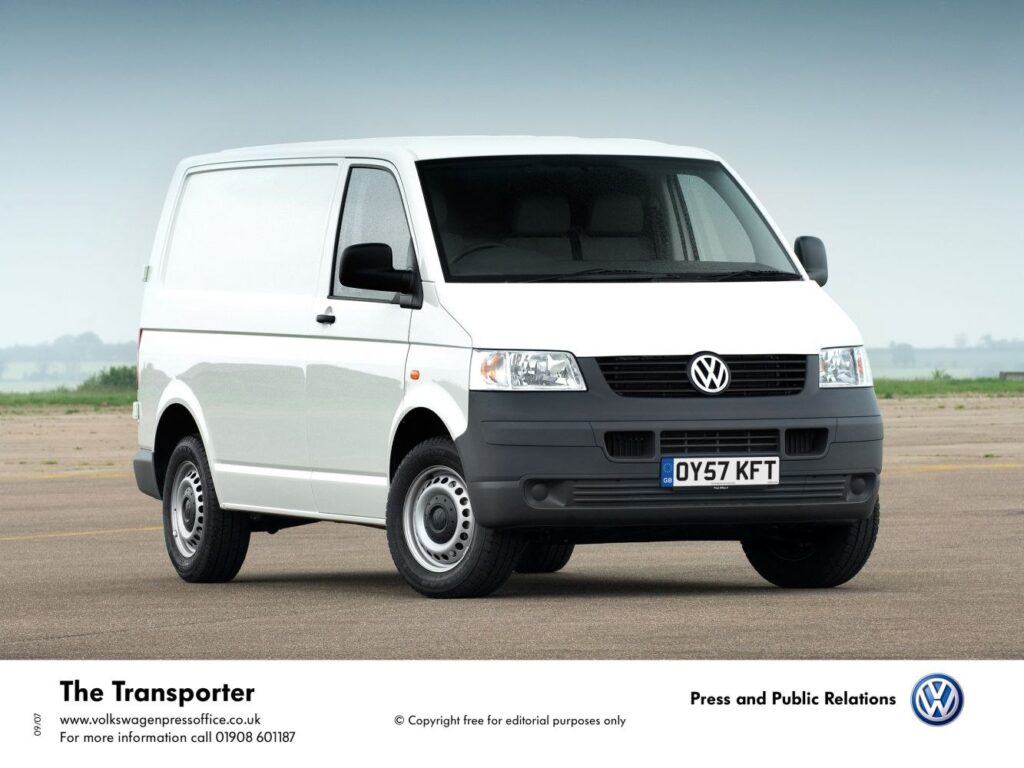
The Volkswagen Transporter (T5) Panel Van 2.5 TDI (174 Hp) L1H1 is a quintessential light commercial vehicle with a rich history rooted in the globally recognized Volkswagen Transporter lineage. Produced from 2003 to 2015, the T5 generation continued the tradition of providing a versatile platform for both commercial and passenger applications. This article details the Volkswagen Transporter (T5) Panel Van 2.5 TDI (174 Hp) L1H1 variant, a robust and efficient diesel-powered vehicle primarily designed for the European and international markets. While not officially sold as a panel van in the United States, the T5 played a vital role in supporting businesses and services worldwide, upholding the Transporter’s reputation for durability, practicality, and engineering excellence. The L1H1 designation indicates a short wheelbase (L1) and standard roof height (H1), contributing to its maneuverability and practicality for urban deliveries and various trades.
Engine & Performance: The Powertrain of the Volkswagen Transporter (T5)
The Volkswagen Transporter (T5) Panel Van 2.5 TDI (174 Hp) L1H1 was equipped with a 2.5-liter (2,460 cm³) inline five-cylinder turbo-diesel engine, a configuration characteristic of Volkswagen during this period. This engine, internally known as EA153 / AXE, was engineered for a balance of power and efficiency, producing 174 horsepower at 3500 rpm. A key attribute of this powertrain, particularly for a commercial vehicle, was its substantial torque output. It generated a peak of 400 Newton-meters (295.02 lb.-ft.) across a broad and usable rev range, between 2000 and 2300 rpm. This torque was crucial for hauling heavy loads and maintaining performance even when fully laden or towing.
The engine incorporated advanced technology for its time, including a turbocharger with an intercooler to optimize air intake and combustion efficiency. Fuel delivery was managed by a pump-nozzle (unit injector) system, a sophisticated direct injection method offering precise fuel atomization and improved fuel economy. The valvetrain utilized a SOHC (Single Overhead Camshaft) design with two valves per cylinder, balancing simplicity with robust performance. A compression ratio of 18.5:1, typical for diesel engines, maximized energy extraction from the fuel.
Power was transmitted to the front wheels via a smooth and durable 6-speed manual transmission, providing the driver with precise control and the ability to optimize fuel consumption. Performance figures were commendable for a panel van: an estimated 0 to 60 mph acceleration time of 11.6 seconds and a maximum speed of 116.82 mph (188 km/h). Despite its power, the 2.5 TDI engine prioritized efficiency, achieving an extra-urban fuel economy of approximately 37.3 US mpg (6.3 l/100 km). The vehicle complied with the Euro 3 emission standard, reflecting environmental considerations for the early 2000s. The robust powertrain, combined with a weight-to-power ratio of 10.8 kg/Hp (92.8 Hp/tonne), ensured the Transporter T5 was ready for demanding tasks.
Design & Features: Practicality and Utility
The Volkswagen Transporter (T5) Panel Van was designed primarily for utility. Its body type is a classic van, offering 4 to 5 doors and seating for 2 to 3 occupants. The L1H1 configuration, with a short wheelbase and standard roof, made it versatile for commercial applications where maneuverability in urban environments was essential. With an overall length of 192.52 inches (4890 mm) and a width of 74.96 inches (1904 mm, or 88.27 inches including mirrors), the T5 L1H1 balanced compact external dimensions with generous internal cargo capacity.
The design prioritized functionality and durability. The exterior was clean and purposeful, with large side panels suitable for business branding. The cabin was ergonomically designed for long drives, offering comfortable seating and intuitive controls. The panel van’s strength lay in its cargo area, boasting a maximum trunk (boot) space of 5800 liters (204.83 cubic feet). The kerb weight ranged from 4133.67 to 4574.59 pounds (1875-2075 kg), with a maximum permissible weight of 6172.94 to 6613.87 pounds (2800-3000 kg), allowing for a substantial maximum payload of 2039.28 pounds (925 kg).
The T5 featured an independent McPherson strut design with coil springs and an anti-roll bar at the front, paired with an independent coil spring, transverse stabilizer, and trailing arm setup at the rear. This suspension system provided a comfortable ride while maintaining excellent handling, even under load. Braking was handled by ventilated discs both front (308×29.5 mm) and rear (294×22 mm), complemented by an Anti-lock Braking System (ABS) for enhanced safety. Steering was a hydraulic rack and pinion system, offering direct feedback and ease of maneuverability. The vehicle rode on 215/65 R16 tires mounted on 6.5J x 16 wheel rims, providing a balance of load-carrying capacity and ride comfort. Its tight minimum turning circle of 39.04 feet (11.9 m) further underscored its urban agility.
Technical Specifications
| Category | Specification |
| General Information | |
| Brand | Volkswagen |
| Model | Transporter |
| Generation | Transporter (T5) Panel Van |
| Type (Engine) | 2.5 TDI (174 Hp) L1H1 |
| Production Start | 2003 |
| Production End | 2006 |
| Body Type | Van |
| Seats | 2-3 |
| Doors | 4-5 |
| Performance Specs | |
| Fuel Consumption (Extra Urban) | 6.3 l/100 km |
| Fuel Consumption (Extra Urban) | 37.3 US mpg |
| Fuel Type | Diesel |
| Acceleration 0-60 mph | 11.6 sec |
| Maximum Speed | 188 km/h |
| Maximum Speed | 116.82 mph |
| Emission Standard | Euro 3 |
| Weight-to-Power Ratio | 10.8 kg/Hp |
| Weight-to-Power Ratio | 23.8 lbs/Hp |
| Engine Specs | |
| Power | 174 Hp @ 3500 rpm |
| Torque | 400 Nm @ 2000-2300 rpm |
| Torque | 295.02 lb.-ft. @ 2000-2300 rpm |
| Engine Layout | Front, Transverse |
| Engine Model/Code | EA153 / AXE |
| Engine Displacement | 2460 cm3 |
| Engine Displacement | 150.12 cu. in. (2.5 L) |
| Number of Cylinders | 5 |
| Engine Configuration | Inline |
| Cylinder Bore | 81 mm |
| Cylinder Bore | 3.19 in. |
| Piston Stroke | 95.5 mm |
| Piston Stroke | 3.76 in. |
| Compression Ratio | 18.5:1 |
| Valves per Cylinder | 2 |
| Fuel Injection System | Pump-nozzle (Unit Injector) |
| Engine Aspiration | Turbocharger, Intercooler |
| Valvetrain | SOHC |
| Engine Oil Capacity | 7.4 l |
| Engine Oil Capacity | 7.82 US qt |
| Coolant Capacity | 7.1 l |
| Coolant Capacity | 7.5 US qt |
| Space, Volume and Weights | |
| Kerb Weight | 1875-2075 kg |
| Kerb Weight | 4133.67 – 4574.59 lbs. |
| Max. Weight | 2800-3000 kg |
| Max. Weight | 6172.94 – 6613.87 lbs. |
| Max Load | 925 kg |
| Max Load | 2039.28 lbs. |
| Trunk (boot) space – maximum | 5800 l |
| Trunk (boot) space – maximum | 204.83 cu. ft. |
| Fuel Tank Capacity | 80 l |
| Fuel Tank Capacity | 21.13 US gal |
| Max. Roof Load | 100 kg |
| Max. Roof Load | 220.46 lbs. |
| Permitted Trailer Load with brakes (8%) | 2500 kg |
| Permitted Trailer Load with brakes (8%) | 5511.56 lbs. |
| Permitted Trailer Load without brakes | 750 kg |
| Permitted Trailer Load without brakes | 1653.47 lbs. |
| Permitted Towbar Download | 100 kg |
| Permitted Towbar Download | 220.46 lbs. |
| Dimensions | |
| Length | 4890 mm |
| Length | 192.52 in. |
| Width | 1904 mm |
| Width | 74.96 in. |
| Width including mirrors | 2242 mm |
| Width including mirrors | 88.27 in. |
| Height | 1959 mm |
| Height | 77.13 in. |
| Wheelbase | 3000 mm |
| Wheelbase | 118.11 in. |
| Front Track | 1628 mm |
| Front Track | 64.09 in. |
| Rear Track | 1628 mm |
| Rear Track | 64.09 in. |
| Ride Height (Ground Clearance) | 165 mm |
| Ride Height (Ground Clearance) | 6.5 in. |
| Minimum Turning Circle | 11.9 m |
| Minimum Turning Circle | 39.04 ft. |
| Approach Angle | 22° |
| Departure Angle | 16° |
| Ramp-over (Brakeover) Angle | 14° |
| Wading Depth | 300 mm |
| Wading Depth | 11.81 in. |
| Drivetrain, Brakes and Suspension | |
| Drivetrain Architecture | Front-wheel drive |
| Drive Wheel | Front-wheel drive |
| Number of Gears/Gearbox Type | 6 gears, manual transmission |
| Front Suspension | Independent, McPherson with coil spring and anti-roll bar |
| Rear Suspension | Independent coil spring, Transverse stabilizer, Trailing arm |
| Front Brakes | Ventilated discs, 308×29.5 mm |
| Rear Brakes | Ventilated discs, 294×22 mm |
| Assisting Systems | ABS (Anti-lock braking system) |
| Steering Type | Steering rack and pinion |
| Power Steering | Hydraulic Steering |
| Tire Size | 215/65 R16 |
| Wheel Rims Size | 6.5J x 16 |
Legacy and Market Impact
The Volkswagen Transporter (T5) Panel Van 2.5 TDI (174 Hp) L1H1 established a significant presence in the light commercial vehicle segment, particularly in Europe, Asia, and other international markets. Building on the Transporter series’ legendary heritage, the T5 generation introduced modern diesel technology, improved ergonomics, and enhanced safety features. Its reputation for reliability and robust construction made it a favored choice among tradespeople, small businesses, and logistics companies.
In its primary markets, the T5 Transporter competed with rivals such as the Ford Transit, Mercedes-Benz Vito, Renault Trafic, and Fiat Ducato. However, Volkswagen’s strong brand image, coupled with its advanced TDI engines and flexible configurations, allowed it to maintain a leading position. The 2.5 TDI (174 Hp) variant was particularly sought after for its blend of power, fuel efficiency, and towing capability. Its substantial permissible trailer load of 5511.56 pounds (2500 kg) with brakes underscored its versatility.
The T5 also became a popular platform for conversions, from camper vans (Multivan, California) to specialized utility vehicles, extending its market reach and demonstrating its adaptability. Its longevity in production (2003-2015) and continued presence on roads worldwide are testaments to its enduring design and engineering quality. While unfamiliar on American roads in its commercial guise, the Transporter (T5) Panel Van 2.5 TDI (174 Hp) L1H1 remains a significant chapter in Volkswagen’s automotive history, embodying the spirit of practical, durable, and efficient transportation that the Transporter badge has represented for decades. It exemplifies a vehicle perfectly adapted to its target market, proving that strong engineering and thoughtful design translate into lasting impact.