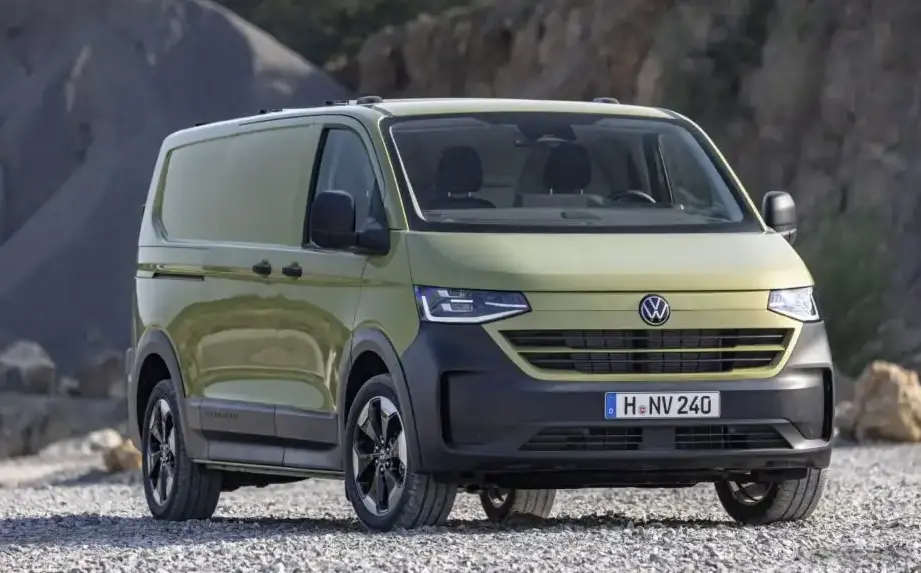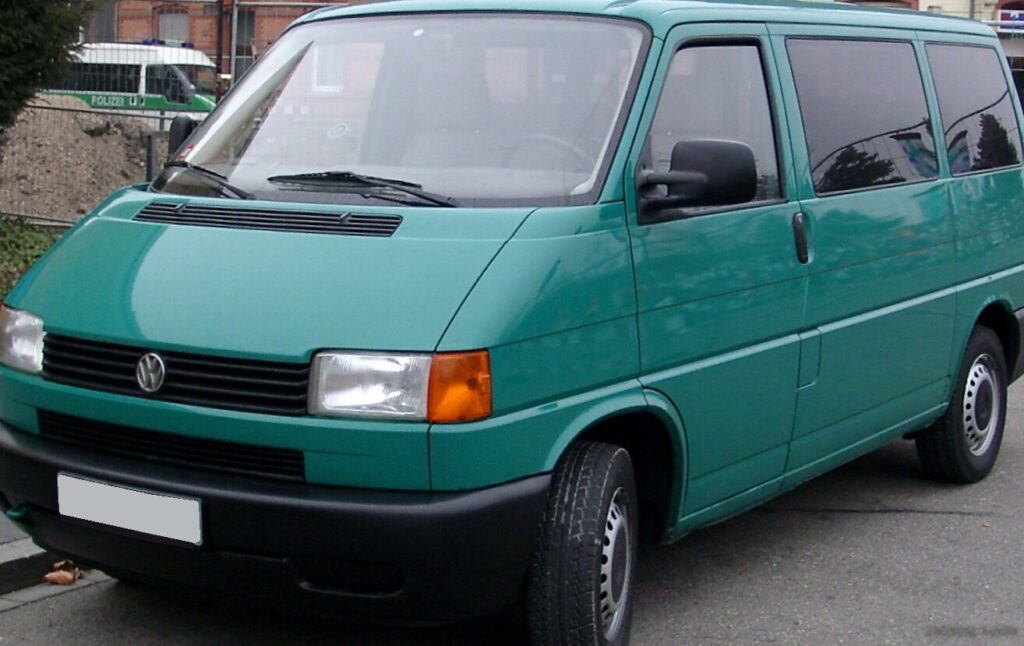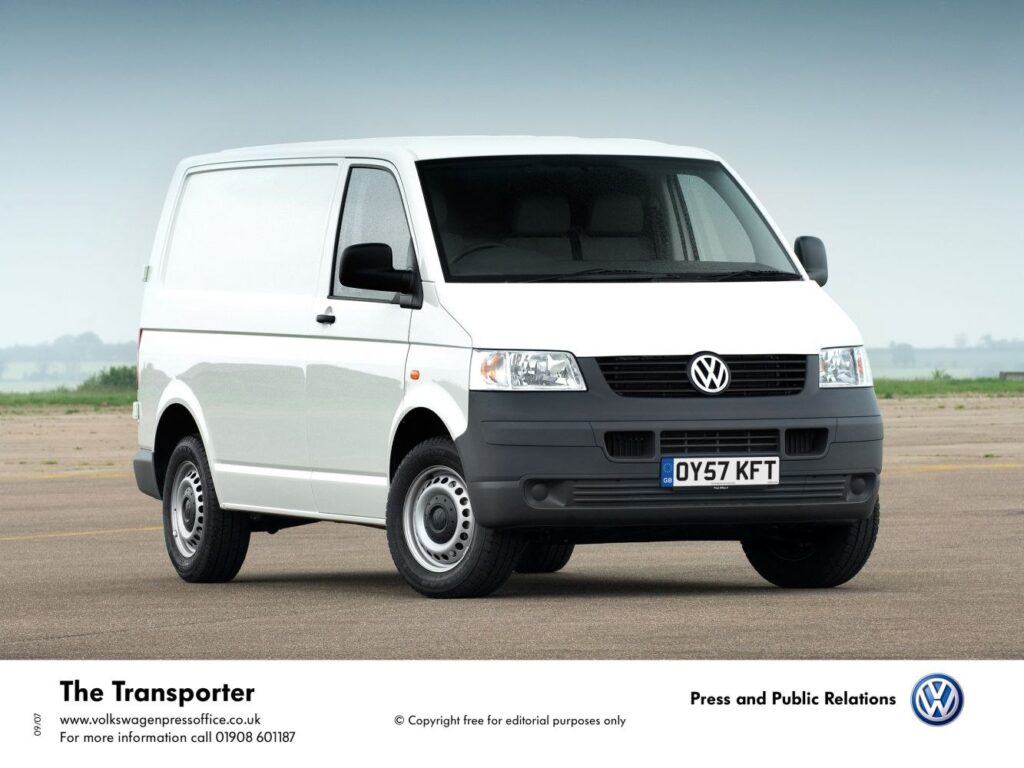
The Volkswagen Transporter, a lineage spanning over seven decades, has long been synonymous with versatility, reliability, and robust utility. The fifth-generation model, known internally as the T5, continued this legacy from its introduction in 2003 through 2009. Among its diverse range of configurations, the Volkswagen Transporter (T5) Panel Van 3.2 V6 (235 Hp) 4MOTION L1H1 stood out as a particularly unique and potent variant. Primarily targeting European markets, where the Transporter enjoys iconic status, this specific model combined the practicality of a commercial panel van with the unexpected power of a gasoline V6 engine and the enhanced traction of Volkswagen’s sophisticated 4MOTION all-wheel-drive system. The L1H1 designation indicates a short wheelbase and standard roof height, offering a compact yet highly capable package designed for demanding tasks and challenging environments, setting it apart from its more utilitarian four-cylinder diesel counterparts.
Volkswagen Transporter (T5) Panel Van: A Powerful Workhorse
The Volkswagen Transporter has been a mainstay of European roads for generations, serving as a vital tool for businesses and tradespeople. Unlike in the United States where full-size vans dominate the commercial market, the Transporter occupies a more versatile mid-size segment in Europe, offering a balance between cargo capacity, maneuverability, and fuel efficiency. The T5 generation represented a significant step forward in terms of refinement and technology, and the 3.2 V6 4MOTION variant represents a particularly interesting outlier, blending commercial practicality with a surprising degree of performance.
Engine & Performance
At the heart of this formidable panel van was a longitudinally mounted 3.2-liter VR6 engine, designated EA390 / BKK. This naturally aspirated gasoline powerplant delivered an impressive 235 horsepower at 6200 rpm, a figure more commonly associated with performance sedans than commercial vehicles. Torque output was equally substantial, peaking at 232.33 lb-ft (315 Nm) at a relatively low 2950 rpm, providing excellent pulling power crucial for a vehicle designed to carry significant loads. This robust engine, featuring DOHC (Double Overhead Camshaft) and a multi-port manifold injection system, offered a smooth and refined power delivery, contributing to a surprisingly car-like driving experience for a van.
The performance figures underscore the unique character of this Transporter variant. It could accelerate from 0 to 60 mph in a brisk 10.1 seconds, with a top speed of 128 mph (206 km/h). These numbers were exceptional for a panel van of its era, making it capable of rapid highway cruising and swift maneuverability, even when laden. Power was routed through a precise 6-speed manual transmission to Volkswagen’s renowned 4MOTION all-wheel-drive system. This intelligent drivetrain architecture typically drove the front wheels but could seamlessly engage the rear wheels via an electrically or mechanically operated clutch when additional traction was needed, providing superior grip in adverse weather conditions or on unpaved surfaces. Despite its power, the engine met the Euro 4 emission standard, reflecting a commitment to environmental considerations for its time. The vehicle’s weight-to-power ratio of 8.5 kg/Hp (117.5 Hp/tonne) and weight-to-torque ratio of 6.3 kg/Nm (157.5 Nm/tonne) further highlight its strong performance capabilities relative to its kerb weight, which ranged from 4409.25 to 4850.17 lbs (2000-2200 kg).
Design & Features
The Volkswagen Transporter (T5) Panel Van 3.2 V6 (235 Hp) 4MOTION L1H1 maintained the T5 generation’s contemporary and functional design language. Its panel van body type, characterized by windowless side panels, emphasized its primary role as a cargo carrier. The L1H1 configuration, denoting a short wheelbase (118.11 inches / 3000 mm) and standard roof height (77.52 inches / 1969 mm), allowed for easier navigation in urban environments and tighter spaces compared to longer or higher variants. With an overall length of 192.52 inches (4890 mm) and a width of 74.96 inches (1904 mm, 88.27 inches / 2242 mm including mirrors), it struck a balance between maneuverability and substantial cargo capacity.
Inside, the panel van typically offered seating for 2 to 3 occupants, with a focus on durability and ergonomics for commercial use. The true highlight, however, was its cavernous cargo area, boasting a maximum trunk space of 204.83 cubic feet (5800 liters). This considerable volume, combined with a maximum load capacity of 1763.7 lbs (800 kg) and an impressive towing capacity of 5511.56 lbs (2500 kg) with brakes, made it an exceptionally practical vehicle for a wide array of businesses. The robust chassis was supported by an independent McPherson strut front suspension with coil springs and an anti-roll bar, complemented by an independent coil spring rear suspension with a transverse stabilizer and trailing arms. This sophisticated setup, uncommon for a van, contributed to its excellent ride comfort and handling dynamics. Safety features for the T5 included an Anti-lock Braking System (ABS) as standard, paired with ventilated disc brakes (13.11 x 1.28 inches / 333×32.5 mm front, 11.57 x 0.87 inches / 294×22 mm rear) for strong stopping power. The hydraulic rack and pinion steering provided precise control, while 235/55 R17 tires on 7J x 17 wheel rims ensured ample grip. Its off-road readiness, thanks to 4MOTION, was further hinted at by a ground clearance of 6.5 inches (165 mm), an approach angle of 22°, a departure angle of 16°, a ramp-over angle of 14°, and a wading depth of 11.81 inches (300 mm), making it suitable for jobs requiring access to less-than-perfect roads or construction sites.
Technical Specifications
| Category | Specification |
|---|---|
| General Information | Volkswagen |
| Model | Transporter |
| Generation | Transporter (T5) Panel Van |
| Type (Engine) | 3.2 V6 (235 Hp) 4MOTION L1H1 |
| Start of Production | 2003 year |
| End of Production | 2009 year |
| Powertrain Architecture | Internal Combustion engine |
| Body Type | Van |
| Seats | 2-3 |
| Doors | 4-5 |
| Performance Specifications | |
| Fuel Consumption (Extra Urban) | 9.7 l/100 km (24.2 US mpg) |
| Fuel Type | Petrol (Gasoline) |
| Acceleration 0 – 60 mph | 10.1 sec |
| Acceleration 0 – 62 mph (0-100 km/h) | 10.6 sec |
| Maximum Speed | 128 mph (206 km/h) |
| Emission Standard | Euro 4 |
| Weight-to-Power Ratio | 8.5 kg/Hp (117.5 Hp/tonne) |
| Weight-to-Torque Ratio | 6.3 kg/Nm (157.5 Nm/tonne) |
| Engine Specifications | |
| Power | 235 Hp @ 6200 rpm |
| Power per Liter | 73.7 Hp/l |
| Torque | 232.33 lb.-ft. (315 Nm) @ 2950 rpm |
| Engine Layout | Front, Transverse |
| Engine Model/Code | EA390 / BKK |
| Engine Displacement | 194.6 cu. in. (3189 cm3) |
| Number of Cylinders | 6 |
| Engine Configuration | VR-engine |
| Cylinder Bore | 3.31 in. (84 mm) |
| Piston Stroke | 3.78 in. (95.9 mm) |
| Compression Ratio | 10.85:1 |
| Number of Valves per Cylinder | 4 |
| Fuel Injection System | Multi-port manifold injection |
| Engine Aspiration | Naturally aspirated engine |
| Valvetrain | DOHC |
| Engine Oil Capacity | 6.45 US qt (6.1 l) |
| Coolant Capacity | 7.5 US qt (7.1 l) |
| Space, Volume, and Weights | |
| Kerb Weight | 4409.25 – 4850.17 lbs. (2000-2200 kg) |
| Max. Weight (GVWR) | 6172.94 – 6613.87 lbs. (2800-3000 kg) |
| Max Load | 1763.7 lbs. (800 kg) |
| Trunk (Boot) Space – Maximum | 204.83 cu. ft. (5800 l) |
| Fuel Tank Capacity | 21.13 US gal (80 l) |
| Max. Roof Load | 220.46 lbs. (100 kg) |
| Permitted Trailer Load with Brakes (8%) | 5511.56 lbs. (2500 kg) |
| Permitted Trailer Load with Brakes (12%) | 5511.56 lbs. (2500 kg) |
| Permitted Trailer Load without Brakes | 1653.47 lbs. (750 kg) |
| Permitted Towbar Download | 220.46 lbs. (100 kg) |
| Dimensions | |
| Length | 192.52 in. (4890 mm) |
| Width | 74.96 in. (1904 mm) |
| Width Including Mirrors | 88.27 in. (2242 mm) |
| Height | 77.52 in. (1969 mm) |
| Wheelbase | 118.11 in. (3000 mm) |
| Front Track | 63.78 in. (1620 mm) |
| Rear (Back) Track | 63.78 in. (1620 mm) |
| Front Overhang | 35.2 in. (894 mm) |
| Rear Overhang | 39.21 in. (996 mm) |
| Ride Height (Ground Clearance) | 6.5 in. (165 mm) |
| Minimum Turning Circle (Turning Diameter) | 39.04 ft. (11.9 m) |
| Approach Angle | 22° |
| Departure Angle | 16° |
| Ramp-over (Brakeover) Angle | 14° |
| Wading Depth | 11.81 in. (300 mm) |
| Drivetrain, Brakes, and Suspension Specifications | |
| Drivetrain Architecture | The Internal combustion engine (ICE) drives the front wheels permanently, and the rear wheels are driven through an electrically or mechanically operated clutch if necessary. |
| Drive Wheel | All wheel drive (4×4) |
| Number of Gears and Type of Gearbox | 6 gears, manual transmission |
| Front Suspension | Independent, type McPherson with coil spring and anti-roll bar |
| Rear Suspension | Independent coil spring, Transverse stabilizer, Trailing arm |
| Front Brakes | Ventilated discs, 13.11 x 1.28 in. (333×32.5 mm) |
| Rear Brakes | Ventilated discs, 11.57 x 0.87 in. (294×22 mm) |
| Assisting Systems | ABS (Anti-lock braking system) |
| Steering Type | Steering rack and pinion |
| Power Steering | Hydraulic Steering |
| Tires Size | 235/55 R17 |
| Wheel Rims Size | 7J x 17 |
Legacy and Market Impact
The Volkswagen Transporter (T5) built upon a storied heritage, further cementing its reputation as a benchmark in the light commercial vehicle segment in Europe and other global markets where it was sold. While the T5 was available in a multitude of configurations, including passenger vans (Multivan, Caravelle) and various commercial chassis, the Volkswagen Transporter (T5) Panel Van 3.2 V6 (235 Hp) 4MOTION L1H1 carved out a unique niche. It was not merely a utilitarian workhorse; it was a premium, high-performance commercial vehicle designed for operators who required superior power, all-weather capability, and a refined driving experience.
In a market dominated by diesel engines and front-wheel drive, the gasoline V6 with 4MOTION offered a compelling alternative. It appealed to businesses needing to transport valuable or time-sensitive cargo quickly, those operating in regions with challenging terrain or heavy snow, or even specialized service providers who valued the smooth, powerful engine and enhanced traction for towing or accessing remote sites. Its sophisticated independent suspension system further elevated its ride quality and handling beyond typical commercial vans, making long hauls less fatiguing for drivers. Competitors in the European market during its production years included the Ford Transit, Mercedes-Benz Vito, Renault Trafic, and Fiat Ducato. While these rivals offered robust and capable vans, few, if any, could match the specific blend of high-output gasoline V6 power and advanced all-wheel drive in a panel van package that the T5 3.2 V6 4MOTION provided. This made it a somewhat niche, yet highly respected, option for those seeking a more premium and capable commercial vehicle. The T5 generation, in general, was praised for its build quality, durability, and versatility, qualities that resonated strongly with fleet operators and individual tradespeople alike. The 3.2 V6 4MOTION variant, though less common than its diesel counterparts, contributed to the T5’s image as a technologically advanced and highly adaptable platform. Its legacy lies in demonstrating that a commercial vehicle could offer a level of performance, refinement, and all-weather capability typically found in passenger cars, pushing the boundaries of what was expected from a panel van and solidifying the Transporter’s position as a truly iconic and multifaceted vehicle in the automotive world.