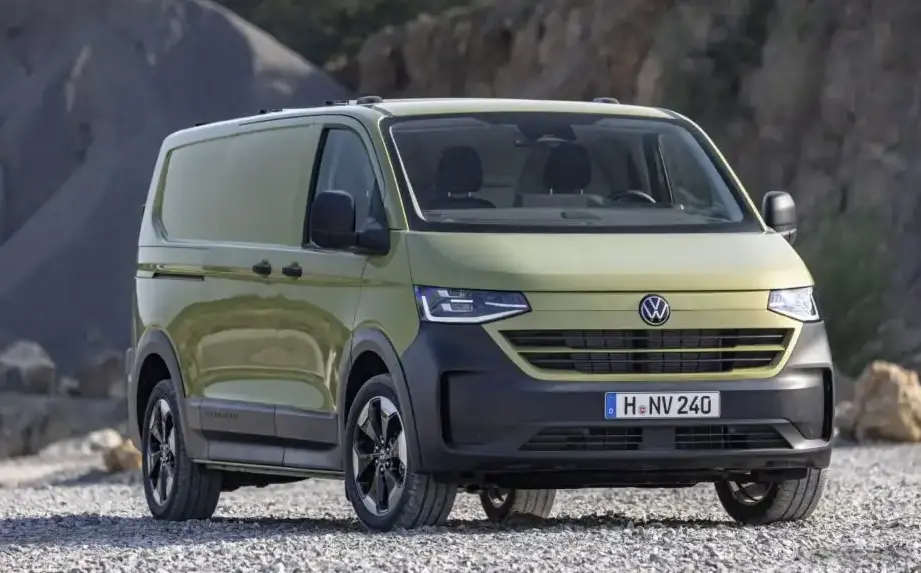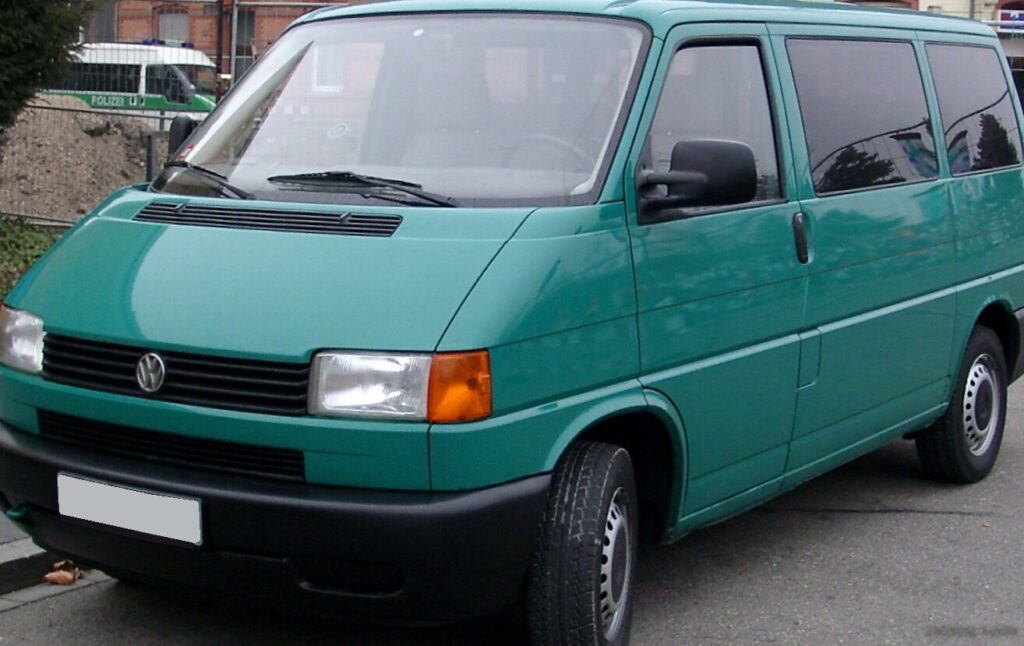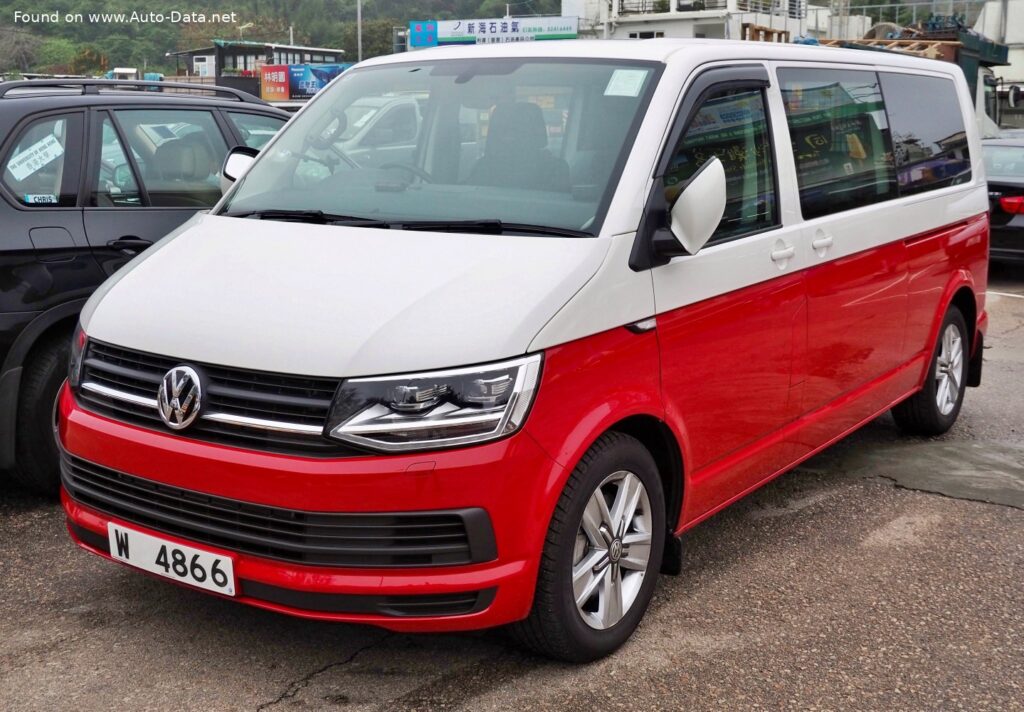
The Volkswagen Transporter (T6) Kombi 2.0 TDI 4MOTION L2H1, produced between 2015 and 2019, represents a significant iteration in Volkswagen’s long-running Transporter lineage. Positioned within the light commercial vehicle segment, the T6 Kombi served as a versatile platform for both commercial and passenger applications, offering a blend of practicality, efficiency, and modern technology. The “Kombi” designation signifies a multi-passenger configuration, differentiating it from the panel van versions. The L2H1 indicates a long wheelbase and a lower roof height, contributing to its spacious interior and manageable dimensions. This particular variant, equipped with the 2.0 TDI engine producing 150 horsepower and a 4MOTION all-wheel-drive system, was a popular choice for those requiring enhanced traction and capability.
Volkswagen Transporter (T6) Kombi: An Overview
The T6 generation of the Transporter marked a substantial evolution from its predecessor, the T5. While retaining the core functionality and robust build quality that defined the Transporter name, the T6 incorporated advancements in safety, comfort, and fuel efficiency. The 2.0 TDI 4MOTION L2H1 model specifically catered to customers needing a reliable and adaptable vehicle for diverse tasks, from family transport to small business operations. The inclusion of 4MOTION all-wheel drive broadened its appeal in regions with challenging weather conditions or demanding terrain. The T6, while sold globally, held particular prominence in the European market, where it competed with vehicles like the Mercedes-Benz Vito and Ford Transit.
Engine & Performance
The heart of the Transporter T6 Kombi 2.0 TDI 4MOTION L2H1 is a 2.0-liter inline four-cylinder diesel engine, identified by the EA288 engine code (CXFA, CXHA). This engine delivers 150 horsepower at 3250-3750 rpm and a robust 340 Nm (250.77 lb.-ft.) of torque between 1500-3000 rpm. The turbocharger and intercooler contribute to improved power delivery and efficiency. Power per liter is rated at 76.2 hp/l. The engine is paired with a six-speed manual transmission, channeling power to all four wheels via Volkswagen’s 4MOTION system. This system utilizes an electronically controlled multi-plate clutch to distribute torque between the front and rear axles as needed, providing enhanced traction and stability. Acceleration from 0 to 100 km/h (0-62 mph) takes 12.2 seconds, while 0-60 mph is achieved in 11.6 seconds. The vehicle boasts a maximum speed of 179 km/h (111.23 mph). Fuel economy, measured using the NEDC standard, ranges from 6.5 to 8.2 liters per 100 kilometers (36.2 to 28.7 US mpg, or 43.5 to 34.4 UK mpg), with CO2 emissions between 169 and 214 g/km. The engine also incorporates a Start & Stop system and a particulate filter to reduce emissions.
Design & Features
The Transporter T6 Kombi L2H1 is a van body style, offering 4-5 doors and seating for 4-9 passengers. Its dimensions are 5304 mm (208.82 in) in length, 1904 mm (74.96 in) in width, and 1990 mm (78.35 in) in height. The wheelbase measures 3400 mm (133.86 in). The lower roof height (H1) contributes to improved accessibility and reduced wind resistance. The 4MOTION system adds to the vehicle’s ground clearance, providing 202 mm (7.95 in) of ride height. Key design features include a functional and durable exterior, with a focus on practicality. Inside, the Kombi configuration offers a flexible seating arrangement, allowing for easy adaptation to various passenger and cargo needs. The interior is designed with durability in mind, utilizing robust materials and a practical layout. Safety features, typical for the era, include ABS (Anti-lock Braking System) and a reinforced body structure. The vehicle offers a maximum load capacity of 858-1023 kg (1891.57 – 2255.33 lbs) and a maximum roof load of 100 kg (220.46 lbs). Trunk space is substantial, reaching 6700 liters (236.61 cu. ft.) with the rear seats folded.
Technical Specifications
| Brand | Volkswagen |
| Model | Transporter |
| Generation | Transporter (T6) Kombi |
| Type (Engine) | 2.0 TDI (150 Hp) 4MOTION L2H1 |
| Start of production | 2015 year |
| End of production | 2019 year |
| Powertrain Architecture | Internal Combustion engine |
| Body type | Van |
| Seats | 4-9 |
| Doors | 4-5 |
| Fuel consumption (economy) – urban (NEDC) | 7.8-9.8 l/100 km (30.2 – 24 US mpg, 36.2 – 28.8 UK mpg, 12.8 – 10.2 km/l) |
| Fuel consumption (economy) – extra urban (NEDC) | 5.8-7.3 l/100 km (40.6 – 32.2 US mpg, 48.7 – 38.7 UK mpg, 17.2 – 13.7 km/l) |
| Fuel consumption (economy) – combined (NEDC) | 6.5-8.2 l/100 km (36.2 – 28.7 US mpg, 43.5 – 34.4 UK mpg, 15.4 – 12.2 km/l) |
| CO2 emissions (NEDC) | 169-214 g/km |
| Fuel Type | Diesel |
| Acceleration 0 – 100 km/h | 12.2 sec |
| Acceleration 0 – 62 mph | 12.2 sec |
| Acceleration 0 – 60 mph | 11.6 sec |
| Maximum speed | 179 km/h (111.23 mph) |
| Emission standard | Euro 6 |
| Weight-to-power ratio | 13.2 kg/Hp, 75.9 Hp/tonne |
| Weight-to-torque ratio | 5.8 kg/Nm, 172 Nm/tonne |
| Power | 150 Hp @ 3250-3750 rpm |
| Power per litre | 76.2 Hp/l |
| Torque | 340 Nm @ 1500-3000 rpm (250.77 lb.-ft. @ 1500-3000 rpm) |
| Engine layout | Front, Transverse |
| Engine Model/Code | EA288 / CXFA, CXHA |
| Engine displacement | 1968 cm3 (120.09 cu. in.) |
| Number of cylinders | 4 |
| Engine configuration | Inline |
| Cylinder Bore | 81 mm (3.19 in.) |
| Piston Stroke | 95.5 mm (3.76 in.) |
| Compression ratio | 15.5:1 |
| Number of valves per cylinder | 4 |
| Fuel injection system | Diesel Commonrail |
| Engine aspiration | Turbocharger, Intercooler |
| Valvetrain | DOHC |
| Engine oil capacity | 7.4 l (7.82 US qt | 6.51 UK qt) |
| Kerb Weight | 1977-2342 kg (4358.54 – 5163.23 lbs.) |
| Max. weight | 3000-3200 kg (6613.87 – 7054.79 lbs.) |
| Max load | 858-1023 kg (1891.57 – 2255.33 lbs.) |
| Trunk (boot) space – maximum | 6700 l (236.61 cu. ft.) |
| Fuel tank capacity | 70 l (18.49 US gal | 15.4 UK gal) |
| AdBlue tank | 13 l (3.43 US gal | 2.86 UK gal) |
| Max. roof load | 100 kg (220.46 lbs.) |
| Permitted trailer load with brakes (12%) | 2500 kg (5511.56 lbs.) |
| Permitted trailer load without brakes | 750 kg (1653.47 lbs.) |
| Permitted towbar download | 100 kg (220.46 lbs.) |
| Length | 5304 mm (208.82 in.) |
| Width | 1904 mm (74.96 in.) |
| Width including mirrors | 2297 mm (90.43 in.) |
| Height | 1990 mm (78.35 in.) |
| Wheelbase | 3400 mm (133.86 in.) |
| Front overhang | 908 mm (35.75 in.) |
| Rear overhang | 993 mm (39.09 in.) |
| Ride height (ground clearance) | 202 mm (7.95 in.) |
| Minimum turning circle (turning diameter) | 13.2 m (43.31 ft.) |
| Drivetrain Architecture | The Internal combustion engine (ICE) drives the front wheels permanently, and the rear wheels are driven through an electrically or mechanically operated clutch if necessary. |
| Drive wheel | All wheel drive (4×4) |
| Number of gears and type of gearbox | 6 gears, manual transmission |
| Front suspension | Independent, type McPherson with coil spring and anti-roll bar |
| Rear suspension | Independent coil spring, Wishbone, Transverse stabilizer |
| Front brakes | Ventilated discs, 308×29.5 mm |
| Rear brakes | Ventilated discs, 294×22 mm |
| Assisting systems | ABS (Anti-lock braking system) |
| Steering type | Steering rack and pinion |
| Power steering | Hydraulic Steering |
| Tires size | 205/65 R16; 215/65 R16 |
| Wheel rims size | 6.5J x 16 |