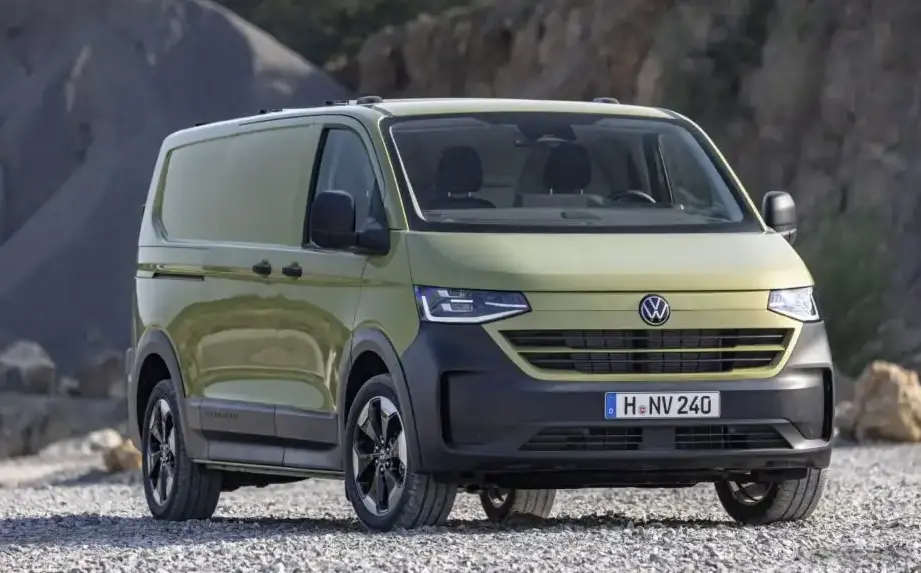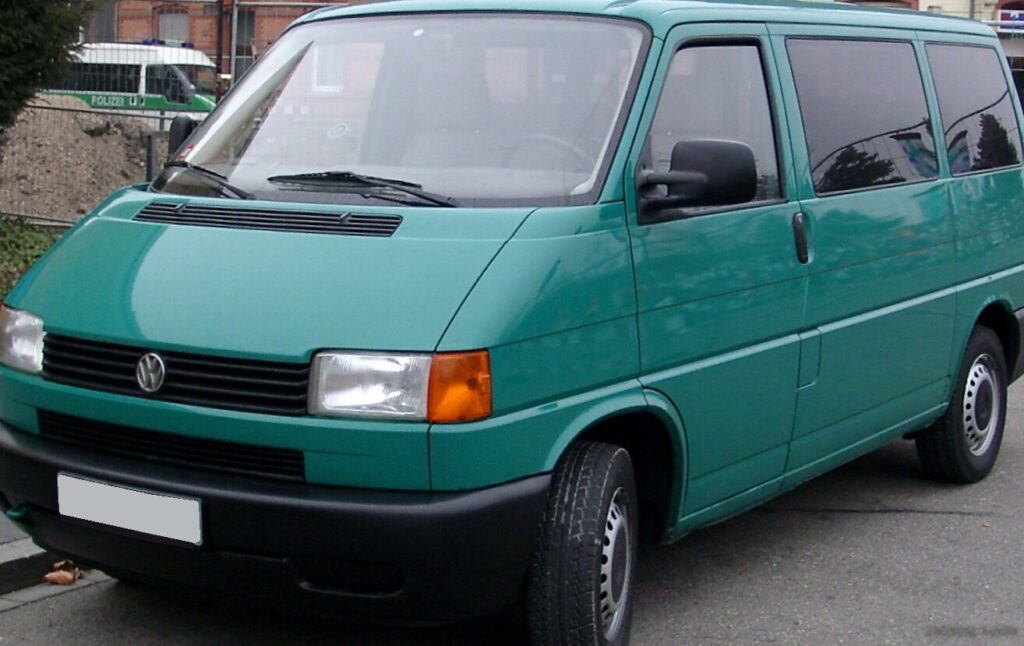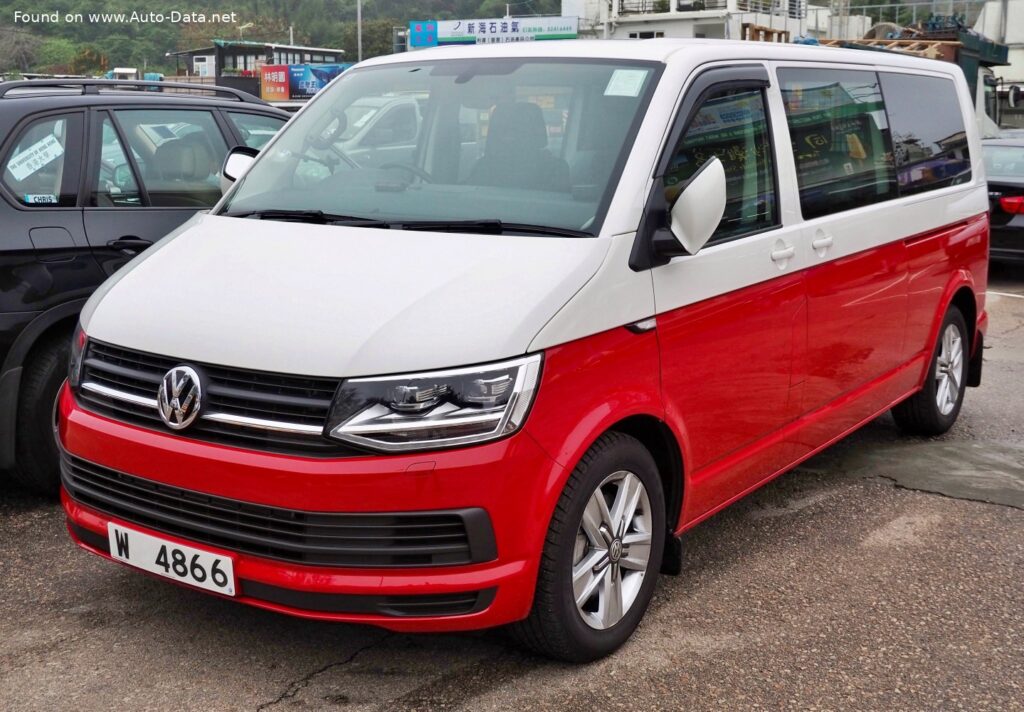
The Volkswagen Transporter (T6) Kombi 2.0 TDI, specifically the 84 horsepower variant designated L1H2, represents a significant iteration in the long-running lineage of Volkswagen’s iconic commercial vehicle. Produced from 2015 to 2018, this model served as a versatile workhorse primarily within the European market, offering a blend of practicality, efficiency, and adaptability. The T6 generation marked a substantial upgrade over its predecessor, the T5, with improvements in technology, safety features, and overall refinement. While not officially sold in the United States, the Transporter series has a dedicated following among van enthusiasts and is often imported for specialized applications.
Volkswagen Transporter (T6) Kombi: An Overview
The Transporter T6 Kombi, in its various configurations, occupies the light commercial vehicle segment, competing with models like the Ford Transit, Mercedes-Benz Vito, and Citroën Dispatch. The “Kombi” designation indicates a passenger-carrying variant, offering seating for between four and nine occupants, making it suitable for both commercial and family use. The L1H2 specification denotes a short wheelbase (L1) and a medium roof height (H2), providing a balance between maneuverability and interior space. The 2.0 TDI engine, producing 84 horsepower, was a common choice for operators prioritizing fuel economy and reliability over outright performance.
Engine & Performance
The heart of the Transporter T6 Kombi 2.0 TDI (84 Hp) L1H2 is the EA288 series 2.0-liter four-cylinder diesel engine. This engine, designated CXGA, delivers 84 horsepower at 2750-3750 rpm and 220 Nm (162.26 lb.-ft.) of torque between 1250 and 2500 rpm. Equipped with a turbocharger and intercooler, the engine provides adequate power for everyday driving and moderate loads. Power per liter is rated at 42.7 Hp/l. The engine utilizes a diesel commonrail fuel injection system and a DOHC valvetrain with four valves per cylinder. The engine is transversely mounted at the front of the vehicle. Acceleration from 0 to 100 km/h (0-62 mph) takes 21.2 seconds, while 0-60 mph is achieved in approximately 20.1 seconds. The top speed is limited to 142 km/h (88.23 mph). Fuel economy, measured using the NEDC standard, ranges from 5.7 to 6.7 l/100 km (41.3 to 35.1 US mpg) combined, with urban consumption between 6.8 and 8.3 l/100 km (34.6 to 28.3 US mpg) and extra-urban figures of 5.1 to 5.8 l/100 km (46.1 to 40.6 US mpg). The vehicle meets Euro 6 emission standards and incorporates a particulate filter and a Start & Stop system to minimize environmental impact.
Design & Features
The Transporter T6 Kombi L1H2 features a traditional van body style with a boxy silhouette optimized for maximizing interior space. It offers four to five doors for passenger access. Key design elements include a robust front grille, prominent headlights, and a practical rear end with a large tailgate or barn doors. The interior is designed with functionality in mind, featuring durable materials and a modular seating arrangement. The Kombi variant offers increased comfort and versatility compared to the standard panel van, with features like comfortable seating, interior trim, and often, additional windows. Safety features, crucial in a modern commercial vehicle, include ABS (Anti-lock Braking System). The vehicle’s dimensions are as follows: length 4904 mm (193.07 in), width 1904 mm (74.96 in) including mirrors 2297 mm (90.43 in), and height 2177 mm (85.71 in). The wheelbase measures 3000 mm (118.11 in), providing a stable and predictable driving experience. The vehicle boasts a maximum roof load of 100 kg (220.46 lbs) and a permitted trailer load with brakes of up to 2200 kg (4850.17 lbs).
Technical Specifications
| Brand | Volkswagen |
| Model | Transporter |
| Generation | Transporter (T6) Kombi |
| Type (Engine) | 2.0 TDI (84 Hp) L1H2 |
| Start of production | 2015 year |
| End of production | 2018 year |
| Powertrain Architecture | Internal Combustion engine |
| Body type | Van |
| Seats | 4-9 |
| Doors | 4-5 |
| Fuel consumption (economy) – urban (NEDC) | 6.8-8.3 l/100 km (34.6 – 28.3 US mpg) |
| Fuel consumption (economy) – extra urban (NEDC) | 5.1-5.8 l/100 km (46.1 – 40.6 US mpg) |
| Fuel consumption (economy) – combined (NEDC) | 5.7-6.7 l/100 km (41.3 – 35.1 US mpg) |
| CO2 emissions (NEDC) | 149-176 g/km |
| Fuel Type | Diesel |
| Acceleration 0 – 100 km/h | 21.2 sec |
| Acceleration 0 – 62 mph | 21.2 sec |
| Acceleration 0 – 60 mph | 20.1 sec |
| Maximum speed | 142 km/h (88.23 mph) |
| Emission standard | Euro 6 |
| Weight-to-power ratio | 21 kg/Hp, 47.6 Hp/tonne |
| Weight-to-torque ratio | 8 kg/Nm, 124.8 Nm/tonne |
| Power | 84 Hp @ 2750-3750 rpm |
| Torque | 220 Nm @ 1250-2500 rpm (162.26 lb.-ft. @ 1250-2500 rpm) |
| Engine layout | Front, Transverse |
| Engine Model/Code | EA288 / CXGA |
| Engine displacement | 1968 cm3 (120.09 cu. in.) |
| Number of cylinders | 4 |
| Engine configuration | Inline |
| Cylinder Bore | 81 mm (3.19 in.) |
| Piston Stroke | 95.5 mm (3.76 in.) |
| Compression ratio | 15.5:1 |
| Number of valves per cylinder | 4 |
| Fuel injection system | Diesel Commonrail |
| Engine aspiration | Turbocharger, Intercooler |
| Valvetrain | DOHC |
| Engine oil capacity | 7.4 l (7.82 US qt | 6.51 UK qt) |
| Kerb Weight | 1763-2074 kg (3886.75 – 4572.39 lbs.) |
| Max. weight | 2600-3080 kg (5732.02 – 6790.24 lbs.) |
| Max load | 837-1006 kg (1845.27 – 2217.85 lbs.) |
| Trunk (boot) space – maximum | 6700 l (236.61 cu. ft.) |
| Fuel tank capacity | 70 l (18.49 US gal | 15.4 UK gal) |
| AdBlue tank | 13 l (3.43 US gal | 2.86 UK gal) |
| Max. roof load | 100 kg (220.46 lbs.) |
| Permitted trailer load with brakes (12%) | 2200 kg (4850.17 lbs.) |
| Permitted trailer load without brakes | 750 kg (1653.47 lbs.) |
| Permitted towbar download | 100 kg (220.46 lbs.) |
| Length | 4904 mm (193.07 in.) |
| Width | 1904 mm (74.96 in.) |
| Width including mirrors | 2297 mm (90.43 in.) |
| Height | 2177 mm (85.71 in.) |
| Wheelbase | 3000 mm (118.11 in.) |
| Front overhang | 908 mm (35.75 in.) |
| Rear overhang | 993 mm (39.09 in.) |
| Ride height (ground clearance) | 201 mm (7.91 in.) |
| Minimum turning circle (turning diameter) | 11.9 m (39.04 ft.) |
| Drivetrain Architecture | The Internal combustion engine (ICE) drives the front wheels of the vehicle. |
| Drive wheel | Front wheel drive |
| Number of gears and type of gearbox | 5 gears, manual transmission |