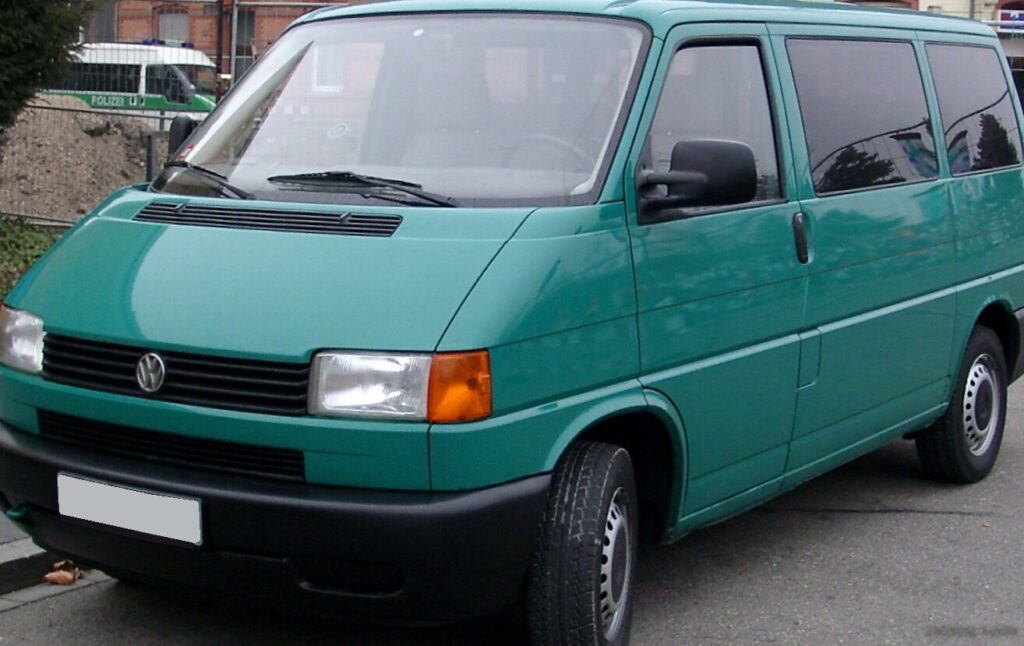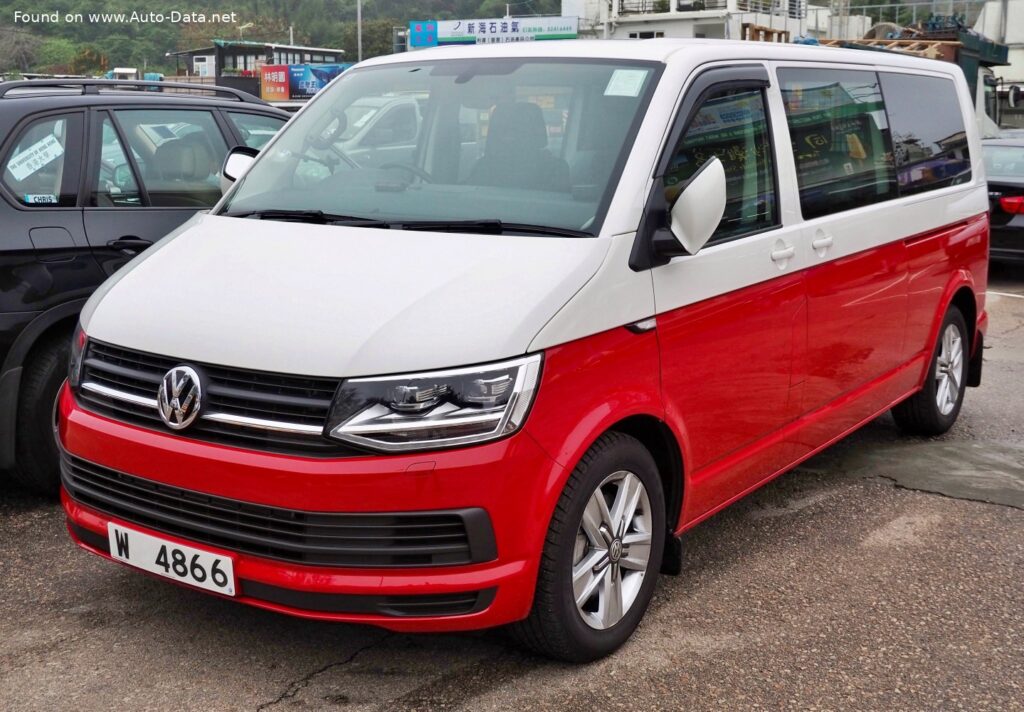
The Volkswagen Transporter (T6) Kombi 2.0 TSI (150 Hp) L2H3 represents a significant iteration in Volkswagen’s long-running Transporter lineage, a vehicle synonymous with commercial and passenger transport in Europe and beyond. Produced from 2015 to 2018, the T6 generation marked a substantial upgrade over its predecessor, the T5, with a focus on improved refinement, technology, and efficiency. The “Kombi” designation signifies a versatile passenger-carrying variant, bridging the gap between a pure cargo van and a multi-passenger vehicle. The L2H3 configuration denotes a long wheelbase and high roof, maximizing interior space and utility. While not officially sold in the United States, the Transporter has a dedicated following among enthusiasts who import models for personal use, appreciating its practicality and European design sensibilities.
Volkswagen Transporter (T6) Kombi: An Overview
The T6 Transporter Kombi aimed to address the evolving needs of both commercial operators and families. It offered a compelling blend of functionality, comfort, and modern features. The 2.0 TSI engine variant, producing 150 horsepower, provided a balance between performance and fuel economy, making it suitable for a wide range of applications. The T6 built upon the reputation of previous Transporter generations for reliability and durability, while incorporating contemporary safety and convenience technologies. The Kombi version, in particular, catered to those requiring flexible seating arrangements and ample cargo space for both work and leisure.
Engine & Performance
The heart of the Transporter (T6) Kombi 2.0 TSI L2H3 is a 2.0-liter turbocharged inline-four cylinder gasoline engine, identified by the engine code CJKB and belonging to the EA888 engine family. This engine delivers a maximum power output of 150 horsepower at 3,750-6,000 rpm, and a torque figure of 280 Nm (206.52 lb.-ft.) between 1,500 and 3,750 rpm. The direct injection system and turbocharger contribute to both performance and efficiency. Power is sent to the front wheels via a six-speed manual transmission. Acceleration from 0 to 100 km/h (0-62 mph) takes 11.8 seconds, while 0-60 mph is achieved in approximately 11.2 seconds. The vehicle boasts a top speed of 170 km/h (105.63 mph). Fuel consumption, measured using the NEDC standard, ranges from 9.1 to 9.5 liters per 100 kilometers (25.8 to 24.8 US mpg) in combined driving conditions. CO2 emissions are rated between 208 and 216 g/km, meeting Euro 6 emission standards.
Design & Features
The Transporter T6 Kombi L2H3 is a van characterized by its practical and functional design. The L2 (long wheelbase) provides a generous cargo area, while the H3 (high roof) allows for comfortable standing room for most adults. The Kombi variant typically features seating for between four and nine passengers, with flexible configurations to accommodate varying needs. The exterior design is relatively understated, prioritizing practicality over flamboyant styling. Key features include sliding side doors for easy access, a rear liftgate, and a robust chassis designed to withstand the demands of commercial use. Inside, the T6 offers a driver-focused cockpit with ergonomic controls and a range of available features, including air conditioning, a radio/CD player, and power windows. Safety features, crucial for a vehicle often used for transporting passengers, include ABS (Anti-lock Braking System) and driver/passenger airbags. The high roof configuration also contributes to the vehicle’s overall stability and handling.
Technical Specifications
| Brand | Volkswagen |
| Model | Transporter |
| Generation | Transporter (T6) Kombi |
| Type (Engine) | 2.0 TSI (150 Hp) L2H3 |
| Start of production | 2015 |
| End of production | 2018 |
| Powertrain Architecture | Internal Combustion engine |
| Body type | Van |
| Seats | 4-9 |
| Doors | 4-5 |
| Fuel consumption (economy) – urban (NEDC) | 12.2-12.4 l/100 km (19.3 – 19 US mpg, 23.2 – 22.8 UK mpg, 8.2 – 8.1 km/l) |
| Fuel consumption (economy) – extra urban (NEDC) | 7.4-7.9 l/100 km (31.8 – 29.8 US mpg, 38.2 – 35.8 UK mpg, 13.5 – 12.7 km/l) |
| Fuel consumption (economy) – combined (NEDC) | 9.1-9.5 l/100 km (25.8 – 24.8 US mpg, 31 – 29.7 UK mpg, 11 – 10.5 km/l) |
| CO2 emissions (NEDC) | 208-216 g/km |
| Fuel Type | Petrol (Gasoline) |
| Acceleration 0 – 100 km/h | 11.8 sec |
| Acceleration 0 – 62 mph | 11.8 sec |
| Acceleration 0 – 60 mph | 11.2 sec |
| Maximum speed | 170 km/h (105.63 mph) |
| Emission standard | Euro 6 |
| Weight-to-power ratio | 12.3 kg/Hp, 81.1 Hp/tonne |
| Weight-to-torque ratio | 6.6 kg/Nm, 151.4 Nm/tonne |
| Power | 150 Hp @ 3750-6000 rpm |
| Power per litre | 75.6 Hp/l |
| Torque | 280 Nm @ 1500-3750 rpm (206.52 lb.-ft. @ 1500-3750 rpm) |
| Engine layout | Front, Transverse |
| Engine Model/Code | EA888 / CJKB |
| Engine displacement | 1984 cm3 (121.07 cu. in.) |
| Number of cylinders | 4 |
| Engine configuration | Inline |
| Cylinder Bore | 82.5 mm (3.25 in.) |
| Piston Stroke | 92.8 mm (3.65 in.) |
| Compression ratio | 9.8:1 |
| Number of valves per cylinder | 4 |
| Fuel injection system | Direct injection |
| Engine aspiration | Turbocharger, Intercooler |
| Valvetrain | DOHC |
| Engine oil capacity | 5.7 l (6.02 US qt | 5.02 UK qt) |
| Kerb Weight | 1849-2263 kg (4076.35 – 4989.06 lbs.) |
| Max. weight | 2800-3200 kg (6172.94 – 7054.79 lbs.) |
| Max load | 937-951 kg (2065.73 – 2096.6 lbs.) |
| Trunk (boot) space – maximum | 9300 l (328.43 cu. ft.) |
| Fuel tank capacity | 80 l (21.13 US gal | 17.6 UK gal) |
| Max. roof load | 100 kg (220.46 lbs.) |
| Permitted trailer load with brakes (12%) | 2500 kg (5511.56 lbs.) |
| Permitted trailer load without brakes | 750 kg (1653.47 lbs.) |
| Permitted towbar download | 100 kg (220.46 lbs.) |
| Length | 5304 mm (208.82 in.) |
| Width | 1904 mm (74.96 in.) |
| Width including mirrors | 2297 mm (90.43 in.) |
| Height | 2477 mm (97.52 in.) |
| Wheelbase | 3400 mm (133.86 in.) |
| Front overhang | 908 mm (35.75 in.) |
| Rear overhang | 993 mm (39.09 in.) |
| Ride height (ground clearance) | 202 mm (7.95 in.) |
| Minimum turning circle (turning diameter) | 13.2 m (43.31 ft.) |
| Drivetrain Architecture | Front wheel drive |
| Number of gears and type of gearbox | 6 gears, manual transmission |
The Volkswagen Transporter (T6) Kombi 2.0 TSI L2H3 remains a popular choice for those seeking a versatile and reliable vehicle capable of handling a variety of tasks. Its blend of practicality, efficiency, and modern features ensures its continued relevance in the commercial and passenger vehicle segments.