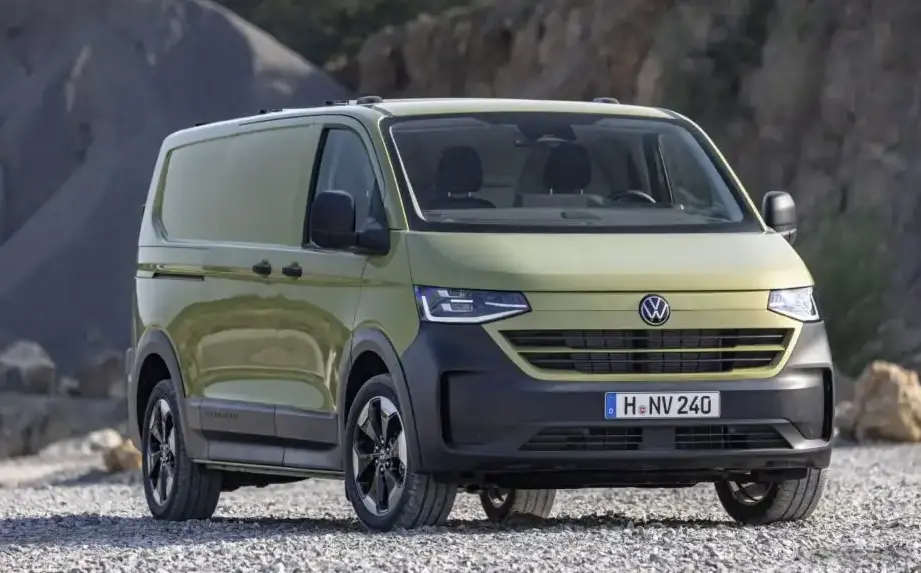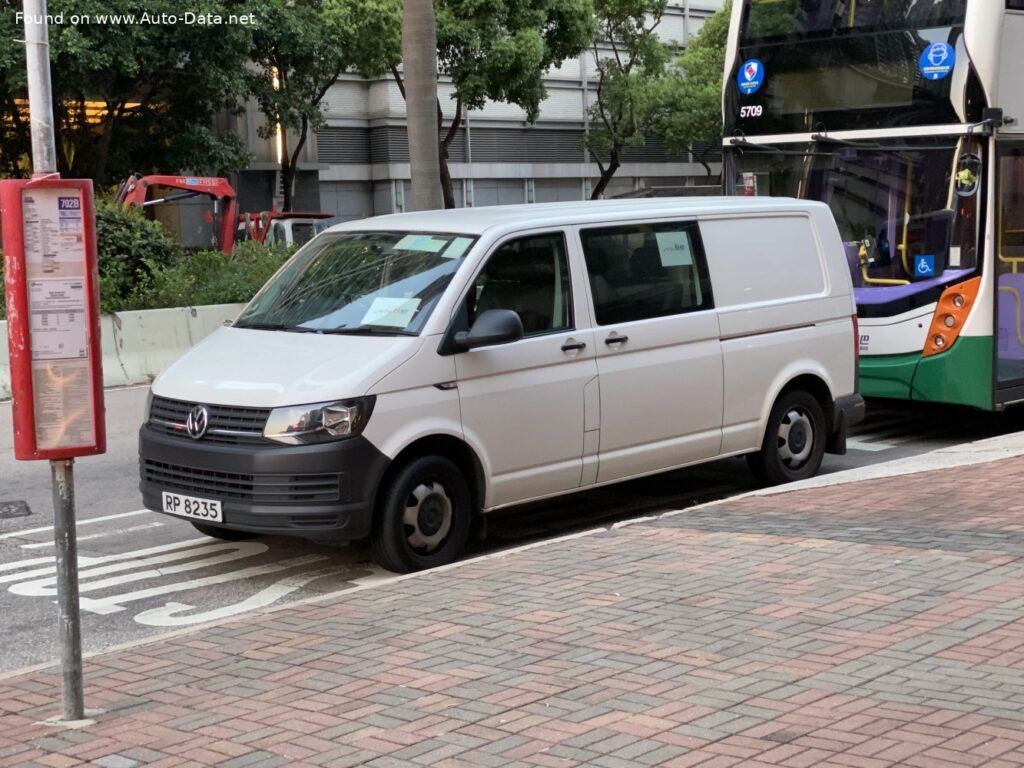
The Volkswagen Transporter (T6), specifically the Kombi Doka Plus 2.0 TDI (140 Hp) 4MOTION L1H1 variant, represents a significant iteration in Volkswagen’s long-running commercial vehicle lineage. Produced from 2015 to 2016, this model caters to a diverse range of needs, blending practicality with Volkswagen’s reputation for engineering. The T6 generation, introduced in 2015, continued the Transporter’s role as a versatile panel van, passenger carrier (Kombi), and platform for various commercial applications. While not directly sold in the United States during this generation, the Transporter remains a cornerstone of the European light commercial vehicle market, competing with models like the Ford Transit and Mercedes-Benz Vito.
Volkswagen Transporter (T6) Overview
The T6 Transporter built upon the success of its predecessors, offering improved fuel efficiency, enhanced safety features, and a more refined driving experience. The “Kombi” designation indicates a crew van configuration, typically seating five to six passengers, while “Doka Plus” signifies a double-cab chassis, offering a separate cargo area behind the passenger compartment. The “L1H1” designation refers to the vehicle’s body length (L1 – short wheelbase) and roof height (H1 – standard roof). The 2.0 TDI engine with 140 horsepower and the 4MOTION all-wheel-drive system provide a balance of performance and capability for both urban and rural environments.
Engine & Performance
The heart of the Transporter (T6) Kombi Doka Plus 2.0 TDI 4MOTION L1H1 is Volkswagen’s 2.0-liter turbocharged diesel engine, designated EA189 / CAAC. This inline-four cylinder engine produces 140 horsepower at 3500 rpm and 340 Nm (250.77 lb.-ft.) of torque between 1750 and 2500 rpm. The engine features a diesel commonrail fuel injection system and an intercooler to optimize combustion and power delivery. Power per liter is rated at 71.1 hp/l. The engine’s transverse mounting contributes to a compact engine bay, maximizing interior space. The 4MOTION all-wheel-drive system provides enhanced traction and stability, particularly in challenging road conditions. Power is delivered to all four wheels through a six-speed manual transmission. Acceleration from 0 to 100 km/h (0-62 mph) takes 13.5 seconds, while 0-60 mph is achieved in approximately 12.8 seconds. The vehicle has a maximum speed of 170 km/h (105.63 mph). Fuel economy, measured using the NEDC standard, ranges from 7.5 to 7.8 liters per 100 kilometers (31.4 to 30.2 US mpg), with CO2 emissions between 198 and 206 g/km.
Design & Features
The T6 Transporter maintains the iconic silhouette of the Volkswagen van, characterized by its boxy shape and practical design. The Kombi Doka Plus configuration offers a versatile layout, combining passenger seating with a dedicated cargo area. The van body provides ample space for both occupants and goods, making it suitable for a wide range of applications, from tradespeople to families. The L1H1 body style offers a manageable size for navigating urban environments while still providing a substantial cargo capacity of 3500 liters (123.6 cu. ft.). Key features include a robust chassis, independent suspension on both front and rear axles, and a hydraulic power steering system. Safety features, typical for the 2015-2016 period, include ABS (Anti-lock Braking System). The vehicle’s dimensions are 4904 mm (193.07 in) in length, 1904 mm (74.96 in) in width, and 1990 mm (78.35 in) in height. Ground clearance is a respectable 201 mm (7.91 in), and the vehicle boasts approach, departure, and ramp-over angles of 21.2°, 16.2°, and 13.7° respectively, enhancing its off-road capability. The T6 also incorporates a Start & Stop system and a particulate filter to reduce emissions.
Technical Specifications
| Brand | Volkswagen |
| Model | Transporter |
| Generation | Transporter (T6) Kombi Doka Plus |
| Type (Engine) | 2.0 TDI (140 Hp) 4MOTION L1H1 |
| Start of production | 2015 |
| End of production | 2016 |
| Powertrain Architecture | Internal Combustion engine |
| Body type | Van |
| Seats | 5-6 |
| Doors | 4-5 |
| Fuel consumption (economy) – urban (NEDC) | 9.5-9.8 l/100 km (24.8 – 24 US mpg, 29.7 – 28.8 UK mpg, 10.5 – 10.2 km/l) |
| Fuel consumption (economy) – extra urban (NEDC) | 6.4-6.7 l/100 km (36.8 – 35.1 US mpg, 44.1 – 42.2 UK mpg, 15.6 – 14.9 km/l) |
| Fuel consumption (economy) – combined (NEDC) | 7.5-7.8 l/100 km (31.4 – 30.2 US mpg, 37.7 – 36.2 UK mpg, 13.3 – 12.8 km/l) |
| CO2 emissions (NEDC) | 198-206 g/km |
| Fuel Type | Diesel |
| Acceleration 0 – 100 km/h | 13.5 sec |
| Acceleration 0 – 62 mph | 13.5 sec |
| Acceleration 0 – 60 mph | 12.8 sec |
| Maximum speed | 170 km/h (105.63 mph) |
| Emission standard | Euro 5 |
| Weight-to-power ratio | 13.8 kg/Hp, 72.5 Hp/tonne |
| Weight-to-torque ratio | 5.7 kg/Nm, 176.2 Nm/tonne |
| Power | 140 Hp @ 3500 rpm |
| Power per litre | 71.1 Hp/l |
| Torque | 340 Nm @ 1750-2500 rpm (250.77 lb.-ft. @ 1750-2500 rpm) |
| Engine layout | Front, Transverse |
| Engine Model/Code | EA189 / CAAC |
| Engine displacement | 1968 cm3 (120.09 cu. in.) |
| Number of cylinders | 4 |
| Engine configuration | Inline |
| Cylinder Bore | 81 mm (3.19 in.) |
| Piston Stroke | 95.5 mm (3.76 in.) |
| Compression ratio | 16.5:1 |
| Number of valves per cylinder | 4 |
| Fuel injection system | Diesel Commonrail |
| Engine aspiration | Turbocharger, Intercooler |
| Valvetrain | DOHC |
| Engine oil capacity | 7 l (7.4 US qt | 6.16 UK qt) |
| Kerb Weight | 1930-2288 kg (4254.92 – 5044.18 lbs.) |
| Max. weight | 3000-3200 kg (6613.87 – 7054.79 lbs.) |
| Max load | 912-1070 kg (2010.62 – 2358.95 lbs.) |
| Trunk (boot) space – maximum | 3500 l (123.6 cu. ft.) |
| Fuel tank capacity | 80 l (21.13 US gal | 17.6 UK gal) |
| Max. roof load | 100 kg (220.46 lbs.) |
| Permitted trailer load with brakes (12%) | 2500 kg (5511.56 lbs.) |
| Permitted trailer load without brakes | 750 kg (1653.47 lbs.) |
| Permitted towbar download | 100 kg (220.46 lbs.) |
| Length | 4904 mm (193.07 in.) |
| Width | 1904 mm (74.96 in.) |
| Width including mirrors | 2297 mm (90.43 in.) |
| Height | 1990 mm (78.35 in.) |
| Wheelbase | 3000 mm (118.11 in.) |
| Front overhang | 908 mm (35.75 in.) |
| Rear overhang | 993 mm (39.09 in.) |
| Ride height (ground clearance) | 201 mm (7.91 in.) |
| Minimum turning circle (turning diameter) | 11.9 m (39.04 ft.) |
| Drivetrain Architecture | The Internal combustion engine (ICE) drives the front wheels permanently, and the rear wheels are driven through an electrically or mechanically operated clutch if necessary. |
| Drive wheel | All wheel drive (4×4) |
| Number of gears and type of gearbox | 6 gears, manual transmission |
| Front suspension | Independent, type McPherson with coil spring and anti-roll bar |
| Rear suspension | Independent coil spring, Wishbone, Transverse stabilizer |
| Front brakes | Ventilated discs, 308×29.5 mm |
| Rear brakes | Ventilated discs, 294×22 mm |
| Assisting systems | ABS (Anti-lock braking system) |
| Steering type | Steering rack and pinion |
| Power steering | Hydraulic Steering |
| Tires size | 215/65 R16 |
| Wheel rims size | 6.5J x 16 |