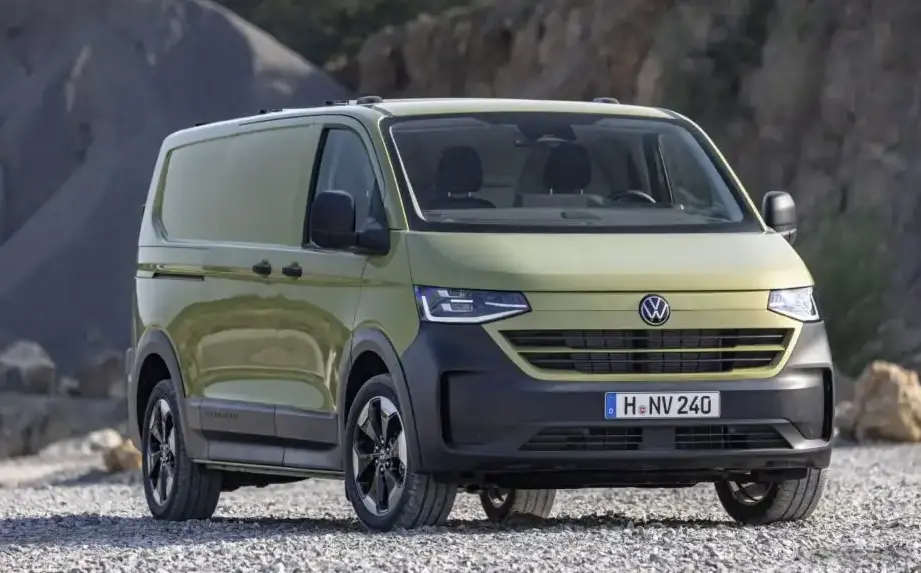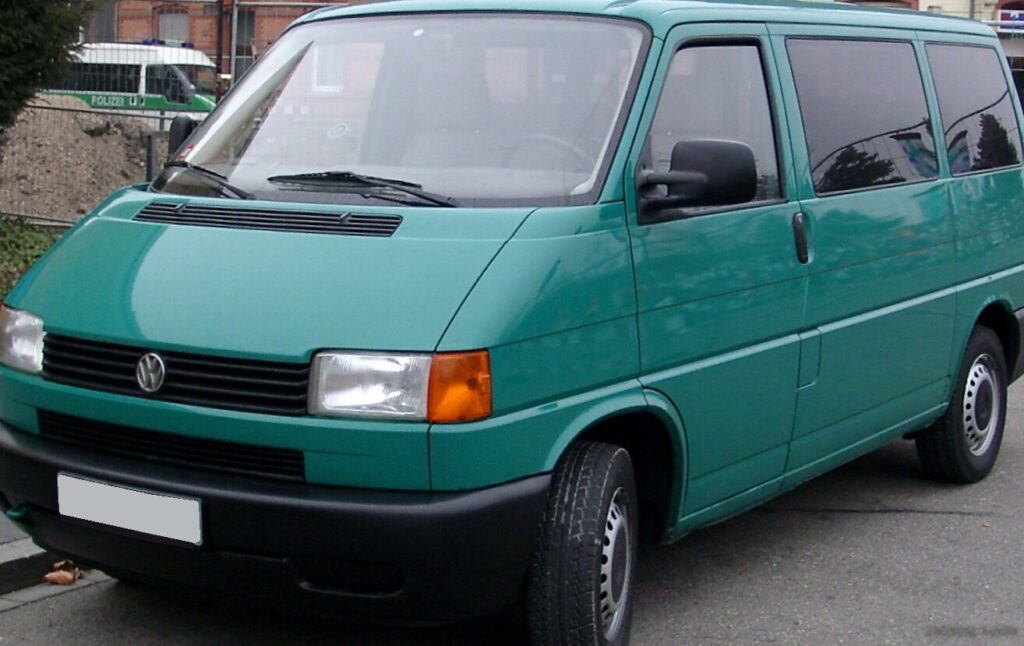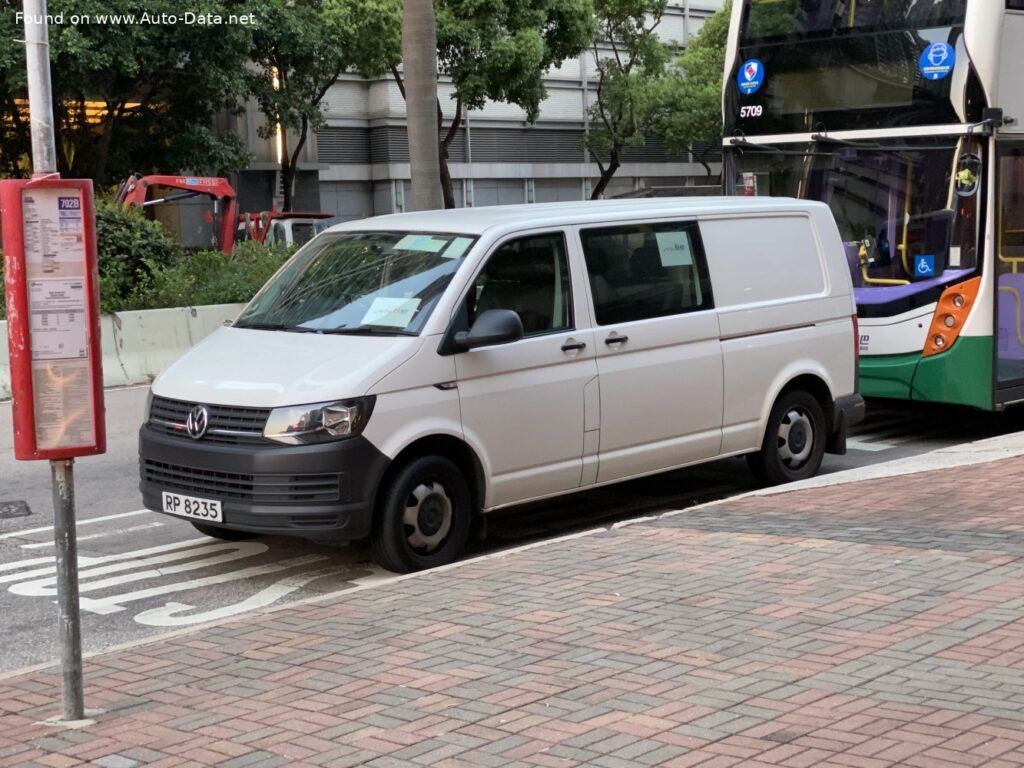
The Volkswagen Transporter, known as the T6 generation from 2015 to 2016, represents a significant evolution in Volkswagen’s long-running commercial vehicle line. Specifically, the Kombi Doka Plus 2.0 TDI (180 Hp) 4MOTION L2H1 variant caters to a market demanding versatility, efficiency, and all-weather capability. While not widely sold in the United States, the Transporter is a mainstay in Europe, Australia, and other regions, serving as a popular choice for both commercial and private use – functioning as a work van, passenger carrier, and even a base for camper conversions. The “Kombi” designation indicates a crew cab configuration, the “Doka” signifies a double cab chassis, “Plus” denotes a higher trim level, “2.0 TDI” identifies the engine, “180 Hp” the power output, “4MOTION” the all-wheel-drive system, and “L2H1” the body length and roof height.
Volkswagen Transporter (T6) Kombi Doka Plus: A Detailed Overview
The T6 Transporter built upon the success of its predecessors, offering improved fuel economy, enhanced safety features, and a more refined driving experience. The L2H1 configuration, a medium-length wheelbase and a low roof, provides a practical balance between cargo capacity and maneuverability. The 4MOTION all-wheel-drive system is a key feature, providing enhanced traction and stability in challenging conditions, making it suitable for diverse terrains and climates. This model year, 2015-2016, represents a transitional period for the T6, bridging the gap between initial launch specifications and later refinements.
Engine & Performance
The heart of the Transporter Kombi Doka Plus 2.0 TDI 4MOTION is a 2.0-liter turbocharged diesel engine, designated EA189 / CFCA. This inline-four cylinder engine produces 180 horsepower at 4000 rpm and a substantial 400 Nm (295.02 lb.-ft.) of torque between 1500 and 2500 rpm. The bi-turbocharger setup, coupled with an intercooler, contributes to both strong low-end torque and responsive performance. Power per liter is rated at 91.5 Hp/l. The engine is paired with a 6-speed manual transmission, delivering power to all four wheels via Volkswagen’s 4MOTION system. This system operates as a permanent all-wheel drive, with the rear wheels engaging as needed to maintain optimal traction. Acceleration from 0 to 100 km/h (0-62 mph) takes 10.4 seconds, while 0-60 mph is achieved in 9.9 seconds. The vehicle boasts a maximum speed of 188 km/h (116.82 mph). Fuel economy, measured using the NEDC standard, ranges from 7.6 to 8.2 l/100 km (30.9 – 28.7 US mpg, 37.2 – 34.4 UK mpg, 13.2 – 12.2 km/l) depending on driving conditions. The engine also incorporates a diesel particulate filter and a Start & Stop system to minimize emissions.
Design & Features
The T6 Transporter Kombi Doka Plus features a functional and robust design. As a van, it offers a spacious interior and a versatile cargo area. The “Kombi” designation indicates a crew cab layout, typically accommodating 5-6 passengers in addition to the driver. The “Doka” configuration provides a double cab chassis, allowing for flexible cargo solutions. The L2H1 body style offers a practical balance between interior space and exterior dimensions. The vehicle’s exterior design is characterized by clean lines and a practical aesthetic. Key features include a durable chassis, a comfortable cabin, and a range of safety systems. The T6 generation saw improvements in driver assistance technologies, although specific features varied depending on the trim level and optional equipment. Standard safety features typically included ABS (Anti-lock Braking System), and driver and passenger airbags. The vehicle’s dimensions are as follows: Length 5304 mm (208.82 in), Width 1904 mm (74.96 in) including mirrors 2297 mm (90.43 in), Height 1990 mm (78.35 in), Wheelbase 3400 mm (133.86 in). Ground clearance is 202 mm (7.95 in).
Technical Specifications
| Brand | Volkswagen |
| Model | Transporter |
| Generation | Transporter (T6) Kombi Doka Plus |
| Type (Engine) | 2.0 TDI (180 Hp) 4MOTION L2H1 |
| Start of production | 2015 |
| End of production | 2016 |
| Powertrain Architecture | Internal Combustion engine |
| Body type | Van |
| Seats | 5-6 |
| Doors | 4-5 |
| Fuel consumption (economy) – urban (NEDC) | 9.3-9.6 l/100 km (25.3 – 24.5 US mpg, 30.4 – 29.4 UK mpg, 10.8 – 10.4 km/l) |
| Fuel consumption (economy) – extra urban (NEDC) | 6.6-7.4 l/100 km (35.6 – 31.8 US mpg, 42.8 – 38.2 UK mpg, 15.2 – 13.5 km/l) |
| Fuel consumption (economy) – combined (NEDC) | 7.6-8.2 l/100 km (30.9 – 28.7 US mpg, 37.2 – 34.4 UK mpg, 13.2 – 12.2 km/l) |
| CO2 emissions (NEDC) | 199-216 g/km |
| Fuel Type | Diesel |
| Acceleration 0 – 100 km/h | 10.4 sec |
| Acceleration 0 – 62 mph | 10.4 sec |
| Acceleration 0 – 60 mph | 9.9 sec |
| Maximum speed | 188 km/h (116.82 mph) |
| Emission standard | Euro 5 |
| Weight-to-power ratio | 11.2 kg/Hp, 89.6 Hp/tonne |
| Weight-to-torque ratio | 5 kg/Nm, 199 Nm/tonne |
| Power | 180 Hp @ 4000 rpm |
| Power per litre | 91.5 Hp/l |
| Torque | 400 Nm @ 1500-2500 rpm (295.02 lb.-ft. @ 1500-2500 rpm) |
| Engine layout | Front, Transverse |
| Engine Model/Code | EA189 / CFCA |
| Engine displacement | 1968 cm3 (120.09 cu. in.) |
| Number of cylinders | 4 |
| Engine configuration | Inline |
| Cylinder Bore | 81 mm (3.19 in.) |
| Piston Stroke | 95.5 mm (3.76 in.) |
| Compression ratio | 16.5:1 |
| Number of valves per cylinder | 4 |
| Fuel injection system | Diesel Commonrail |
| Engine aspiration | BiTurbo, Intercooler |
| Valvetrain | DOHC |
| Engine oil capacity | 7 l (7.4 US qt | 6.16 UK qt) |
| Kerb Weight | 2010-2373 kg (4431.29 – 5231.57 lbs.) |
| Max. weight | 3000-3200 kg (6613.87 – 7054.79 lbs.) |
| Max load | 827-990 kg (1823.22 – 2182.58 lbs.) |
| Trunk (boot) space – maximum | 4400 l (155.38 cu. ft.) |
| Fuel tank capacity | 80 l (21.13 US gal | 17.6 UK gal) |
| Max. roof load | 100 kg (220.46 lbs.) |
| Permitted trailer load with brakes (12%) | 2500 kg (5511.56 lbs.) |
| Permitted trailer load without brakes | 750 kg (1653.47 lbs.) |
| Permitted towbar download | 100 kg (220.46 lbs.) |
| Length | 5304 mm (208.82 in.) |
| Width | 1904 mm (74.96 in.) |
| Width including mirrors | 2297 mm (90.43 in.) |
| Height | 1990 mm (78.35 in.) |
| Wheelbase | 3400 mm (133.86 in.) |
| Front overhang | 908 mm (35.75 in.) |
| Rear overhang | 993 mm (39.09 in.) |
| Ride height (ground clearance) | 202 mm (7.95 in.) |
| Minimum turning circle (turning diameter) | 13.2 m (43.31 ft.) |
| Drivetrain Architecture | The Internal combustion engine (ICE) drives the front wheels permanently, and the rear wheels are driven through an electrically or mechanically operated clutch if necessary. |
| Drive wheel | All wheel drive (4×4) |
| Number of gears and type of gearbox | 6 gears, manual transmission |
| Front suspension | Independent, type McPherson with coil spring and anti-roll bar |
| Rear suspension | Independent coil spring, Wishbone, Transverse stabilizer |
| Front brakes | Ventilated discs, 308×29.5 mm |
| Rear brakes | Ventilated discs, 294×22 mm |
| Steering type | Steering rack and pinion |
| Power steering | Hydraulic Steering |
| Tires size | 215/65 R16; 235/55 R17 |
| Wheel rims size | 6.5J x 16; 7J x 17 |