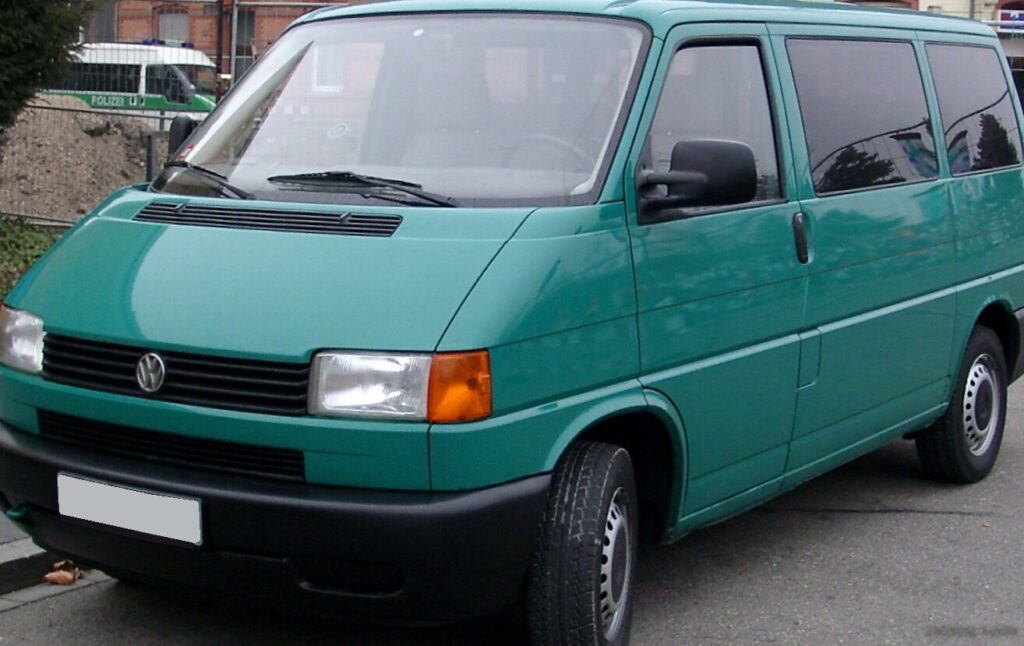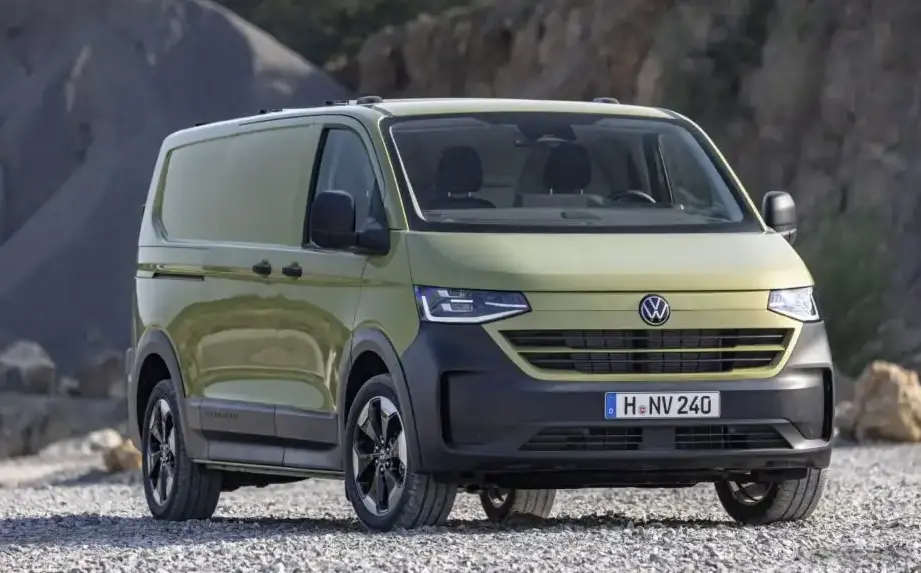
The Volkswagen Transporter (T7) Panel Van 2.0 TDI (150 hp) Automatic L1H1 represents the latest iteration of Volkswagen’s iconic commercial vehicle, launched in August 2024. Positioned as a versatile workhorse, this variant caters to businesses and tradespeople requiring a practical and efficient van solution. The T7 builds upon the foundation of the previous T6.1 generation, incorporating significant technological upgrades and a modernized interior while retaining the core functionality expected of a Transporter. The L1H1 designation refers to the van’s body length (L1 – short wheelbase) and roof height (H1 – standard roof). This specific 2.0 TDI Automatic configuration aims to balance performance with fuel economy and ease of driving, making it a popular choice for urban and regional delivery services.
Technical Specifications
| Brand | Volkswagen |
| Model | Transporter |
| Generation | Transporter (T7) Panel Van |
| Type | 2.0 TDI (150 Hp) Automatic L1H1 |
| Start of production | August, 2024 |
| Powertrain Architecture | Internal Combustion engine |
| Body type | Van |
| Seats | 2-3 |
| Doors | 4-5 |
| Combined fuel consumption (WLTP) | 7.5 l/100 km (31.4 US mpg, 37.7 UK mpg, 13.3 km/l) |
| CO2 emissions (WLTP) | 198 g/km |
| Fuel Type | Diesel |
| Acceleration 0 – 100 km/h | 14.7 sec |
| Acceleration 0 – 62 mph | 14.7 sec |
| Acceleration 0 – 60 mph | 14 sec |
| Emission standard | Euro 6e |
| Weight-to-power ratio | 12.2 kg/Hp, 81.7 Hp/tonne |
| Weight-to-torque ratio | 5.1 kg/Nm, 196.2 Nm/tonne |
| Power | 150 Hp |
| Power per litre | 75.2 Hp/l |
| Torque | 360 Nm (265.52 lb.-ft.) |
| Engine layout | Front, Transverse |
| Engine Model/Code | Panther |
| Engine displacement | 1996 cm3 (121.8 cu. in.) |
| Number of cylinders | 4 |
| Engine configuration | Inline |
| Cylinder Bore | 84.01 mm (3.31 in.) |
| Piston Stroke | 90.03 mm (3.54 in.) |
| Compression ratio | 16.5:1 |
| Number of valves per cylinder | 4 |
| Fuel injection system | Diesel Commonrail |
| Engine aspiration | Turbocharger, Intercooler |
| Valvetrain | DOHC |
| Engine systems | Start & Stop System, Particulate filter |
| Kerb Weight | 1835 kg (4045.48 lbs.) |
| Max. weight | 2800 kg (6172.94 lbs.) |
| Max load | 965 kg (2127.46 lbs.) |
| Trunk (boot) space – maximum | 5800 l (204.83 cu. ft.) |
| Fuel tank capacity | 70 l (18.49 US gal, 15.4 UK gal) |
| AdBlue tank | 20 l (5.28 US gal, 4.4 UK gal) |
| Max. roof load | 170 kg (374.79 lbs.) |
| Permitted trailer load with brakes (12%) | 2800 kg (6172.94 lbs.) |
| Permitted trailer load without brakes | 750 kg (1653.47 lbs.) |
| Permitted towbar download | 112 kg (246.92 lbs.) |
| Length | 5050 mm (198.82 in.) |
| Width | 2032 mm (80 in.) |
| Width including mirrors | 2275 mm (89.57 in.) |
| Height | 1983 mm (78.07 in.) |
| Wheelbase | 3100 mm (122.05 in.) |
| Front overhang | 958 mm (37.72 in.) |
| Rear overhang | 992 mm (39.06 in.) |
| Minimum turning circle | 12.5 m (41.01 ft.) |
| Approach angle | 16.5° |
| Departure angle | 16.4° |
| Ramp-over angle | 13.1° |
| Drivetrain Architecture | Front wheel drive |
| Number of gears | 8 |
| Gearbox type | Automatic transmission |
| Assisting systems | ABS (Anti-lock braking system) |
| Steering type | Steering rack and pinion |
| Power steering | Electric Steering |
| Tires size | 215/65 R16; 215/60 R17 |
| Wheel rims size | 6.5J x 16; 6.5J x 17 |
Powertrain & Engine Architecture
The heart of the T7 2.0 TDI Automatic is the Panther engine, a 2.0-liter inline four-cylinder diesel engine. This engine utilizes a common rail direct injection system, delivering fuel directly into the combustion chamber at extremely high pressure for optimized combustion efficiency and reduced emissions. The engine is turbocharged and intercooled, enhancing power output and torque. The DOHC (Double Overhead Camshaft) valvetrain, with four valves per cylinder, further contributes to improved engine breathing and performance. The 150 hp output is achieved through careful calibration of the engine management system. Paired with this engine is an 8-speed automatic transmission, designed to provide smooth and efficient gear changes. This transmission is crucial for optimizing fuel economy and providing a comfortable driving experience, particularly in stop-and-go traffic. The inclusion of a Start & Stop system and a particulate filter demonstrates Volkswagen’s commitment to reducing the vehicle’s environmental impact, meeting stringent Euro 6e emission standards.
Driving Characteristics
The 150 hp 2.0 TDI Automatic L1H1 offers a practical and capable driving experience. While not designed for outright speed – evidenced by the 14.7-second 0-60 mph acceleration – it provides ample torque (360 Nm / 265.52 lb.-ft.) for hauling loads and navigating varied terrain. The 8-speed automatic transmission is well-tuned, offering smooth shifts and keeping the engine within its optimal power band. Compared to manual transmission versions, the automatic prioritizes convenience and ease of use, particularly for drivers who spend a significant amount of time in congested areas. Compared to higher-output TDI variants (e.g., 200 hp), this version offers a more economical driving experience, albeit with reduced performance. The gear ratios are optimized for fuel efficiency and load-carrying capacity, rather than rapid acceleration.
Equipment & Trim Levels
The T7 Panel Van 2.0 TDI Automatic L1H1 typically comes standard with a range of practical features. These include air conditioning, a touchscreen infotainment system with Bluetooth connectivity, a multi-function steering wheel, and a comprehensive suite of safety features such as ABS, ESP (Electronic Stability Program), and driver/passenger airbags. Interior upholstery is typically durable and hard-wearing, designed to withstand the rigors of commercial use. Optional extras often include features like parking sensors, a rearview camera, navigation system, upgraded infotainment systems, and various driver-assistance technologies. Trim levels can vary depending on the market, but generally offer increasing levels of comfort and convenience.
Chassis & Braking
The T7 utilizes a robust chassis designed to handle substantial payloads. The front suspension typically consists of independent MacPherson struts, while the rear suspension employs a leaf spring setup, optimized for load-carrying capacity. Braking systems generally feature disc brakes on the front wheels and drum brakes on the rear, providing adequate stopping power for the vehicle’s weight class. The inclusion of ABS (Anti-lock Braking System) and ESP (Electronic Stability Program) enhances safety and control, particularly in challenging driving conditions. Stabilizer bars are fitted to both the front and rear axles to reduce body roll during cornering.
Market Reception & Comparison
The Volkswagen Transporter has consistently been a popular choice in the commercial vehicle segment, and the T7 continues this trend. Critics generally praise the T7’s improved technology, comfortable interior, and refined driving experience. The 2.0 TDI Automatic variant is often lauded for its balance of fuel efficiency and usability. Compared to other vans in its class, such as the Ford Transit Custom and Mercedes-Benz Vito, the T7 often stands out for its build quality and driving dynamics. However, some critics note that the T7 can be more expensive than its competitors. Fuel economy is competitive within the diesel van segment, and the 2.0 TDI engine is generally considered reliable, although regular maintenance is crucial for longevity.
Legacy
The 2.0 TDI engine, in various iterations, has proven to be a durable and reliable powerplant in Volkswagen’s commercial vehicle lineup. The 8-speed automatic transmission, while relatively new to the Transporter, is based on proven technology and is expected to offer long-term reliability. In the used car market, well-maintained T7 2.0 TDI Automatic vans are likely to hold their value due to the Transporter’s reputation for durability and practicality. Regular servicing, including oil changes, filter replacements, and adherence to Volkswagen’s recommended maintenance schedule, will be key to ensuring the longevity of this powertrain.