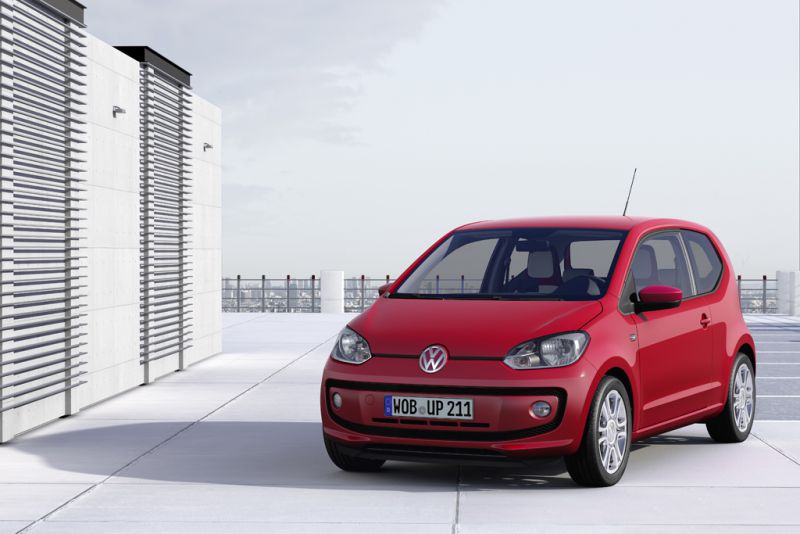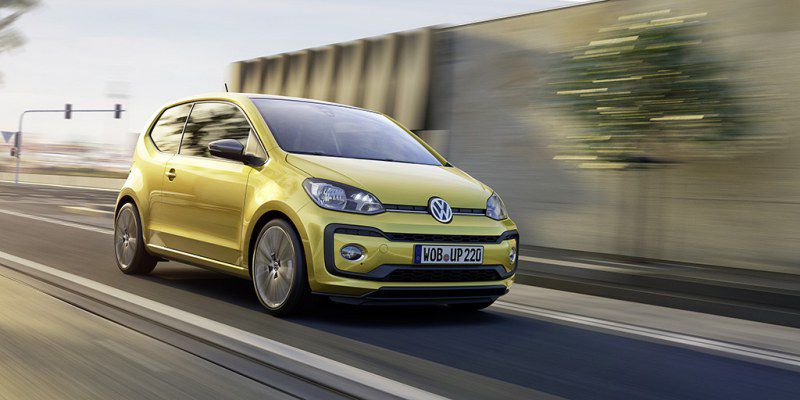
The Volkswagen Up! is a city car manufactured by the German automaker Volkswagen. Introduced in 2011, the Up! was designed as a modern, affordable, and fuel-efficient vehicle aimed at the urban driving environment. The model underwent a significant facelift in 2016, bringing updated styling, improved equipment, and enhanced technology. This article details the Volkswagen Up! (facelift 2016) powered by the 1.0 MPI 65 horsepower engine, focusing on its specifications, performance, and features. While not officially sold in the United States, the Up! represents Volkswagen’s entry-level offering in European and other international markets, competing with vehicles like the Fiat 500, Toyota Aygo, and Hyundai i10.
Volkswagen Up! (Facelift 2016) 1.0 MPI: An Overview
The Up! facelift, launched in 2016, refined the original model with a more mature aesthetic and a broader range of available features. The 1.0 MPI (Multi-Point Injection) engine, producing 65 horsepower, was a key component of the Up! lineup, offering a balance between fuel economy and adequate performance for city driving. This version of the Up! is typically offered as a 3-door or 5-door hatchback, catering to different practicality needs. The vehicle’s compact size and nimble handling make it well-suited for navigating congested urban streets and tight parking spaces.
Engine & Performance
The heart of the Volkswagen Up! (facelift 2016) 1.0 MPI is a naturally aspirated, three-cylinder 1.0-liter gasoline engine. This engine, designated DSGC, produces 65 horsepower (Hp) and 91 Newton-meters (67.12 lb.-ft.) of torque between 2950 and 3150 rpm. The engine’s power-to-liter ratio is 65.1 Hp/l. Power is delivered to the front wheels via a five-speed manual transmission. While not designed for rapid acceleration, the Up! 1.0 MPI achieves 0 to 100 km/h (0 to 62 mph) in 15.6 seconds, and 0 to 60 mph in 14.8 seconds. Its maximum speed is 163 km/h (101.28 mph). The engine incorporates multi-port manifold fuel injection and meets Euro 6d-ISC-FCM emission standards. A Start & Stop system is included to further improve fuel efficiency. The weight-to-power ratio is 14.1 kg/Hp, and the weight-to-torque ratio is 10.1 kg/Nm.
Design & Features
The Volkswagen Up! (facelift 2016) is a compact hatchback, available in both 3-door and 5-door configurations. Its design emphasizes practicality and efficiency. The facelift brought revised front and rear bumpers, new headlight designs, and updated interior trim. The vehicle seats four passengers and offers a surprisingly spacious interior for its size. The trunk (boot) space ranges from 251 liters (8.86 cu. ft.) with the rear seats up to 959 liters (33.87 cu. ft.) with the rear seats folded down.
Standard features typically include ABS (Anti-lock Braking System), electric power steering, and a driver’s airbag. Higher trim levels may offer additional features such as air conditioning, central locking, electric windows, and an infotainment system with touchscreen display. Safety features were enhanced in the facelifted model, though it’s important to note that safety standards have evolved since its initial release. The Up! prioritizes affordability and functionality, making it a practical choice for urban commuters and first-time car buyers.
Technical Specifications
| Brand | Volkswagen |
| Model | Up! |
| Generation | Up! (facelift 2016) |
| Type (Engine) | 1.0 MPI (65 Hp) |
| Start of production | 2020 year |
| Powertrain Architecture | Internal Combustion engine |
| Body type | Hatchback |
| Seats | 4 |
| Doors | 3-5 |
| Fuel consumption at Low speed (WLTP) | 6.2 l/100 km (37.9 US mpg, 45.6 UK mpg, 16.1 km/l) |
| Fuel consumption at Medium speed (WLTP) | 4.6 l/100 km (51.1 US mpg, 61.4 UK mpg, 21.7 km/l) |
| Fuel consumption at high speed (WLTP) | 4.4 l/100 km (53.5 US mpg, 64.2 UK mpg, 22.7 km/l) |
| Fuel consumption at very high speed (WLTP) | 5.6 l/100 km (42 US mpg, 50.4 UK mpg, 17.9 km/l) |
| Combined fuel consumption (WLTP) | 5.1 l/100 km (46.1 US mpg, 55.4 UK mpg, 19.6 km/l) |
| CO2 emissions (WLTP) | 116 g/km |
| Fuel consumption (economy) – urban (NEDC) | 5.2 l/100 km (45.2 US mpg, 54.3 UK mpg, 19.2 km/l) |
| Fuel consumption (economy) – extra urban (NEDC) | 3.8 l/100 km (61.9 US mpg, 74.3 UK mpg, 26.3 km/l) |
| Fuel consumption (economy) – combined (NEDC) | 4.3 l/100 km (54.7 US mpg, 65.7 UK mpg, 23.3 km/l) |
| CO2 emissions (NEDC) | 98 g/km |
| Fuel Type | Petrol (Gasoline) |
| Acceleration 0 – 100 km/h | 15.6 sec |
| Acceleration 0 – 62 mph | 15.6 sec |
| Acceleration 0 – 60 mph | 14.8 sec |
| Maximum speed | 163 km/h (101.28 mph) |
| Emission standard | Euro 6d-ISC-FCM |
| Weight-to-power ratio | 14.1 kg/Hp |
| Weight-to-torque ratio | 10.1 kg/Nm |
| Power | 65 Hp |
| Power per litre | 65.1 Hp/l |
| Torque | 91 Nm @ 2950-3150 rpm (67.12 lb.-ft. @ 2950-3150 rpm) |
| Engine layout | Front, Transverse |
| Engine Model/Code | DSGC |
| Engine displacement | 999 cm3 (60.96 cu. in.) |
| Number of cylinders | 3 |
| Engine configuration | Inline |
| Number of valves per cylinder | 4 |
| Fuel injection system | Multi-port manifold injection |
| Engine aspiration | Naturally aspirated engine |
| Engine oil capacity | 3.6 l (3.8 US qt | 3.17 UK qt) |
| Kerb Weight | 916 kg (2019.43 lbs.) |
| Max. weight | 1330 kg (2932.15 lbs.) |
| Max load | 414 kg (912.71 lbs.) |
| Trunk (boot) space – minimum | 251 l (8.86 cu. ft.) |
| Trunk (boot) space – maximum | 959 l (33.87 cu. ft.) |
| Fuel tank capacity | 35 l (9.25 US gal | 7.7 UK gal) |
| Max. roof load | 50 kg (110.23 lbs.) |
| Length | 3600 mm (141.73 in.) |
| Width | 1641 mm (64.61 in.) |
| Width with mirrors folded | 1645 mm (64.76 in.) |
| Width including mirrors | 1910 mm (75.2 in.) |
| Height | 1504 mm (59.21 in.) |
| Wheelbase | 2407 mm (94.76 in.) |
| Front track | 1412-1433 mm (55.59 – 56.42 in.) |
| Rear (Back) track | 1408-1428 mm (55.43 – 56.22 in.) |
| Ride height (ground clearance) | 144 mm (5.67 in.) |
| Minimum turning circle (turning diameter) | 9.8 m (32.15 ft.) |
| Drive wheel | Front wheel drive |
| Number of gears and type of gearbox | 5 gears, manual transmission |
| Front suspension | Coil spring, Independent coil spring, Wishbone |
| Rear suspension | Semi-independent, coil spring |
| Front brakes | Ventilated discs |
| Rear brakes | Drum |
| Tires size | 165/70 R14; 185/55 R15; 185/50 R16; 195/40 R17 |
| Wheel rims size | 5J x 14; 5.5J x 15; 6J x 16; 6.5J x 17 |