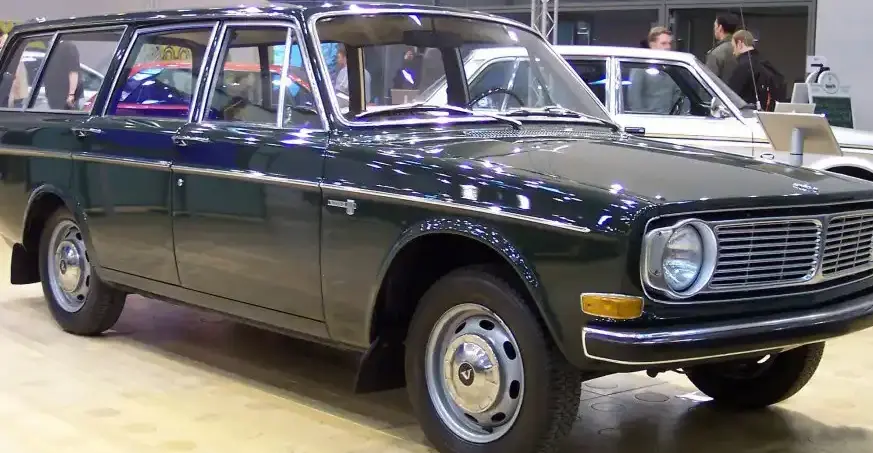
Technical Specifications
| Brand | Volvo |
| Model | 140 |
| Generation | 140 Combi (145) |
| Type (Engine) | 2.0 S (116 Hp) |
| Start of production | 1973 |
| End of production | 1975 |
| Powertrain Architecture | Internal Combustion engine |
| Body type | Station wagon (estate) |
| Seats | 5 |
| Doors | 5 |
| Fuel Type | Petrol (Gasoline) |
| Power | 116 Hp |
| Engine aspiration | Naturally aspirated engine |
| Fuel tank capacity | 58 l / 15.32 US gal / 12.76 UK gal |
The Volvo 145, part of the broader 140 series, represented Volvo’s entry into the growing station wagon market in the early 1970s. Produced from 1973 to 1975, the 2.0 S (116 hp) variant occupied a middle ground within the 145 lineup, offering a balance between performance and affordability. This model, built on the robust and safe foundations of the 140 platform, aimed to provide practical family transportation with a touch of Scandinavian refinement. It was a key component of Volvo’s strategy to appeal to a wider customer base seeking versatility and durability.
Powertrain & Engine Architecture
The heart of the 145 2.0 S was Volvo’s B20 engine, a 1,986 cc (121.1 cubic inch) inline-four cylinder. This engine was a development of the earlier B18, featuring a larger bore and stroke for increased displacement. The B20 was known for its robustness and relatively simple design, contributing to its longevity. The 116 hp output was achieved through a single overhead camshaft (SOHC) valvetrain, two SU carburetors, and a compression ratio of 9.5:1. The engine utilized a cast iron block and cylinder head, ensuring durability.
The 2.0 S was typically paired with a three-speed automatic transmission with overdrive. This transmission, while not particularly sporty, provided smooth and comfortable shifting, ideal for everyday driving. The automatic transmission was a popular choice for buyers prioritizing convenience over performance. The gear ratios were optimized for fuel efficiency and relaxed cruising, rather than rapid acceleration. The overdrive function allowed for lower engine speeds at highway speeds, further improving fuel economy and reducing noise. The transmission itself was a Borg-Warner unit, known for its reliability, though it lacked the sophistication of more modern automatics.
Driving Characteristics
The 145 2.0 S, with its automatic transmission, offered a comfortable and predictable driving experience. Acceleration was adequate for the time, with a 0-60 mph time estimated around 12-14 seconds. However, it wasn’t a particularly quick vehicle, especially when compared to the manual transmission versions or the later 145 GT models. The automatic transmission did detract somewhat from the engine’s potential, as it absorbed some power. The car’s weight, typical for a station wagon of the era, also contributed to its less-than-sporty performance.
Handling was safe and predictable, thanks to the 140 series’ well-engineered chassis. The suspension, consisting of independent front suspension with coil springs and a solid rear axle with leaf springs, provided a comfortable ride, although it could feel somewhat bouncy on uneven surfaces. Steering was relatively heavy, but precise. Overall, the driving experience was geared towards practicality and comfort rather than outright performance. The automatic transmission’s shift points were calibrated for smooth operation, prioritizing ease of use over aggressive downshifts.
Equipment & Trim Levels
The 145 2.0 S came reasonably well-equipped for its time. Standard features included comfortable cloth upholstery, a wood-trimmed dashboard, and a comprehensive instrument panel. The interior was known for its spaciousness and practicality, with ample room for passengers and cargo. Optional extras included a sunroof, power steering, and upgraded audio systems. The 2.0 S trim generally featured more refined interior materials and trim details compared to the base 145 models. Features like a vinyl roof and upgraded carpeting were often selected by buyers.
Safety was a key selling point for Volvo, and the 145 2.0 S was no exception. It featured disc brakes on all four wheels, a robust body structure designed to absorb impacts, and a steering column designed to collapse in the event of a collision. These safety features were ahead of their time and contributed to Volvo’s reputation for building safe cars. The car also included seat belts for all passengers, a relatively uncommon feature in the early 1970s.
Chassis & Braking
The 140 series chassis was a body-on-frame construction, providing a solid and durable platform. The front suspension utilized independent coil springs and wishbones, while the rear suspension employed a solid axle with leaf springs. This setup provided a good balance between ride comfort and handling. The 145 2.0 S typically featured stabilizer bars on both the front and rear axles to reduce body roll during cornering. The chassis design prioritized strength and longevity over lightweight construction.
Braking was handled by disc brakes on all four wheels, a relatively advanced feature for the early 1970s. The braking system was known for its effectiveness and reliability. The 145 2.0 S also featured a dual-circuit braking system, providing redundancy in case of a brake line failure. The tires were typically bias-ply tires, which offered good durability but less grip than modern radial tires. Drum brakes were sometimes found on lower-spec versions of the 145, but the 2.0 S consistently featured all-wheel disc brakes.
Market Reception & Comparison
The Volvo 145 2.0 S was generally well-received by critics and buyers alike. It was praised for its practicality, safety, and durability. However, some critics noted its relatively modest performance and somewhat dated styling. Compared to other station wagons of the era, such as the Ford Estate or the Opel Caravan, the 145 2.0 S offered a more refined and sophisticated driving experience.
Fuel economy was reasonable for the time, averaging around 18-22 mpg. Reliability was a strong point, with the B20 engine proving to be exceptionally durable. The automatic transmission, while not as sporty as a manual, was generally reliable. Compared to the manual transmission versions of the 145, the 2.0 S offered less performance but greater convenience. Compared to the higher-spec 145 GT, it offered less power and fewer features but at a lower price point. The 2.0 S appealed to families who wanted a safe, reliable, and comfortable station wagon without the expense of the performance-oriented GT model.
Legacy
The Volvo 145 2.0 S, and the 140 series as a whole, left a lasting legacy on the automotive industry. It established Volvo as a leader in safety and durability, and it helped to popularize the station wagon body style. Today, the 145 2.0 S is a sought-after classic car, appreciated by enthusiasts for its simplicity, reliability, and timeless design.
The B20 engine remains highly regarded for its robustness and ease of maintenance. Parts availability is generally good, making it relatively easy to keep these cars on the road. While the automatic transmission may require occasional servicing, it is generally a reliable unit. The 145 2.0 S represents a piece of automotive history, embodying the values of practicality, safety, and durability that have long been associated with the Volvo brand. Its influence can still be seen in modern Volvo designs, particularly in the brand’s continued commitment to safety and functional design.